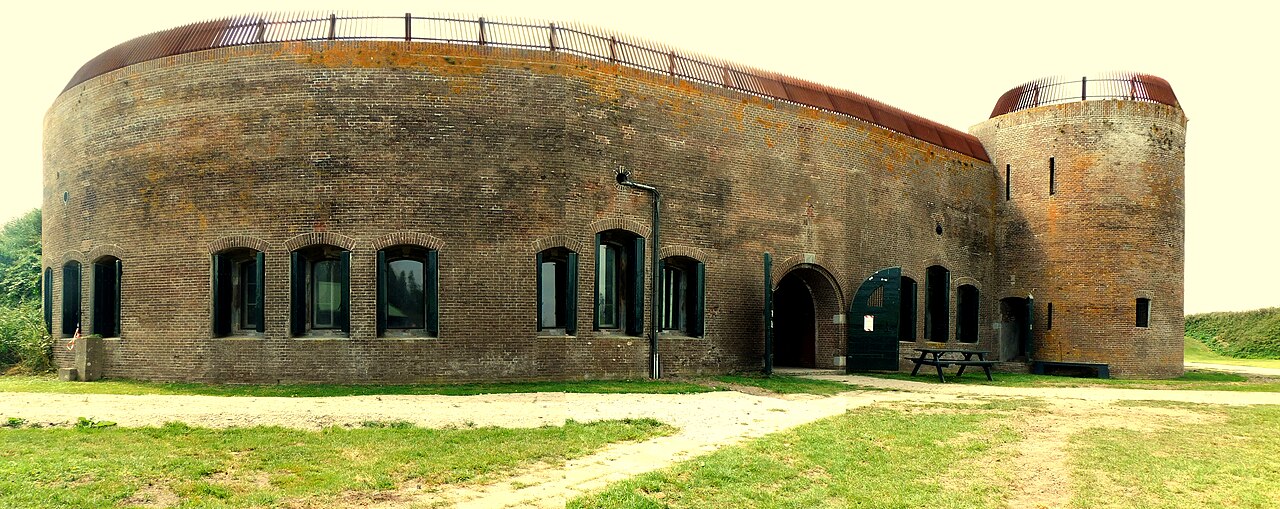
Willemstad Fortress
Willemstad Fortress stands as a remarkable example of Renaissance military architecture in the Netherlands. Constructed beginning in 1583, the fortress was designed by the prominent military engineer Abraham Andriesz to protect the strategically vital village of Ruigenhil—later renamed Willemstad in honor of William I of Orange following his death in 1584. This fortress played a crucial role in the defense of the northern provinces of the Netherlands during the Eighty Years' War against Spanish forces.
Historical context and strategic importance
In 1583, the Spanish capture of nearby Steenbergen posed a direct threat to the northern Dutch territories. William I of Orange recognized the vulnerability and ordered the fortification of Ruigenhil, which lay on the border between the northern and southern Netherlands along the crucial Meuse River (Maas). The location was of immense strategic value as it controlled river access and served as a defensive bulwark against Spanish advances.
William I's acquisition of the town followed the dismissal of the previous marquis, who had sided with the Spanish in 1567. The Dutch state rewarded William with the title of marquis as compensation for his military expenses. The fortress thus became a symbol of Dutch resistance and sovereignty.
Architectural design and fortification features
The fortress was designed according to the Old Dutch System of fortification, but with distinctive modifications that reflect an Italian influence. Unlike typical bastions where the flanks are perpendicular to the curtain walls, Willemstad's bastions feature retreated curved flanks forming arrow-headed shapes. These bastions are notably short, a unique characteristic that differentiates Willemstad from other star forts of the period.
The fortifications include two main bastions facing the sea, with the walls on this front revetted in brick for added durability. The rest of the ramparts consist of unrevetted earthworks, a common feature in Dutch fortifications designed to absorb artillery fire effectively.
A key defensive element is the glacis situated between the bastions and the river, which historically prevented enemy ships from approaching the walls and provided additional protection against bombardment. The fortress moat is separated from the river by a dam, and a small canal connects the internal harbor to the river, facilitating controlled access and supply.
Later modifications and additions
Throughout the centuries, Willemstad Fortress underwent several updates to adapt to evolving military technologies and tactics. Some bastion flanks were later modified to be perpendicular to the curtain walls, aligning more closely with conventional bastion designs.
In the 19th century, extensive additions such as powder magazines, bomb shelters, and during World War II, blockhouses, were constructed. These structures remain well-preserved, offering insight into the fortress's continued military relevance beyond the Renaissance.
Cultural significance and preservation
Willemstad Fortress officially lost its military status in 1926. Following this, the local population campaigned for the preservation of the fortifications, recognizing their historical and cultural value. Today, the fortress and the surrounding town are protected as a monument, reflecting its importance in Dutch heritage.
The fortress's enduring charm lies not only in its architectural features but also in its harmonious relationship with the surrounding waterworks and landscape. The harbor remains active and close to the water, preserving the historic atmosphere and connecting visitors with the site's maritime past.
Architectural style and construction period
Willemstad Fortress is a quintessential example of Renaissance fortification design in the Netherlands, constructed primarily in the late 16th century, with the main building phase starting in 1583. Its design reflects Renaissance military engineering principles, adapted to the Dutch landscape and strategic needs.
Legacy and visitor experience
Visitors to Willemstad can explore the well-preserved bastions, earthworks, and water defenses that illustrate the evolution of military architecture from the Renaissance through the 19th century. The fortress’s unique curved bastions and extensive waterworks are highlights that attract historians, architects, and tourists alike.
The integration of the fortress with the active harbor and the surrounding natural environment offers a vivid sense of the site’s historical function and ongoing life. The preservation efforts ensure that Willemstad Fortress remains a significant cultural landmark and a testament to Dutch resilience and ingenuity in fortification design.
Frequently asked questions (FAQ)
- What is the historical significance of Willemstad Fortress?
- Willemstad Fortress, built in the 16th century, played a crucial role in the defense of the region against naval attacks. It served as a strategic military base for the Dutch during the Eighty Years' War and is a prime example of Renaissance military architecture.
- When was Willemstad Fortress built?
- The construction of Willemstad Fortress began in 1583 and was completed in stages over the following years. It was designed by the famed architect Simon Stevin, reflecting the military needs of the time.
- What are the opening hours for Willemstad Fortress?
- Willemstad Fortress is open to visitors year-round, but hours may vary by season. Typically, the fortress is open from 10 AM to 5 PM, with extended hours during the summer months.
- Can I visit Willemstad Fortress with children?
- Yes, Willemstad Fortress is family-friendly and offers a range of activities that are suitable for children. The fortress grounds provide ample space for exploration and learning about its history in an engaging way.
- Is it possible to take guided tours of Willemstad Fortress?
- Absolutely! Guided tours are available and provide in-depth insights into the fortress's history and architecture. These tours are led by knowledgeable guides who can answer your questions and enhance your experience.
- What are the ticket prices for visiting Willemstad Fortress?
- Ticket prices for Willemstad Fortress are generally affordable, with discounts available for children and seniors. Tickets can be purchased at the entrance or online for convenience, ensuring a seamless visit.
- When is the best time to visit Willemstad Fortress?
- The best time to visit Willemstad Fortress is during the spring and early autumn when the weather is mild. This allows for comfortable exploration of the fortress and its surrounding areas without the summer crowds.
- What nearby attractions can I explore after visiting Willemstad Fortress?
- After visiting Willemstad Fortress, you can explore the charming town of Willemstad, known for its colorful buildings and waterfront views. Other nearby attractions include the National Park De Biesbosch, offering beautiful nature trails and boat tours.
- How do I get to Willemstad Fortress?
- Willemstad Fortress is easily accessible by car and public transport. If you are traveling by train, there are local buses that connect to the fortress, making it convenient for visitors coming from nearby cities.
Information
Loading map...
Visitor reviews
No reviews yet. Been here? Write the first review and help other travelers!
Write the first reviewVisited this castle? Share your experience
Your review helps other travelers and adds first-hand knowledge to our encyclopedia.