Zerzevan Castle
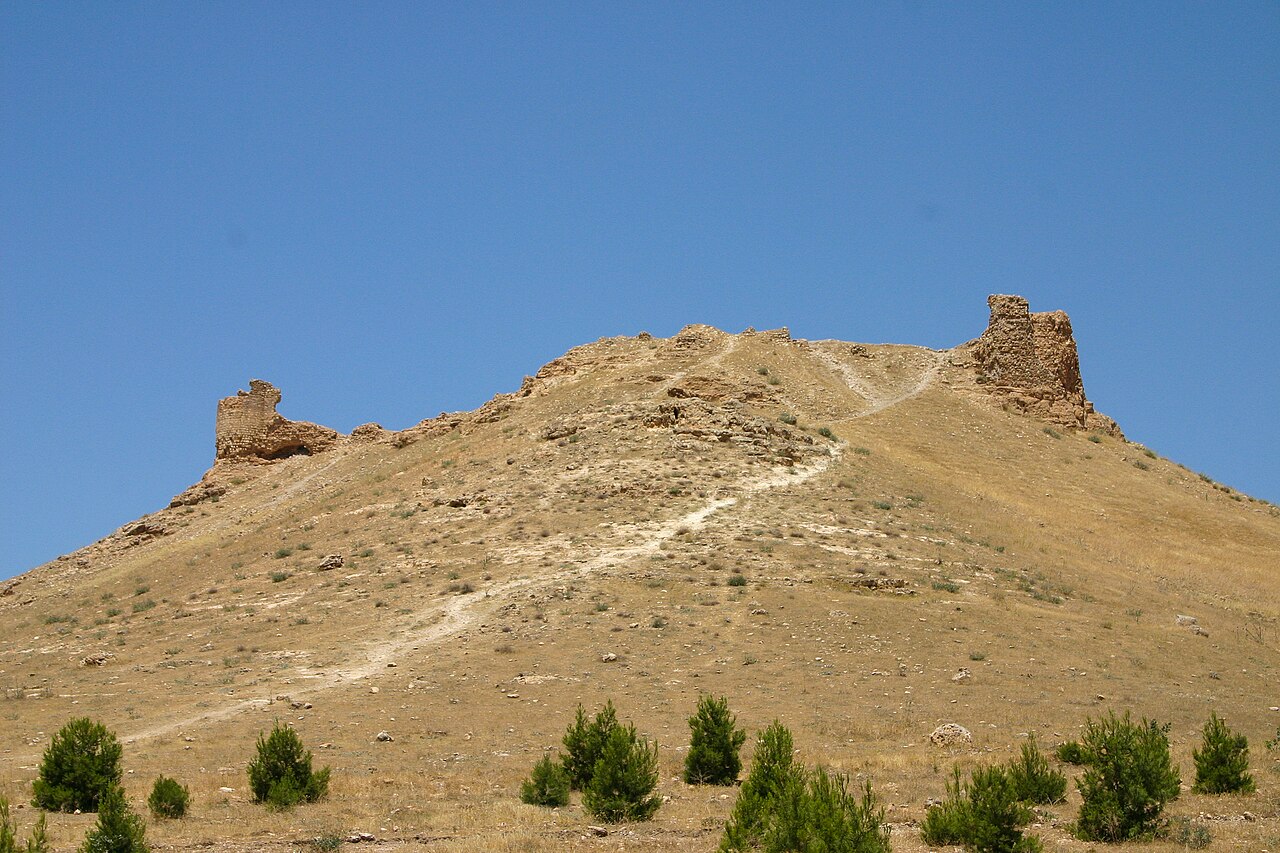
Zerzevan Castle stands as a remarkable example of a Byzantine military fortress strategically positioned in southeastern Turkey. Established in the 4th century AD by the Eastern Roman Empire, this hill castle played a crucial role in securing the empire's eastern frontier during a period marked by frequent conflicts with the Sasanian Empire. Its location near the vital trade route connecting the cities of Amida (modern Diyarbakır) and Dara (modern Mardin) underscores its military and administrative significance in controlling movement and communication across the region.
The castle's construction and subsequent restorations reflect the architectural and strategic evolution of Byzantine fortifications. Major building phases occurred under the reigns of Emperors Anastasius I (491–518 AD) and Justinian I (527–565 AD), whose efforts fortified the site into a formidable stronghold. The defensive walls extend approximately 1,200 meters, enclosing an area of about 5.7 hectares atop a rocky hill. These walls, reaching heights of up to 12 meters and thicknesses between 2.1 and 3.2 meters, are reinforced by ten bastions and two towers, including a prominent watchtower standing 21 to 22 meters tall. This extensive fortification system was designed to provide comprehensive defensive coverage against invasions and sieges.
Architectural features and layout
Fortifications and defensive structures
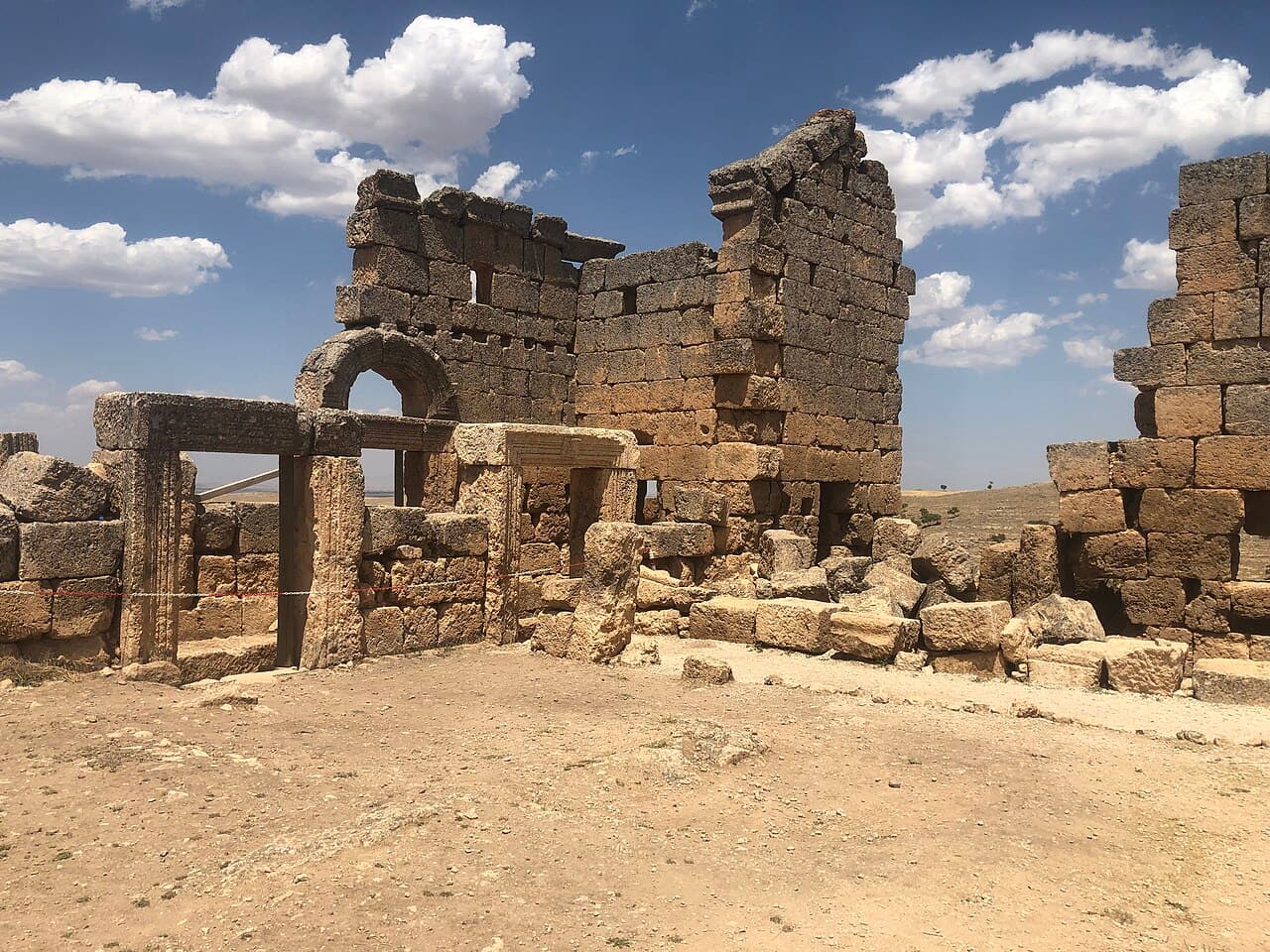
The castle's perimeter is defined by robust stone walls constructed using locally quarried stone blocks. The walls are buttressed by external supporting structures enhancing their resilience. The ten bastions and two towers are strategically placed to maximize defensive capabilities, allowing defenders to monitor and repel attackers effectively. The watchtower, the tallest structure, served as an observation post providing visibility over the surrounding landscape.
Residential and public buildings
Within the fortress, the northern part contains residential quarters carved directly into the bedrock, arranged along narrow streets. These rock-cut dwellings demonstrate a sophisticated adaptation to the natural terrain. The southern slope features larger stone-built houses alongside several public buildings, including a church with an east-west orientation and an adjacent baptismal pool, indicative of the Christian community residing within the castle.
Other significant public structures include a palace used for administrative purposes, a governance building, baths for hygiene and social activities, a granary for food storage, and an arsenal measuring approximately 10.9 by 36.4 meters, highlighting the site's military function. The water supply was ingeniously managed through 54 rock-hewn cisterns connected by a 616-meter aqueduct running outside the fortress walls, ensuring a reliable source of water during sieges.
Underground sanctuaries and tunnels
The Mithraeum temple
One of the most extraordinary features of Zerzevan Castle is its well-preserved Mithraeum, a subterranean temple dedicated to the god Mithras. Carved directly from the bedrock and covering about 35 square meters, the Mithraeum contains intricately carved columns along the eastern wall, a large central niche flanked by smaller recesses, and a flaming crown symbol associated with Mithraism. A small basin near the left niche and ritual inscriptions at the entrance provide valuable insights into the spiritual practices of the garrison stationed here.
Other underground spaces
Additional subterranean areas include a church formed by repurposing rock-cut tombs, featuring a baptismal pool and lamp niches that suggest liturgical use. Secret tunnels, sealed for nearly three thousand years, extend beneath the site, offering potential escape routes or concealed access points. A large underground shelter capable of housing up to 400 people includes five ventilation shafts and a spiral staircase, demonstrating advanced engineering designed for prolonged protection during attacks or sieges.
Historical context and significance
Zerzevan Castle's history is deeply intertwined with the geopolitical struggles of the Byzantine Empire's eastern frontier. Serving as a military base and administrative center, it was a vital outpost during the frequent clashes with the Sasanian Empire. The fortress housed a community of soldiers and civilians, with estimates suggesting a population of around 1,000 inhabitants living within its walls.
The castle's military use ended around 639 AD when Arab Muslim forces advanced during the early Arab-Byzantine wars, leading to the abandonment of the fortress as a defensive site. However, the location saw renewed civilian settlement in the late 19th century, with residents living there until the 1960s before relocating to establish the modern village of Zerzevan, now known as Demirölçek.
Archaeological discoveries and artifacts
Extensive archaeological excavations have uncovered a wealth of material culture that sheds light on the daily, spiritual, and military life at Zerzevan Castle. Finds include military and medical instruments, bronze coins, personal adornments such as jewelry, and ritual items like offering basins located outside the fortifications. These artifacts provide a tangible connection to the fortress’s past inhabitants and their complex cultural practices.
The necropolis
Outside the castle walls lies a necropolis featuring rock-cut graves of three distinct types: bench tombs, vaulted tombs, and sarcophagus-style chambers. These burial sites reflect the funerary traditions practiced by the community that once thrived within the fortress.
Preservation and visitor experience
Today, Zerzevan Castle remains a significant archaeological and historical site, offering visitors a glimpse into the military architecture and religious life of the Byzantine era. The well-preserved walls, underground sanctuaries, and extensive ruins provide a unique opportunity to explore a fortress that was both a defensive stronghold and a spiritual center.
Visitors can walk along the ancient walls, explore the rock-cut residential areas, and descend into the Mithraeum to experience the mysterious atmosphere of this subterranean temple. The site’s combination of surface and underground elements makes it a compelling destination for those interested in Byzantine history, military architecture, and ancient religious practices.
Frequently asked questions (FAQ)
- When was Zerzevan Castle built and by whom?
- Zerzevan Castle was built in the 4th century AD by the Eastern Roman (Byzantine) Empire as a military fortress on its eastern frontier.
- What are the main architectural features of Zerzevan Castle?
- The castle features robust stone walls with ten bastions, two towers including a 21-22 meter watchtower, rock-cut residential quarters, public buildings like a church and baths, and an underground Mithraeum temple.
- Is it possible to visit the underground Mithraeum at Zerzevan Castle?
- Yes, visitors can explore the well-preserved underground Mithraeum temple carved from bedrock, which offers insight into the spiritual life of the Byzantine garrison.
- Why did Zerzevan Castle cease to be used as a military fortress?
- The fortress was abandoned as a military site around 639 AD following the arrival of Arab Muslim forces during the early Arab-Byzantine wars, marking the end of Byzantine control in the region.
- What kinds of artifacts have been found at Zerzevan Castle?
- Archaeological excavations have uncovered military and medical instruments, coins, jewelry, ritual offering basins, and various everyday items reflecting the lives of the castle's inhabitants.
Photo gallery

Information
Loading map...
Visitor reviews
No reviews yet. Been here? Write the first review and help other travelers!
Write the first reviewVisited this castle? Share your experience
Your review helps other travelers and adds first-hand knowledge to our encyclopedia.