Zegrze Fortress
Zegrze Fortress (Polish: Twierdza Zegrze) is a significant 19th-century bastioned fortress located in Zegrze, Poland, strategically positioned on a high escarpment overlooking the Narew River. Constructed by the Russian Empire in the late 19th century, its primary purpose was to secure the vital river crossing and strengthen the empire's western defenses. The fortress was a key component of the Warsaw Fortified Area (Варшавской укрепленной район), a defensive network that included the Warsaw Fortress and Modlin Fortress.
Design and architectural features
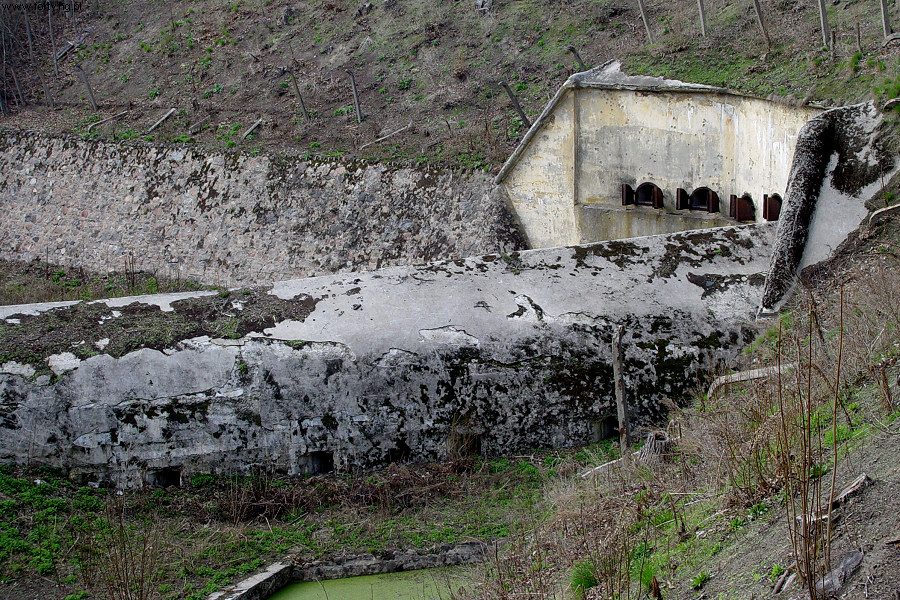
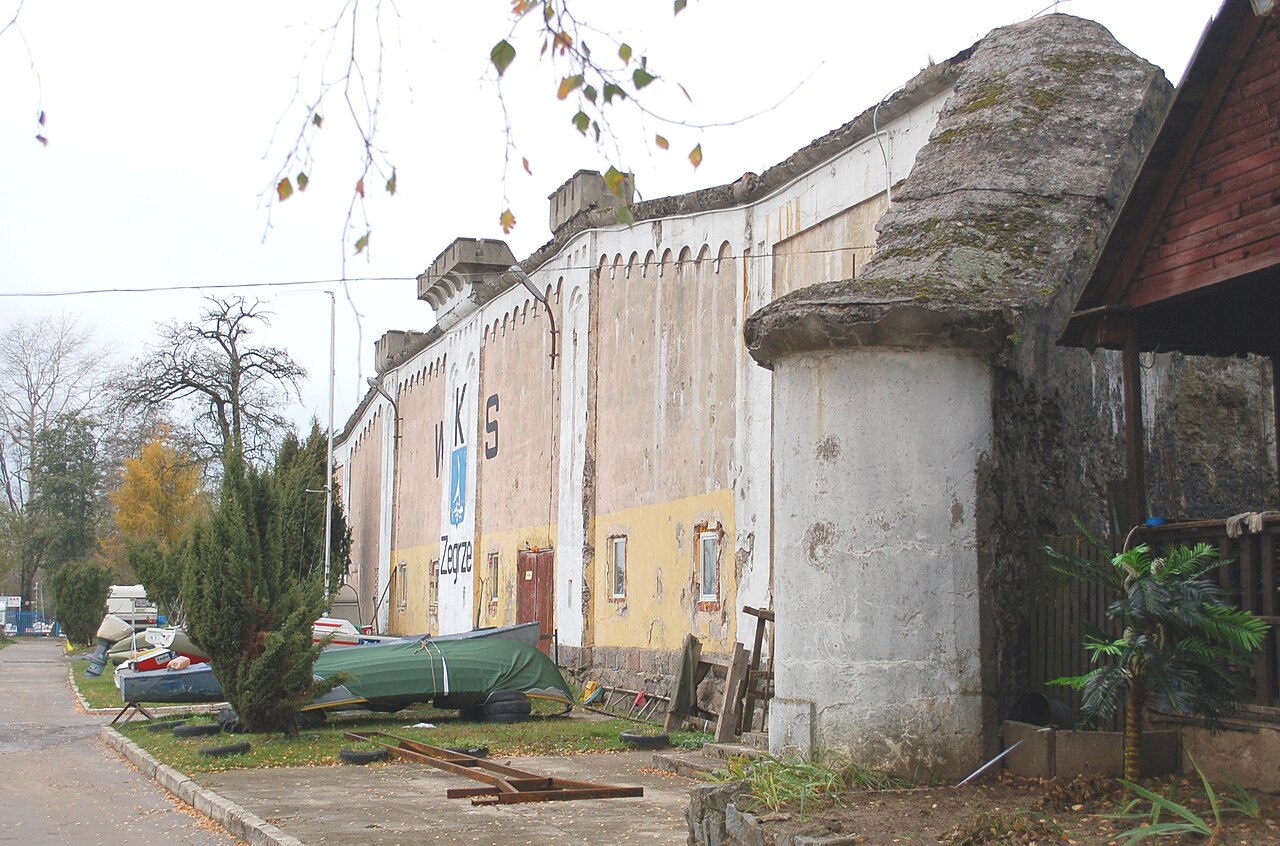
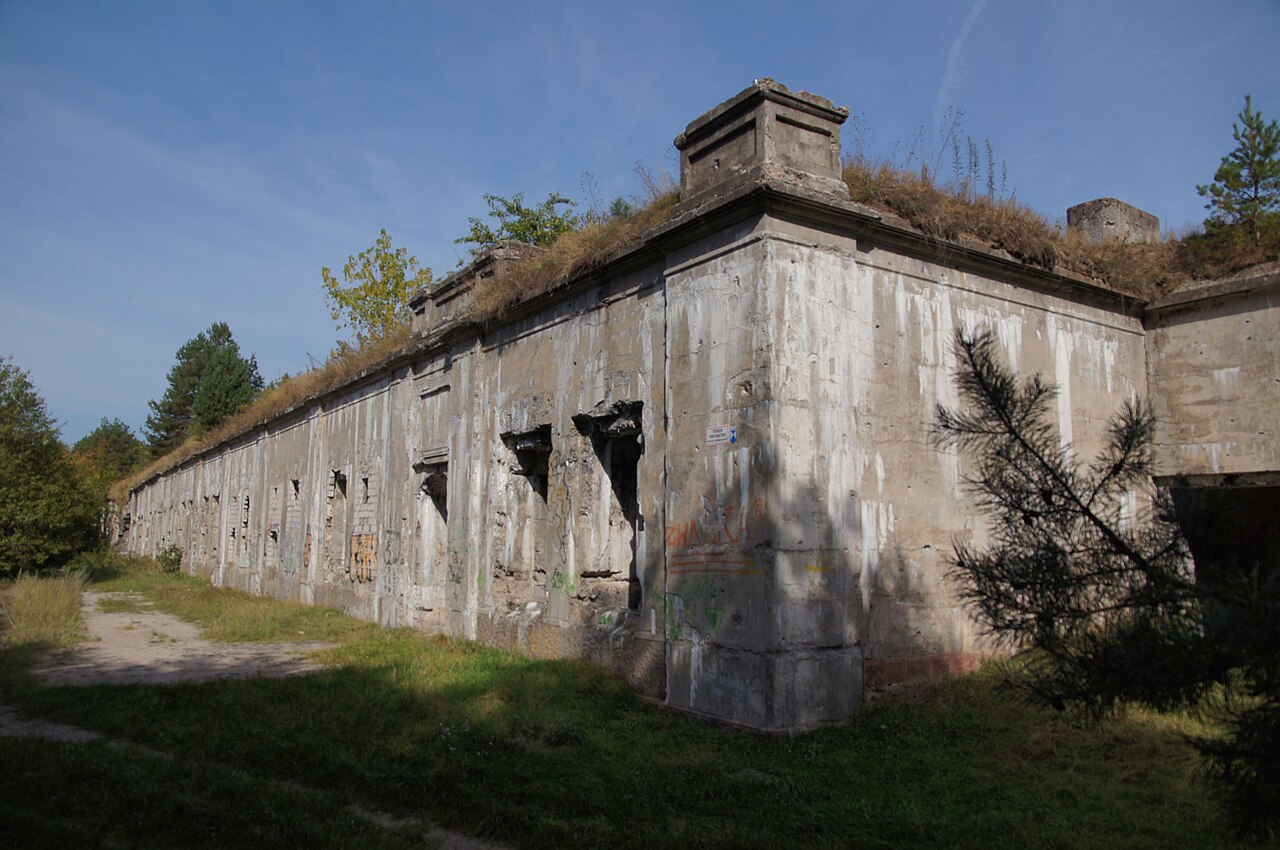
The fortress was built as a bastioned fortress, a style characterized by angular bastions allowing defensive fire along the walls and reducing blind spots. Its main body consisted of two primary forts connected by extensive earthwork fortifications. These were known as the Large Fortification (Umocnienie Duże, also called Fort Ordon) and the Small Fortification (Umocnienie Małe, or Fort Karlinek).
In addition to these core structures, the fortress complex commanded two other forts: Fort Dębe, situated approximately 10 kilometers downstream towards Modlin, and Fort Beniaminów across the Narew River. The entire complex was supported by a network of military infrastructure, including barracks located in Beniaminów, Zagroby, and Zegrze, along with seven munitions depots and a garrison church.
Historical context and military role
Zegrze Fortress was constructed during a period of military modernization by the Russian Empire in the late 19th century, reflecting advances in artillery and fortification design. Between 1902 and 1907, the fortress underwent significant modernization to improve its defenses and adapt to evolving military technology.
During World War I, the fortress played a defensive role during the Great Retreat of Russian forces from Poland in 1915. Following the war and the re-establishment of Polish independence in 1918, the fortress was taken over by the Polish military. It was actively involved in the Battle of Warsaw in 1920, a decisive conflict during the Polish-Soviet War, and later participated in the defense against the 1939 Nazi and Soviet invasions of Poland.
Structural components and layout
The Large Fortification (Fort Ordon) and Small Fortification (Fort Karlinek) were the fortress's main defensive works. These forts were linked by thick earthworks designed to absorb artillery fire and provide protected communication routes between the two. The bastioned design featured angular projections allowing enfilading fire, enhancing the fortress's ability to repel attackers.
The additional forts, Fort Dębe and Fort Beniaminów, extended the defensive perimeter and controlled key approaches along the river. The placement of barracks and munitions depots around the fortress ensured logistical support and troop accommodation within protected zones.
Later history and current status
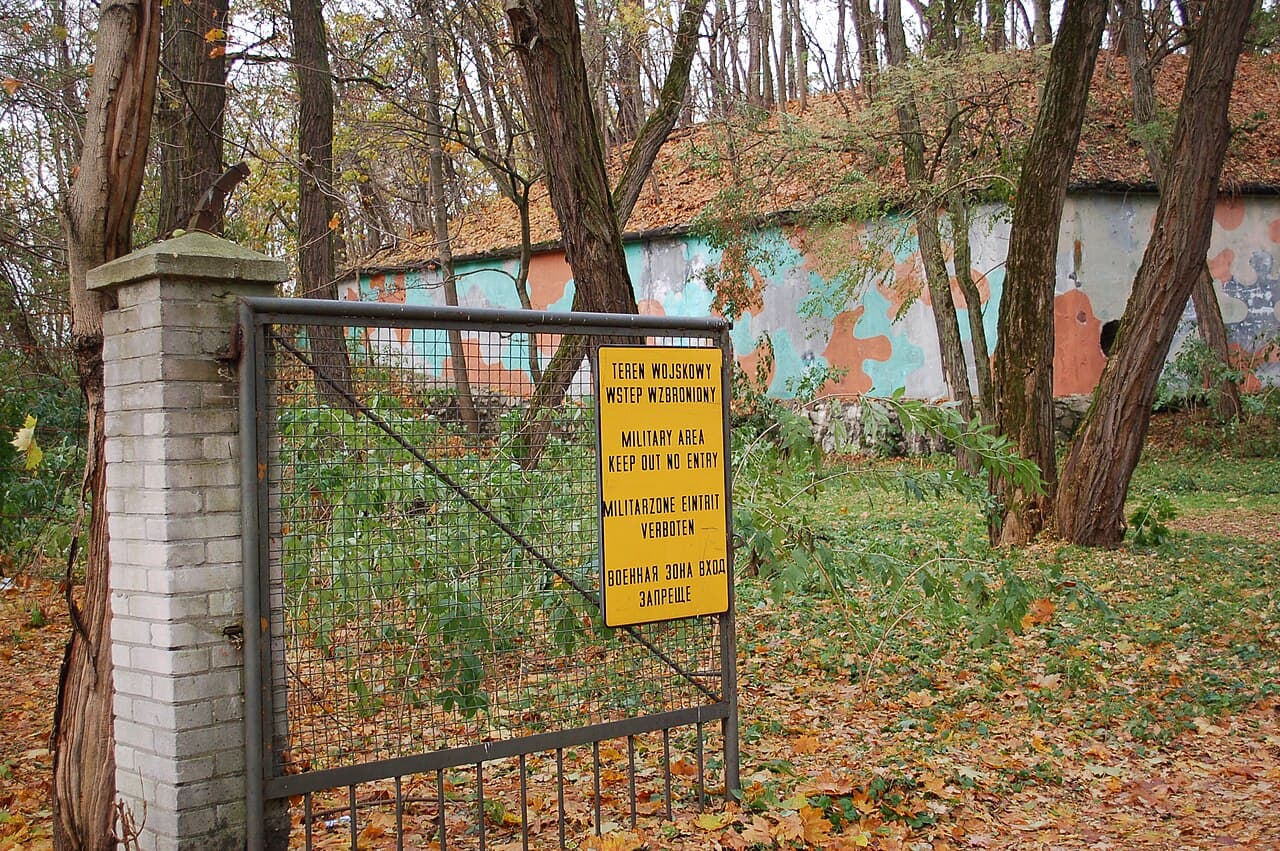
After World War II, the fortress's military importance declined with changes in warfare and defense strategies. In recent years, the Large Fortification was acquired by the National Bank of Poland, marking a shift from military to civilian use. Despite this change, the fortress remains a notable example of 19th-century bastioned military architecture in Poland.
Parts of the fortress are preserved, though some areas have suffered from neglect. The site offers insight into the military engineering of the era and the strategic significance of river crossings in defensive planning.
Legacy and cultural significance
Zegrze Fortress is an important historical monument reflecting the geopolitical struggles in Eastern Europe during the late 19th and early 20th centuries. Its role in multiple conflicts underscores its strategic value. The fortress also illustrates the evolution of military architecture from traditional bastioned designs to adaptations necessitated by modern artillery.
Today, the fortress attracts interest from historians, architects, and visitors interested in military heritage. Its preserved structures and surrounding landscape provide a tangible connection to the region's complex history.
Frequently asked questions (FAQ)
- What is the historical significance of Zegrze Fortress?
- Zegrze Fortress was built by the Russian Empire in the late 19th century to guard the Narew River crossing and was part of the Warsaw Fortified Area. It played roles in World War I, the Polish-Soviet War, and the 1939 invasion of Poland.
- Can visitors tour Zegrze Fortress today?
- Access to Zegrze Fortress may be limited as parts of the complex are under private ownership, including the National Bank of Poland. Visitors should check local sources for current visiting options and restrictions.
- What architectural features define Zegrze Fortress?
- Zegrze Fortress is a bastioned fortress featuring two main forts connected by earthwork fortifications, with additional satellite forts controlling approaches along the Narew River. Its design reflects late 19th-century military engineering.
- When was Zegrze Fortress modernized?
- The fortress underwent modernization between 1902 and 1907 to enhance its defenses and adapt to new military technologies of the early 20th century.
- How did Zegrze Fortress contribute to the Battle of Warsaw in 1920?
- After Poland regained independence, Zegrze Fortress was used by Polish forces during the Battle of Warsaw in 1920, helping to defend the region against Soviet advances.
Photo gallery

Information
Loading map...
Visitor reviews
No reviews yet. Been here? Write the first review and help other travelers!
Write the first reviewVisited this castle? Share your experience
Your review helps other travelers and adds first-hand knowledge to our encyclopedia.