Fort Beniaminów
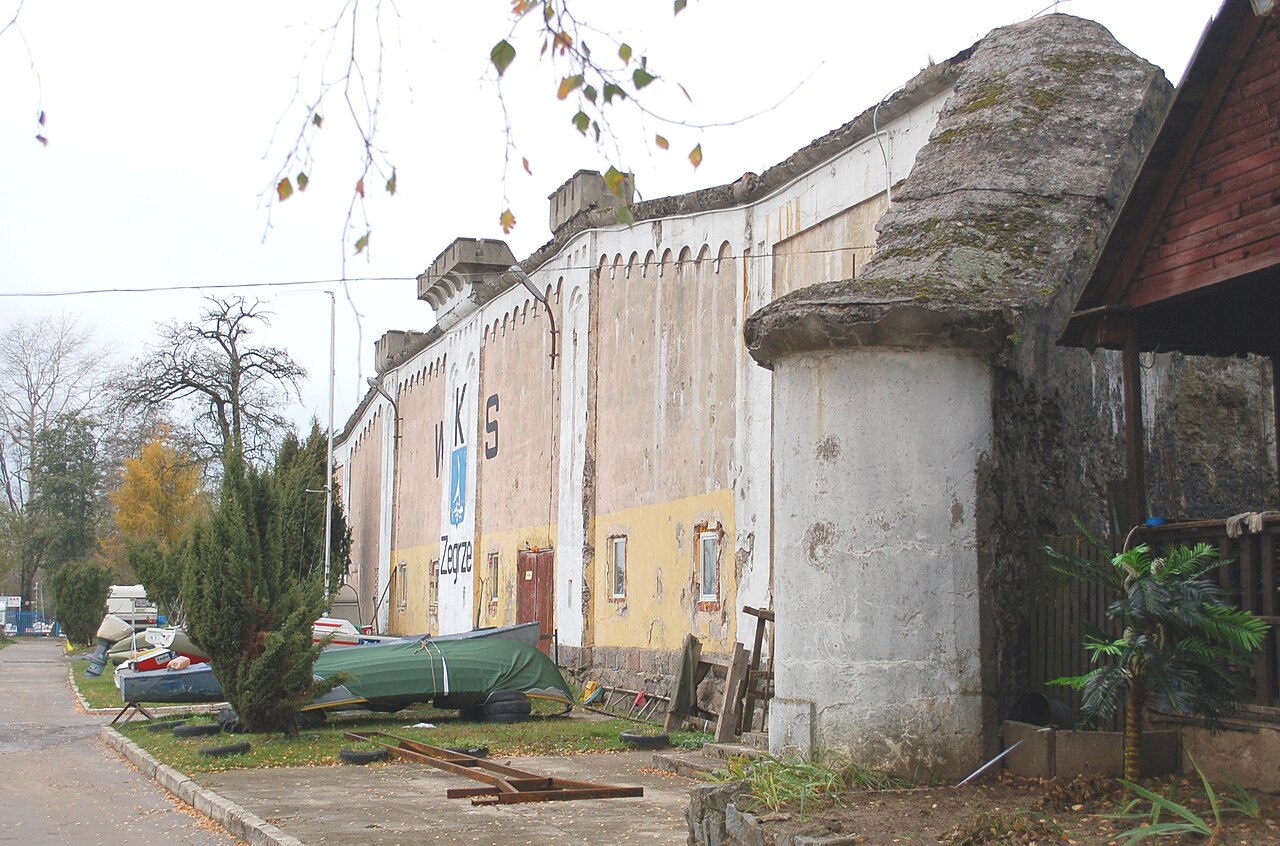
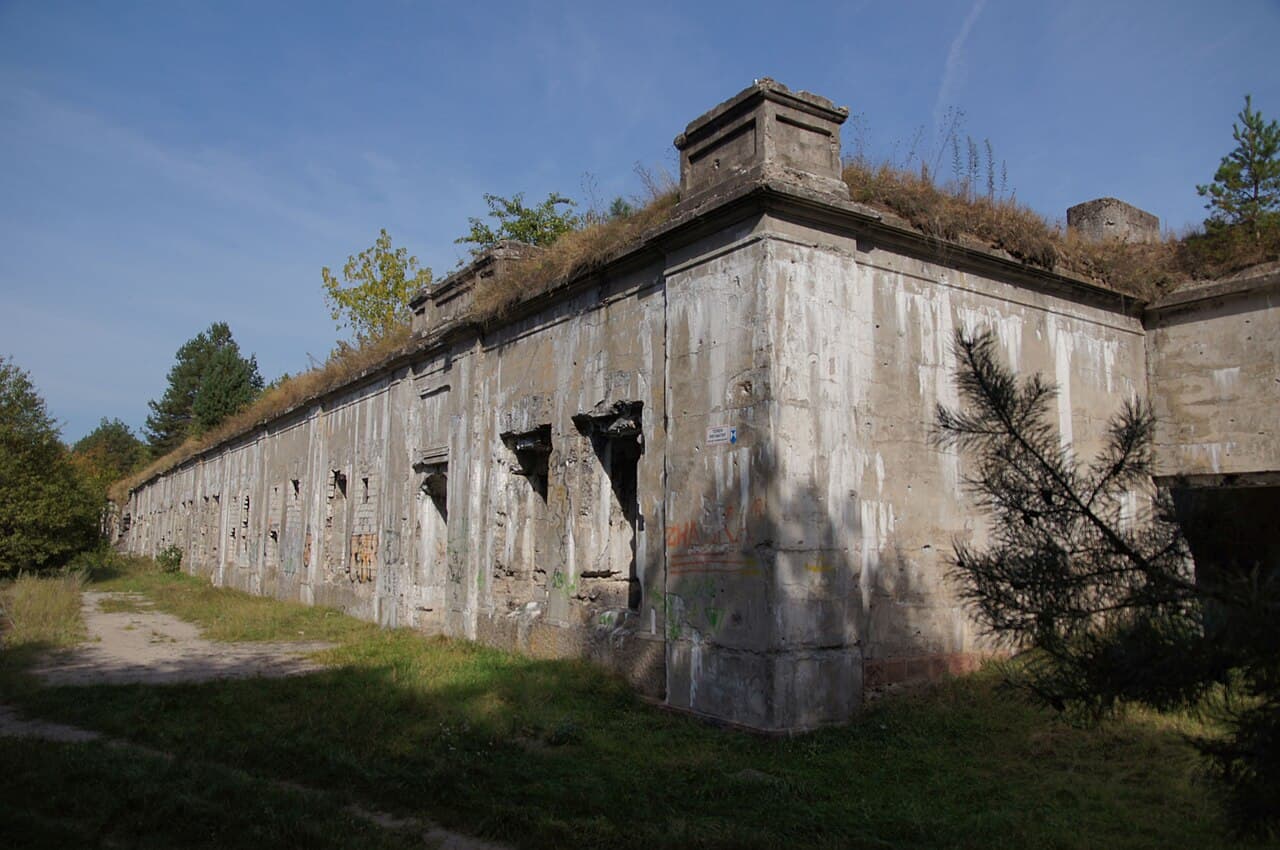
Fort Beniaminów is a significant bastioned fortress located approximately 20 kilometres east of Warsaw, Poland. Constructed in the early 20th century, it was designed by the Polish-born Russian General Konstanty Wieliczko as part of the outer defensive ring of the Warsaw Fortress. Its strategic position near the southern bank of the Bugonarew River was intended to protect the then-Russian-controlled city of Warsaw from potential eastern attacks, notably from the German Army advancing from East Prussia. Fort Beniaminów was planned to work in conjunction with earlier forts at Wawer and Kawęczyn, built in the 1890s, and two additional forts at Pustelniki and Maciołki, whose construction was never completed.
Construction and military purpose
The fort's construction began in 1904 and was nearing completion by 1909. However, following the Russo-Japanese War defeat, the Russian government implemented military reforms that led to the disbandment of the Warsaw Fortress system. Although Fort Beniaminów was not demolished like many other forts, its armaments and supplies were removed, and construction was halted in 1913. This left the fort largely incomplete and without its intended defensive capabilities.
Role during world wars and interwar period
Fort Beniaminów did not see combat during World War I, as it was captured peacefully by the Imperial German Army in 1915. The Germans repurposed the fort, using its barracks as a military prison, notably detaining soldiers from the Polish Legions following the Oath Crisis. During the Polish-Bolshevik War of 1920, the fort was utilized by the Polish Army during the Battle of Radzymin, part of the larger Battle of Warsaw. However, the fort itself was not engaged in direct combat as the Russian forces never reached its vicinity.
Between the wars, the fort's barracks, located about 3 kilometres away in Białobrzegi, housed the 2nd Radio-telegraphic Battalion. This period saw the fort maintained as a military installation but without significant upgrades or combat activity.
World war ii and aftermath
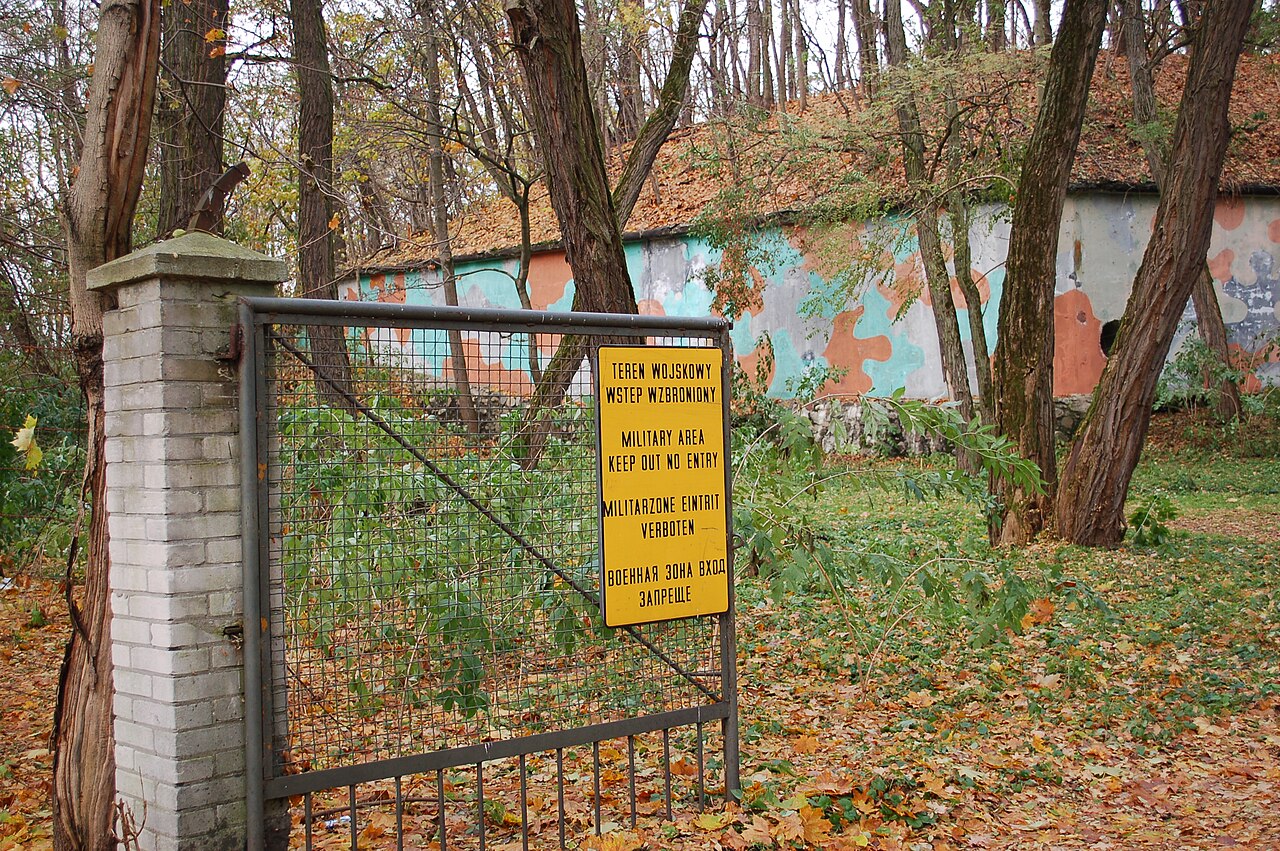
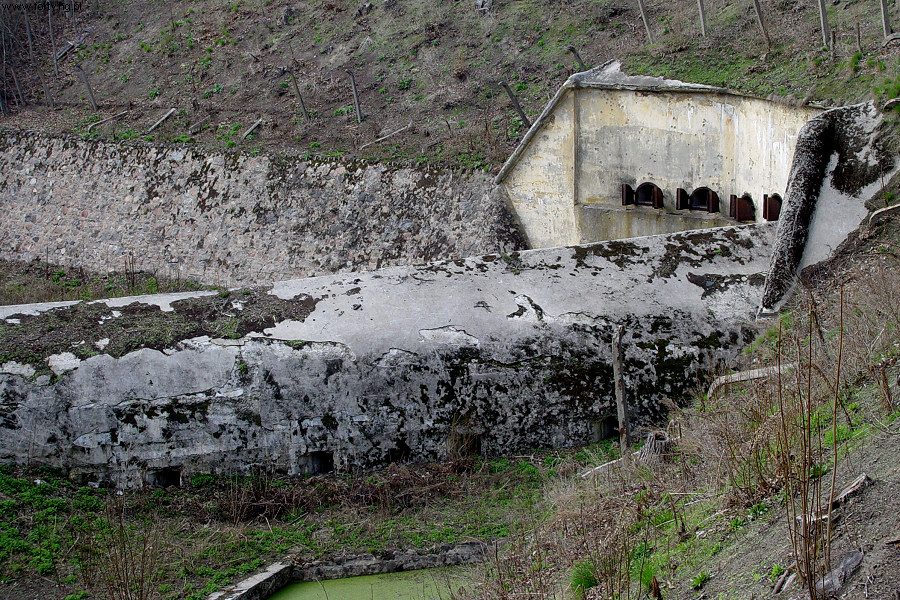
Following the 1939 invasion of Poland by German and Soviet forces, Fort Beniaminów was seized by the Wehrmacht. The Germans modernized parts of the fort and used the barracks as a prison camp, designated Stalag 368, primarily for Soviet prisoners of war. In 1944, the advancing Soviet forces captured the fort and partially destroyed key defensive elements, including gun casemates designed for flanking fire and caponiers, to prevent further military use.
Architectural features and layout
Fort Beniaminów exemplifies the bastioned fortress design typical of early 20th-century military architecture. Its layout includes thick defensive walls, bastions arranged to provide overlapping fields of fire, and extensive underground casemates. The fort was designed to integrate with natural terrain features, particularly the proximity to the Bugonarew River, which enhanced its defensive capabilities. The barracks and support buildings were situated separately, approximately 3 kilometres away in Białobrzegi, a common practice to reduce vulnerability of troop accommodations to artillery fire.
Current status and use
Today, Fort Beniaminów is privately owned. Portions of the former military barracks now serve as housing for the 9th Command Regiment, while other parts have been converted into residential apartment buildings. Despite its partial destruction during World War II and the passage of time, many of the fort's structural elements remain visible, offering insight into early 20th-century fortress construction and military strategy in the Warsaw region.
Historical significance and legacy
Fort Beniaminów represents an important chapter in the military history of Poland and the broader region. Its construction reflects the strategic concerns of the Russian Empire in the early 1900s, aiming to protect Warsaw from eastern threats. The fort's varied use through two world wars and the interwar period illustrates the shifting control and military priorities in this part of Europe. Today, it stands as a reminder of the complex geopolitical struggles that have shaped Poland's history and the evolution of fortress design from the late 19th to early 20th centuries.
Frequently asked questions (FAQ)
- How do I get to Fort Beniaminów?
- Fort Beniaminów is located in Beniaminów, Poland, and can be easily accessed by car or public transport. The nearest major city is Lublin, from which you can take a bus or drive approximately 30 minutes to reach the castle.
- What is the historical significance of Fort Beniaminów?
- Fort Beniaminów has a rich history that dates back to the 19th century, serving as a defensive structure during various conflicts. It played a crucial role in the regional military strategy and is now a symbol of Polish heritage and resilience.
- When was Fort Beniaminów built?
- Construction of Fort Beniaminów began in the late 1800s, specifically between 1880 and 1886, as part of the Prussian fortification efforts. Over the years, it has undergone various renovations and restorations to preserve its historical integrity.
- Can I visit Fort Beniaminów year-round?
- Yes, Fort Beniaminów is open for visitors year-round, but it's advisable to check for any seasonal events or maintenance closures. Guided tours are available, providing insights into the castle's history and architecture.
- Why is Fort Beniaminów considered an architectural gem?
- Fort Beniaminów is recognized for its unique blend of military architecture and natural surroundings, featuring imposing stone walls and strategic vantage points. Its design reflects the military engineering techniques of the 19th century, making it a fascinating site for architecture enthusiasts.
- Is it possible to access all areas of the castle?
- While many areas of Fort Beniaminów are accessible to visitors, certain sections may be restricted for safety reasons or ongoing restoration work. Guided tours typically cover the most significant areas of the fortress, ensuring a comprehensive experience.
- What are the opening hours for Fort Beniaminów?
- Fort Beniaminów is generally open from 10 AM to 6 PM during the summer months and may have reduced hours in the winter. It’s best to check the official website or contact the castle directly for the most current opening times before your visit.
- What are the ticket prices for visiting Fort Beniaminów?
- Ticket prices for Fort Beniaminów vary based on age and group size, with discounts available for students and seniors. Typically, adult tickets range from 10 to 15 PLN, and children under 12 can enter for free.
- What are some nearby attractions to visit when I’m at Fort Beniaminów?
- In addition to exploring Fort Beniaminów, visitors can enjoy nearby attractions such as the historical town of Lublin, which offers a rich cultural experience. Other sites include natural parks and local museums, providing a well-rounded visit to the region.
Photo gallery

Information
Loading map...
Visitor reviews
No reviews yet. Been here? Write the first review and help other travelers!
Write the first reviewVisited this castle? Share your experience
Your review helps other travelers and adds first-hand knowledge to our encyclopedia.