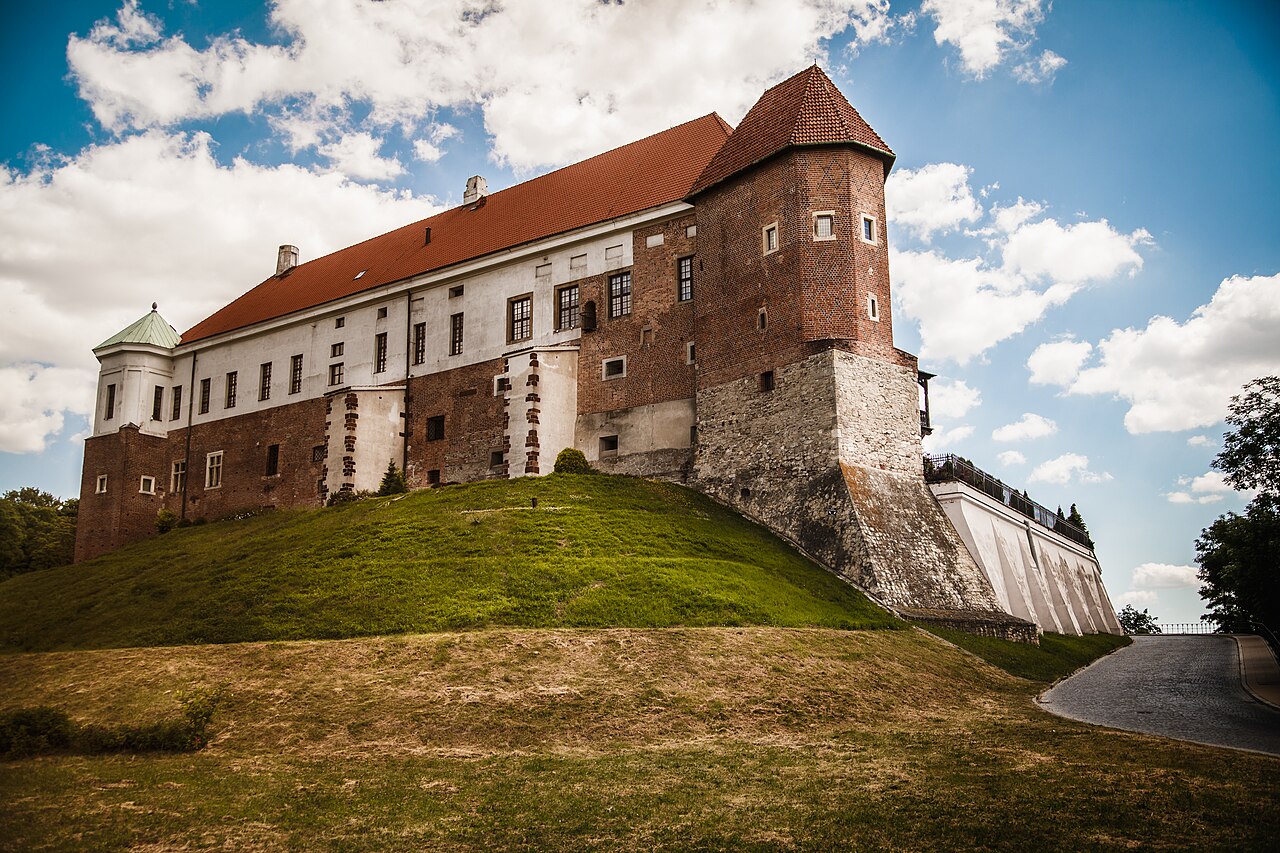
Zawichost Castle, located in the town of Zawichost, Poland, stands today as evocative ruins on a hill overlooking the Vistula River. The site has a rich history rooted in early medieval defensive structures, evolving into a modest Renaissance fortress before its destruction in the mid-17th century. This castle's story is intertwined with Poland's medieval and early modern history, marked by royal patronage, military conflict, and natural forces.
The origins and early history of Zawichost Castle
The earliest mentions of Zawichost date back to a papal bull from 1148, indicating the settlement's longstanding significance. Originally, the location hosted a defensive gord—a fortified Slavic settlement—strategically positioned amidst riverine wetlands to guard a crucial crossing over the Vistula River. This early fortification also served as the seat of a castellany, an administrative district governed by a castellan responsible for local defense and justice.
According to chronicles by Janko of Czarnków and Jan Długosz, the stone castle was founded by King Casimir III the Great in the 14th century. Casimir the Great is renowned for his extensive castle-building program across Poland, aiming to strengthen royal authority and protect key territories. While it is uncertain whether the stone castle was constructed directly atop the earlier gord's remains, its location on the left bank of the Vistula was of strategic importance.
Architectural features and Renaissance modifications
The original Gothic castle built under Casimir the Great was relatively small, as suggested by surviving descriptions and archaeological evidence. Unfortunately, extensive destruction over the centuries has left little of the original structure intact, making precise reconstruction challenging.
In the 16th century, the castle underwent significant expansion and modernization, reflecting Renaissance architectural influences. The complex consisted of two masonry buildings facing each other, connected by curtain walls topped with battlements. This layout provided a compact but defensible courtyard. The entrance was protected by a bailey surrounded by wooden and earthen ramparts, a typical feature for Polish castles adapting to evolving military technologies.
Defensive elements and layout
The castle's position on a hill near the river allowed natural defense, supplemented by man-made fortifications. The curtain walls with battlements offered protection for defenders, while the bailey served as a controlled access point. The combination of stone and earthworks was common in Polish Renaissance fortifications, balancing durability with resource availability.
Destruction during the Swedish Deluge and subsequent decline
Zawichost Castle met its demise during the Swedish Deluge (Potop) in 1657, a devastating period when Swedish forces invaded and ravaged large parts of Poland. The castle was destroyed by the Swedes, marking the end of its military and residential use.
In 1678, parts of the remaining brick walls were deliberately dismantled, further reducing the castle to ruins. The final blow came from nature: in 1813, a change in the Vistula River's course caused flooding that submerged the ruins. Historical accounts mention that even into the early 20th century, remnants of the castle walls could be seen during periods of low river water.
Historical significance and cultural heritage
Despite its ruinous state, Zawichost Castle holds cultural and historical importance as a symbol of medieval Polish fortifications and royal authority. Its association with King Casimir the Great links it to a pivotal era of Polish state-building and defense.
The castle's location guarding a vital river crossing underscores the strategic value of such sites in medieval and Renaissance warfare and governance. Today, the ruins serve as a tangible connection to Poland's layered past, attracting historians, archaeologists, and visitors interested in medieval architecture and history.
Visiting Zawichost Castle today
While the castle remains largely in ruins, the site offers a glimpse into Poland's defensive architecture and historical landscape. Visitors can explore the hilltop location, imagining the castle's former presence amid the natural surroundings of the Vistula River valley. Interpretive signage and local historical resources help contextualize the site's significance.
Zawichost's ruins exemplify the challenges of preserving medieval structures subjected to warfare and environmental changes, highlighting the importance of heritage conservation efforts in Poland.
Frequently asked questions (FAQ)
- What is the historical significance of Zawichost Castle?
- Zawichost Castle is a historically significant site as it was an important stronghold during the medieval period, playing a key role in the defense of the region. It is associated with various historical events, including conflicts between Polish and foreign forces, making it a fascinating place for history enthusiasts.
- When was Zawichost Castle built?
- Zawichost Castle was constructed in the 12th century, making it one of the oldest fortifications in the region. Its architectural style reflects the Romanesque influences of that era, providing insight into medieval military architecture.
- Can I visit Zawichost Castle year-round?
- Yes, Zawichost Castle is open to visitors throughout the year, although certain areas may be restricted during the winter months due to weather conditions. It's advisable to check for any seasonal events or maintenance schedules before planning your visit.
- What are the opening hours for Zawichost Castle?
- The opening hours for Zawichost Castle typically vary by season. Generally, it opens at 9 AM and closes at 5 PM during the summer months, while winter hours may be shorter. Always confirm current hours before your visit.
- Is Zawichost Castle accessible for visitors with mobility challenges?
- Zawichost Castle has limited accessibility due to its historic structure and terrain. However, efforts have been made to accommodate visitors, and staff can assist with navigating the site as needed.
- What are the ticket prices for visiting Zawichost Castle?
- Ticket prices for Zawichost Castle are quite affordable, typically ranging from 10 to 20 PLN for adults, with discounts available for students and seniors. Family tickets are also offered at a reduced rate, making it an economical outing for all.
- When is the best time to visit Zawichost Castle?
- The best time to visit Zawichost Castle is during the late spring and early autumn months, when the weather is pleasant and outdoor tours are more enjoyable. These seasons also offer beautiful natural scenery surrounding the castle.
- Are there any nearby attractions to visit while in Zawichost?
- Yes, while visiting Zawichost Castle, you can explore nearby attractions such as the picturesque Vistula Boulevards and the charming town of Zawichost itself, which boasts additional historical sites. Additionally, the region offers various hiking trails and natural parks for outdoor enthusiasts.
Information
Loading map...
Visitor reviews
No reviews yet. Been here? Write the first review and help other travelers!
Write the first reviewVisited this castle? Share your experience
Your review helps other travelers and adds first-hand knowledge to our encyclopedia.