Zavlekov Fortress
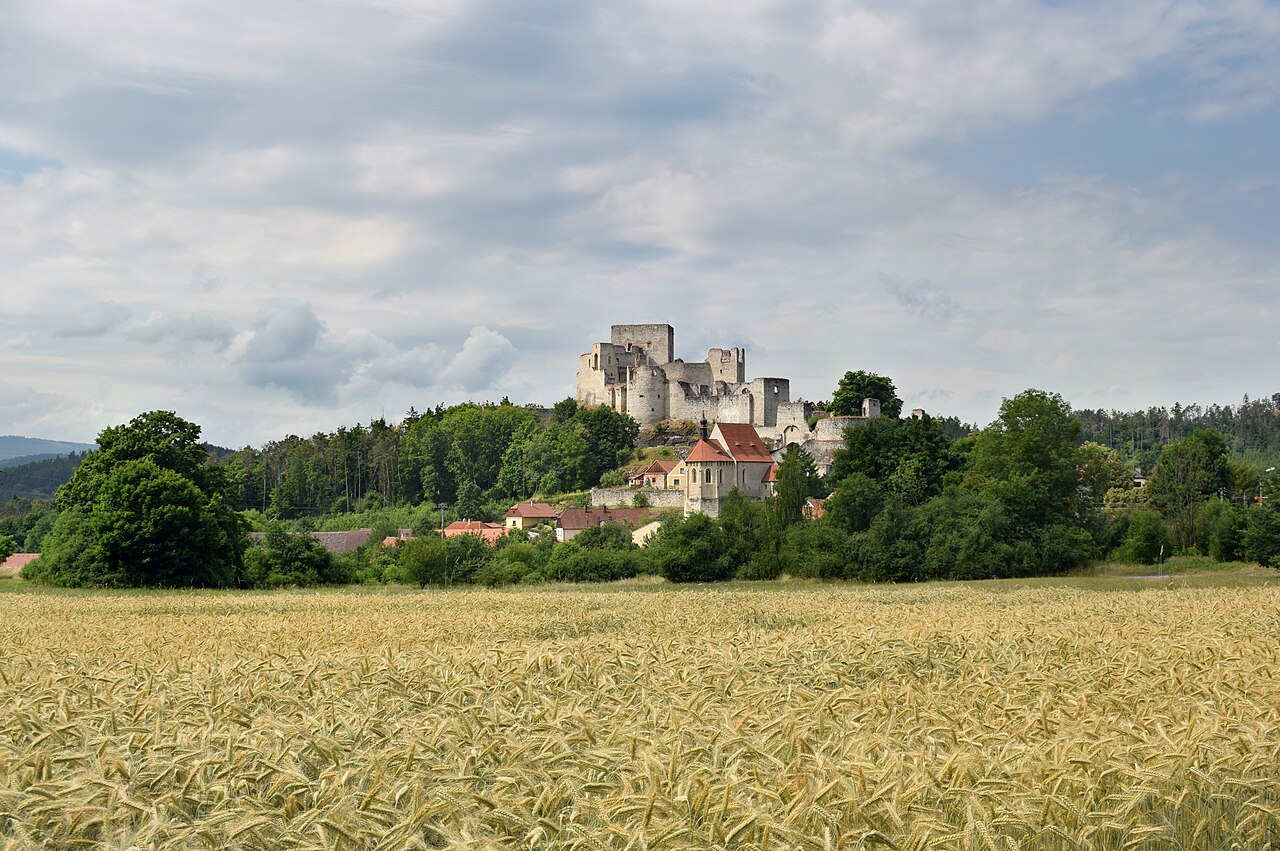
Zavlekov fortress is a medieval hill castle located in the municipality of Zavlekov in the present-day Czech Republic. Established in the 14th century, it was originally built by Dluhomil of Velhartice, a nobleman from the Dluhomil family, whose ownership is documented in 1334 and 1377. This stronghold served primarily as a manorial residence, reflecting the feudal social and political structures of the time.
Historical background and ownership
The fortress remained under the control of Dluhomil's descendants, passing to his son Bušek and subsequently managed by Bušek's widow Eliška, who sold her dowry share by 1404. Over the following decades, ownership transferred through several noble families, including Jan of Herštejn and Velhartice and the Švihovský family. The mid-15th century was marked by legal disputes over inheritance rights, culminating in a ruling by King George of Poděrady in 1465 that affirmed Vilém of Herštejn's rights to the estate.
By the early 16th century, the original fortress ceased to be a residence and was described as abandoned by 1544. Around this time, a new fortress was constructed within the village by Jan Dlouhoveský, but this later structure did not survive and was eventually replaced by an agricultural granary.
In the 19th century, the ruins of the medieval fortress underwent a romantic-style reconstruction led by Count Karl Taaffe. This restoration aimed to enhance the picturesque qualities of the site, blending historic medieval masonry with romantic architectural elements. Since 1964, Zavlekov fortress has been protected as a cultural monument, preserving its historical and architectural legacy.
Architectural features and layout
The fortress is situated on a rocky hill known as Hora, which rises to an elevation of 583 meters within the Blatná Upland. Its strategic location on a narrow, rocky spur provided natural defensive advantages. The entrance was controlled by a slender rock-formed neck, further protected by a surrounding moat that encircled the fortress except for the northern approach.
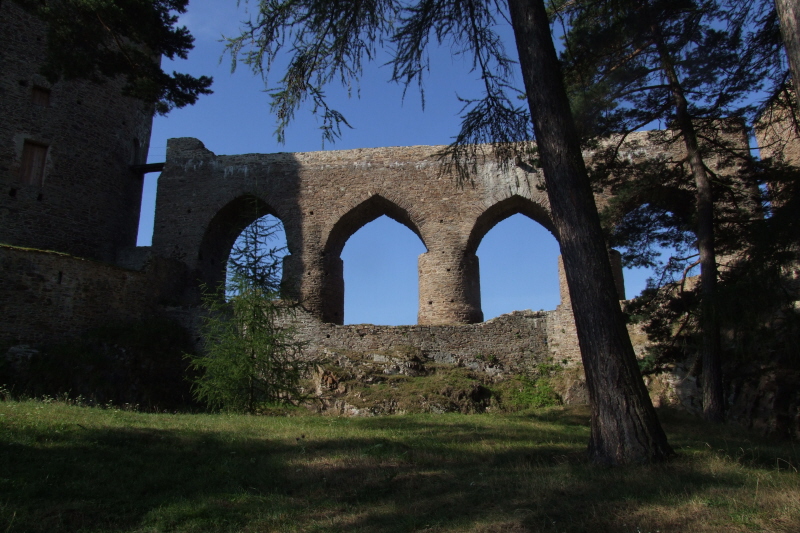
The core layout of Zavlekov fortress follows a trapezoidal ground plan. The construction technique primarily involved rubble stone masonry, using rough, uncut stones set in mortar. Surviving walls reach up to the height of the former first floor, while cellars beneath these walls remain preserved; these are simple underground chambers without vaulted ceilings.
One of the most significant architectural elements is the Gothic sandstone portal that originally framed the entrance at the first-floor level, which remains recognizable today. This portal offers valuable insight into the Gothic architectural style prevalent during the fortress's construction period.
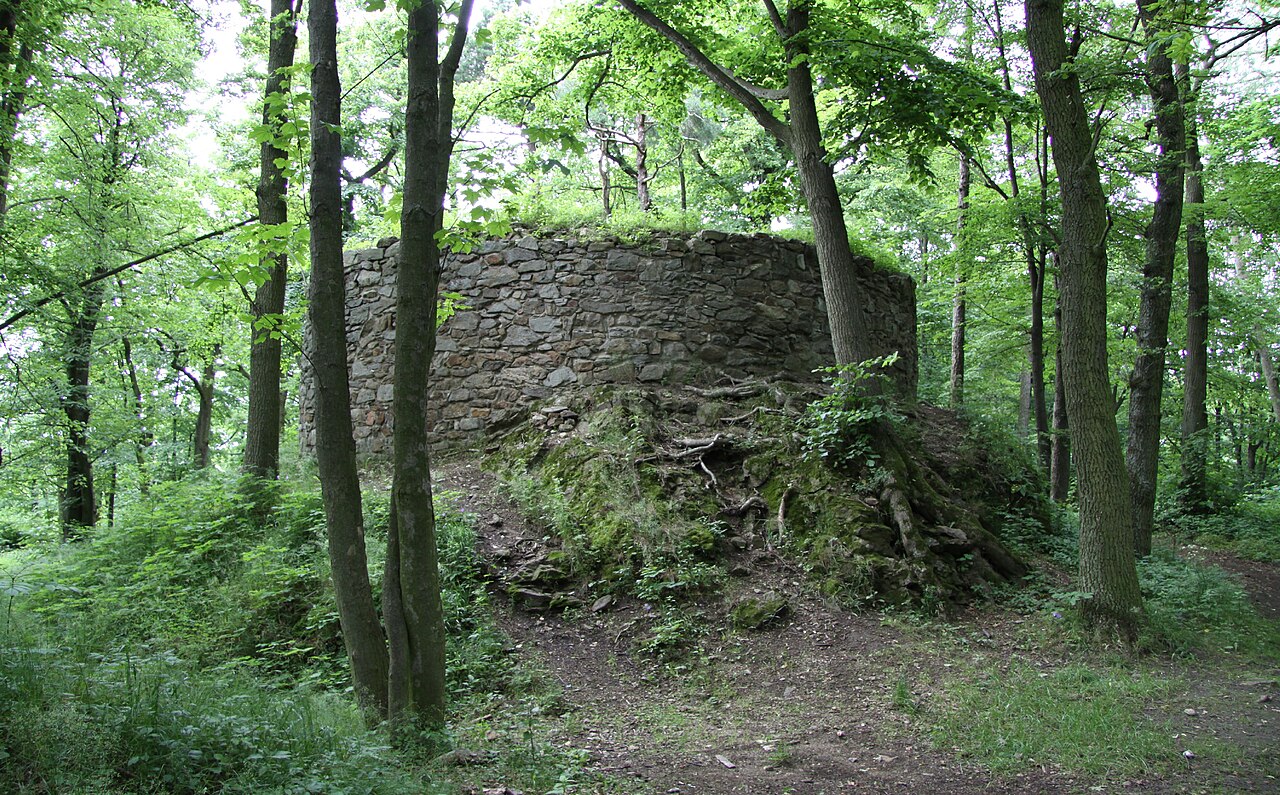
During the 19th-century restoration, a cylindrical bastion was added to the northwest corner of the fortress. This feature reflects the romantic interpretation of medieval fortifications typical of that era, integrating with the older stonework to create a visually striking blend of styles.
The fortress was surrounded by a moat, which served as a defensive barrier. Although no longer filled with water, the moat's outline can still be traced in the surrounding landscape, indicating the original extent of the fortification.
Preservation and access
Today, Zavlekov fortress stands as a partially preserved ruin, with visible masonry incorporating both medieval and 19th-century romantic elements. The site is accessible via a hiking trail that connects the nearby towns of Plánice and Sušice, making it a popular destination for visitors interested in medieval architecture and history.
The fortress's elevated position provides scenic views of the surrounding Blatná Upland countryside. Despite its ruined state, the site offers a tangible connection to the region's medieval past and the evolution of fortification architecture over several centuries.
Cultural and historical significance
Zavlekov fortress exemplifies the typical medieval hill castle of the Czech lands, illustrating the feudal system's manorial residences and defensive strategies. Its history of ownership reflects the complex noble lineage and territorial disputes common in the region during the late Middle Ages.
The 19th-century romantic restoration by Count Karl Taaffe highlights the period's interest in medieval ruins as symbols of national heritage and picturesque landscapes. The fortress's protection as a cultural monument since 1964 ensures its preservation for future generations and underscores its importance within Czech historical and architectural heritage.
Frequently asked questions (FAQ)
- How do I get to Zavlekov fortress?
- Zavlekov fortress is accessible by a hiking trail connecting the towns of Plánice and Sušice. The trail passes through scenic countryside and is suitable for most hikers.
- What is the historical significance of Zavlekov fortress?
- Zavlekov fortress is a 14th-century medieval hill castle that served as a manorial residence and reflects the feudal history of the Czech lands. It also illustrates noble family disputes and 19th-century romantic restoration trends.
- Can I explore the interior of Zavlekov fortress?
- The fortress is a partially preserved ruin with visible walls and cellars. Visitors can walk around the site and view the remains, but access inside the structures may be limited for safety reasons.
- When was Zavlekov fortress built?
- The fortress was originally established in the 14th century, with documented ownership as early as 1334.
- Is there an entrance fee to visit Zavlekov fortress?
- There is no entrance fee; the site is open to the public and free to visit year-round.
Information
Current owner
Municipality
Loading map...
Visitor reviews
No reviews yet. Been here? Write the first review and help other travelers!
Write the first reviewVisited this castle? Share your experience
Your review helps other travelers and adds first-hand knowledge to our encyclopedia.