Zarafona Castle
Zarafona Castle stands as a notable example of late medieval fortification architecture in the region of Sparta, Greece. Constructed in the 15th century, its origins are closely linked to the turbulent period of the Despotate of Morea under the rule of Theodoros II Paleologos (1407-1448). This fortress was part of the Byzantine defensive strategy aimed at resisting the advancing Ottoman Empire, reflecting the military and political challenges of the time.
The castle is strategically situated to oversee the surrounding landscape, embodying the typical features of Byzantine military architecture adapted to the needs of the era. Its almost trapezoid layout encloses an area of approximately 745 square meters, designed to maximize defensive capabilities while maintaining a compact footprint suitable for the terrain.
Architectural design and structural features
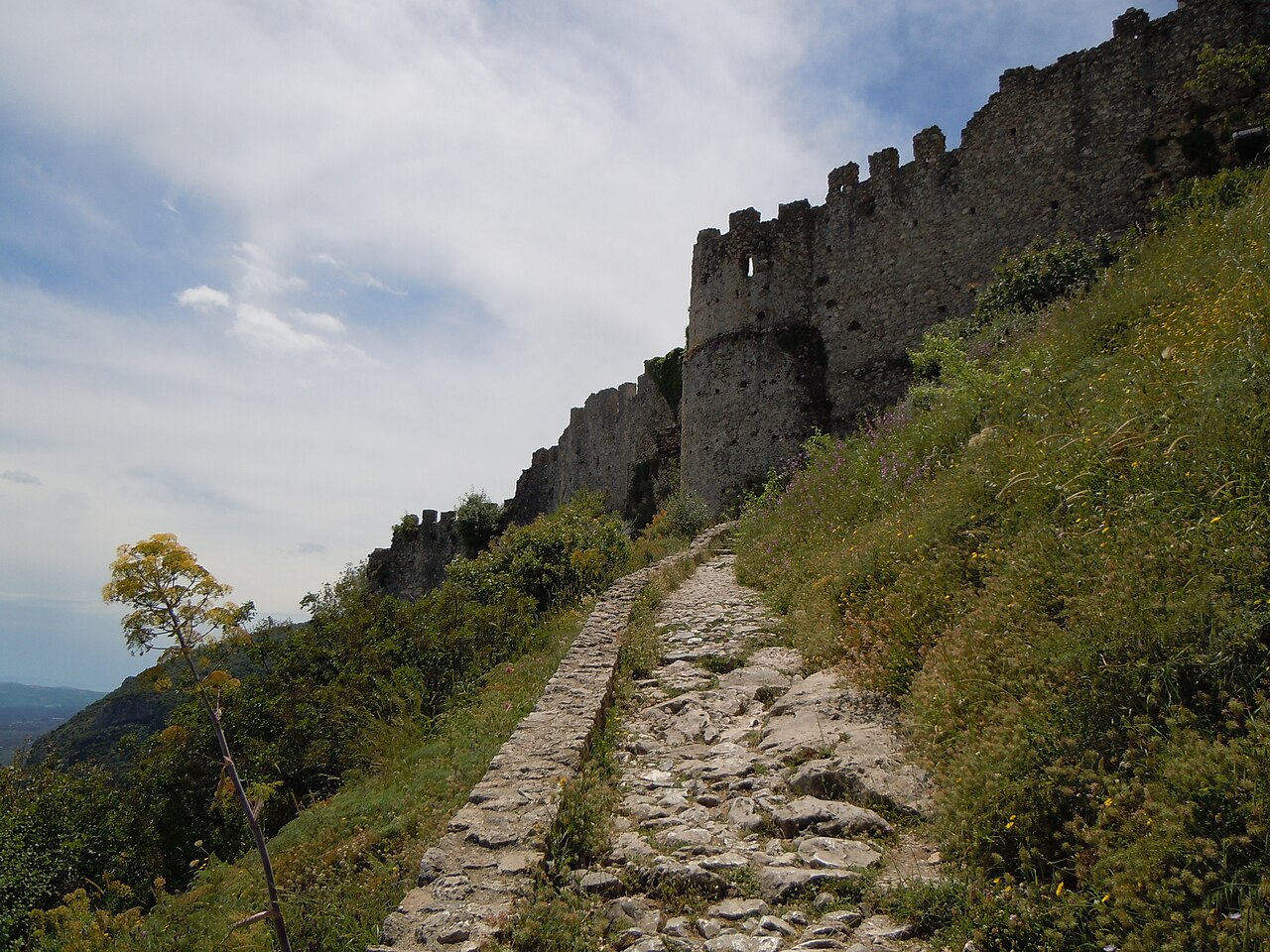
The fortification's walls are constructed in five distinct straight sections, each forming vertical walls that create a robust perimeter. These walls are punctuated by three towers: two positioned on the western side and one on the eastern side, providing overlapping fields of defense and surveillance. The central tower, notably taller than the rest, rises to three levels and serves as the castle's keep or main stronghold.
This central tower is architecturally significant, featuring a ground floor that houses a cistern, essential for water storage during sieges. The elevated design of the tower allowed defenders to monitor the surrounding area and coordinate the castle's defense effectively.
Defensive elements and layout
The castle's trapezoidal shape was a deliberate choice to adapt to the topography and to provide a strong defensive stance. The vertical walls are thick and constructed to withstand assaults, while the towers offer vantage points for archers and lookouts. The positioning of the towers at the west and east sides enabled crossfire coverage, enhancing the fortress's defensive depth.
Historical context and significance
During the first half of the 15th century, the Byzantine Despotate of Morea was one of the last strongholds of Byzantine power in mainland Greece. The construction of Zarafona Castle under Theodoros II Paleologos was part of a broader effort to fortify the region against the growing threat of the Ottoman Turks, who were steadily expanding their territory.
The castle's role was primarily military, serving as a defensive bastion to protect local populations and maintain control over strategic routes. Its preservation in relatively good condition offers valuable insights into the military architecture and defensive strategies employed during the late Byzantine period.
Current condition and preservation
Zarafona Castle remains well preserved, allowing visitors to appreciate its original architectural layout and structural elements. The survival of the central tower with its three levels and the cistern provides a direct link to the castle's functional design during times of conflict.
Its walls and towers, though weathered by centuries, still convey the strength and resilience of Byzantine fortifications. The site is accessible for study and tourism, contributing to the cultural heritage of Sparta and the broader region of the Peloponnese.
Architectural style and influence
The castle exemplifies the Byzantine military architectural style of the late medieval period, characterized by practical defensive features rather than ornamental design. Its straightforward geometric layout, robust walls, and strategically placed towers reflect the priorities of fortification during a time of frequent warfare and political instability.
The use of a cistern within the central tower highlights the importance of self-sufficiency in siege conditions, a common feature in Byzantine castles designed to withstand prolonged attacks.
Frequently asked questions (FAQ)
- What is the historical significance of Zarafona Castle?
- Zarafona Castle, located in Sparta, Greece, dates back to the Byzantine period and reflects the architectural style of medieval fortifications. It played a crucial role in protecting the region during various conflicts throughout history, particularly during the Ottoman era. Today, it stands as a testament to the rich history and heritage of Sparta.
- When was Zarafona Castle built?
- Zarafona Castle was constructed in the 13th century, during the time of the Byzantine Empire. Its strategic location served to defend the area against invaders and contributed to the military significance of Sparta. Over the centuries, the castle has undergone various renovations, preserving its historical essence.
- Can I visit Zarafona Castle?
- Yes, Zarafona Castle is open to visitors who wish to explore its historic grounds. The site offers a unique opportunity to experience the grandeur of medieval architecture while enjoying stunning views of the surrounding landscape. Guided tours are available to enhance your visit.
- What are the opening hours of Zarafona Castle?
- Zarafona Castle is typically open to visitors from 9 AM to 5 PM, but it is advisable to check for seasonal hours or any special events. During peak tourist seasons, the castle may have extended hours to accommodate more visitors. Always confirm the hours before planning your visit.
- Is it possible to access Zarafona Castle with mobility issues?
- While Zarafona Castle has some accessible areas, the terrain can be uneven and steep in parts, making it challenging for visitors with mobility issues. It is recommended to contact the castle administration in advance to inquire about specific accessibility options and any assistance that may be available during your visit.
- What is the best time to visit Zarafona Castle?
- The best time to visit Zarafona Castle is during the spring (April to June) and fall (September to October) when the weather is mild and pleasant. These seasons often provide a more enjoyable experience with fewer crowds. Summer can be hot and busy, so plan accordingly if you choose to visit during that time.
- Are there any nearby attractions to visit while at Zarafona Castle?
- Yes, while visiting Zarafona Castle, you can explore other nearby attractions such as the ancient ruins of Sparta and the picturesque town of Mystras. Additionally, the surrounding natural beauty offers opportunities for hiking and outdoor activities, making it a perfect day trip for history and nature enthusiasts alike.
- What are the ticket prices for Zarafona Castle?
- Ticket prices for Zarafona Castle are generally affordable, with discounts available for students and seniors. Children under a certain age may enter for free. Check the official website or local tourist information for the most current pricing and any available packages that include other attractions.
Information
Loading map...
Visitor reviews
No reviews yet. Been here? Write the first review and help other travelers!
Write the first reviewVisited this castle? Share your experience
Your review helps other travelers and adds first-hand knowledge to our encyclopedia.