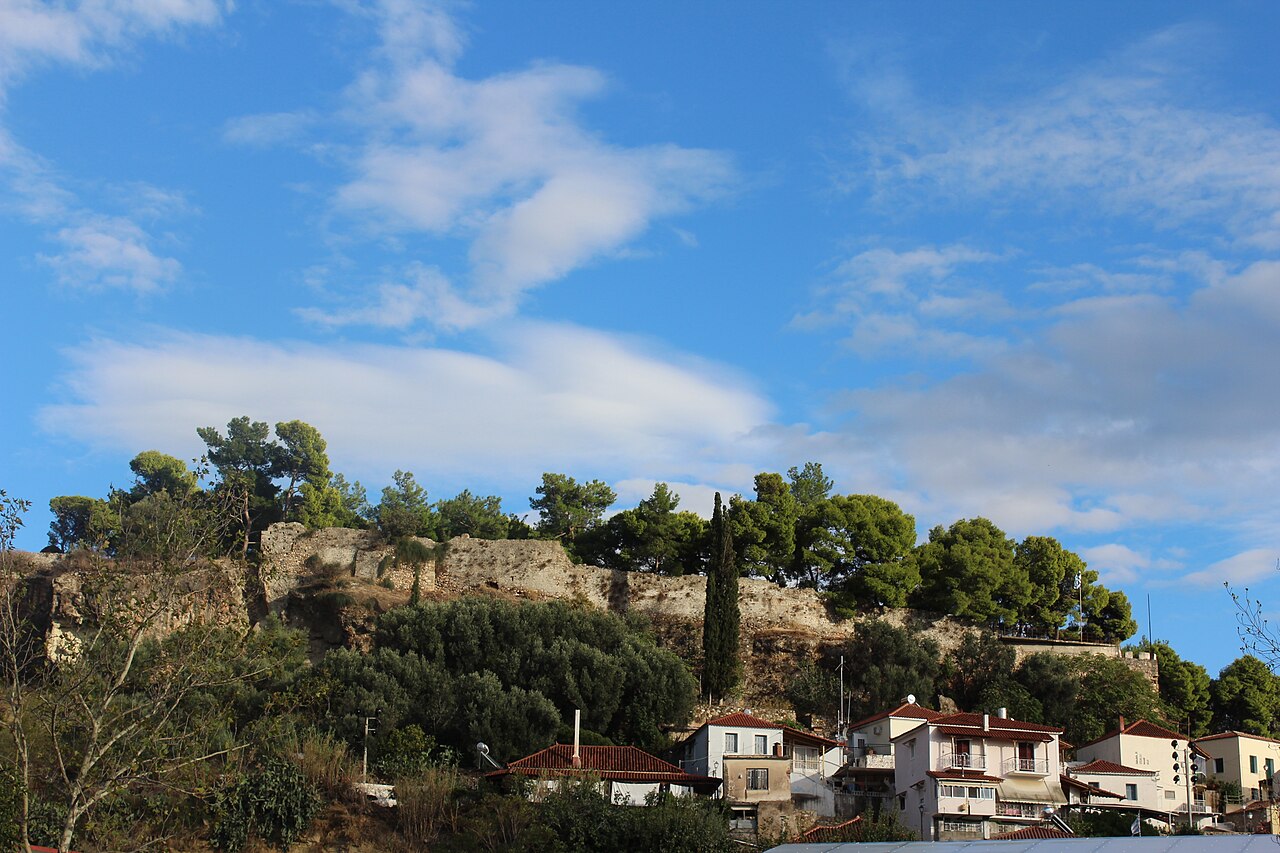
Mystras, also spelled Mistras and historically known as Myzethras or Myzithras, is a remarkable example of a fortified Byzantine town located in the Taygetus mountain range in the region of Laconia, Peloponnese, Greece. Positioned on a steep hill overlooking the site of ancient Sparta, Mystras became a significant political and cultural center during the Late Byzantine period, particularly in the 14th and 15th centuries. It served as the capital of the Despotate of the Morea, a semi-autonomous Byzantine province, and flourished during the Palaeologan Renaissance, a period marked by a revival of arts and letters.
Historical background and political significance
The founding of Mystras is linked to the aftermath of the Fourth Crusade and the establishment of Frankish rule in the Peloponnese in the early 13th century. The fortress, built by the Frankish Crusaders, was strategically located to control the surrounding territory and to serve as a military stronghold. By the mid-14th century, Mystras emerged as the capital of the Byzantine Despotate of the Morea, governed by members of the Palaiologos dynasty. One of the most notable rulers was Constantine XI Palaiologos, who served as Despot of Mystras before becoming the last Byzantine emperor.
During this era, Mystras played a critical role in the defense of the Byzantine territories in the Peloponnese against the advancing Ottoman Turks. The city also became a hub of intellectual and cultural activity, attracting scholars, artists, and philosophers, including the renowned Gemistos Plethon, who contributed to the revival of classical learning and philosophy.
Architectural features and urban layout
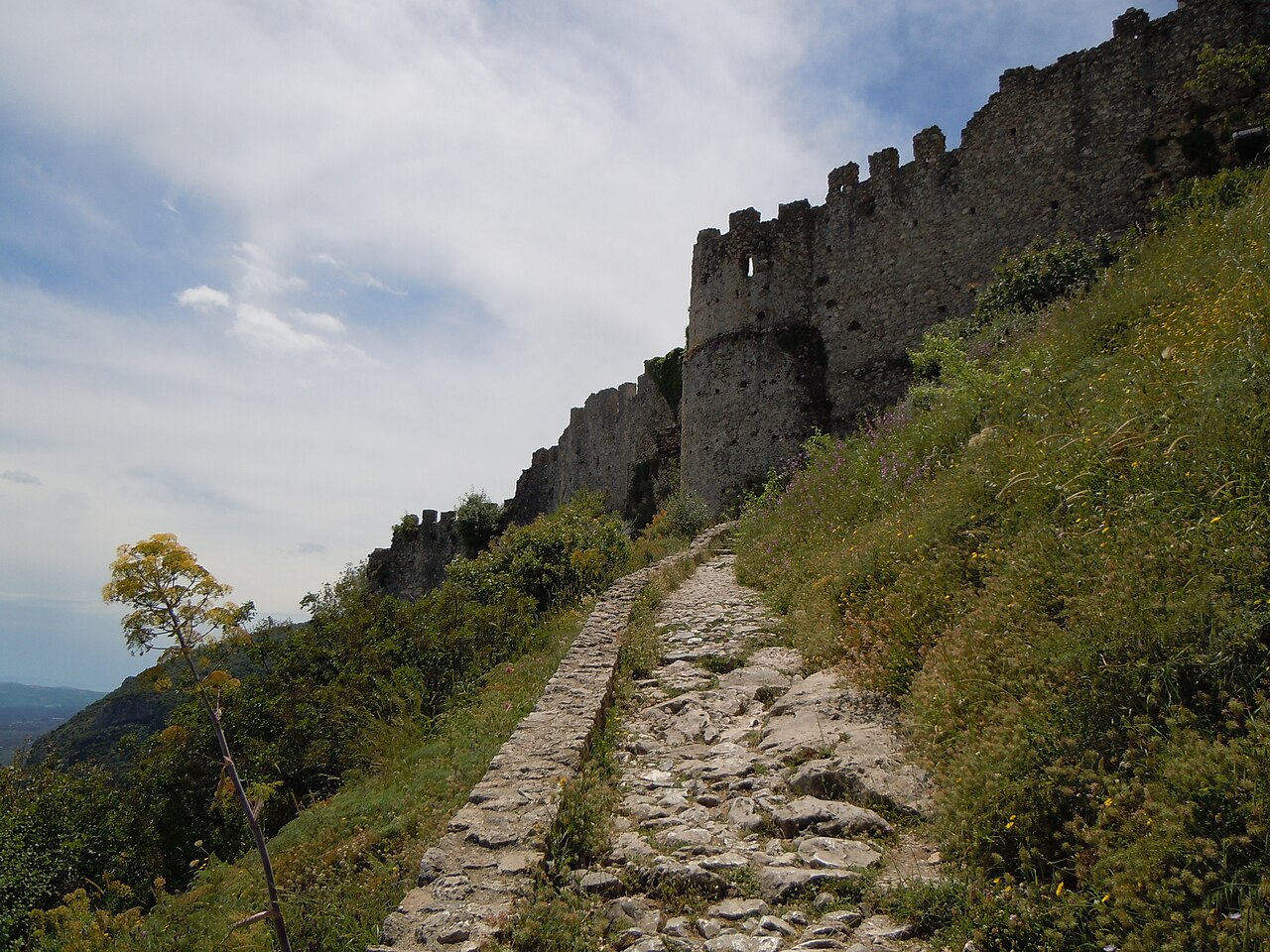
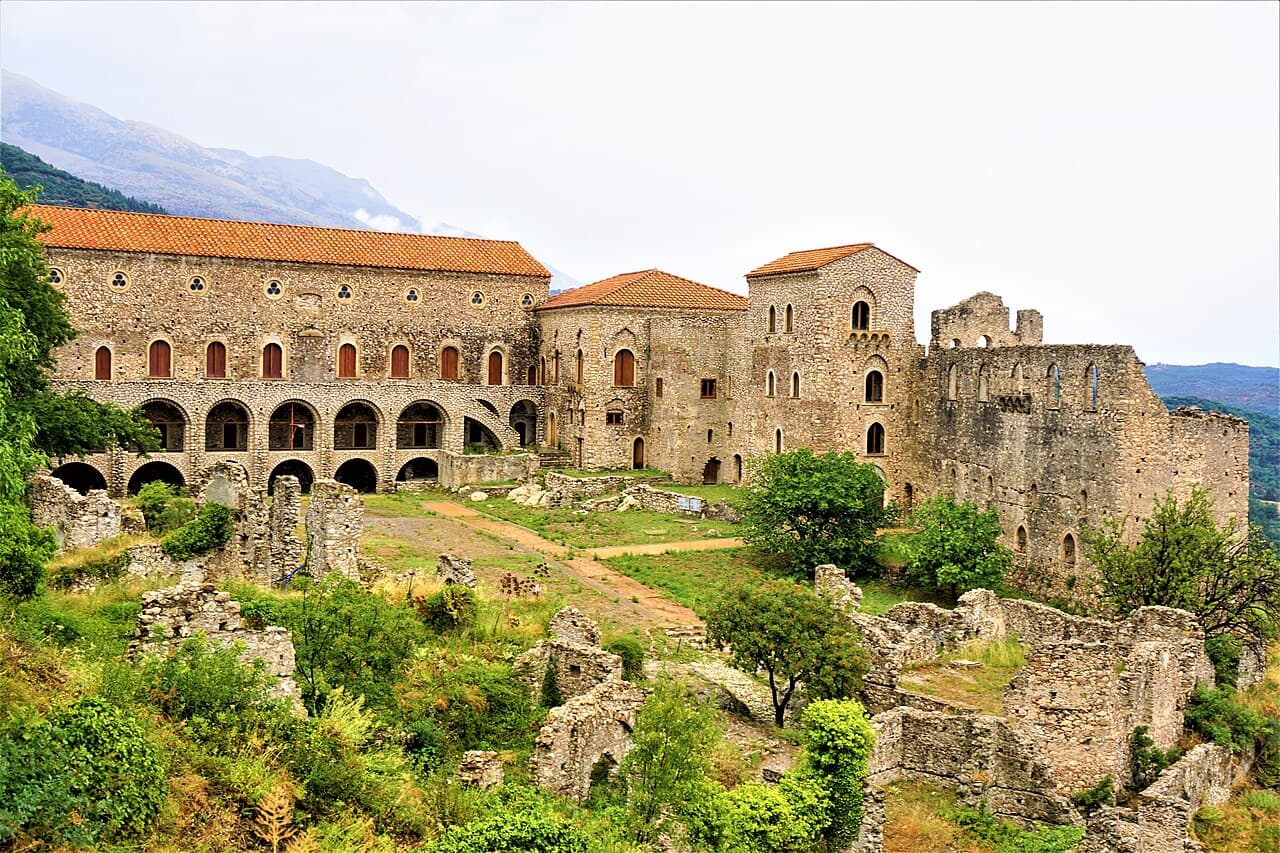
Mystras is an exceptional example of a medieval fortified city that integrates both military and residential architecture. The site is dominated by the remains of a Frankish castle at its highest point, which served as the primary defensive structure. Below the castle, the city extends down the hillside, comprising a complex network of fortification walls, residential quarters, churches, monasteries, and public buildings.
The urban plan reflects the Byzantine approach to city design, with narrow winding streets adapted to the mountainous terrain. Several important religious structures survive, including the Peribleptos Monastery and the Church of Agia Sophia, which display exquisite examples of Byzantine frescoes and architectural detailing characteristic of the Late Byzantine style. These churches are noted for their well-preserved wall paintings that provide valuable insight into the artistic traditions of the period.
Defensive elements
The fortifications of Mystras include multiple layers of walls that follow the contours of the hill, designed to protect the city from siege. The main castle features towers, battlements, and a fortified gatehouse. The strategic location atop a steep ridge allowed defenders to monitor and control access routes, making it a formidable stronghold.
Cultural and artistic significance
Mystras is renowned for its role in the Palaeologan Renaissance, a cultural revival during the last centuries of the Byzantine Empire. The city became a center for the production of Byzantine art, especially fresco painting, manuscript illumination, and architecture. The presence of Gemistos Plethon, a philosopher who sought to revive Platonic philosophy, contributed to Mystras' reputation as an intellectual hub.
The artistic heritage of Mystras is preserved in its churches and monasteries, where the frescoes exhibit a blend of traditional Byzantine iconography and innovative stylistic elements. These works are considered some of the finest examples of Late Byzantine art and have been instrumental in understanding the transition to post-Byzantine artistic traditions.
Later history and preservation
Following the fall of Constantinople in 1453, Mystras continued to be inhabited under Ottoman rule. Foreign travelers in the early modern period often mistook the ruins of Mystras for those of ancient Sparta due to its proximity and impressive remains. The town remained occupied until the 1830s, when it was abandoned in favor of the newly established city of Sparta, located approximately eight kilometers to the east.
Today, Mystras is recognized as one of the most important archaeological sites in Greece. It was inscribed on the UNESCO World Heritage List in 1989 for its outstanding testimony to Byzantine urbanism and artistic achievement. The site is managed to preserve its extensive ruins, which include the castle, churches, monasteries, and residential buildings, offering visitors a unique glimpse into the Byzantine era.
Archaeological research and tourism
Extensive archaeological excavations have been conducted at Mystras since the early 20th century, revealing significant information about Byzantine life, architecture, and culture. The preservation of frescoes and structural remains has made Mystras a major destination for scholars and tourists interested in Byzantine history and art.
Visitors to Mystras can explore the castle ruins, walk through the medieval streets, and visit the many churches renowned for their frescoes. The site offers panoramic views of the surrounding Peloponnesian landscape, enhancing its appeal as a cultural and historical landmark.
Frequently asked questions (FAQ)
- How do I get to Mystras from Sparta?
- You can reach Mystras from Sparta by taking a short drive of about 10 minutes, or you can opt for a local bus that operates regularly between the two. The castle is well-signposted, making it easy to find. If you prefer to walk, there are scenic paths leading to the site.
- What is the historical significance of Mystras?
- Mystras was an important Byzantine city and served as the capital of the Morea during the Middle Ages. It is renowned for its well-preserved Byzantine churches, palaces, and monasteries, reflecting the artistic and architectural achievements of that era. The site is a UNESCO World Heritage Site, emphasizing its cultural importance.
- When was Mystras founded?
- Mystras was founded in the mid-13th century, around 1249, by the Frankish ruler William II de Villehardouin. It became a significant center of Byzantine culture and politics until its decline in the 19th century. The ruins today are a testament to its rich history.
- Can I take guided tours of Mystras?
- Yes, guided tours are available at Mystras, providing visitors with in-depth knowledge of the site's history and architecture. These tours can enhance your experience by offering insights that you might miss while exploring on your own. It’s recommended to check in advance for availability and timing.
- Why is the architecture of Mystras unique?
- The architecture of Mystras is a blend of Byzantine and Gothic styles, showcasing the influence of various cultures over the centuries. The site features impressive churches with exquisite frescoes, fortified walls, and palatial structures that offer a glimpse into medieval urban planning. This diversity makes it an architectural gem in Greece.
- Is it possible to visit Mystras year-round?
- Yes, Mystras is open to visitors year-round, although hours may vary by season. The best time to visit is during the spring or fall when the weather is mild and pleasant for exploring the site. Be sure to check the official website for any seasonal changes in opening hours.
- What are the ticket prices for Mystras?
- As of now, the entrance fee for Mystras is quite affordable, allowing access to the entire archaeological site. Discounts are often available for students, seniors, and groups. It’s best to check the official website for the most current pricing and any special offers.
- What are some nearby attractions to visit after Mystras?
- After visiting Mystras, consider exploring the ancient city of Sparta, which is just a short drive away. You might also enjoy the beautiful landscapes of Taygetus Mountain or visit the nearby archaeological site of Ancient Sparta for a deeper dive into the region's history. These attractions make for a well-rounded day of exploration.
Photo gallery

Information
Loading map...
Visitor reviews
No reviews yet. Been here? Write the first review and help other travelers!
Write the first reviewVisited this castle? Share your experience
Your review helps other travelers and adds first-hand knowledge to our encyclopedia.