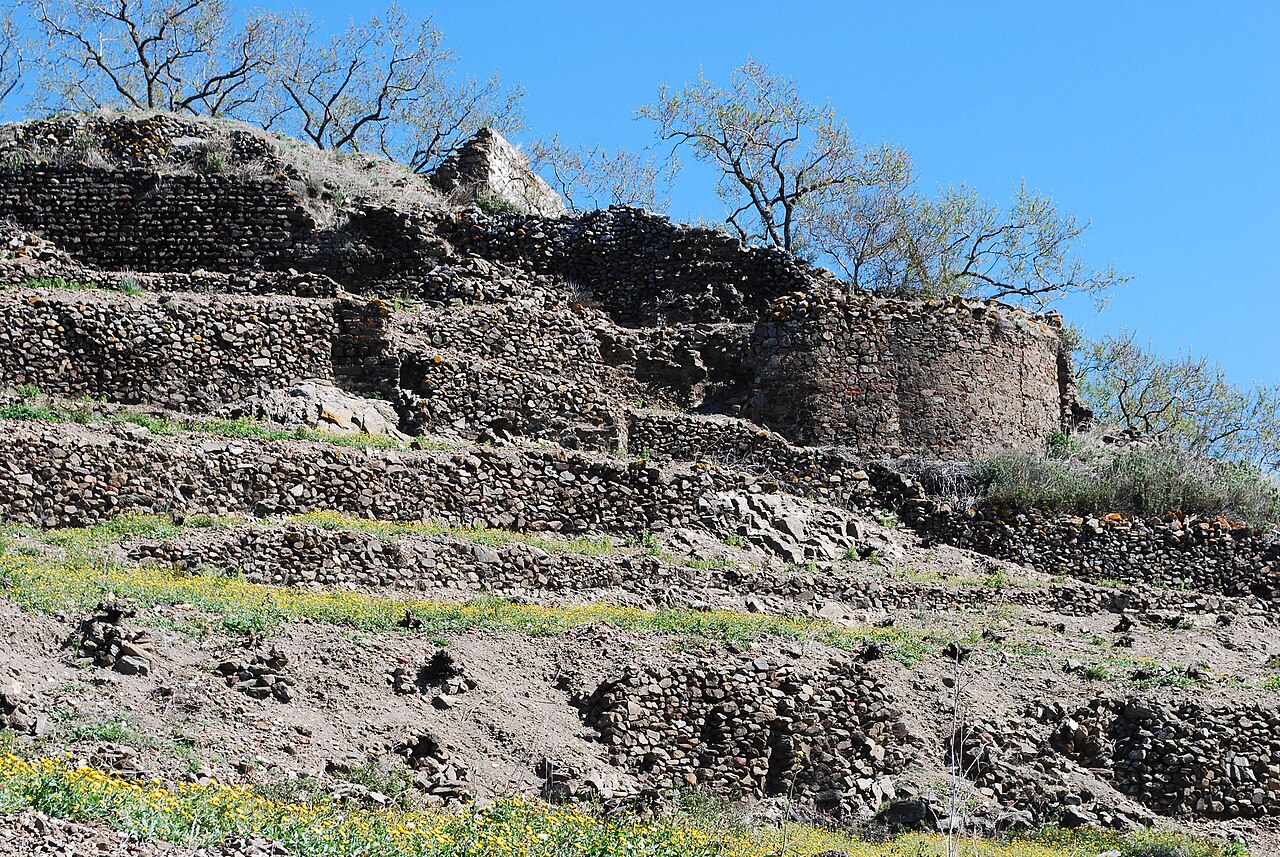
Zalia Castle
Zalia Castle, locally known as Castillo de Zalia, is a significant early medieval hill castle situated on a commanding hill opposite the village of Alcaucín in the province of Málaga, Spain. Its strategic position overlooking the surrounding valleys and the ancient Nasrid trade route from Granada to Málaga through the Zafarraya pass made it a vital military and economic stronghold during the Islamic period.
The origins of Zalia Castle are steeped in antiquity, with some theories suggesting the site may have initially been fortified by the Phoenicians. However, the castle as it stands today was primarily constructed and expanded by the Moors during the medieval period. The fortress was designed with a double-walled enclosure that follows an irregular plan, adapted carefully to the natural contours of the hill, a common feature in Islamic military architecture that prioritized both defense and terrain integration.
Historical significance and strategic role
The castle played a pivotal role in controlling the vital Nasrid royal road, a key artery connecting the cities of Granada and Málaga. This route passed through the nearby Zafarraya pass, making the fortress an essential watchtower and military outpost. The castle’s position allowed it to oversee and regulate movement along this trade and communication corridor, which was crucial for the Nasrid kingdom's economic and military interests.
During its peak, the castle supported a thriving local economy based on livestock breeding and cereal cultivation, which sustained the garrison and nearby settlements. Archaeological evidence, including ceramic finds dating from the 10th to the 15th centuries, confirms continuous occupation and use throughout the late Islamic period.
In September 1485, the castle fell to the Catholic Monarchs during the final stages of the Reconquista. This conquest was notably aided by the betrayal of a local Moor who had converted to Christianity, illustrating the complex social and religious dynamics of the period. Following its capture, Zalia Castle was repurposed as a prison-bishopric to detain rebellious Moriscos, Muslims who remained in Spain after the Reconquest and faced persecution and forced conversions.
Architectural features and layout
The fortress covers an area approximately 120 meters east to west and 150 meters north to south, with a layout that adapts irregularly to the hill’s gentle slopes. The castle is enclosed by a double circuit of defensive walls that follow the terrain’s natural contours rather than imposing strict geometric shapes.
Inner enclosure
The inner enclosure is the heart of the fortress, featuring a large square water cistern (aljibe) located in the central-northern section. This cistern was vital for collecting and storing rainwater, ensuring a reliable water supply during sieges. The walls of the inner enclosure combine masonry towers with sections constructed from rammed earth (tapial), coated with lime mortar to create a smooth finish. Some towers retain fragments of parapets and battlements with built-in drainage channels, showcasing the fortress’s practical design elements.
Outer enclosure
The outer enclosure consists of masonry walls punctuated by both square and semicircular towers spaced irregularly. These walls were originally covered with lime plaster, much of which has eroded over time. The main gate faces north and is flanked by two imposing masonry towers with tapial reinforcements on top, highlighting the castle’s defensive strength and architectural detail.
Along one edge of the outer enclosure, a watchtower stands as a testament to the castle’s role in surveillance and territorial control. The combination of construction materials—stone blocks, rubble, brick, and tapial—reflects a versatile building approach adapted to available resources and evolving military needs.
Current condition and visitor experience
Today, Zalia Castle remains in a very ruinous state, with only several gate towers and fragments of other towers from the inner enclosure still standing. Portions of the outer walls and a tower remain, though many sections have collapsed or been displaced. Despite its ruined condition, the site offers spectacular panoramic views over the surrounding valleys and countryside, making it a rewarding destination for visitors interested in history and nature.
The castle is freely accessible and can be reached via the road from La Viñuela Dam along the route Ventas de Zafarraya-Granada. Visitors can still discern the irregular outline of the fortress and some of its surviving towers amidst the gorse and scrubland that now cover the site.
Cultural legacy and local traditions
Local oral traditions associate the name Zalia with a Moorish queen who is said to have resided in the castle, adding a layer of legend to its historical narrative. Nearby, stories speak of a former lagoon close to the castle, though no archaeological evidence has confirmed this feature. These traditions enrich the cultural heritage of the site and reflect its longstanding place in the collective memory of the region.
The castle’s history as a military fortress, prison, and symbol of changing political powers encapsulates the complex history of southern Spain during the medieval and early modern periods. Its ruins stand as a monument to the region’s layered past, from Phoenician beginnings through Islamic rule and Christian reconquest.
Archaeological insights and research
Archaeological studies at Zalia Castle have revealed the use of diverse construction techniques, including the combination of masonry and tapial, which was typical in Andalusian fortifications. The presence of a large aljibe highlights the importance of water management in sustaining the garrison. Ceramic fragments and other finds provide a timeline of occupation from the 10th century through the 15th century, marking the castle’s continuous strategic relevance.
Research underscores the castle’s adaptation to the natural landscape, with its irregular walls and towers designed to maximize defensive capabilities while utilizing the hill’s topography. The castle’s role in controlling a major trade and military route further emphasizes its importance in regional geopolitics during the Nasrid period.
Frequently asked questions (FAQ)
- How do I get to Zalia Castle?
- Zalia Castle is located along Naer A-402 in Spain, easily accessible by car and public transport. If you're driving, ample parking is available nearby. Public transport options include local buses that stop within walking distance of the castle.
- What is the historical significance of Zalia Castle?
- Zalia Castle dates back to the 12th century and played a crucial role in the region's defense against invasions. It is an excellent example of medieval architecture and reflects the historical conflicts of its time. Today, it serves as a reminder of the rich history of the area.
- When was Zalia Castle built?
- Construction of Zalia Castle began in the early 12th century, during a period of significant territorial conflict in Spain. Over the centuries, it has undergone various renovations, preserving its historical essence while adapting to modern times. Its enduring structure is a testament to the craftsmanship of the era.
- Can I take guided tours of Zalia Castle?
- Yes, guided tours are available and provide an in-depth look at the castle's history and architecture. Tours are typically offered in multiple languages, making it accessible for international visitors. It's recommended to book in advance, especially during peak season.
- Why is Zalia Castle popular among tourists?
- Zalia Castle attracts tourists due to its stunning architecture and panoramic views of the surrounding landscape. The castle's rich history, combined with its picturesque setting, makes it a favorite among history buffs and photographers alike. Additionally, its proximity to other local attractions enhances its appeal.
- Is it possible to host events at Zalia Castle?
- Yes, Zalia Castle is available for various events, including weddings and corporate gatherings. The unique setting and historical ambiance provide a memorable backdrop for any occasion. Interested parties should contact the castle administration for specific details and availability.
- What are the opening hours for Zalia Castle?
- Zalia Castle is open to visitors from 9 AM to 6 PM daily, with extended hours during the summer months. It's advisable to check the official website or contact the castle for any changes in hours or special closures. Planning your visit according to these hours will ensure you have ample time to explore.
- What are the ticket prices for visiting Zalia Castle?
- Tickets for Zalia Castle are reasonably priced, with discounts available for students, seniors, and children. General admission allows visitors to explore the castle grounds and access the guided tours. Group rates are also available, making it an affordable destination for families and tour groups.
- When is the best time to visit Zalia Castle?
- The best time to visit Zalia Castle is during the spring and fall months when the weather is mild and the crowds are smaller. This allows for a more enjoyable experience while exploring the castle and its surroundings. Summer can be busy, but it's also when the castle hosts various events and activities.
- Are there any nearby attractions to visit after Zalia Castle?
- Yes, there are several attractions near Zalia Castle, including local museums and scenic hiking trails. Visitors can also explore charming nearby villages that offer a taste of local culture and cuisine. Planning a full day of exploration can make your trip even more memorable.
Information
Loading map...
Visitor reviews
No reviews yet. Been here? Write the first review and help other travelers!
Write the first reviewVisited this castle? Share your experience
Your review helps other travelers and adds first-hand knowledge to our encyclopedia.