Vélez-Málaga Castle

Vélez-málaga castle: a historic hilltop fortress in spain
Vélez-Málaga, Spain
Early Medieval (5th–10th c.)
Partially Restored

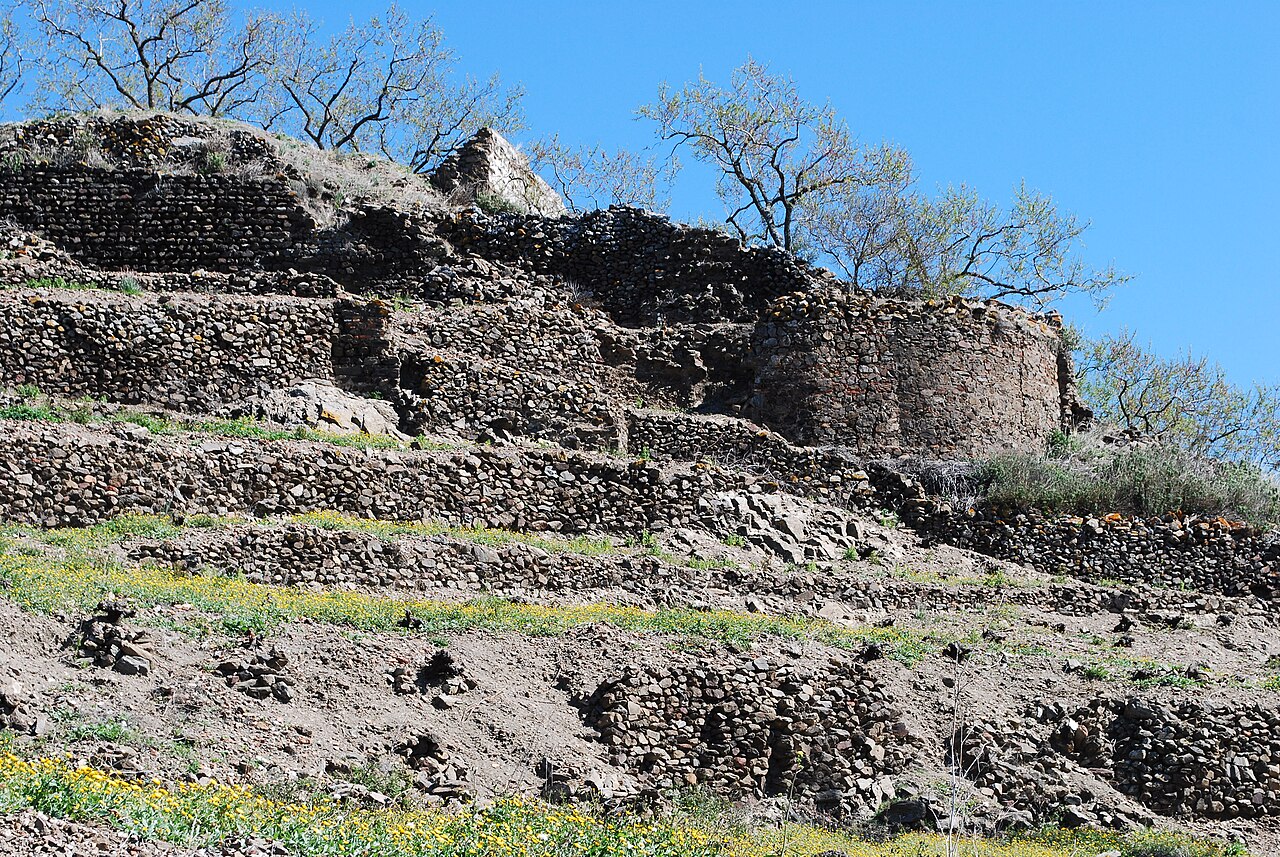
Vélez-Málaga Castle, also known locally as the Alcazaba or Fortaleza, is a remarkable example of a hill castle with a rich history dating back to the 10th century. Situated on the highest hill in Vélez-Málaga, Spain, this fortress was originally constructed by Islamic rulers to exert control over the local population rather than solely for defensive purposes. Its commanding position offered extensive views of the surrounding landscape, making it a strategic military site for surveillance and protection against potential invaders.

The origins and early medieval construction

The castle's foundation in the early medieval period, specifically the 10th century, reflects the architectural and military practices of the Islamic rulers who dominated the Iberian Peninsula at the time. The fortress was built using traditional rammed earth (tapial) techniques, reinforced with masonry and brickwork arranged in verdugadas, a distinctive patterned layering that enhanced both strength and aesthetic appeal. The use of these materials was typical of Moorish military architecture and allowed for durable fortifications suited to the hilltop terrain.

The castle's role in the Nasrid kingdom and the reconquista

During the 14th century, the castle became a vital stronghold within the Nasrid Kingdom of Granada, the last Muslim dynasty in Spain. Its function expanded to protect the fertile Vega de Vélez plains and the broader Axarquía region. The fortress served as a refuge for the local population during attacks, with its outer walls providing shelter and the inner buildings offering a high level of defense.

In 1487, the castle was captured by Christian King Fernando during the Reconquista. This conquest marked a significant shift in the castle's use and ownership. Following the Christian takeover, the fortress was adapted to serve as a royal residence and became the seat of the general captaincy, highlighting its administrative importance. It also functioned as a prison and housed the local government council (cabildo), thereby playing a central role in civic governance.

Architectural features and military adaptations

The castle's design incorporates several key features characteristic of Moorish and later Christian military architecture. The Puerta Real (Royal Gate) is notable for its horseshoe-shaped arch, a hallmark of Islamic design that combines both structural integrity and artistic expression. This gate remains one of the most prominent surviving elements of the fortress.

Another significant structure is the Torre del Homenaje, or keep, a tall tower with a square base that served as the primary defensive stronghold and residence within the castle. Positioned adjacent to the Puerta de Antequera, this tower dominates the skyline and symbolizes the castle's enduring military significance.

The fortress originally featured a moat surrounding the inner walls, although physical traces of this defensive element are now scarce. The courtyard within the inner castle walls housed a fortified stable and was designed according to the best military practices of the time, serving as a secure area for storing weapons and accommodating troops.

In the 16th century, the castle's role evolved in response to Mediterranean piracy threats. The fortress became part of a coastal defense system against Dutch, British, Spanish, and Moorish pirates. The southern semicircular wall facing the sea was equipped with six battery guns, providing the first line of defense against maritime attacks.

Later history and decline

During the Peninsular War (1808-1810), the castle was occupied by French forces who modified it for their military needs. To prevent its use by enemy troops after their withdrawal, significant portions of the fortress were deliberately demolished. This event marked the beginning of the castle's decline as a military stronghold.

By the 19th century, the fortress had lost its strategic importance. The hilltop was repurposed as a quarry, leading to further deterioration of the structure. Despite this, some key elements, including the Puerta Real and Torre del Homenaje, survived and were restored in the early 1970s to preserve the site for historical and cultural appreciation.

Current condition and visitor experience

Today, Vélez-Málaga Castle stands as a partially restored monument reflecting its layered history from Islamic origins through Christian adaptations to modern times. Visitors can explore the restored main keep and the south-facing castle wall, along with remains of various buildings that showcase the fortress's evolution. The site offers panoramic views of Vélez-Málaga, the surrounding Axarquía region, and the Mediterranean coastline.

The castle's architectural elements, such as the horseshoe arches, rammed earth walls, and defensive battlements, provide insight into medieval military engineering and the cultural influences that shaped the region. The fortress remains a significant heritage site, illustrating the complex history of southern Spain and its strategic importance across centuries.

Frequently asked questions (FAQ)

How do I get to Vélez-Málaga Castle?
Vélez-Málaga Castle is located on a hilltop in the city of Vélez-Málaga, Andalusia. It is accessible by car or local bus, with walking paths leading up to the fortress from the town center.
What is the best time to visit Vélez-Málaga Castle?
The best time to visit Vélez-Málaga Castle is during the spring and autumn months when the weather is mild and comfortable for exploring the hilltop site and enjoying panoramic views.
Is Vélez-Málaga Castle wheelchair accessible?
Due to its hilltop location and historic terrain, Vélez-Málaga Castle has limited wheelchair accessibility. Visitors with mobility concerns should plan accordingly and consider assistance or alternative viewpoints.
What are the opening hours and ticket prices for Vélez-Málaga Castle?
Opening hours and ticket prices vary seasonally. It is recommended to check the official local tourism website or visitor center for the most current information before planning your visit.
Can I take guided tours at Vélez-Málaga Castle?
Guided tours are often available at Vélez-Málaga Castle, providing detailed historical context and architectural insights. Visitors can inquire locally or book tours through official channels.

Information

Hill Castle

Sources & official resources

Verify the information above using these authoritative references.

Loading map...

Visitor reviews

No reviews yet. Been here? Write the first review and help other travelers!

Write the first review

Visited this castle? Share your experience

Your review helps other travelers and adds first-hand knowledge to our encyclopedia.
Write a review

(5/5)

0/2000 characters

Your review will be visible after admin approval

Nearby castles

5.5 km
Bentomiz Castle — Spain castle

Bentomiz Castle

Arenas, Spain

Bentomiz Castle stands as a remarkable example of a Moorish fortress perched on a hill near the village of Arenas in the province of Málaga, Spain. Situated at an altitude of 711 metres, this castle commands expansive views over the Axarquía region stretching towards the Mediterranean Sea. Its strategic location and imposing ruins reflect a complex history of occupation, adaptation, and military significance spanning from ancient Mediterranean civilizations through the Islamic period and into the Christian Reconquista. The site of Bentomiz Castle has been occupied since antiquity, with evidence of Phoenician, Greek, and Roman presence. Archaeological remains include Roman baths, underscoring the site's long-standing importance as a settlement and defensive position. However, the most prominent surviving structures date to the High Medieval period, specifically the 11th century, when the Moors constructed the fortress on the hill, then known as Munt Mās. This name appears in the memoirs of Abdallah ibn Buluggin, the last Zirid ruler of the Taifa of Granada, who described Bentomiz as a formidable stronghold during his 11th-century civil war against his brother. Historical significance and military role Throughout the Nasrid Kingdom of Granada era, between the 13th and 15th centuries, Bentomiz Castle functioned as the administrative center of a district, or ta’a, within the kingdom. This period coincided with economic prosperity in the surrounding mountains, fueled by the production of silk and raisins. Bentomiz was part of a strategic defensive network that included the castles of Comares and Zalia, forming a triangular line of fortifications designed to protect the region. The castle played a significant role during various conflicts, including the revolt of Umar ibn Hafsun against the Umayyad state. In the late 15th century, as the Christian forces advanced during the Reconquista, Bentomiz was involved in military actions leading up to the Siege of Málaga in 1487. The Granadan Sultan El Zagal stationed troops around Bentomiz to oppose the forces of Ferdinand II of Aragon. Despite a night attack by the Moors on the Christian siege train, the defenders were repulsed, and the castle ultimately surrendered peacefully to the Catholic Monarchs in 1487. After the Reconquista, Bentomiz remained a military outpost overseeing a population largely composed of Moriscos, Muslims who had converted to Christianity. The castle was involved in the Morisco Revolt of 1570, after which its military importance declined, leading to gradual abandonment and ruin. Historical records from 1492 note a population of approximately 7,500 defenders and Muslim families, many of whom fled during the Christian conquest, leaving behind properties and a legacy of cultural transition. Architectural features and layout Bentomiz Castle is recognized as one of the largest and most architecturally distinctive castles in the Málaga area. Its design is characterized by a double enclosure that adapts to the irregular terrain of the hilltop. The fortress comprises two main sections: a smaller upper enclosure crowning the summit and a larger lower enclosure wrapping around the plateau below. Upper enclosure The upper enclosure is fortified with thick stone walls supported by several square towers and a notable hexagonal tower. This hexagonal tower is remarkable for housing two vaulted cisterns with barrel-shaped vaulting, used to collect and store water, a critical feature for sustaining the fortress during sieges. Lower enclosure The larger lower enclosure features robust walls reinforced by multiple towers, some retaining their original battlements where defenders once stood guard. This section contains two large cisterns with ribbed vaulted roofs, a sophisticated architectural element that parallels the water storage systems found beneath the Palace of Charles V in the Alhambra. These cisterns highlight the advanced water management techniques employed in Nasrid fortifications, ensuring the castle's self-sufficiency. Construction techniques and materials The castle's construction reflects multiple historical phases, evidenced by the variety of masonry techniques and materials. Stonework is predominant, but sections of the fortress were built or repaired using rammed earth (tapia), a traditional method involving compacted earth, which was common in Islamic architecture of the region. These variations indicate continuous occupation and adaptation from the early Caliphate period through the late 16th century. Despite the passage of centuries, substantial portions of the walls, towers, and internal chambers survive, although some have collapsed. Attached to the northern side of the lower enclosure's wall is a cluster of residential houses that remained inhabited until recent times, demonstrating the site's prolonged use beyond its military function. At the highest point of the upper enclosure, a modern small building serves as a television repeater, marking the intersection of ancient and contemporary uses. Cultural and heritage importance Bentomiz Castle is not only a military monument but also a cultural symbol reflecting the layered history of southern Spain. Its name possibly derives from the Latin "montemar," meaning "mountain overlooking the sea," or from Arabic place names beginning with "ben-," indicating lineage or family association. The castle's ruins, including its towers, walls, and underground chambers, offer valuable insights into the Islamic architectural heritage and the complex socio-political dynamics of the Nasrid Kingdom. Today, Bentomiz Castle stands as a significant archaeological site that attracts historians, architects, and visitors interested in the medieval fortifications of Andalusia. Its preservation, though partial, allows for the study and appreciation of the defensive strategies and architectural innovations employed by the Moors, as well as the impact of the Reconquista on the region's cultural landscape. The castle's large cisterns, battlements, and towers continue to evoke the strength and resilience of this historic fortress. Bentomiz remains a testament to the enduring legacy of Islamic military architecture in Spain and the rich tapestry of Mediterranean history.

High Medieval (11th–13th c.)
Details
13.8 km

Zalia Castle

Naer A-402, Spain

Zalia Castle, locally known as Castillo de Zalia, is a significant early medieval hill castle situated on a commanding hill opposite the village of Alcaucín in the province of Málaga, Spain. Its strategic position overlooking the surrounding valleys and the ancient Nasrid trade route from Granada to Málaga through the Zafarraya pass made it a vital military and economic stronghold during the Islamic period. The origins of Zalia Castle are steeped in antiquity, with some theories suggesting the site may have initially been fortified by the Phoenicians. However, the castle as it stands today was primarily constructed and expanded by the Moors during the medieval period. The fortress was designed with a double-walled enclosure that follows an irregular plan, adapted carefully to the natural contours of the hill, a common feature in Islamic military architecture that prioritized both defense and terrain integration. Historical significance and strategic role The castle played a pivotal role in controlling the vital Nasrid royal road, a key artery connecting the cities of Granada and Málaga. This route passed through the nearby Zafarraya pass, making the fortress an essential watchtower and military outpost. The castle’s position allowed it to oversee and regulate movement along this trade and communication corridor, which was crucial for the Nasrid kingdom's economic and military interests. During its peak, the castle supported a thriving local economy based on livestock breeding and cereal cultivation, which sustained the garrison and nearby settlements. Archaeological evidence, including ceramic finds dating from the 10th to the 15th centuries, confirms continuous occupation and use throughout the late Islamic period. In September 1485, the castle fell to the Catholic Monarchs during the final stages of the Reconquista. This conquest was notably aided by the betrayal of a local Moor who had converted to Christianity, illustrating the complex social and religious dynamics of the period. Following its capture, Zalia Castle was repurposed as a prison-bishopric to detain rebellious Moriscos, Muslims who remained in Spain after the Reconquest and faced persecution and forced conversions. Architectural features and layout The fortress covers an area approximately 120 meters east to west and 150 meters north to south, with a layout that adapts irregularly to the hill’s gentle slopes. The castle is enclosed by a double circuit of defensive walls that follow the terrain’s natural contours rather than imposing strict geometric shapes. Inner enclosure The inner enclosure is the heart of the fortress, featuring a large square water cistern (aljibe) located in the central-northern section. This cistern was vital for collecting and storing rainwater, ensuring a reliable water supply during sieges. The walls of the inner enclosure combine masonry towers with sections constructed from rammed earth (tapial), coated with lime mortar to create a smooth finish. Some towers retain fragments of parapets and battlements with built-in drainage channels, showcasing the fortress’s practical design elements. Outer enclosure The outer enclosure consists of masonry walls punctuated by both square and semicircular towers spaced irregularly. These walls were originally covered with lime plaster, much of which has eroded over time. The main gate faces north and is flanked by two imposing masonry towers with tapial reinforcements on top, highlighting the castle’s defensive strength and architectural detail. Along one edge of the outer enclosure, a watchtower stands as a testament to the castle’s role in surveillance and territorial control. The combination of construction materials—stone blocks, rubble, brick, and tapial—reflects a versatile building approach adapted to available resources and evolving military needs. Current condition and visitor experience Today, Zalia Castle remains in a very ruinous state, with only several gate towers and fragments of other towers from the inner enclosure still standing. Portions of the outer walls and a tower remain, though many sections have collapsed or been displaced. Despite its ruined condition, the site offers spectacular panoramic views over the surrounding valleys and countryside, making it a rewarding destination for visitors interested in history and nature. The castle is freely accessible and can be reached via the road from La Viñuela Dam along the route Ventas de Zafarraya-Granada. Visitors can still discern the irregular outline of the fortress and some of its surviving towers amidst the gorse and scrubland that now cover the site. Cultural legacy and local traditions Local oral traditions associate the name Zalia with a Moorish queen who is said to have resided in the castle, adding a layer of legend to its historical narrative. Nearby, stories speak of a former lagoon close to the castle, though no archaeological evidence has confirmed this feature. These traditions enrich the cultural heritage of the site and reflect its longstanding place in the collective memory of the region. The castle’s history as a military fortress, prison, and symbol of changing political powers encapsulates the complex history of southern Spain during the medieval and early modern periods. Its ruins stand as a monument to the region’s layered past, from Phoenician beginnings through Islamic rule and Christian reconquest. Archaeological insights and research Archaeological studies at Zalia Castle have revealed the use of diverse construction techniques, including the combination of masonry and tapial, which was typical in Andalusian fortifications. The presence of a large aljibe highlights the importance of water management in sustaining the garrison. Ceramic fragments and other finds provide a timeline of occupation from the 10th century through the 15th century, marking the castle’s continuous strategic relevance. Research underscores the castle’s adaptation to the natural landscape, with its irregular walls and towers designed to maximize defensive capabilities while utilizing the hill’s topography. The castle’s role in controlling a major trade and military route further emphasizes its importance in regional geopolitics during the Nasrid period.

Early Medieval (5th–10th c.)
Details
17.7 km

Bezmiliana Castle

Rincón de la Victoria, Spain

Bezmiliana Castle, located in Rincón de la Victoria, Spain, is the town's most emblematic monument and a significant example of post-Renaissance military architecture. Constructed in 1766, the castle was designed as a coastal defense complementing earlier 16th-century fortifications such as the Towers of El Cantal and Benagalbón. These structures collectively aimed to protect the coastline from maritime piracy and terrestrial threats prevalent during that period. Architectural design and structural features The castle's layout is a quadrangular plan enclosed by an outer masonry wall that provides robust defense. The fortification includes two unadorned towers positioned diagonally to maximize defensive coverage and crossfire capabilities. The structure rises to two floors, with walls reinforced by two screen walls that further strengthen its resilience against attacks. At the heart of the castle lies a central building which housed the main operational and residential quarters. A distinctive feature of Bezmiliana Castle is its alcuílla, a covered outdoor well with a dome-shaped roof, derived from the Arabic word qubba. This well was essential for sustaining the garrison during sieges or prolonged periods of isolation. The main entrance is notable for being crowned with the coat of arms of King Carlos III, reflecting the castle's official royal patronage and its strategic importance in the defense system of the Spanish coast during the 18th century. Internal layout and functional spaces Inside the fortress, the spatial organization reflects its military purpose. There is a 'troop room', which served as quarters for soldiers stationed at the castle. Adjacent to this is the 'chamber of the official', likely reserved for the commanding officer or administrative personnel. These two rooms are connected by a common stack with two mouths, possibly a shared chimney or ventilation system. The southern section of the castle contains the 'south room' or 'room of stables', which includes 14 horse stalls. This area was paved with stone, ensuring durability and ease of maintenance. The presence of stables within the fortification highlights the importance of cavalry and mounted patrols in the coastal defense strategy. Historical context and significance The construction of Bezmiliana Castle in the mid-18th century was a response to persistent threats from maritime piracy and coastal raids along the Mediterranean shores of Spain. The castle's strategic position allowed it to oversee and protect the surrounding coastline and nearby settlements. Its role was part of a broader network of fortifications established under the reign of King Carlos III, who prioritized strengthening Spain's coastal defenses to safeguard trade routes and local communities. The castle functioned not only as a military outpost but also as a symbol of royal authority and control over the region. Preservation and current status Today, Bezmiliana Castle remains a well-preserved example of post-Renaissance military architecture. Its structural integrity and original features, including the towers, walls, and internal rooms, have been maintained, allowing visitors to appreciate its historical and architectural value. The castle is an important cultural landmark for Rincón de la Victoria and continues to attract interest for its historical significance and coastal defense heritage.

Post-Renaissance (17th–18th c.)
Details

