Yvoire Castle
Yvoire Castle, locally known as Château d'Yvoire, is a historic fortress located in the medieval village of Yvoire on the southern shore of Lake Geneva in the Haute-Savoie department of France. Constructed in the early 14th century by Amadeus V, Count of Savoy, the castle and its surrounding fortifications were established to secure a strategic point between the "small lake" and the "large lake" sections of Lake Geneva, controlling key navigation routes and overland roads leading to Geneva, the Rhône valley, and Italy.
Strategic importance and military role in the late medieval period
The castle was part of a comprehensive fortification effort initiated in 1306 by Amadeus V to protect the Savoyard territories. The village of Yvoire, fortified by walls and defensive structures including the castle, served as a military outpost overseeing lake traffic and land routes. For about fifty years, Yvoire played a significant military role, which contributed to the granting of certain freedoms to its inhabitants in 1324. The castle's position allowed it to monitor and control the narrow point between the two parts of Lake Geneva, making it a key defensive site during the late medieval period.
Architectural features and fortifications
The original castle, built in the late medieval Gothic style, featured robust stone walls, defensive towers, and battlements designed for both surveillance and defense. The fortifications included a curtain wall enclosing the village and the castle, with gates controlling access. The castle itself had a keep and several corner towers, which were typical of Savoyard military architecture of the period. The use of turrets and watch towers allowed for extensive visibility over the lake and surrounding lands.
16th-century decline and damage
During the 16th century, the region experienced political turmoil. From 1536 to 1591, Yvoire and its castle were occupied by forces from the city of Bern, allies of France and Geneva. This occupation led to the dismantling of the village's ramparts and the loss of the castle's military function. In 1591, a devastating fire severely damaged the castle, leaving it roofless and in ruins for over three centuries. The castle remained in this state, a ruin without a roof, which contributed to its gradual decay.
Restoration in the 20th century
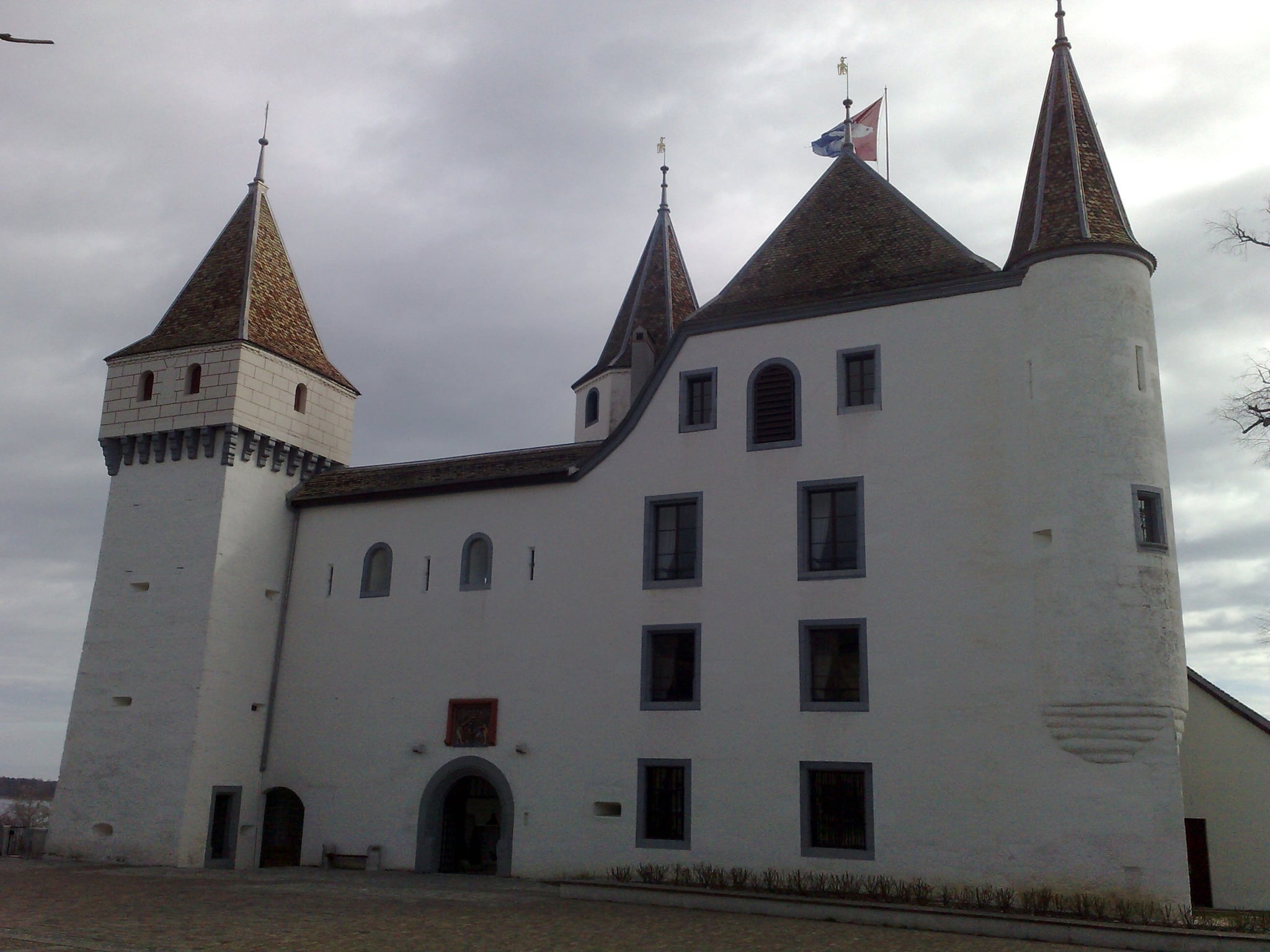
In 1655, the castle became the property of the d'Yvoire family. It was not until the early 20th century, between 1919 and 1939, that significant restoration efforts were undertaken. Félix Bouvier of Yvoire led the renovation, which included rebuilding the roof and reconstructing the four corner turrets, restoring the castle's silhouette to something close to its original form. These restorations helped preserve the castle as a historic monument and contributed to the medieval character of the village.
Current status and cultural significance
Today, Yvoire Castle remains private property and is not open to the public. Despite this, the castle is a prominent feature of the picturesque medieval town of Yvoire, which is known for its well-preserved walls, cobbled streets, and charming lakeside setting. The castle and village together represent an important heritage site illustrating the military and strategic history of the Savoy region during the late medieval period.
Historical context and regional conflicts
Throughout its history, Yvoire was caught in the midst of conflicts involving the houses of Faucigny, Dauphiné, and Savoy, as well as the independent cities of Bern and Geneva. Its location made it a contested site in religious and territorial wars between France and its neighbors. The castle's military importance waned after the 16th century, reflecting broader shifts in regional power and military technology.
The castle's role in controlling trade and military routes
The castle oversaw the road linking Geneva to the Rhône valley and onward to Italy. This position enabled it to control commerce and troop movements, making it a valuable asset for whoever held it. The fortifications around the village and castle were thus vital for maintaining regional influence.
Architectural evolution over centuries
While the original construction was firmly Gothic, the castle's architecture evolved due to damage and restoration. The 20th-century renovations aimed to respect the medieval character while stabilizing the structure. The addition of the roof and turrets restored its defensive appearance, though the castle no longer serves a military purpose.
Frequently asked questions (FAQ)
- What is the historical significance of Yvoire Castle?
- Yvoire Castle, dating back to the 14th century, played a crucial role in the defense against invasions along the shores of Lake Geneva. Its well-preserved architecture reflects the medieval military strategies and the feudal history of the region, making it a significant landmark in French heritage.
- When was Yvoire Castle built?
- Yvoire Castle was constructed in the late 14th century, specifically around 1306, during a time when the region was under the influence of the Counts of Savoy. The castle has undergone various renovations, but retains much of its original medieval charm and structure.
- What are the opening hours for Yvoire Castle?
- Yvoire Castle is typically open to visitors from April to October, with hours varying by season. During peak summer months, the castle is open daily from 10 AM to 6 PM, while winter hours may be reduced, so it’s best to check the official website for the most current information.
- Can I visit Yvoire Castle with a mobility impairment?
- Yvoire Castle has made efforts to improve accessibility for all visitors. However, given its historical nature and the terrain of the surrounding area, some parts may still present challenges for those with mobility impairments. It's advisable to contact the castle in advance for specific accessibility options.
- Is it possible to tour Yvoire Castle?
- Yes, guided tours of Yvoire Castle are available, offering visitors a chance to explore its rich history and stunning architecture. Tours often include informative commentary about the castle's significance and the surrounding area, enhancing the overall experience.
- What is the best time to visit Yvoire Castle?
- The best time to visit Yvoire Castle is during the spring and early fall when the weather is mild, and the tourist crowds are smaller. This allows for a more enjoyable experience as you explore the castle and the picturesque village of Yvoire.
- What are the ticket prices for Yvoire Castle?
- Tickets for Yvoire Castle are reasonably priced, with discounts available for students and seniors. Children under a certain age may enter for free, making it an affordable destination for families looking to explore history.
- Are there any nearby attractions to Yvoire Castle?
- Yes, the charming village of Yvoire itself is a major attraction, known for its beautiful flower gardens and lakeside views. Additionally, nearby attractions include the medieval town of Thonon-les-Bains and the scenic boat rides on Lake Geneva, providing a perfect complement to your visit to the castle.
Information
Address
Rue du Lac, Yvoire, France
Loading map...
Visitor reviews
No reviews yet. Been here? Write the first review and help other travelers!
Write the first reviewVisited this castle? Share your experience
Your review helps other travelers and adds first-hand knowledge to our encyclopedia.