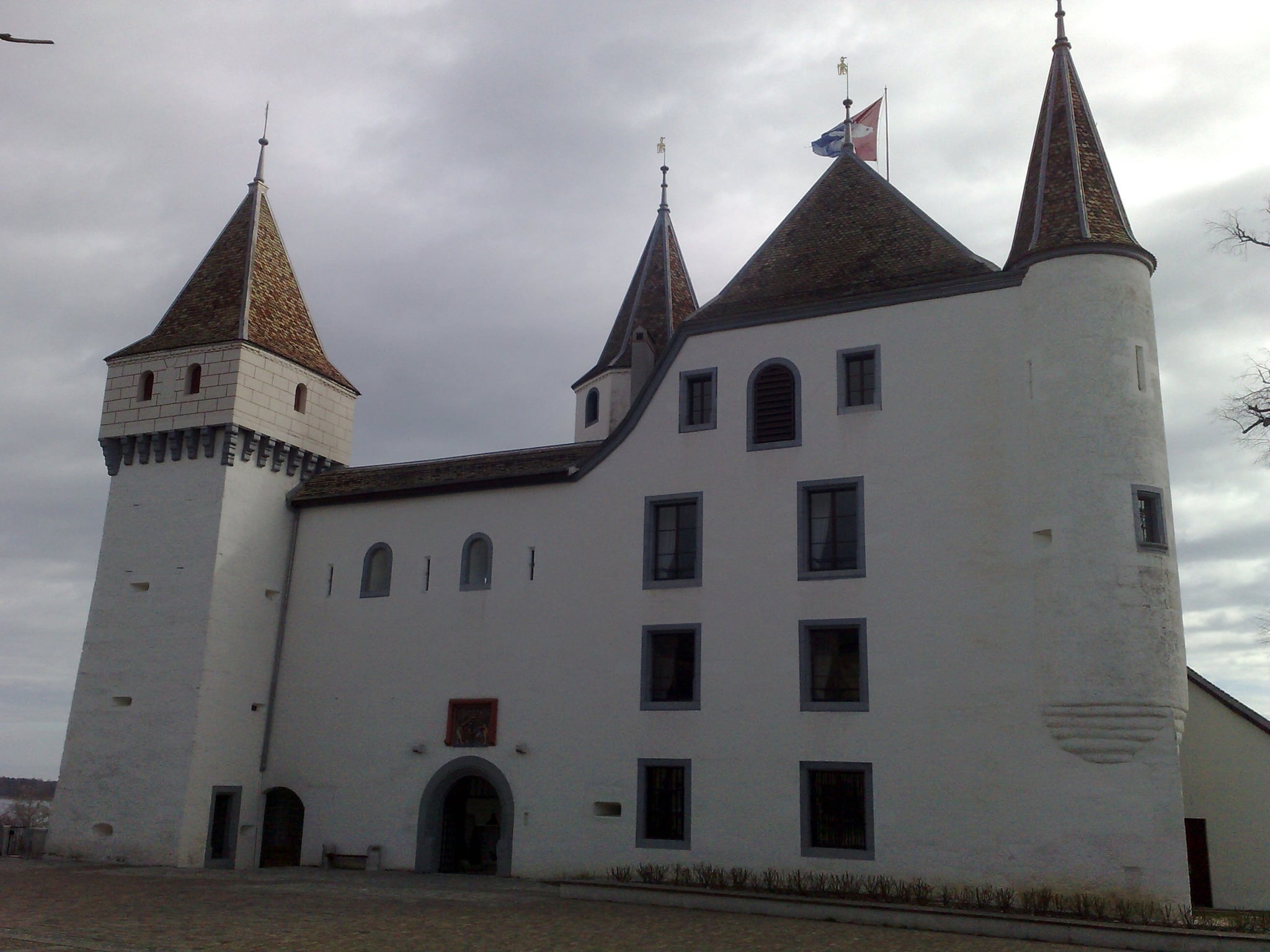
Prangins Castle
Prangins Castle is a significant post-Renaissance hill castle located in the municipality of Prangins in the Canton of Vaud, Switzerland. This historic castle serves as one of the three sites of the Swiss National Museum, alongside locations in Zurich and Schwyz. The castle's exhibitions primarily focus on daily life in the 18th century within the castle and its surrounding region, complemented by displays on broader Swiss history. Visitors can also enjoy a variety of temporary exhibitions and cultural events hosted throughout the year.
Historical background and ownership
The domain of Prangins Castle has a history dating back to 1096, marking it as a site of longstanding regional importance. The original medieval structure was destroyed in 1293 by the Dukes of Savoy, after which it was rebuilt and changed ownership multiple times over the centuries. In 1613, Nicholas de Diesbach expanded the property, and it was later ceded to Emilie de Nassau in 1627. The estate was sold in 1656 and again in 1719 to Jean Rieu, a Genevan citizen and Paris banker.
In 1723, the castle was acquired by Louis Guiguer, another Paris banker, who constructed the current palace that stands today. The previous building was likely in a state of ruin at that time. The castle passed to Guiguer's nephew, Jean-George Guiguer, who notably hosted the famous philosopher Voltaire during his exile from France. Jean-George also commissioned the construction of a temple and enhanced the castle's gardens.
After Jean-George's death, the estate was inherited by his son, Louis-François Guiguer de Prangins, who from 1771 maintained detailed journals documenting the daily life of the region over 15 years. These writings, spanning seven volumes, are a valuable resource for understanding the cultural and social history of the era and form a key part of the museum's exhibits. Louis-François's son, Charles-Jules Guiguer, became a general in the Swiss army and sold the castle in 1814 to Joseph Bonaparte, elder brother of Napoleon Bonaparte.
From 1873 to 1920, the castle served an educational purpose as a school run by the Frères Moraves, a Protestant monastic order, adding another layer to its diverse history.
Architectural features and gardens
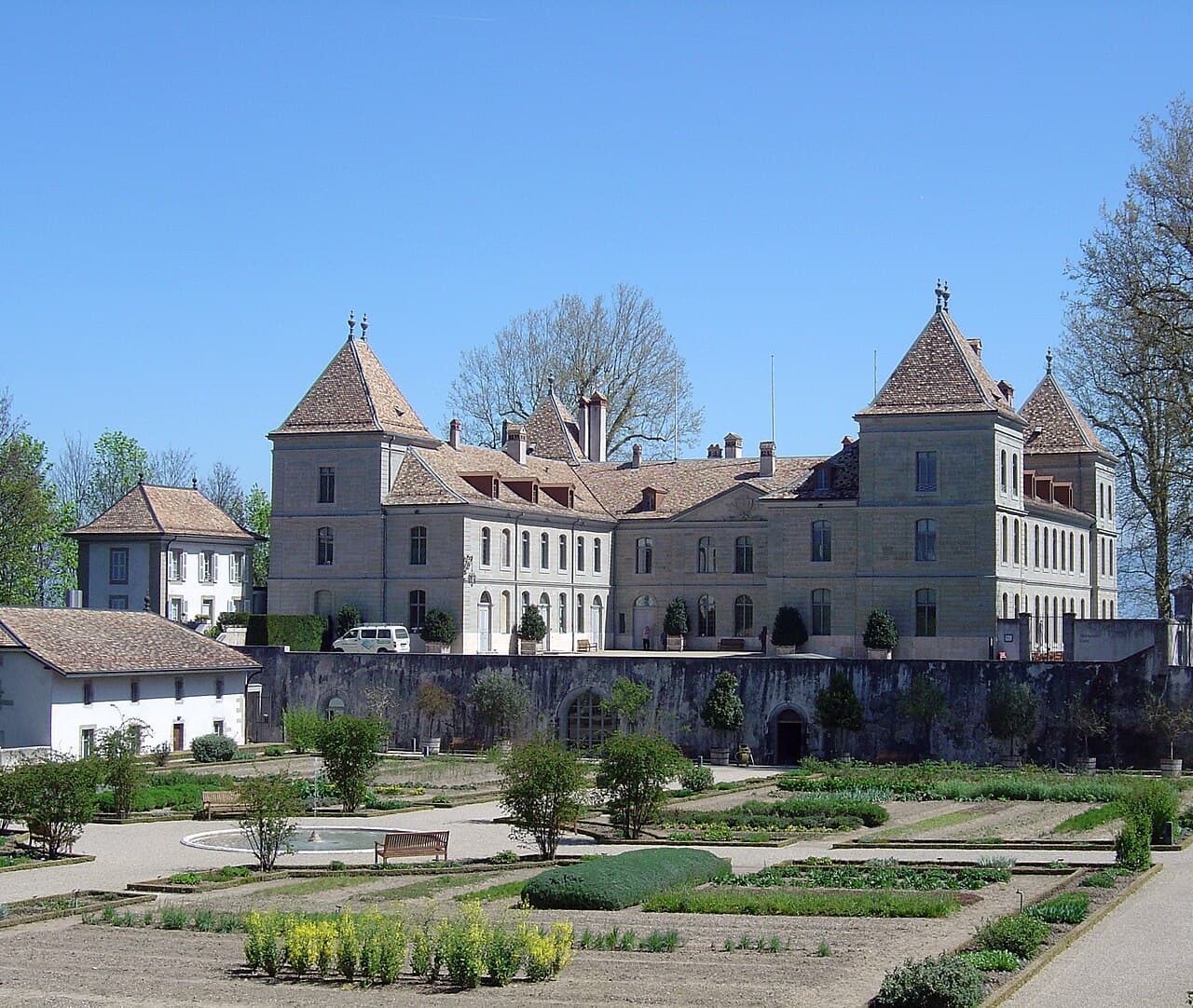
The castle built in 1732 exemplifies post-Renaissance architecture with a focus on elegance and functionality. It has been extensively restored and furnished to reflect its original 18th-century style, preserving the historical ambiance for visitors. The castle's location on a gentle hill provides commanding views of Lake Geneva and the Alps, which can be enjoyed from the castle's terrace and gardens.
One of the most remarkable features of Prangins Castle is its sunken kitchen garden, replanted to mirror its original 18th-century layout. This garden is a rare example of period horticultural design and demonstrates the practical and aesthetic considerations of the time. The castle grounds also include a temple commissioned in the mid-18th century, adding a unique architectural element to the estate.
Current function and visitor experience
Today, Prangins Castle operates as a museum dedicated to Swiss cultural history and daily life in the region. The museum offers a wide range of exhibits, including artifacts, period furnishings, and multimedia displays that bring the castle's history to life. The inclusion of temporary exhibitions ensures that there is always something new for returning visitors.
The castle features a café where guests can enjoy drinks, snacks, and lunch while taking in the scenic views of the lake and mountains. The museum's location and setting make it a popular destination for those interested in history, architecture, and Swiss heritage. The castle is also a venue for various cultural events, enhancing its role as a living part of the community.
Significance and heritage status
Prangins Castle is recognized as a Swiss heritage site of national significance. Its rich history, architectural integrity, and role in preserving Swiss cultural heritage make it an important landmark. The castle's connection to prominent historical figures, including Voltaire and Joseph Bonaparte, adds to its historical interest.
The castle's preservation efforts and its function as part of the Swiss National Museum system ensure that it remains accessible to the public and continues to educate visitors about Switzerland's past. Its combination of historical architecture, gardens, and museum exhibits provides a comprehensive experience of Swiss history and culture.
Frequently asked questions (FAQ)
- What are the opening hours of Prangins Castle?
- Prangins Castle is generally open to visitors daily, with hours typically from 10:00 to 17:00. It is advisable to check the official website for seasonal variations and special closures.
- Can I visit the gardens at Prangins Castle?
- Yes, the castle's gardens, including the unique sunken kitchen garden, are open to the public and can be explored during museum visiting hours.
- Is there a café available at Prangins Castle?
- There is a café on site offering drinks, snacks, and lunch, allowing visitors to relax while enjoying views of Lake Geneva and the Alps.
- What is the historical significance of Prangins Castle?
- Prangins Castle has a history dating back to 1096 and has been associated with notable figures such as Voltaire and Joseph Bonaparte. It reflects post-Renaissance architecture and Swiss cultural heritage.
- Are there temporary exhibitions at the castle?
- Yes, the museum regularly hosts temporary exhibitions alongside its permanent displays, providing fresh cultural and historical insights for visitors.
Photo gallery

Information
Sources & official resources
Verify the information above using these authoritative references.
Loading map...
Visitor reviews
No reviews yet. Been here? Write the first review and help other travelers!
Write the first reviewVisited this castle? Share your experience
Your review helps other travelers and adds first-hand knowledge to our encyclopedia.