Yuzuki Castle
Yuzuki Castle is a significant late medieval hill castle located in Matsuyama, Japan. Constructed between 1334 and 1338, it served as the stronghold of the powerful Kono clan during a turbulent period in Japanese history known as the Nanboku-chô period (1336-1392). This era was marked by conflict between rival imperial courts, and Yuzuki Castle's strategic location in the prosperous Dogo area made it a crucial base for the clan's political and military activities.
The castle's origins trace to the relocation of the Kono clan's home base from Kono-Gun to Yuzuki Castle by Kono Michimori. The move was motivated by the desire to control a more economically vibrant region, which allowed the clan to thrive despite ongoing challenges such as interference from the powerful Hosokawa clan and internal family disputes. Throughout its history, Yuzuki Castle was a symbol of the Kono clan's allegiance to the Ashikaga Shogunate, and it maintained alliances with influential neighboring clans including the Ouchi, Otomo, and Mori.
Architectural features and fortifications
The castle's defensive capabilities were notably enhanced around 1535 by Kono Michinao, who constructed an outer moat, thereby creating a dual-moat system that significantly increased its protection against sieges. This addition was a strategic response to the escalating military threats of the period. The moats, combined with the castle's elevated position on a hill, provided natural and man-made defenses that made Yuzuki Castle a formidable fortress.
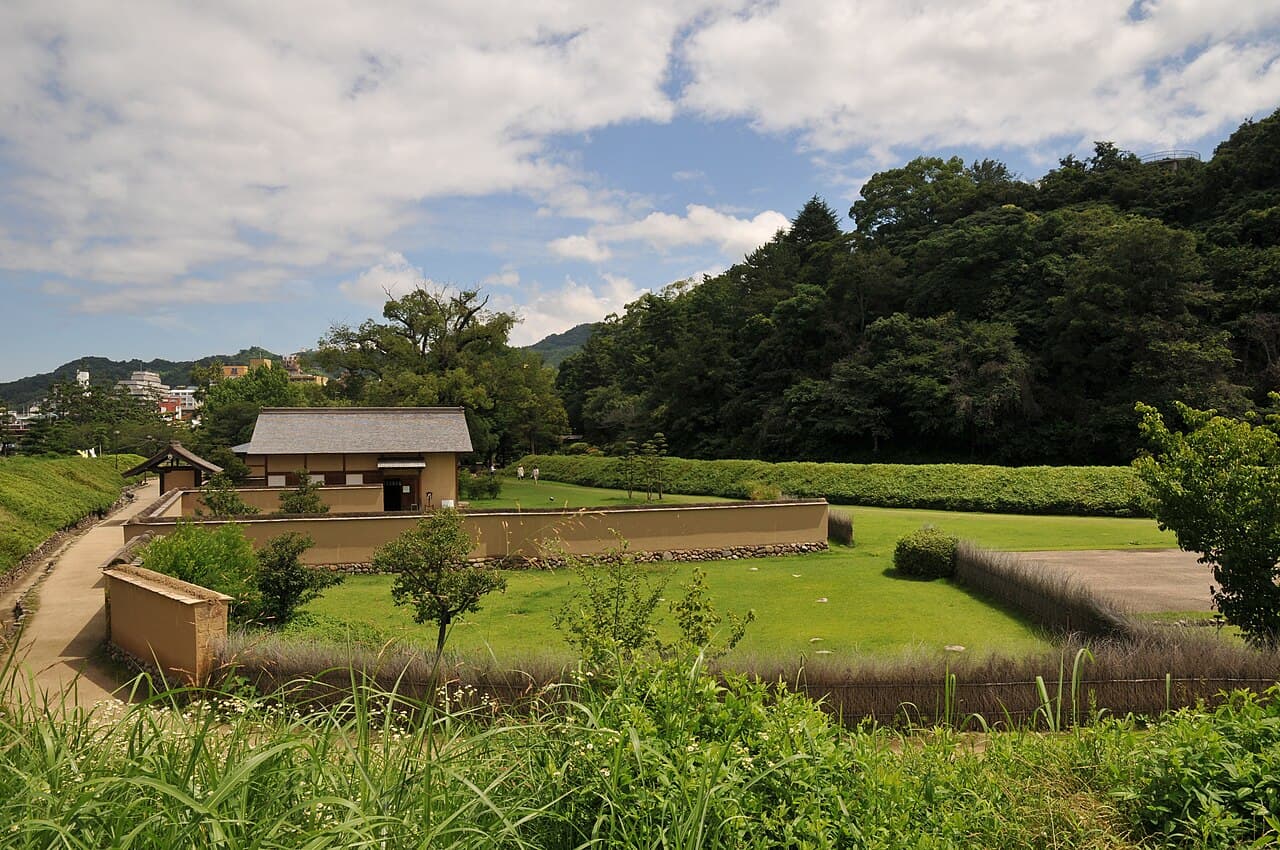
Yuzuki Castle's layout reflects typical features of Japanese hill castles (yamajiro), including terraced baileys, stone walls, and wooden structures designed to blend with the natural terrain. The castle complex included residential quarters, defensive walls, gates, and watchtowers, which were reconstructed in modern times to give visitors a vivid sense of the castle's original appearance and function.
The role of the Murakami pirates
During the mid-16th century, the Kono clan strengthened their maritime connections through alliances with Murakami Michiyasu, a prominent pirate leader of the Inland Sea and son-in-law to Kono Michinao. This alliance was crucial for controlling sea routes and defending the castle from naval threats, highlighting the castle's strategic importance not only on land but also in maritime affairs.
Historical significance and decline
The castle remained under the Kono clan's control until 1585, when Kono Michinao (Ushifukumaru), the last heir of the clan, surrendered Yuzuki Castle to the forces of Toyotomi Hideyoshi. This event marked the end of the Kono clan's dominance in the Iyo Province. Following the surrender, the castle briefly came under the rule of Fukushima Masanori, a prominent daimyo and military commander under Hideyoshi.
Shortly after, Yuzuki Castle was abandoned as political power consolidated around more strategically advantageous locations, such as the nearby Matsuyama Castle. Despite its abandonment, the castle's ruins and partial reconstructions remain a testament to its historical and architectural legacy.
Modern preservation and visitor experience
Today, Yuzuki Castle is partially preserved, with reconstructed buildings and fortifications that provide visitors with an immersive experience of a late medieval Japanese castle. The reconstructions are carefully executed to reflect historical accuracy, allowing visitors to envision the castle's original grandeur and defensive complexity.
The castle's hilltop location offers panoramic views of Matsuyama Castle and the surrounding landscape, enhancing its appeal as a cultural heritage site. Visitors can explore the moats, walls, and reconstructed structures while learning about the castle's role in regional history and the broader context of Japanese feudal warfare.
Visitor amenities and accessibility
The site is accessible to the public, with walking paths that guide visitors through the castle grounds. Informational signage and exhibits provide historical context, making it an educational destination for those interested in Japanese history and castle architecture.
Yuzuki Castle's blend of natural beauty, historical significance, and well-preserved fortifications make it a compelling destination for scholars, tourists, and castle enthusiasts alike.
Frequently asked questions (FAQ)
- When was Yuzuki Castle built and by whom?
- Yuzuki Castle was built between 1334 and 1338 by the Kono clan, who moved their home base there during the Nanboku-chô period.
- What defensive features does Yuzuki Castle have?
- The castle features a dual moat system constructed around 1535, terraced baileys, stone walls, and wooden structures typical of Japanese hill castles.
- Can visitors access reconstructed buildings at Yuzuki Castle?
- Yes, several buildings and fortifications have been reconstructed to provide an immersive experience of the castle's original appearance.
- What is the historical significance of Yuzuki Castle?
- Yuzuki Castle was the stronghold of the Kono clan, allied with the Ashikaga Shogunate, and played a key role in regional politics until its surrender to Toyotomi Hideyoshi in 1585.
- Is Yuzuki Castle accessible to the public?
- Yes, the castle grounds are open to visitors with walking paths and informational signage to enhance the educational experience.
Photo gallery

Information
Opening hours
Park: open year round, free admissionFacilities : open from 09:00 to 17:00; closed on Mondays (when monday falls on a national holiday, the next day will be closed), December 29th-january 3rd; admission free
Current owner
Municipality of Matsuyama
Website
Visit websiteSources & official resources
Verify the information above using these authoritative references.
Loading map...
Visitor reviews
No reviews yet. Been here? Write the first review and help other travelers!
Write the first reviewVisited this castle? Share your experience
Your review helps other travelers and adds first-hand knowledge to our encyclopedia.