
Ozu Castle
Ozu Castle, located in the city of Ozu in Ehime Prefecture, Japan, is a remarkable example of a hill castle with origins dating back to the late medieval period. The castle's strategic position on a hill overlooking the Hiji River valley provided natural defenses and commanding views, essential for controlling the surrounding region during Japan's feudal era.
The earliest fortifications at the site were established in 1331 by Utsunomiya Toyofusa, marking the beginning of the castle's long and complex history. Over the centuries, Ozu Castle underwent numerous expansions and reconstructions, particularly during the Azuchi-Momoyama period (late 16th century to early 17th century), when it was ruled by a succession of prominent lords including Kobayakawa Takakage, Toda Katsutaka, Todo Takatora, and Wakisaka Yasuharu. These lords contributed to the castle's architectural development, transforming it into a formidable stronghold with multiple defensive structures.
Architectural features and layout
The castle's layout reflects typical hill castle design, utilizing the natural topography for defense. The complex originally included a main keep (tenshu), several yagura (turrets), stone walls, moats, and baileys. Notably, four original yagura survive at Ozu Castle, each designated as Important Cultural Properties of Japan, underscoring their historical and architectural significance.
The main keep was destroyed in 1888, a common fate for many Japanese castles during the Meiji Restoration era, when feudal structures were dismantled. However, in 2004, a faithful reconstruction of the main keep was completed using traditional wooden construction methods, preserving the castle's historical authenticity. This reconstruction also serves to connect two of the original yagura, enhancing the coherence of the castle's defensive system and visitor experience.
Defensive components
The castle's defensive elements include stone walls with angled slopes, designed to prevent scaling, and narrow gates that controlled access. The yagura served multiple purposes, including watchtowers, storage, and defensive positions for archers and gunners. The castle's position on a hill further amplified its defensive capabilities, making it difficult for attackers to mount a successful siege.
Historical significance and lordship
From 1585 to 1617, Ozu Castle changed hands among several influential lords, reflecting the turbulent political climate of the late Sengoku and early Edo periods. Kobayakawa Takakage, a renowned general and strategist, was among the early rulers who fortified the castle. Todo Takatora, famed for his expertise in castle construction, likely influenced the castle's architectural enhancements during his tenure.
In 1617, Kato Sadayasu took control of the castle, and his descendants governed the domain until the Meiji Restoration in the late 19th century. This long period of stability under the Kato family allowed for the preservation and maintenance of the castle structures, contributing to its current condition.
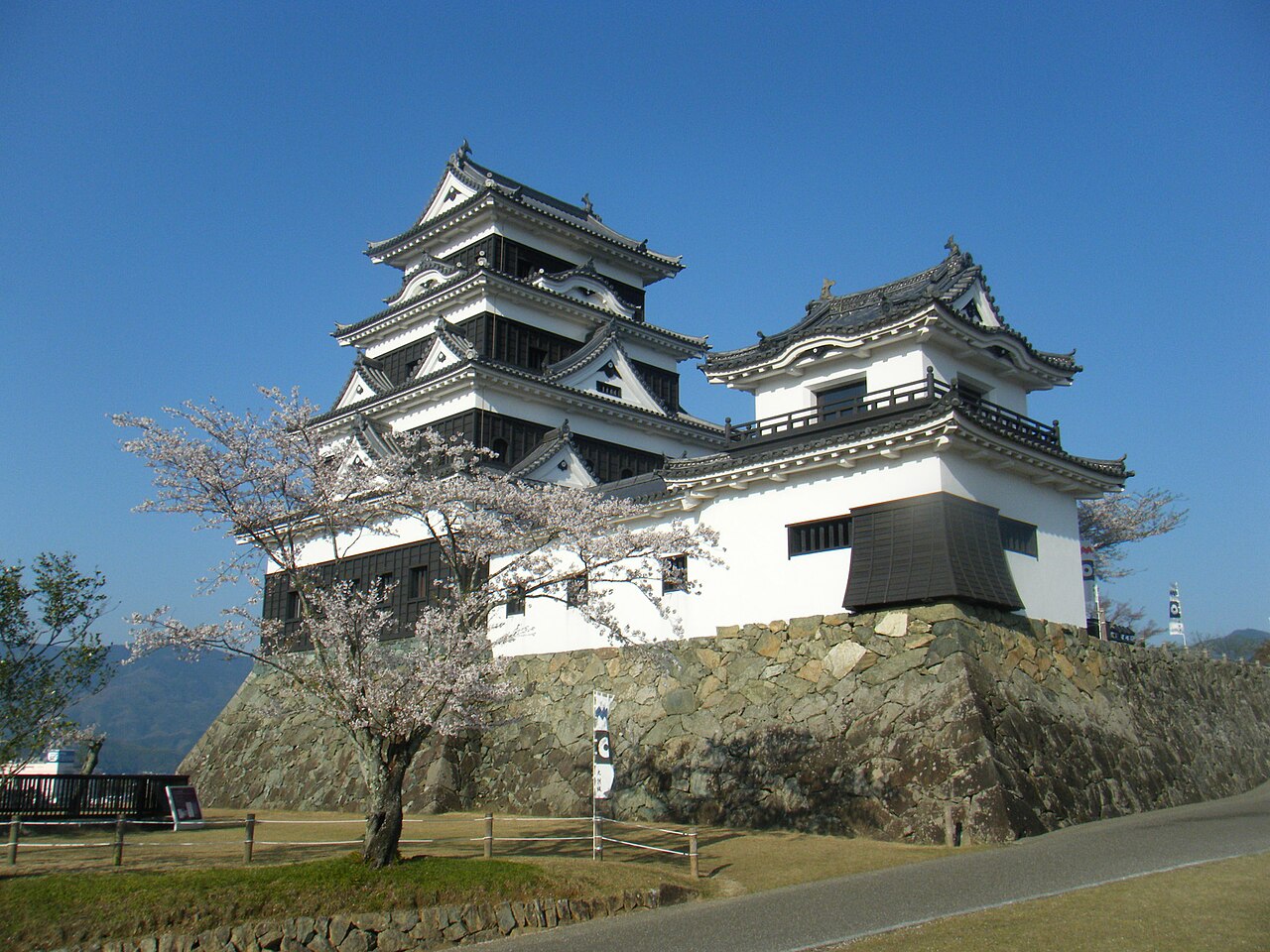
Photo by As6673 • CC BY-SA 3.0
Cultural heritage and visitor experience
Ozu Castle is highly regarded for its picturesque setting in the valley along the river, making it a favored destination for photographers and history enthusiasts alike. The blend of original Important Cultural Property yagura and the reconstructed wooden main keep offers visitors a tangible connection to Japan's feudal past and architectural traditions.
The castle grounds provide ample opportunities to explore the various defensive structures and enjoy panoramic views of the surrounding landscape. The traditional wooden reconstruction completed in 2004 is noted for its craftsmanship, with experts suggesting that it could achieve designation as an Important Cultural Property itself within a century due to its authenticity and quality.
Photography and sightseeing
Visitors often spend considerable time moving around the town and castle precincts to capture the castle from multiple vantage points. The castle's location along the river enhances its scenic appeal, especially during different seasons and weather conditions. Rainfall in the afternoon, as experienced by some visitors, can shorten visits but also adds a unique atmospheric quality to photographs.
Preservation and restoration efforts
The castle is currently partially restored, with ongoing efforts to maintain and preserve its historical structures. The use of traditional materials and techniques in the 2004 reconstruction reflects a commitment to cultural heritage preservation. The surviving yagura remain protected as Important Cultural Properties, ensuring their conservation for future generations.
Ozu Castle stands as a testament to Japan's rich feudal history, architectural ingenuity, and cultural preservation ethos. Its combination of original medieval structures and carefully executed modern restorations provides a comprehensive glimpse into the evolution of Japanese castle architecture from the late medieval period through the early modern era.
Frequently asked questions (FAQ)
- What is the best time to visit Ozu Castle?
- The best time to visit Ozu Castle is during spring and autumn when the weather is mild and the surrounding scenery is vibrant with cherry blossoms or colorful foliage. These seasons also provide excellent lighting conditions for photography.
- Are there guided tours available at Ozu Castle?
- Yes, guided tours are available at Ozu Castle, offering detailed historical and architectural insights. Tours can be booked at the visitor center or through local tourism offices.
- Is Ozu Castle accessible for visitors with mobility issues?
- The castle grounds include some uneven terrain and slopes typical of hill castles, which may pose challenges for visitors with mobility issues. However, efforts have been made to improve accessibility in key areas.
- Can I take photographs inside Ozu Castle?
- Photography is generally allowed in the castle grounds and exterior structures. Restrictions may apply inside certain buildings to preserve artifacts and interiors.
- What are the ticket prices for Ozu Castle?
- Ticket prices vary by season but are generally affordable, with discounts available for children, seniors, and groups. Visitors should check the official website or local tourist information for current rates.
Photo gallery

Information
Opening hours
9:00-17:00 daily
Ticket prices
Varies by season, generally affordable
Website
Visit websiteSources & official resources
Verify the information above using these authoritative references.
Loading map...
Visitor reviews
No reviews yet. Been here? Write the first review and help other travelers!
Write the first reviewVisited this castle? Share your experience
Your review helps other travelers and adds first-hand knowledge to our encyclopedia.