Imabari Castle
Imabari Castle, located in Imabari city on the Iyo Peninsula in Ehime Prefecture, Japan, is a remarkable example of a lowland castle with significant historical and architectural importance. Constructed beginning in 1602 under the direction of Takatora Todo, a famed castle architect and daimyo, the castle was completed in 1604 and served as a strategic military stronghold controlling traffic through the vital Seto Inland Sea. Its location on the coast allowed it to oversee maritime routes and provided a defensive advantage during the turbulent early Edo period.
Historical background and strategic importance
Takatora Todo was awarded the land on the Iyo Peninsula for his distinguished service during the Battle of Sekigahara in 1600, a decisive conflict that unified Japan under Tokugawa rule. Beginning construction in 1602, Takatora moved from his previous stronghold at Uwajima Castle to Imabari in 1608 once the palace within the castle complex was completed. However, that same year, he was reassigned to Tsu Castle in Ise Prefecture, and his adopted son, Takayoshi Todo, assumed control of Imabari Castle.
In 1635, Takayoshi was reassigned, and the castle passed into the hands of the Matsudaira clan, who governed it until the Meiji Restoration in the late 19th century. Throughout this period, Imabari Castle remained a critical military and administrative center, reflecting the shifting political landscape of early modern Japan.
Architectural features and design
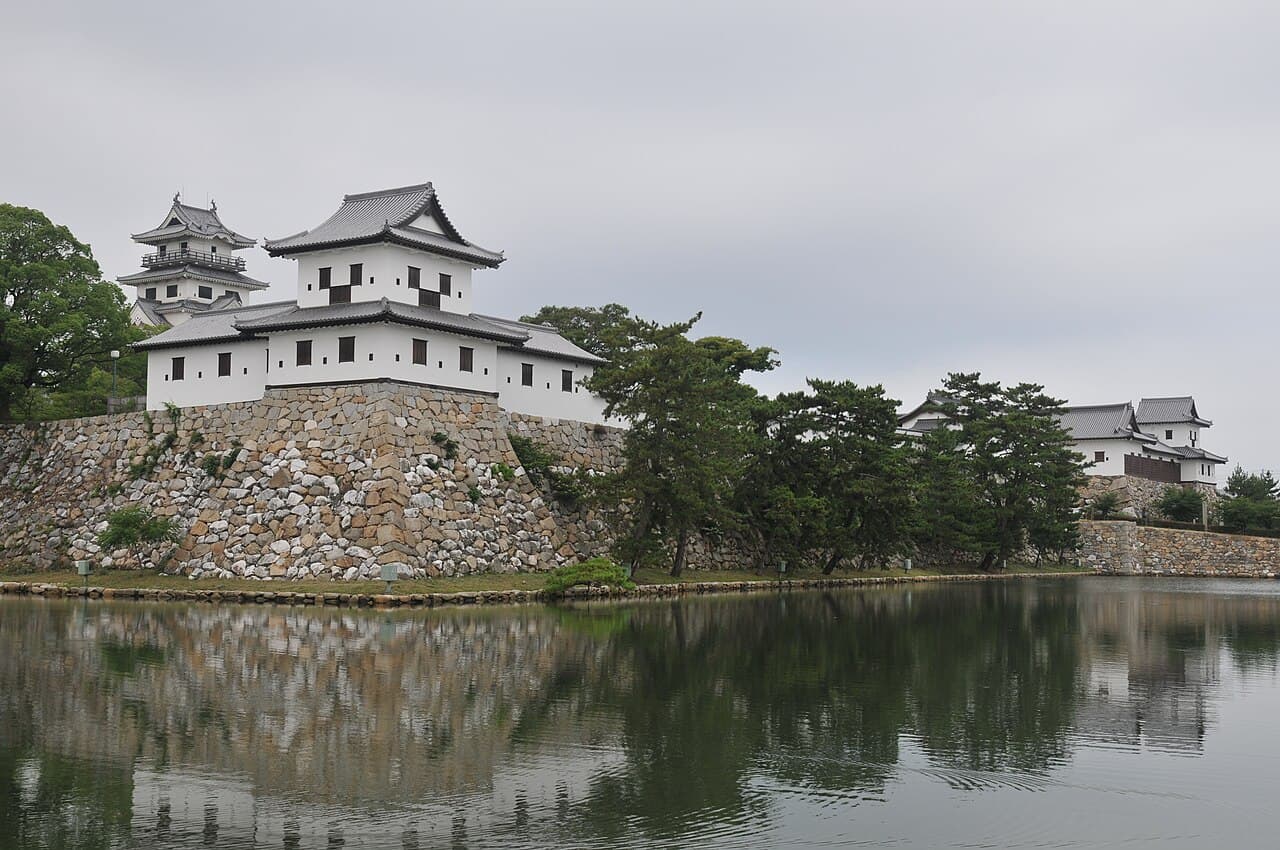
Imabari Castle is notable for its moated lowland design, a distinctive style adapted to flat coastal terrain rather than elevated hills or mountains. The castle's complex originally featured multiple concentric moats filled with seawater, creating formidable natural defenses. This use of seawater moats is a unique characteristic that distinguishes Imabari from many other Japanese castles, which typically rely on freshwater moats.
The castle's layout includes an inner bailey (honmaru) surrounded by moats and defensive walls, with a palace complex serving as the residential and administrative center. The main keep (tenshu), however, has a unique history: it was dismantled in 1610 and transported to Osaka, where it was intended for Igaueno Castle but ultimately rebuilt as the main keep of Kameyama Castle. This relocation means that Imabari Castle today lacks its original tenshu, which was a prominent feature of its early design.
Despite the absence of the original main keep, the castle retains well-preserved stone walls (ishigaki), gates, and several yagura (turrets), providing insight into the castle's defensive capabilities and architectural style. The castle's walls and moats still impress visitors with their scale and the ingenuity of Edo-period Japanese castle construction.
Earthquake damage and restoration efforts
The castle has suffered damage from natural disasters, including earthquakes common to the region. Scaffolding visible in some photographs indicates ongoing restoration efforts to preserve the structure's integrity. These repairs are crucial for maintaining the castle's cultural heritage and ensuring safe public access.
Cultural significance and visitor experience
Today, Imabari Castle is recognized as a partially restored historic site, attracting visitors interested in Japanese history, architecture, and samurai culture. The castle grounds offer stunning views of the Seto Inland Sea and the nearby Kurushima Kaikyō Bridge, one of the longest suspension bridge series in the world, enhancing the site's appeal.
Visitors often praise the friendly staff who provide engaging experiences, including the opportunity to try on authentic samurai helmets, which are surprisingly heavy and offer a tangible connection to Japan's feudal past. The castle's accessibility and scenic surroundings make it a popular destination on tours of Shikoku Island.
Nearby attractions and regional context
Imabari Castle's location in Ehime Prefecture places it within a region rich in cultural heritage and natural beauty. Nearby attractions include other historic castles, traditional temples, and the beautiful coastal landscapes of the Seto Inland Sea National Park. The castle serves as a gateway to exploring the unique history and culture of Shikoku Island.
Legacy of takatora todo and architectural innovation
Takatora Todo, the castle's founder, is renowned as one of Japan's most skilled castle architects and builders. His influence is evident in the strategic design and innovative use of seawater moats at Imabari Castle, reflecting his expertise in fortification during the transition from the Sengoku to the Edo period. His work contributed significantly to the development of Japanese castle architecture, blending practical military needs with aesthetic considerations.
The castle's history of ownership and structural changes over the centuries illustrates the dynamic nature of feudal Japan's political and military landscape. Imabari Castle stands as a testament to this history, embodying the legacy of its builders and the strategic importance of its location.
Frequently asked questions (FAQ)
- How do I get to Imabari Castle?
- Imabari Castle is located in Imabari city, Ehime Prefecture, Japan. It is accessible by local bus or taxi from Imabari Station, which is connected to the JR Yosan Line.
- What is the best time to visit Imabari Castle?
- The best time to visit Imabari Castle is during spring and autumn when the weather is mild and the surrounding scenery, including views of the Seto Inland Sea, is particularly beautiful.
- Can I see the original main keep of Imabari Castle?
- The original main keep was dismantled in 1610 and relocated to Osaka. Therefore, Imabari Castle does not have its original tenshu today, but visitors can explore the remaining stone walls, moats, and turrets.
- Is Imabari Castle wheelchair accessible?
- While some areas of Imabari Castle grounds are accessible, the uneven terrain and historic structures may pose challenges for wheelchair users. It is recommended to check with the castle management for specific accessibility information.
- Are there guided tours available at Imabari Castle?
- Guided tours are sometimes available and can provide in-depth historical and architectural insights. Visitors should inquire locally about tour schedules and availability.
- What can I do at Imabari Castle?
- Visitors can explore the castle grounds, enjoy panoramic views of the Seto Inland Sea and Kurushima Kaikyō Bridge, and try on authentic samurai helmets provided by the staff for a unique cultural experience.
Photo gallery

Information
Website
Visit websiteSources & official resources
Verify the information above using these authoritative references.
Loading map...
Visitor reviews
No reviews yet. Been here? Write the first review and help other travelers!
Write the first reviewVisited this castle? Share your experience
Your review helps other travelers and adds first-hand knowledge to our encyclopedia.