Yumen Pass
Yumen Pass, also known as the Jade Gate or Pass of the Jade Gate, is a historically significant mountain pass located west of Dunhuang in Gansu Province, China. Situated at an elevation of approximately 1400 meters, it served as a critical gateway on the Silk Road during the Han dynasty (202 BC – AD 220). This pass marked the western frontier of ancient China and was the principal route connecting the Western Regions (Central Asia) with East Asia, facilitating trade, cultural exchange, and military movements.
Historical context and strategic importance
The Yumen Pass was a vital checkpoint on the Silk Road, controlling access between the Chinese heartland and the vast territories of Central Asia. It was one of the two main passes near Dunhuang, the other being the Yangguan Pass to the south. Both passes functioned as defensive and customs points, regulating trade caravans and military expeditions. The name "Yumen" translates to "Jade Gate," highlighting its role in the transport of precious goods such as jade, silk, spices, and other luxury items from the East to the West.
The Han dynasty and the Silk Road
During the Han dynasty, the Chinese imperial government established and fortified the Yumen Pass to secure the Silk Road and protect its western borders. The pass was part of a broader network of fortifications and watchtowers along the Great Wall and adjacent desert routes. It enabled the Han dynasty to maintain political influence and military presence over the Western Regions, which were crucial for the empire's economic and diplomatic interests.
Architectural and archaeological features
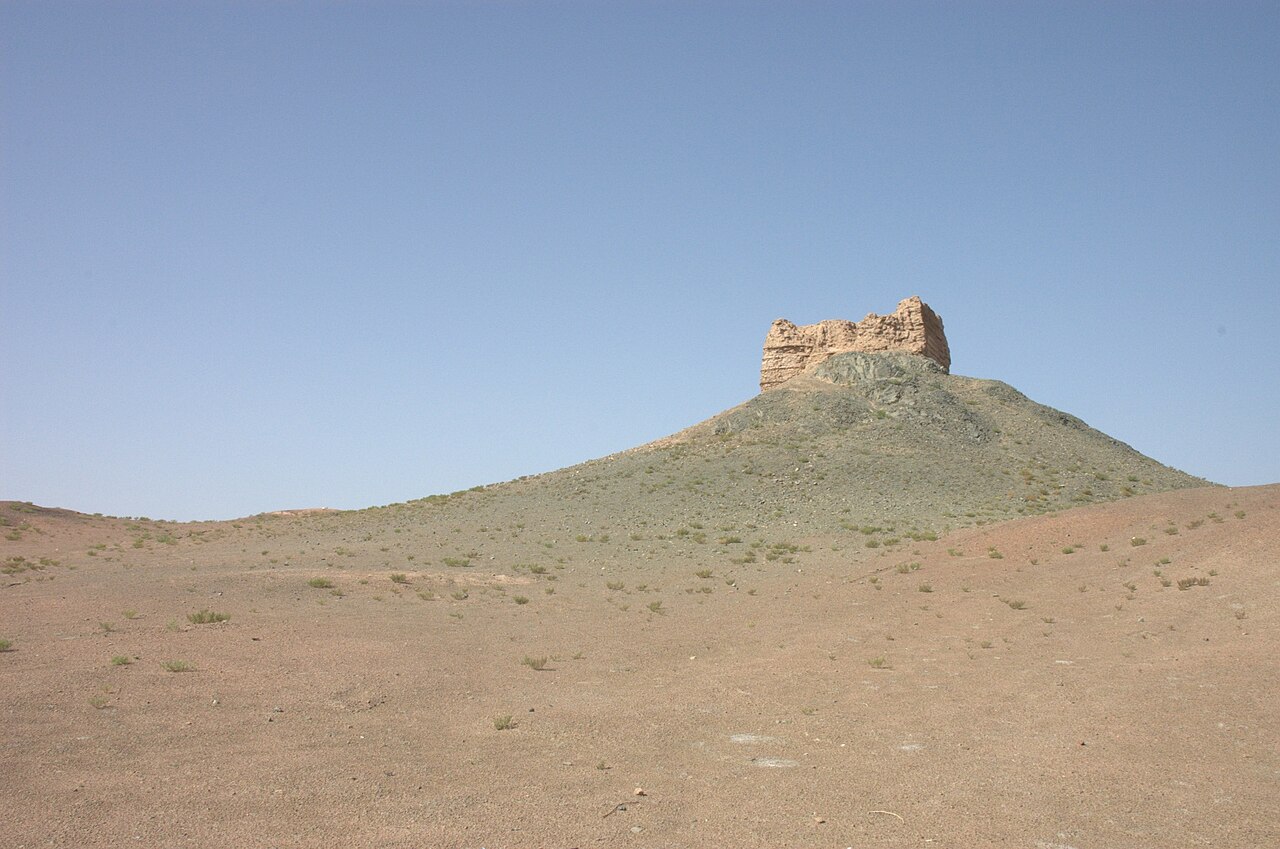
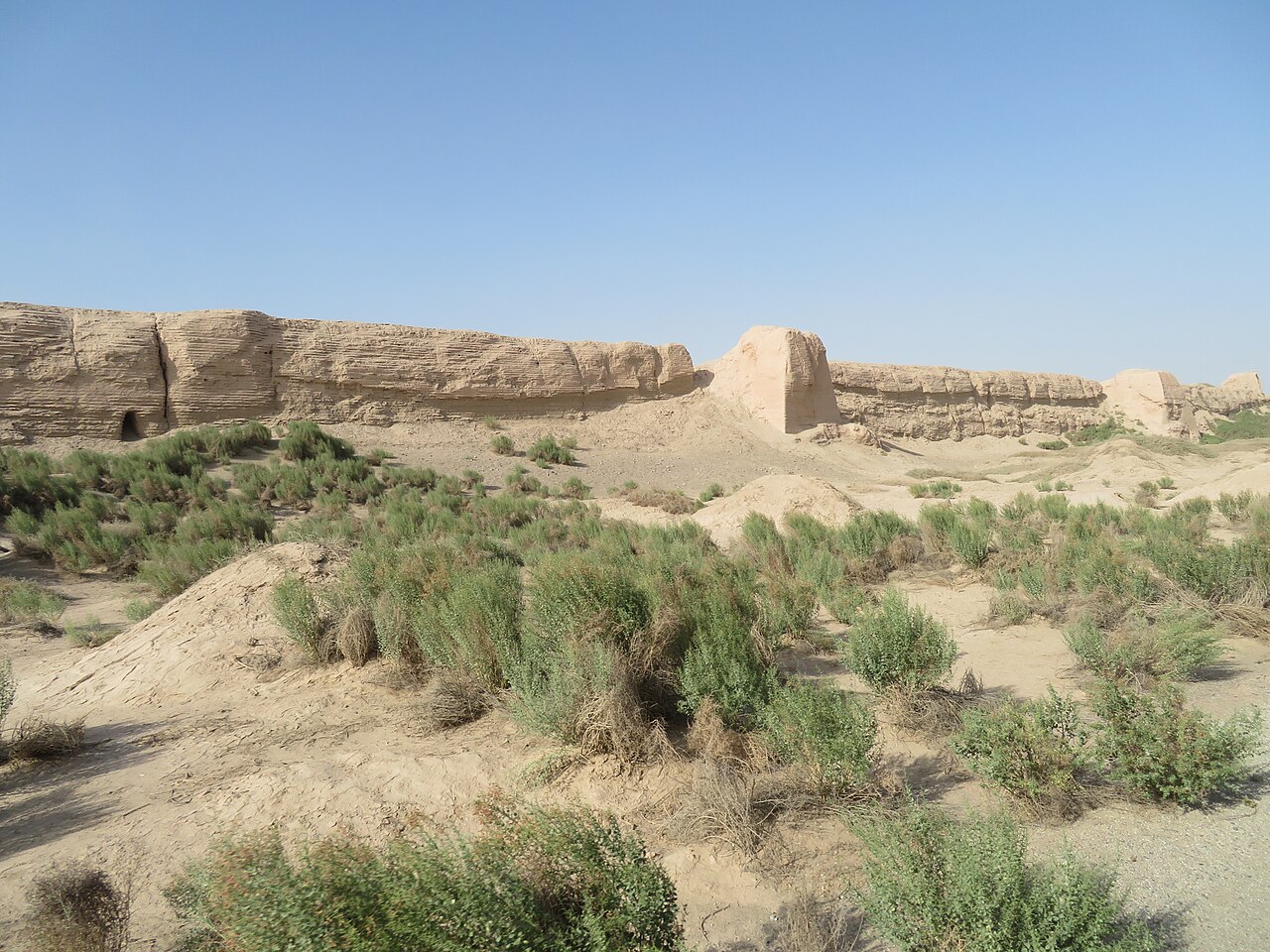
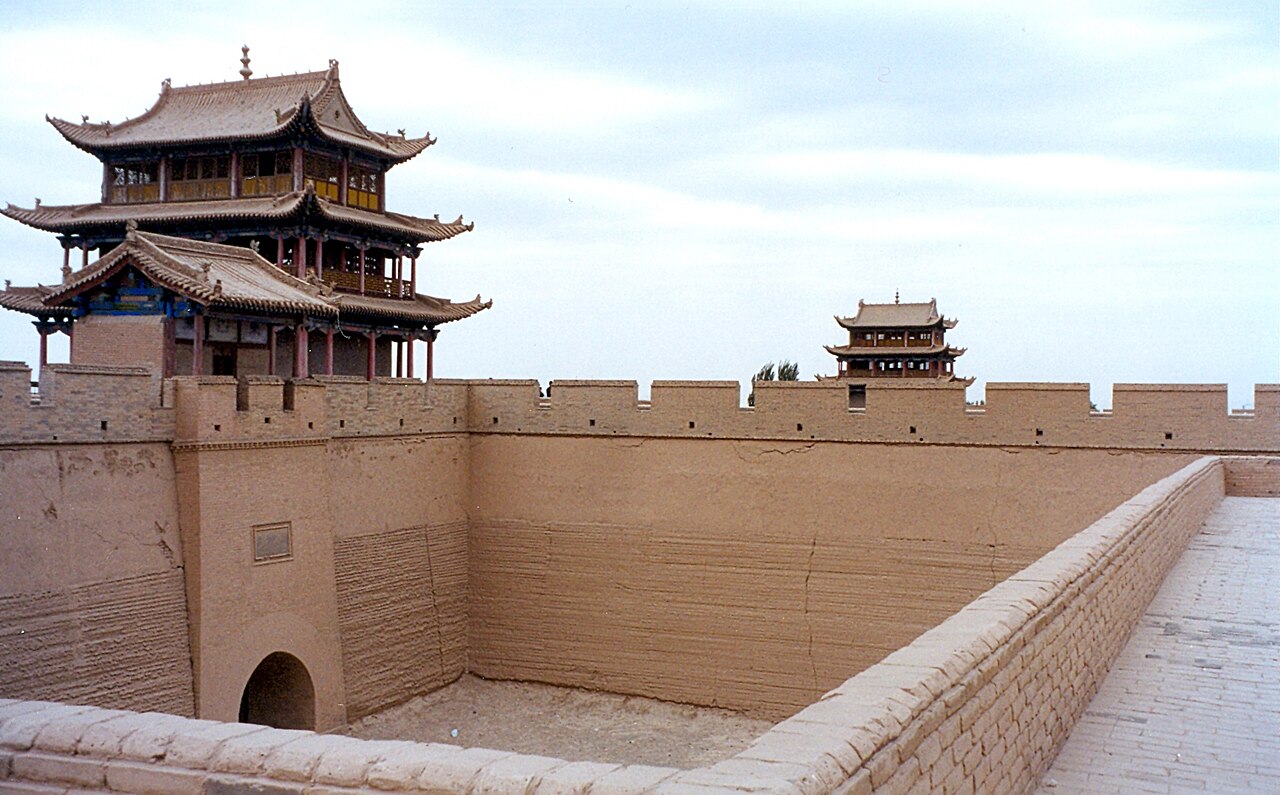
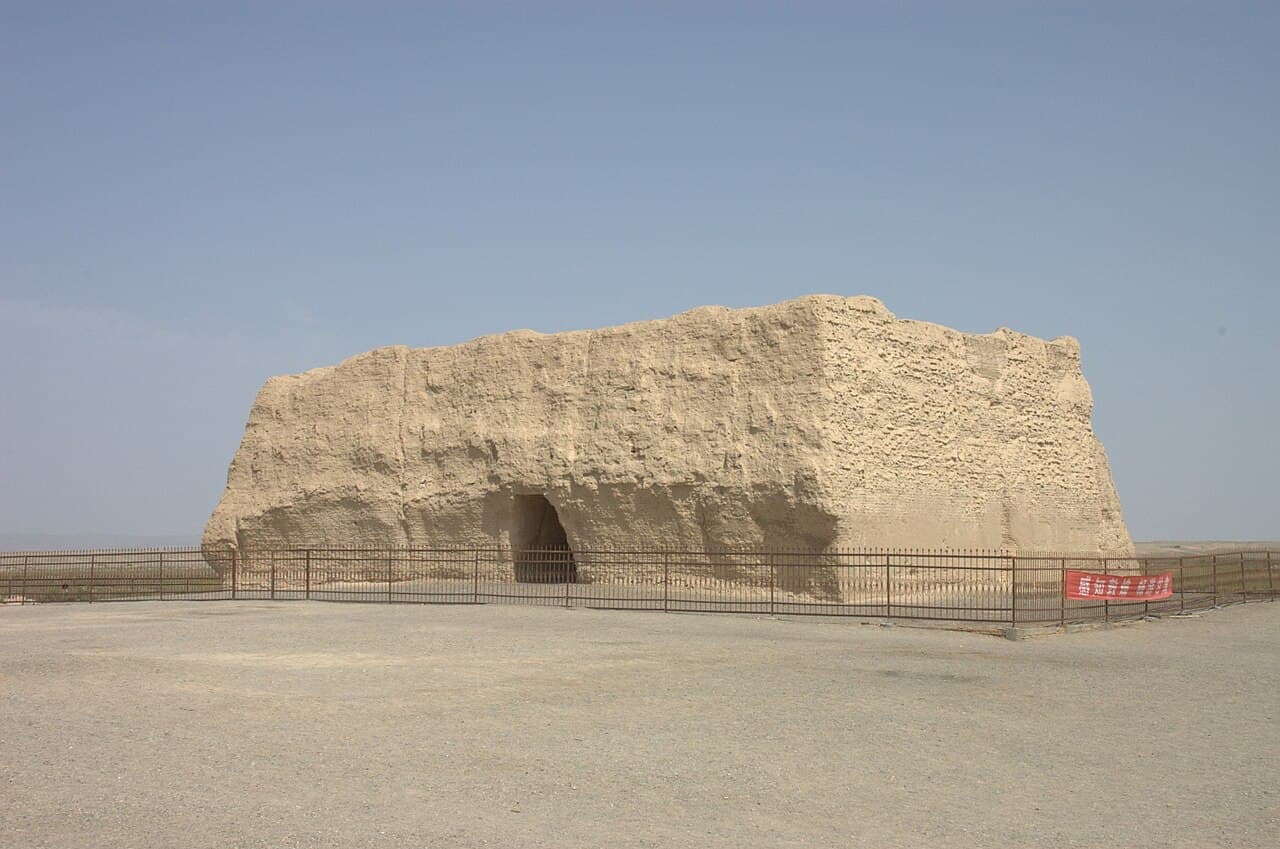
Today, Yumen Pass is classified as archaeological ruins, with remnants of its ancient fortifications still visible. The site includes traces of defensive walls, gate structures, and watchtowers that once guarded the passage. These ruins reflect typical military architecture of the Han period, characterized by compact stone and rammed earth construction designed to withstand desert conditions and potential sieges.
Defensive structures
The surviving remains indicate a fortified gate complex that controlled the narrow mountain pass. The walls were constructed to create a choke point, making it easier to defend against invaders or unauthorized traders. Watchtowers positioned along the route provided vantage points for early warning and communication using smoke or fire signals.
Geographical significance and environment
Yumen Pass is located near the edge of the Gobi Desert, in a harsh, arid environment that shaped its strategic importance. The pass offered a relatively accessible route through otherwise difficult terrain, linking fertile oases and caravan stops along the Silk Road. Its elevation and position allowed control over traffic moving between the vast deserts and the more hospitable regions to the east.
UNESCO World Heritage status and cultural legacy
In 2014, Yumen Pass, along with other significant sites along the Silk Road, was inscribed on the UNESCO World Heritage List as part of the Silk Roads: the Routes Network of Chang'an-Tianshan Corridor. This designation recognizes the pass's importance in facilitating early global trade and cultural exchange between East and West.
The legacy of Yumen Pass extends beyond its military and commercial functions. It symbolizes the historical connectivity between civilizations and the enduring impact of the Silk Road on world history. Visitors to the site can explore the archaeological ruins and imagine the caravans of traders, soldiers, and envoys that once passed through this gateway.
Visiting Yumen Pass today
As an archaeological site in ruins, Yumen Pass offers a glimpse into ancient frontier life and the challenges of maintaining control over a critical trade route. The site is accessible to visitors interested in Chinese history, Silk Road heritage, and ancient military architecture. Its remote location and desert surroundings add to the sense of isolation and historical depth.
Nearby attractions include the city of Dunhuang, famous for the Mogao Caves, a UNESCO World Heritage Site known for its Buddhist art. The region provides a rich cultural landscape for those exploring the history of the Silk Road and ancient China.
Frequently asked questions (FAQ)
- What is the historical significance of Yumen Pass?
- Yumen Pass was a key gateway on the Silk Road during the Han dynasty, linking China with Central Asia and controlling trade and military movements.
- Can I visit the ruins of Yumen Pass?
- Yes, Yumen Pass is accessible as an archaeological site where visitors can explore the remains of ancient fortifications and experience the Silk Road's historical environment.
- Where is Yumen Pass located?
- Yumen Pass is located west of Dunhuang in Gansu Province, China, near the edge of the Gobi Desert at an elevation of 1400 meters.
- What other historical sites are near Yumen Pass?
- Nearby is the Yangguan Pass, another important Silk Road pass, and the city of Dunhuang, known for the Mogao Caves, a UNESCO World Heritage Site featuring Buddhist art.

Information
Loading map...
Visitor reviews
No reviews yet. Been here? Write the first review and help other travelers!
Write the first reviewVisited this castle? Share your experience
Your review helps other travelers and adds first-hand knowledge to our encyclopedia.