Yonezawa Castle — Japan castle

Yonezawa Castle

Yonezawa Castle: historic hill castle of the Uesugi clan in Yamagata
Yonezawa, Japan
High Medieval (11th–13th c.)
Partially Restored

Yonezawa Castle (米沢城, Yonezawa-jō) is a notable hill castle located in the city of Yonezawa, in southern Yamagata Prefecture, Japan. Although often described as a flatland-style castle due to its location, it is actually situated on a slight elevation, giving it strategic advantages typical of hill castles. The castle's origins trace back to the 13th century, placing its construction in the high medieval period of Japanese history, a time marked by the rise of samurai clans and fortified structures across Japan.

The founding and early history

The initial construction of Yonezawa Castle is attributed to the early samurai rulers who controlled the region during the Kamakura period. Its strategic position allowed control over the surrounding plains and important routes, making it a valuable military and administrative center. Over the centuries, the castle underwent numerous expansions and fortifications to adapt to changing military technologies and political circumstances.

Architectural features and layout

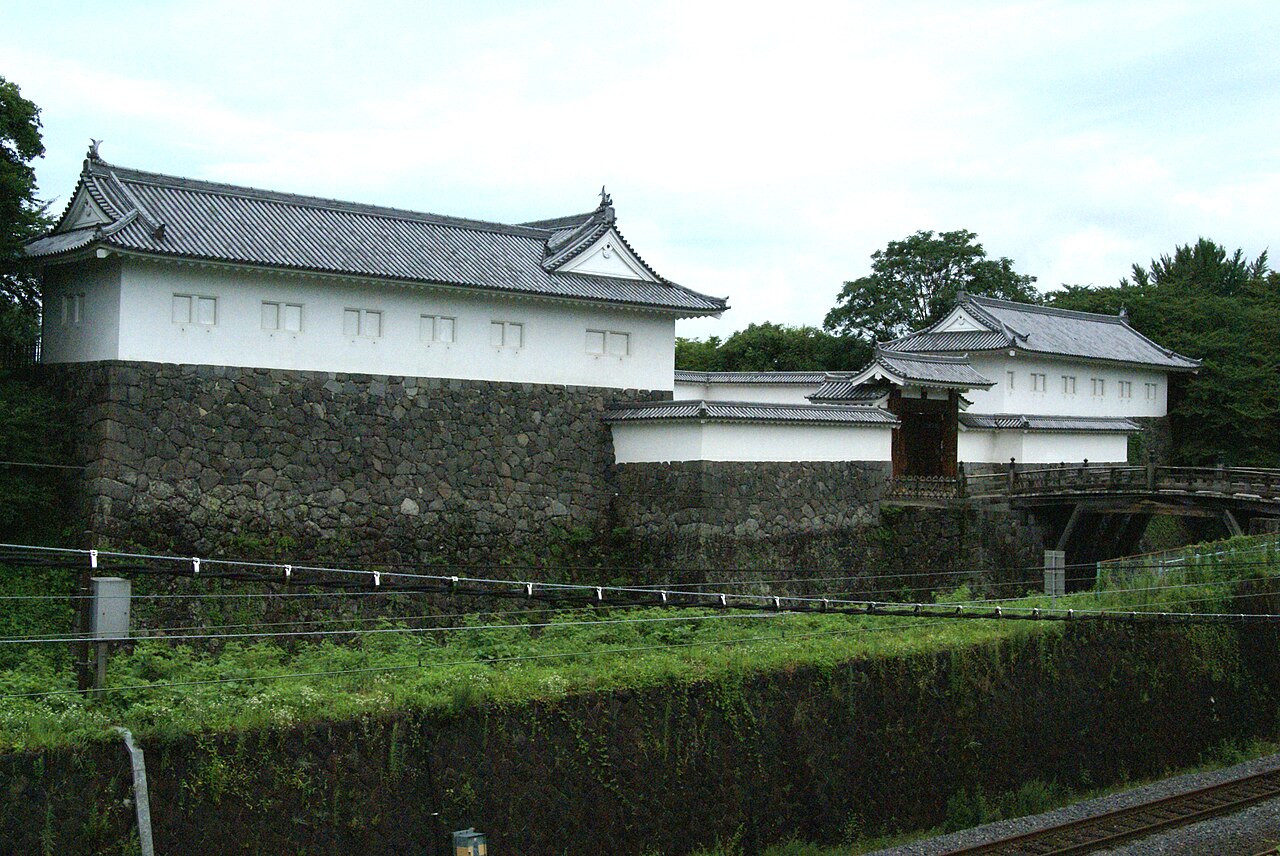
Yonezawa Castle's design reflects typical Japanese castle architecture with a central honmaru (main bailey) surrounded by secondary baileys, moats, and defensive walls. The castle's layout was carefully planned to maximize defense, including earthen ramparts and stone walls. Although the original tenshu (main keep) no longer stands, the castle grounds still feature reconstructed gates and turrets that give insight into its former grandeur.

The moats and walls

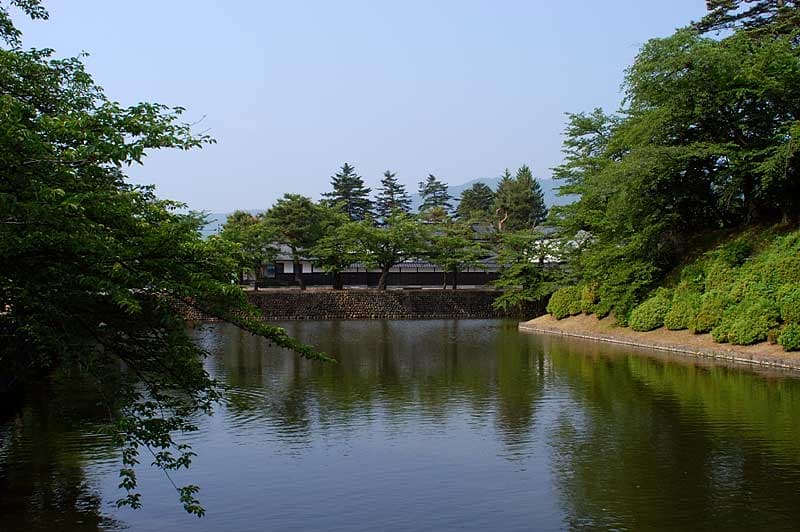
The castle was protected by multiple moats, which served both as defensive barriers and as aesthetic water features. The stone walls were built using traditional Japanese techniques, combining strength with elegance. These fortifications were essential during the frequent conflicts of the Sengoku period.

Residential and administrative buildings

Within the castle complex, various buildings served as the residence of the Uesugi clan daimyō and their retainers. These structures included living quarters, audience halls, and storehouses. Many of these buildings were constructed using wood with tiled roofs, characteristic of Japanese castle architecture in the Edo period.

The Uesugi clan and Edo period significance

During the Edo period (1603–1868), Yonezawa Castle was the seat of the Uesugi clan, a powerful samurai family who ruled the Yonezawa Domain. The castle served as the political and military center of the domain, overseeing administration and governance. The Uesugi were known for their cultural patronage and contributions to the arts, which influenced the castle's surroundings and the city itself.

The castle was maintained and occasionally renovated during this period to reflect the stability and prestige of the ruling clan. While the military function of the castle diminished during the peaceful Edo era, it remained a symbol of the Uesugi clan's authority and heritage.

Modern history and preservation

Following the Meiji Restoration and the abolition of the feudal domain system, many Japanese castles were dismantled or repurposed. Yonezawa Castle suffered partial destruction, with much of its original structures lost. However, efforts have been made to preserve and restore parts of the castle grounds, including reconstructed gates and walls, to honor its historical significance.

Today, the castle site is a public park and cultural landmark in Yonezawa city. It hosts festivals and events that celebrate the legacy of the Uesugi clan and the region's history. Visitors can explore the castle ruins, reconstructed features, and nearby museums dedicated to samurai culture and local heritage.

Visiting Yonezawa Castle

The castle grounds are accessible year-round and provide a peaceful setting for visitors interested in Japanese history and architecture. The site offers walking paths, informative plaques, and scenic views of the surrounding city and mountains. Nearby attractions include the Uesugi Shrine and the Yonezawa City Uesugi Museum, which further enrich the experience of the castle's historical context.

Frequently asked questions (FAQ)

How do I get to Yonezawa Castle?
Yonezawa Castle is located in Yonezawa, Japan, and can be easily accessed by public transportation. Take a train to Yonezawa Station, and from there, it's a short bus ride or a 20-minute walk to the castle grounds.
What is the historical significance of Yonezawa Castle?
Yonezawa Castle was originally built in the early 17th century and served as the seat of the Uesugi clan during the Edo period. The castle played a crucial role in regional politics and military strategy, making it an important historical site in Japan.
When was Yonezawa Castle constructed?
Construction of Yonezawa Castle began in 1601 and was completed in 1603. It has undergone several renovations and reconstructions over the centuries, with the main keep being reconstructed in 1990 based on historical designs.
Can I visit the castle grounds year-round?
Yes, Yonezawa Castle grounds are open to the public year-round, but some areas may have restricted access during winter months due to snow. Visitors can enjoy the beautiful gardens and historical structures throughout the year.
Why is Yonezawa Castle considered an architectural gem?
Yonezawa Castle is celebrated for its unique blend of traditional Japanese castle architecture and scenic natural surroundings. The castle features a three-story turret and beautiful stone walls, set against the backdrop of the surrounding mountains, making it visually stunning.
Is it possible to access the castle with a wheelchair?
Yonezawa Castle is partially accessible for wheelchair users, although some areas may have limitations due to the terrain. The castle grounds have pathways and ramps, but visitors are advised to check specific accessibility options upon arrival.
What are the best times to visit Yonezawa Castle?
The best times to visit Yonezawa Castle are during the cherry blossom season in spring (late March to early April) and the autumn foliage season (November). These seasons offer breathtaking views and a vibrant atmosphere, making it a perfect time for photography and exploration.
What are the ticket prices for entering Yonezawa Castle?
Admission to Yonezawa Castle is typically free for the castle grounds, while there may be a small fee for entering the main keep and museum. Always check the latest information on ticket prices before your visit, as they can vary depending on special exhibitions or events.
What are the opening hours for Yonezawa Castle?
Yonezawa Castle is generally open from 9:00 AM to 5:00 PM, with extended hours during the peak tourist seasons. It's advisable to check the official website or local resources for any changes in hours or special closures before your visit.

Photo gallery

Yonezawa Castle
Click to view

Photo by Satoshin at Japanese Wikipedia•CC BY-SA 3.0

1 photo • Click any image to view in full screen

Information

Hill Castle

Loading map...

Visitor reviews

No reviews yet. Been here? Write the first review and help other travelers!

Write the first review

Visited this castle? Share your experience

Your review helps other travelers and adds first-hand knowledge to our encyclopedia.
Write a review

(5/5)

0/2000 characters

Your review will be visible after admin approval

Nearby castles

31.4 km
Kaminoyama Castle — Japan castle

Kaminoyama Castle

Kaminoyama, Japan

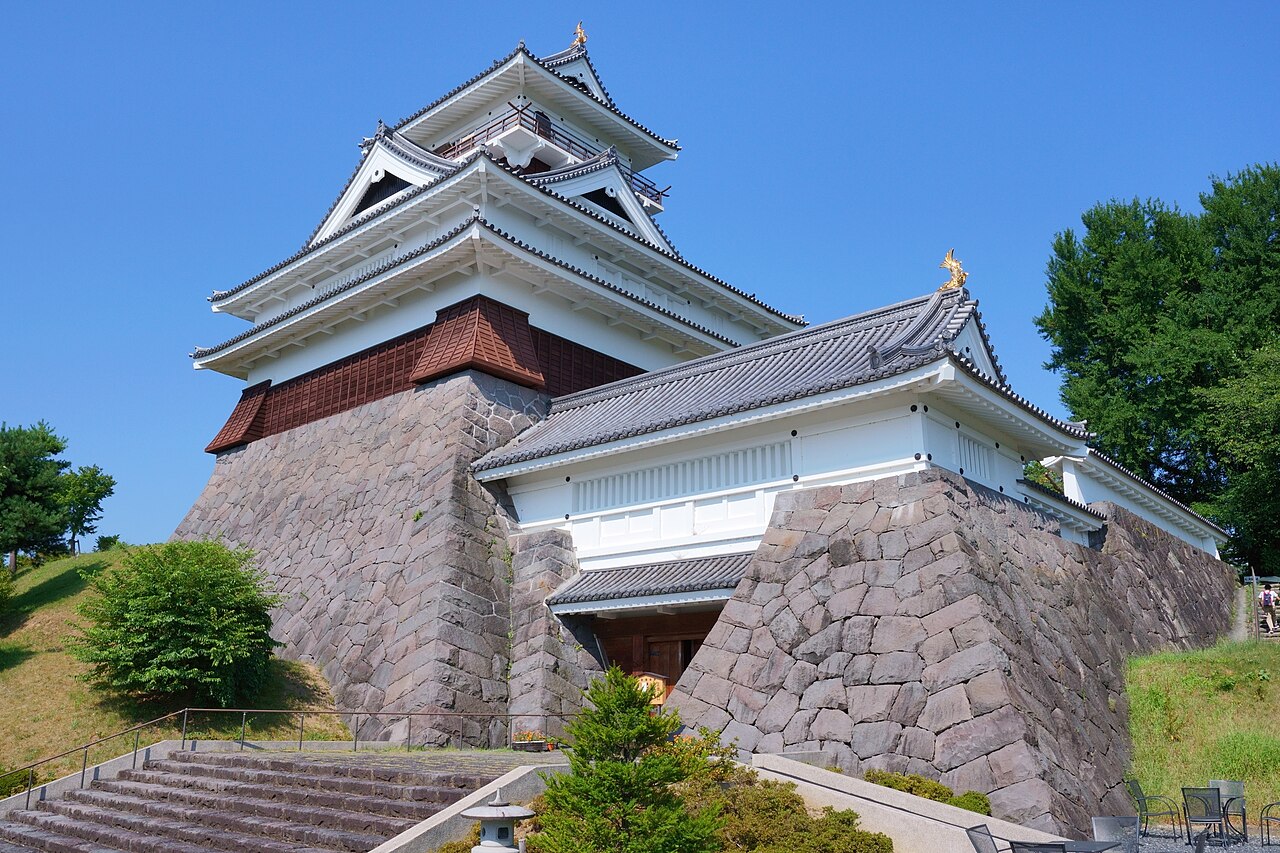
Kaminoyama Castle (上山城, Kaminoyama-jō) is a prominent example of a hirayama-style Japanese castle, situated in the heart of the city of Kaminoyama in eastern Yamagata Prefecture, Japan. This castle played a significant role during the Edo period as the administrative center for the daimyō of the Kaminoyama Domain. It is also historically referred to as Tsukioka Castle (月岡城, Tsukioka-jō), a name that reflects its local heritage and connection to the surrounding area. Historical background and strategic importance Constructed in the 16th century, Kaminoyama Castle was built during a time of intense military and political upheaval in Japan, known as the Sengoku period. The castle's location on a hill provided a strategic vantage point overseeing the surrounding plains, which was typical for hirayama-style castles that combine elements of flatland and hilltop fortifications. This positioning allowed the castle to serve as a defensive stronghold and a center for regional governance. Throughout the Edo period (1603–1868), Kaminoyama Castle was the seat of the local daimyō, who governed the Kaminoyama Domain under the Tokugawa shogunate. The castle's role shifted from purely military functions to administrative and residential purposes, reflecting the relative peace of the Edo era. Architectural features and layout Kaminoyama Castle exemplifies typical features of a hirayama-style castle, which is characterized by its construction on a low hill or elevated terrain surrounded by flatlands. The castle complex included stone walls, moats, and multiple baileys that were arranged to maximize defense while allowing access to the town below. The castle's main keep or tenshu was modest compared to larger castles but served as a symbol of the daimyō's authority. The surrounding walls and gates were designed to control access and provide layered defense against potential attackers. The castle grounds also contained residential quarters, administrative buildings, and storage facilities necessary for the domain's governance. Tsukioka Shrine within the castle grounds Within the castle precincts lies the Tsukioka Shrine, a Shinto shrine that holds cultural and spiritual significance for the local community. The shrine contributes to the historical ambiance of the castle site and reflects the integration of religious practices within the castle environment. Kaminoyama Castle in the modern era Today, Kaminoyama Castle stands as a cultural heritage site in Kaminoyama city. While the original castle structures have undergone changes over the centuries, the site remains a point of interest for visitors and historians alike. Efforts have been made to preserve and restore parts of the castle, maintaining its historical value and providing educational opportunities about Japan's feudal past. The castle's location in Yamagata Prefecture places it within a region known for its natural beauty and historical landmarks, making it a destination for tourists interested in Japanese history and castle architecture. Visiting Kaminoyama Castle Visitors to Kaminoyama Castle can explore the castle grounds, including the Tsukioka Shrine, and enjoy views of the surrounding city and landscape from the hilltop. The site offers insight into the architectural style and feudal history of the region. Local museums and cultural centers often provide additional context about the castle's role and the history of the Kaminoyama Domain.

Renaissance (15th–17th c.)
Details
43.1 km
Yamagata Castle — Japan castle

Yamagata Castle

Yamagata City, Japan

Yamagata Castle, located in Yamagata City, Japan, is a significant example of a late-medieval lowland castle that played a crucial role in the regional power struggles of the Tohoku region. Originally established in 1356 by Shiba Kaneyori, the castle began as a modest fortification approximately the size of the later castle's honmaru (main bailey). Shiba Kaneyori later adopted the name of the surrounding area, becoming Mogami, which links the castle closely to the powerful Mogami clan that shaped its history. Historical development and the Mogami clan The castle was extensively expanded and reconstructed by Mogami Yoshiaki in 1592, transforming it into a much larger fortress with multiple baileys. Yoshiaki added the ninomaru (second bailey) and sannomaru (third bailey), significantly increasing the castle's defensive capabilities. Unlike many contemporary Japanese castles, Yamagata Castle never featured a large main keep or tenshu. Instead, it relied on three two-story and one three-story yagura (turrets) for defense and strategic vantage points. During the Battle of Sekigahara in 1600, Mogami Yoshiaki allied with Tokugawa Ieyasu. When Yoshiaki left to support Tokugawa, the Uesugi clan's general Naoe Kanetsugu attempted to seize Yamagata Castle. However, legend holds that dense fog concealed the castle, preventing its capture and earning it the nickname Kasumigajo, or "castle in the haze." Architectural features and layout Yamagata Castle is a prime example of a lowland castle that utilized natural and man-made defenses. It is surrounded by extensive earthen embankments and deep moats, which create formidable barriers against attackers. The castle's layout is characterized by multiple baileys, with the honmaru at the core, encircled by the ninomaru and sannomaru baileys. The castle's gates are notable for their complex design and impressive stonework. The Honmaru Masugata Gate has been recently reconstructed, showcasing traditional Japanese defensive architecture with its angled walls and enclosed courtyard designed to trap invaders. The East Main Gate was also rebuilt in wood, adding to the castle's historical ambiance. Visitors can explore the top of the earthen embankments that surround the ninomaru and overlook the moats, providing panoramic views of the castle grounds. Foundations of additional yagura turrets remain visible, offering insight into the castle's original scale and defensive complexity. Political significance and decline At its peak following the Battle of Sekigahara, Mogami Yoshiaki controlled lands yielding approximately 570,000 koku, reflecting his considerable power and influence in the region. However, after Yoshiaki's death in 1614 and the subsequent deaths of his successors, the domain's size and importance diminished. His successor, Mogami Yoshitoshi, saw the domain reduced to 300,000 koku before being reassigned to Mikawa. Over time, the strategic importance of Yamagata Castle under the Tokugawa shogunate waned, mirrored by the reduction in the territory governed from the castle. This decline marked a shift in the political landscape of Eastern Japan during the early Edo period. Modern preservation and visitor experience Today, Yamagata Castle is partially preserved, with ongoing archaeological excavations and restoration projects enhancing its historical presentation. The recent reconstruction of the Honmaru Masugata Gate is a highlight, demonstrating traditional Japanese castle architecture and craftsmanship. The castle grounds are among the best-preserved in the Tohoku region, offering visitors a chance to walk along the earthen walls and moats, observe the stone foundations of former structures, and appreciate the castle's scale and defensive ingenuity. The site is a popular destination for history enthusiasts and tourists alike, providing educational insights into Japan's feudal past and castle-building traditions. Visitors are encouraged to take their time exploring the extensive grounds, particularly the embankments around the ninomaru, which afford excellent views of the moats and the surrounding cityscape. The castle's blend of natural landscape and human engineering exemplifies the strategic thinking of Japanese castle builders during the late-medieval period. Additional features and cultural significance Yamagata Castle also holds cultural importance as a symbol of the Mogami clan's legacy and the turbulent history of the Tohoku region during the Sengoku and early Edo periods. Its nickname, Kasumigajo, reflects the mysterious and elusive nature of the castle during times of conflict. The castle grounds host seasonal events and festivals that celebrate its heritage, attracting visitors interested in traditional Japanese culture and history. The preservation efforts continue to uncover artifacts and structural details that enrich understanding of samurai-era fortifications.

Late Medieval (14th–15th c.)
Details
44.7 km
Nihonmatsu Castle — Japan castle

Nihonmatsu Castle

Nihonmatsu, Japan

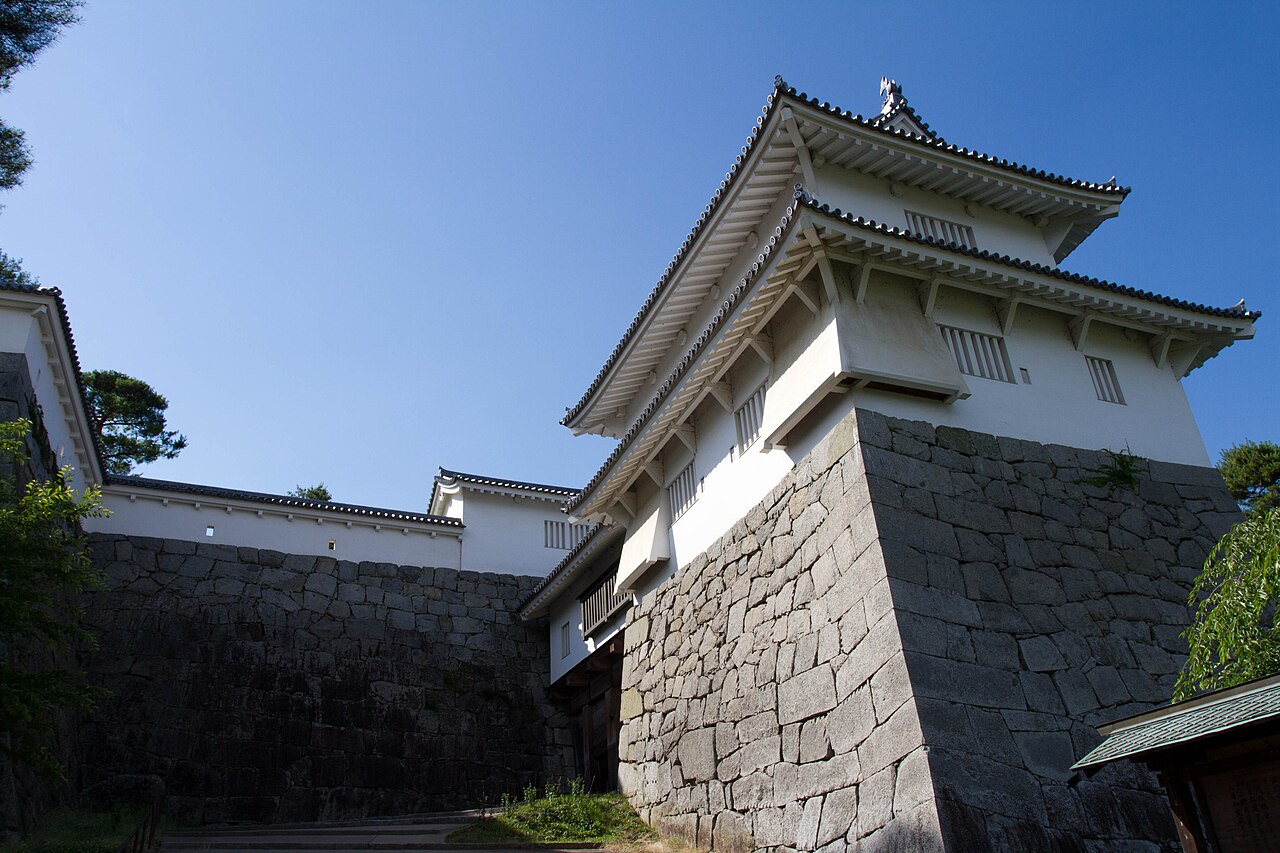
Nihonmatsu Castle, also known as Kasumiga-jo, is a historically significant hill castle located in Nihonmatsu city, Fukushima Prefecture, Japan. It stands as a remarkable testament to the turbulent Late Medieval period in Japanese history, specifically during the Muromachi period (1333-1573). The castle complex uniquely comprises the ruins of two distinct castles built on the same hill but at different times and by different ruling clans. The original castle was constructed between 1394 and 1427 by the Hatakeyama clan, a powerful samurai family during the Muromachi era. This early fortress occupied the summit of the hill, commanding a strategic vantage point over the surrounding landscape. The castle's honmaru (main bailey) was fortified with robust stone walls that still partially survive today. The elevated position provided natural defense advantages, typical of hill castles (yamajiro) in Japan, allowing defenders to monitor approaching enemies and control the nearby routes. The original castle and its dramatic history The original Hatakeyama-built castle played a pivotal role in the regional conflicts of the late 16th century. In 1585, Hatakeyama Yoshitsugu captured Date Terumune, the father of the famous warlord Date Masamune. This event triggered a violent confrontation when Masamune, who was hunting nearby, quickly pursued Yoshitsugu’s party to the Abukuma River. The ensuing clash resulted in the death of Terumune and the entire party, marking a significant moment in the castle's history. Following this, a coalition of samurai from Hitachi Province (modern-day Ibaraki Prefecture), including warriors from the Satake, Ashina, Iwaki, and Ishikawa clans, attempted to seize Nihonmatsu Castle. They engaged Date forces near present-day Motomiya in the battle of Hitotoribashi. The battle ended in a stalemate, leaving Kasumiga-jo independent from either faction's control. In April 1586, Date Masamune's forces laid siege to Kasumiga-jo once again. By July, the son of Hatakeyama Yoshitsugu set fire to the castle and fled to Aizu, leading to the castle's abandonment and the end of its original incarnation. The second castle and its legacy After the destruction of the original castle, a new fortress was constructed at the base of the hill by the Niwa clan. This second castle served as the main seat of power in Nihonmatsu for several centuries. The Niwa clan controlled the castle from 1643 until the Meiji Restoration in the late 19th century, overseeing a period of relative peace and administrative governance rather than military conflict. The castle's architecture evolved during this time, reflecting the changing needs from a purely defensive stronghold to a residence and administrative center. Although much of the original structures have not survived intact, remnants of stone walls and gates remain, providing insight into the castle's layout and construction techniques. Architectural features and site layout The castle complex is characterized by its honmaru at the summit, surrounded by stone fortifications typical of the period. Visitors today can hike to the top of the hill to explore the ruins and appreciate the commanding views of the surrounding Fukushima landscape. The reconstructed Minowa Gate near the base serves as an entrance point and a reminder of the castle's historical significance. The castle grounds include remnants of defensive walls, moats, and baileys that illustrate the strategic design employed by the Hatakeyama and later the Niwa clans. The use of natural topography combined with man-made fortifications exemplifies classic yamajiro defensive architecture. Modern cultural significance and visitor experience Today, Nihonmatsu Castle is a cherished cultural heritage site attracting visitors interested in Japanese history and castle architecture. The castle ruins are partially preserved, allowing for exploration and educational opportunities. The site is particularly famous for its Chrysanthemum Festival, held annually from October to November, which showcases elaborate floral displays and traditional celebrations, enhancing the cultural experience for visitors. The hiking trail to the honmaru and stone walls is a popular activity, offering both historical insight and scenic beauty. The panoramic views from the hilltop provide a unique perspective on the castle's strategic location and the surrounding region. Access and visitor information Visitors can reach the castle ruins by a short hike from the reconstructed Minowa Gate. The site is accessible year-round, with the autumn months being the most popular due to the Chrysanthemum Festival. While the castle is not fully restored, the partially preserved ruins and interpretive signage help visitors understand the site's historical context and architectural features. Overall, Nihonmatsu Castle offers a compelling glimpse into Japan's feudal past, combining natural beauty with rich historical narratives and architectural heritage.

Late Medieval (14th–15th c.)
Details