Yamagata Castle
Yamagata Castle, located in Yamagata City, Japan, is a significant example of a late-medieval lowland castle that played a crucial role in the regional power struggles of the Tohoku region. Originally established in 1356 by Shiba Kaneyori, the castle began as a modest fortification approximately the size of the later castle's honmaru (main bailey). Shiba Kaneyori later adopted the name of the surrounding area, becoming Mogami, which links the castle closely to the powerful Mogami clan that shaped its history.
Historical development and the Mogami clan
The castle was extensively expanded and reconstructed by Mogami Yoshiaki in 1592, transforming it into a much larger fortress with multiple baileys. Yoshiaki added the ninomaru (second bailey) and sannomaru (third bailey), significantly increasing the castle's defensive capabilities. Unlike many contemporary Japanese castles, Yamagata Castle never featured a large main keep or tenshu. Instead, it relied on three two-story and one three-story yagura (turrets) for defense and strategic vantage points.
During the Battle of Sekigahara in 1600, Mogami Yoshiaki allied with Tokugawa Ieyasu. When Yoshiaki left to support Tokugawa, the Uesugi clan's general Naoe Kanetsugu attempted to seize Yamagata Castle. However, legend holds that dense fog concealed the castle, preventing its capture and earning it the nickname Kasumigajo, or "castle in the haze."
Architectural features and layout
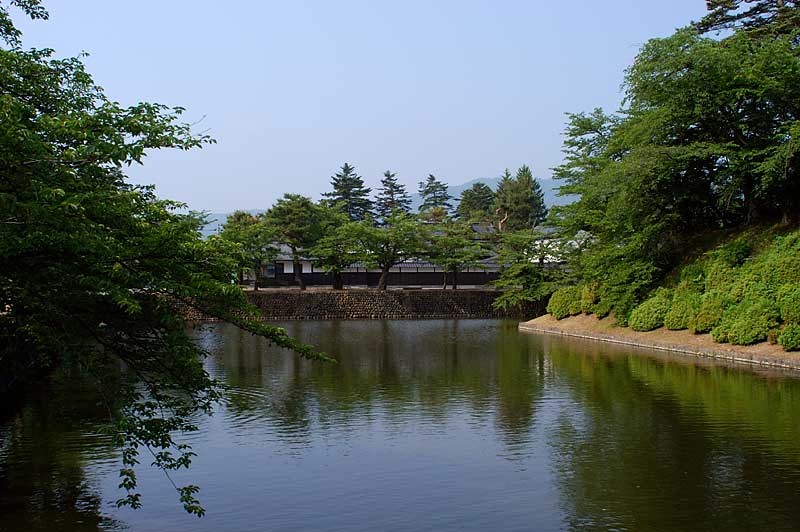
Yamagata Castle is a prime example of a lowland castle that utilized natural and man-made defenses. It is surrounded by extensive earthen embankments and deep moats, which create formidable barriers against attackers. The castle's layout is characterized by multiple baileys, with the honmaru at the core, encircled by the ninomaru and sannomaru baileys.
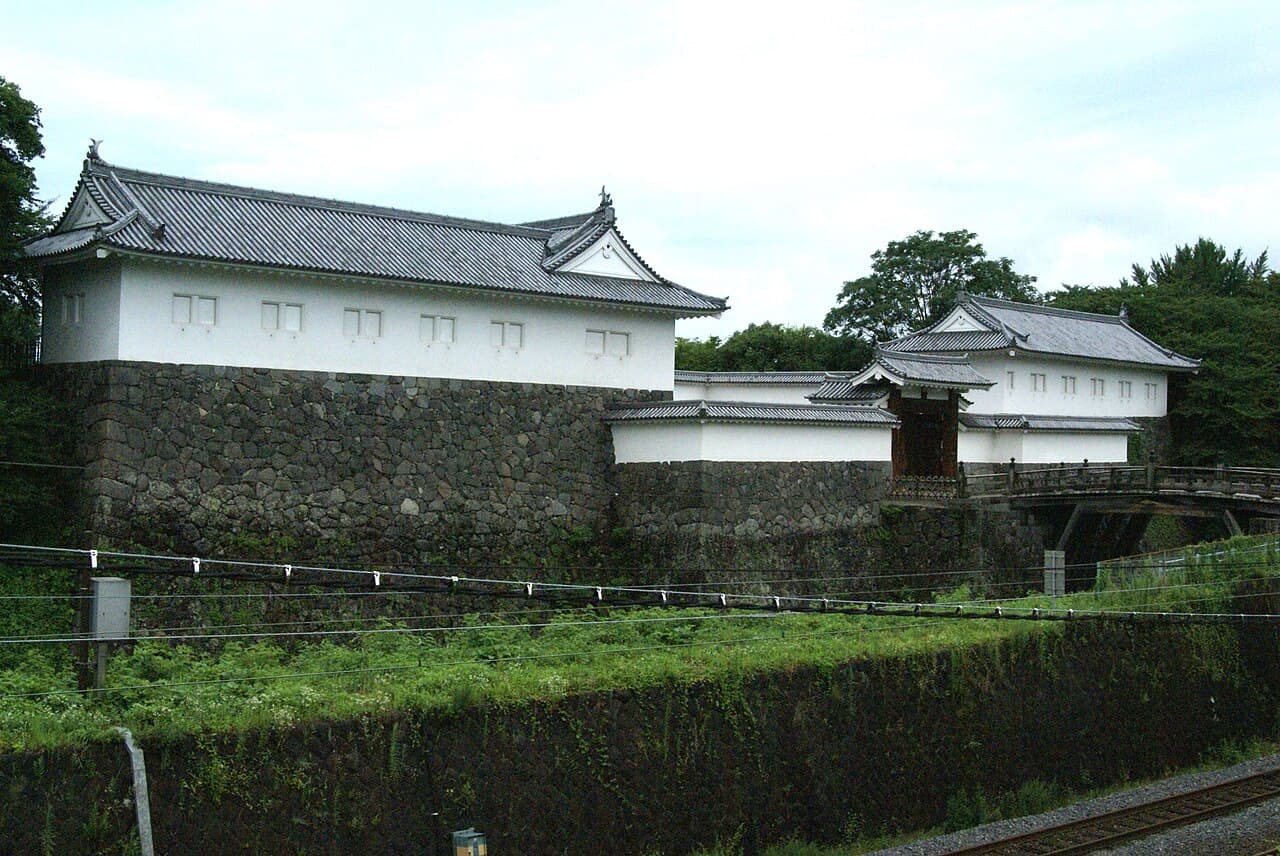
The castle's gates are notable for their complex design and impressive stonework. The Honmaru Masugata Gate has been recently reconstructed, showcasing traditional Japanese defensive architecture with its angled walls and enclosed courtyard designed to trap invaders. The East Main Gate was also rebuilt in wood, adding to the castle's historical ambiance.
Visitors can explore the top of the earthen embankments that surround the ninomaru and overlook the moats, providing panoramic views of the castle grounds. Foundations of additional yagura turrets remain visible, offering insight into the castle's original scale and defensive complexity.
Political significance and decline
At its peak following the Battle of Sekigahara, Mogami Yoshiaki controlled lands yielding approximately 570,000 koku, reflecting his considerable power and influence in the region. However, after Yoshiaki's death in 1614 and the subsequent deaths of his successors, the domain's size and importance diminished.
His successor, Mogami Yoshitoshi, saw the domain reduced to 300,000 koku before being reassigned to Mikawa. Over time, the strategic importance of Yamagata Castle under the Tokugawa shogunate waned, mirrored by the reduction in the territory governed from the castle. This decline marked a shift in the political landscape of Eastern Japan during the early Edo period.
Modern preservation and visitor experience
Today, Yamagata Castle is partially preserved, with ongoing archaeological excavations and restoration projects enhancing its historical presentation. The recent reconstruction of the Honmaru Masugata Gate is a highlight, demonstrating traditional Japanese castle architecture and craftsmanship.
The castle grounds are among the best-preserved in the Tohoku region, offering visitors a chance to walk along the earthen walls and moats, observe the stone foundations of former structures, and appreciate the castle's scale and defensive ingenuity. The site is a popular destination for history enthusiasts and tourists alike, providing educational insights into Japan's feudal past and castle-building traditions.
Visitors are encouraged to take their time exploring the extensive grounds, particularly the embankments around the ninomaru, which afford excellent views of the moats and the surrounding cityscape. The castle's blend of natural landscape and human engineering exemplifies the strategic thinking of Japanese castle builders during the late-medieval period.
Additional features and cultural significance
Yamagata Castle also holds cultural importance as a symbol of the Mogami clan's legacy and the turbulent history of the Tohoku region during the Sengoku and early Edo periods. Its nickname, Kasumigajo, reflects the mysterious and elusive nature of the castle during times of conflict.
The castle grounds host seasonal events and festivals that celebrate its heritage, attracting visitors interested in traditional Japanese culture and history. The preservation efforts continue to uncover artifacts and structural details that enrich understanding of samurai-era fortifications.
Frequently asked questions (FAQ)
- How do I get to Yamagata Castle?
- Yamagata Castle is located in Yamagata City and is accessible by local public transportation and taxis. It is within walking distance from Yamagata Station, making it convenient for visitors traveling by train.
- What is the best time to visit Yamagata Castle?
- The best time to visit Yamagata Castle is during spring and autumn when the weather is mild and the castle grounds are adorned with cherry blossoms or colorful fall foliage, enhancing the scenic views.
- Can I explore the reconstructed gates and moats at Yamagata Castle?
- Yes, visitors can explore the recently reconstructed Honmaru Masugata Gate, the wooden East Main Gate, and walk along the earthen embankments and moats, which offer excellent views of the castle's defensive structures.
- Is Yamagata Castle wheelchair accessible?
- While the castle grounds feature uneven terrain and earthen embankments, some areas near the gates and main paths are accessible. Visitors with mobility concerns should check with local tourist information for detailed accessibility options.
- Are there guided tours available at Yamagata Castle?
- Guided tours may be available seasonally or by arrangement through local tourist offices. These tours provide detailed historical and architectural insights into the castle and the Mogami clan's history.
Photo gallery

Information
Opening hours
The park is open from 5am-10pm from April to November and from 5:30am in the winter months. The East Main Gate is only open from April until the Culture Day weekend in November. Check the website for details about dates and times.
Website
Visit websiteSources & official resources
Verify the information above using these authoritative references.
Loading map...
Visitor reviews
No reviews yet. Been here? Write the first review and help other travelers!
Write the first reviewVisited this castle? Share your experience
Your review helps other travelers and adds first-hand knowledge to our encyclopedia.