Yogaisan Castle
Yōgaiyama Castle (要害山城, Yōgaiyama-jō), also known as Sekisuiyama Castle (積翠山城, Sekisuiyama-jō), is a significant example of a Sengoku period yamajiro (mountain castle) located in the historic Kai Province, in what is today Yamanashi Prefecture, Japan. Constructed in the 1520s by the powerful Takeda clan, this fortress played a strategic role during the turbulent era of feudal Japan marked by continuous warfare and shifting allegiances.
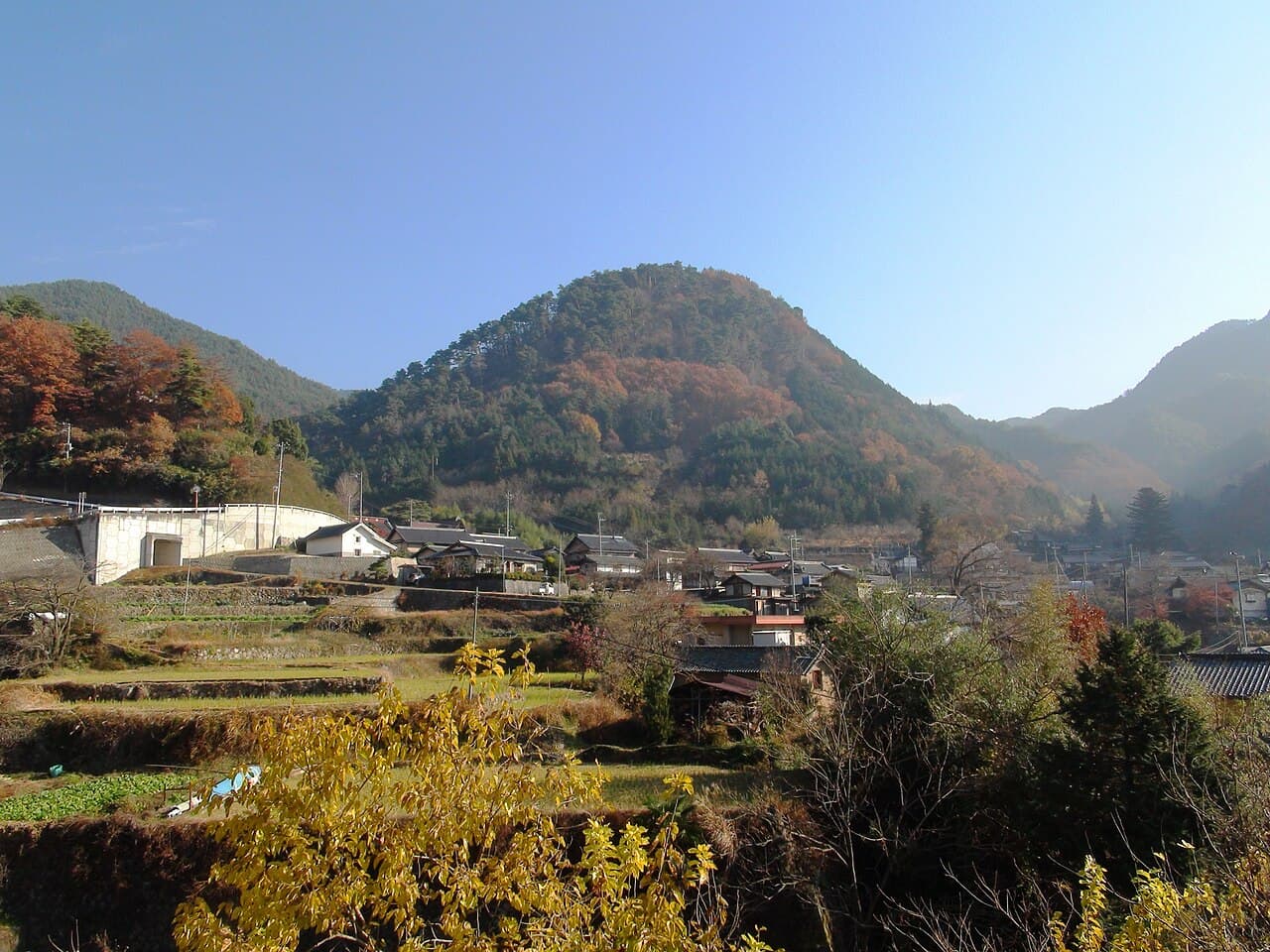
The castle is situated atop Yōgaiyama ("Guard Mountain"), a natural elevation that provided commanding views of the surrounding valleys and approaches, making it an ideal location for defense and surveillance. Its design follows the typical characteristics of a yamajiro, utilizing the rugged mountainous terrain to enhance its defensive capabilities. The castle's layout included multiple baileys terraced along the mountain slope, connected by narrow paths and fortified with stone walls and earthen ramparts.
Historical context and the Takeda clan
The Takeda clan were among the most influential samurai families during the Sengoku period (1467–1603), a time of near-constant military conflict in Japan. Yōgaiyama Castle was constructed as part of the Takeda's efforts to consolidate their power in the Kai Province and defend their territory against rival clans such as the Uesugi and Hojo. The castle served both as a military stronghold and a symbol of the Takeda's regional dominance.
While not as large or famous as some other Takeda castles like Shingen's Tsutsujigasaki Castle, Yōgaiyama Castle contributed to the network of fortifications that enabled the Takeda to control their domain effectively. The castle's strategic location allowed for early warning against enemy advances and served as a refuge during times of siege.
Architectural features and defensive design
Yōgaiyama Castle exemplifies the yamajiro style of castle construction, which emphasizes natural topography to enhance defense. The castle's multiple terraced baileys were arranged along ridges and slopes, with steep cliffs and dense forests providing natural barriers. The use of stone walls in critical areas helped to reinforce vulnerable points, while dry moats and earthen embankments further impeded enemy movements.
The castle's main enclosure likely housed the lord's residence and command facilities, protected by secondary baileys that contained barracks, storage areas, and watchtowers. Narrow pathways and steep staircases connected these sections, making it difficult for attackers to advance quickly or in large numbers.
Use of natural terrain
The mountainous terrain was integral to the castle's defense strategy. The steep slopes limited the approach routes available to attackers, and the defenders could exploit height advantages for archery and surveillance. The dense vegetation around the castle also served to conceal its exact layout and hinder enemy reconnaissance.
Stonework and fortifications
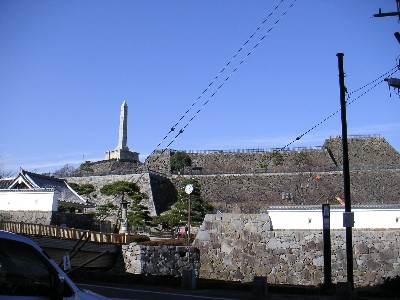
Although primarily constructed with earthworks and wooden structures, Yōgaiyama Castle incorporated stone walls in key defensive positions. These stone fortifications were carefully fitted to withstand assaults and prevent erosion. The remains of these walls are among the most visible features surviving today.
Decline and preservation
Following the fall of the Takeda clan in the late 16th century, Yōgaiyama Castle gradually lost its military importance. Like many mountain castles of the Sengoku period, it was abandoned as the political landscape stabilized under the Tokugawa shogunate. Over time, the wooden buildings decayed, and the site fell into ruin.
Recognizing its historical significance, the Japanese government designated the castle ruins as a National Historic Site in 1938. Since 1991, efforts have been made to protect and preserve the remaining earthworks, stone walls, and terraces. Today, the site offers valuable insights into Sengoku period military architecture and the Takeda clan's regional influence.
Visiting Yōgaiyama Castle ruins
The castle ruins are accessible to visitors interested in Japanese history and castle architecture. Hiking trails lead to the site, allowing exploration of the terraced baileys and surviving fortifications. The natural setting provides a scenic backdrop and a tangible connection to Japan's feudal past.
Interpretive signage and occasional guided tours help contextualize the ruins, explaining their historical and architectural significance. Visitors can appreciate the strategic ingenuity of the Takeda clan and the challenges of mountain castle construction during the Sengoku period.
Legacy and cultural importance
Yōgaiyama Castle remains an important cultural asset, representing the military strategies and architectural practices of 16th-century Japan. Its preservation as an archaeological site enables ongoing study and public education about the Sengoku period and the Takeda clan's legacy.
The castle's ruins contribute to the broader understanding of yamajiro-type fortresses, which played a crucial role in Japan's feudal warfare and territorial control. As a National Historic Site, Yōgaiyama Castle continues to attract historians, archaeologists, and tourists seeking to explore Japan's rich samurai heritage.
Frequently asked questions (FAQ)
- How do I get to Yogaisan Castle?
- Yogaisan Castle is accessible by public transport, with the nearest train station being approximately a 15-minute walk away. Local buses also connect the castle to nearby towns, making it easy for visitors to reach this historical site. For those driving, there is limited parking available near the entrance.
- When was Yogaisan Castle built?
- Yogaisan Castle was originally constructed in the late 16th century during the Sengoku period. It served as a strategic fortification and residence for local feudal lords. Although it has undergone various restorations, much of its original architecture reflects the design principles of that era.
- What is the historical significance of Yogaisan Castle?
- Yogaisan Castle played a crucial role in the unification of Japan during the tumultuous Sengoku period. It was a center of military and political power, influencing the surrounding regions. Today, it stands as a symbol of Japan's rich history and offers insights into the feudal system of the time.
- Can I take guided tours at Yogaisan Castle?
- Yes, guided tours are available for visitors who want to learn more about the castle's history and architecture. These tours are conducted by knowledgeable guides who provide fascinating insights into the castle's past and its significance in Japanese history. It is recommended to check the official website for tour schedules and booking information.
- What are the opening hours of Yogaisan Castle?
- Yogaisan Castle is open to visitors from 9 AM to 5 PM daily, with last entries accepted one hour before closing. It is closed on certain public holidays, so it’s advisable to check the schedule before planning your visit. The castle also has seasonal hours, which may vary during festivals or special events.
- Is it possible to hold events at Yogaisan Castle?
- Yes, Yogaisan Castle offers facilities for hosting various events, including weddings and cultural ceremonies. The picturesque setting and historical ambiance make it a unique venue. Interested parties should contact the castle management for details on availability and booking procedures.
- What are the ticket prices for Yogaisan Castle?
- Admission to Yogaisan Castle is reasonably priced, with tickets typically costing around 500 yen for adults and discounts available for children and seniors. Group rates may also be offered for larger parties, making it an affordable option for families and school trips. Tickets can be purchased on-site or through the castle's official website.
- When is the best time to visit Yogaisan Castle?
- The best time to visit Yogaisan Castle is during the spring and autumn months when the weather is mild, and the surrounding nature is in full bloom. Cherry blossoms in spring and vibrant fall foliage create a stunning backdrop for the castle. Additionally, various festivals and events take place during these seasons, enhancing the visitor experience.
- Are there any nearby attractions to visit?
- Yes, there are several attractions near Yogaisan Castle, including traditional Japanese gardens and museums that showcase local history and culture. Visitors can also explore nearby temples and shrines, adding to the experience of Japanese heritage. The surrounding area offers beautiful hiking trails, perfect for those looking to immerse themselves in nature.
Photo gallery

Information
Loading map...
Visitor reviews
No reviews yet. Been here? Write the first review and help other travelers!
Write the first reviewVisited this castle? Share your experience
Your review helps other travelers and adds first-hand knowledge to our encyclopedia.