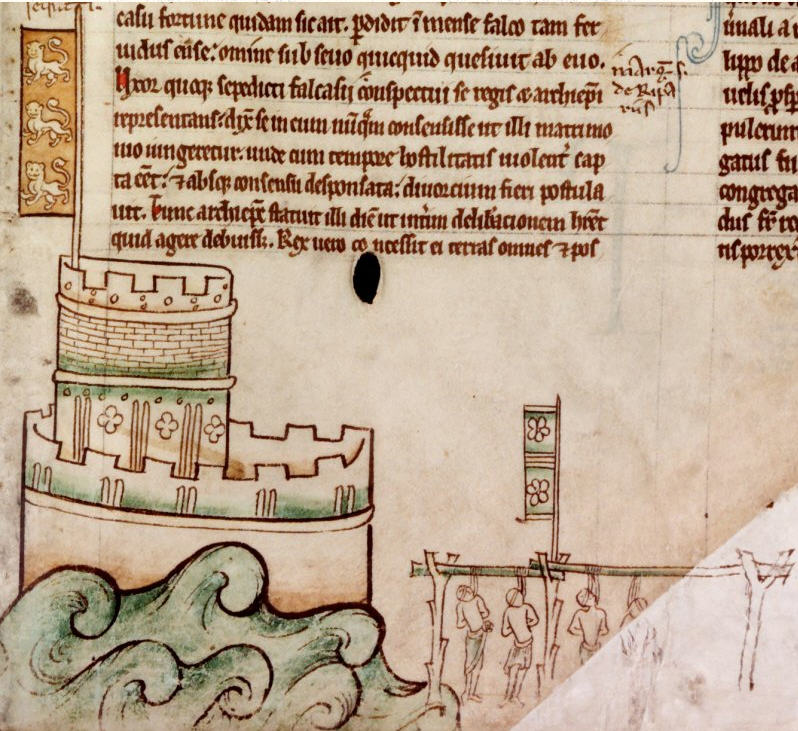
Yielden Castle
Yielden Castle stands as a significant example of a medieval motte-and-bailey fortress located in the village of Yelden, Bedfordshire, England. Established during the medieval period by the Norman rulers following the Norman Conquest of 1066, the castle reflects the typical military and residential architecture of the time. Its strategic placement and architectural evolution illustrate the changing nature of feudal strongholds in England from the 12th through the 14th centuries.
Historical background and significance
The first documented mention of Yielden Castle dates to 1173, suggesting its construction occurred in the twelfth century. The castle served as the fortified residence of the Trailly family, a noble lineage that controlled the surrounding lands. As a seat of local power, the castle was integral to the feudal system, providing defense and administration within its domain.
During the late 12th and early 13th centuries, the castle's role as a stronghold was prominent, reflecting the broader Norman strategy of consolidating control through fortified manors. However, by the mid-14th century, around 1360, the castle had fallen into disrepair, indicative of the declining military importance of smaller castles as warfare and political structures evolved. Its abandonment as a functional fortress mirrors the fate of many similar sites across England.
The revival of interest in the late 19th century led to archaeological excavations in 1881 and 1882, which uncovered key structural elements such as the thirteenth-century stone curtain wall. These investigations enhanced understanding of the castle's layout and defensive capabilities, cementing its status as a protected Scheduled Monument today.
Architectural features and layout
Motte-and-bailey design with dual baileys
Yielden Castle exemplifies the classic Norman motte-and-bailey design, featuring a raised earthwork mound or motte topped originally with a wooden or stone keep. Uniquely, it includes two enclosed courtyard areas known as baileys, which provided additional space for domestic buildings, stables, and defensive structures. This dual-bailey configuration is relatively uncommon and suggests a complex functional arrangement for both defense and habitation.
Stone curtain wall and defensive evolution
Excavations revealed remnants of a stone curtain wall dating from the 13th century, which replaced or supplemented earlier wooden palisades. This stone fortification enclosed the baileys, significantly enhancing the castle's defensive capabilities against siege warfare. The wall's construction marks an important phase in the castle's architectural evolution, reflecting broader trends in medieval military engineering.
Earthworks and current remains
Today, the castle's physical footprint is primarily discernible through extensive earthworks covered in grass. These earthworks outline the original motte and the two baileys, providing a visible record of the castle's medieval footprint despite the loss of most above-ground stone structures. Only fragments of the stone curtain wall remain visible, offering a glimpse into the site's former strength.
The site is situated on relatively flat terrain, approximately 67 meters above sea level, which is somewhat atypical for a motte-and-bailey castle that often occupies more elevated ground. This location may have been chosen for strategic control of the surrounding landscape and local routes.
Archaeological investigations and preservation
The late 19th-century excavations conducted in 1881 and 1882 were pivotal in documenting the castle's layout and uncovering key architectural elements. These efforts revealed the extent of the stone curtain wall and clarified the relationship between the motte and the dual baileys. The findings have been essential for historical and archaeological scholarship on Norman castles in Bedfordshire.
Currently, Yielden Castle is designated as a Scheduled Monument, ensuring legal protection of the site. Although much of the castle remains as earthworks, the site is recognized for its cultural and historical importance as a representative example of Norman military architecture and feudal power structures in medieval England.
Context within medieval English fortifications
Yielden Castle fits within the broader context of Norman fortifications established across England after 1066. The motte-and-bailey design was a hallmark of Norman military strategy, facilitating rapid construction of defensible residences for the new ruling elite. The castle's evolution from timber to stone defenses mirrors the general architectural progression seen throughout the medieval period.
The decline of Yielden Castle by the 14th century aligns with the reduced strategic value of smaller castles as centralized royal power increased and new forms of warfare emerged. Many such castles were abandoned or repurposed, leaving behind earthworks and ruins that today provide valuable insights into medieval life and defense.
Visiting yielden castle today
While Yielden Castle no longer stands as a complete fortress, its earthworks remain accessible to visitors interested in medieval history and archaeology. The site offers a tangible connection to Norman England and the feudal past of Bedfordshire. Visitors can explore the grassy mounds marking the motte and baileys and appreciate the castle's historical significance within the English landscape.
Interpretive signage and local heritage initiatives help contextualize the site, although no extensive visitor facilities exist due to the castle's ruinous state. The castle's protected status ensures its preservation for future generations to study and enjoy.
Frequently asked questions (FAQ)
- When was Yielden Castle built?
- Yielden Castle was constructed in the 12th century, with its first historical record appearing in 1173.
- What architectural style characterizes Yielden Castle?
- Yielden Castle is a classic example of a Norman motte-and-bailey castle, featuring earthworks and a 13th-century stone curtain wall.
- Can visitors explore the remains of Yielden Castle?
- Yes, visitors can explore the grassy earthworks marking the motte and dual baileys, though only fragments of stone walls remain visible.
- Why did Yielden Castle fall into ruin?
- By the mid-14th century, Yielden Castle had declined due to reduced strategic importance and evolving military tactics, leading to its abandonment.
- Is Yielden Castle protected for preservation?
- Yes, Yielden Castle is a Scheduled Monument, legally protected to preserve its archaeological and historical significance.
Information
Sources & official resources
Verify the information above using these authoritative references.
Loading map...
Visitor reviews
No reviews yet. Been here? Write the first review and help other travelers!
Write the first reviewVisited this castle? Share your experience
Your review helps other travelers and adds first-hand knowledge to our encyclopedia.