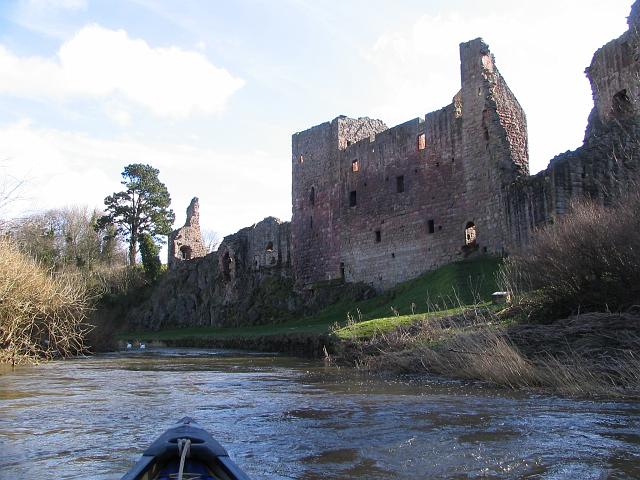
Yester Castle
Yester Castle stands as a remarkable example of medieval fortification in East Lothian, Scotland, renowned not only for its historical significance but also for its intriguing blend of documented history and local legend. The castle's origins date back to the 12th and 13th centuries, with its earliest stone keep constructed before 1267 by Sir Hugo de Giffard, a Norman nobleman and reputed sorcerer, often referred to as the "Wizard of Yester." This association with magic and necromancy has contributed to the castle's enduring cultural mystique, making it a unique subject of both historical and folkloric interest.
The site occupies a strategic hill castle position overlooking the surrounding landscape, typical of Norman defensive architecture meant to assert control and provide security in turbulent medieval Scotland. The castle's layout originally featured a stone keep, curtain walls forming a defensive enclosure, and a subterranean chamber known as the Goblin Ha' or Hobgoblin Hall, which remains one of the most significant surviving architectural elements. This vaulted underground hall, with its Gothic-style masonry, is notable for its scale and craftsmanship, illustrating the advanced building techniques of the period.
Historical background and foundation
The establishment of Yester Castle is closely tied to the arrival of Norman settlers in Scotland during the medieval period. The barony of Yester was granted by King William the Lion to Hugo de Giffard, a Norman immigrant, anchoring the castle's foundation in the early medieval nobility of Scotland. The de Giffard family played a prominent role in the region, with Sir Hugo himself gaining a reputation as both a guardian to the young King Alexander III of Scotland and a figure enveloped in tales of sorcery.
Historical records indicate that Alexander III visited Yester Castle around May 24, 1278, underscoring the site's importance as a royal residence and political center during the 13th century. Correspondence with Edward I of England during this time further suggests the castle's role in the complex political landscape of medieval Scotland.
The wizard of yester and local legends
Sir Hugo de Giffard's legacy extends beyond his noble duties into the realm of legend. He was reputed to be a magician and necromancer, with local folklore crediting him with supernatural powers. The subterranean Goblin Ha' was believed to be constructed by a magical army of hobgoblins conjured through a pact with the Devil. Chronicler John of Fordun in the 14th century mentioned the large cavern beneath the castle, thought to have been formed by magical means.
These stories have imbued Yester Castle with a mystical aura, making it a site of fascination not only for historians but also for enthusiasts of Scottish folklore and paranormal tales. The Goblin Ha' itself, with its impressive vaulted ceiling and mysterious atmosphere, continues to inspire imagination and curiosity.
Architectural features and layout
Yester Castle's architecture reflects the evolution of medieval military design. The original stone keep served as the stronghold's central defensive and residential structure. Surrounding this was a curtain wall forming an enclosure or castle of enceinte, designed to protect inhabitants during times of siege or attack.
Although much of the above-ground stonework has been lost—largely due to stone being repurposed in the 17th century for the construction of the nearby Yester House—the northern curtain wall remnants still provide insight into the castle's defensive capabilities. The castle's hilltop location further enhanced its natural defenses, allowing for surveillance of the surrounding territory.
The goblin ha’: a subterranean marvel
The most remarkable surviving feature is the Goblin Ha', a large vaulted chamber beneath the castle. This subterranean hall is accessible via a staircase on the west side of the site and showcases Gothic vaulting that exemplifies medieval masonry skill. The hall extends beneath a significant portion of the castle footprint and includes window-like openings that illuminate the interior space.
Historically, the Goblin Ha' may have served multiple purposes, including storage, refuge during attacks, or as a symbolic chamber reflecting the owner's status and mystical reputation. Its preservation and continued use until the 18th century highlight its importance long after the castle above had fallen into ruin.
Historical events and later history
Yester Castle witnessed significant historical events, particularly during the Wars of Scottish Independence and the Rough Wooing conflicts of the 16th century. The castle was rebuilt as a defensive enclosure to adapt to changing military needs. After the death of the last male Giffard in 1357, the estate passed to the Hay family through marriage, who maintained control for centuries.
In 1544, English forces burned the castle during the Rough Wooing, a campaign aimed at securing a dynastic marriage between Scotland and England. Despite this, John, 4th Lord Hay, successfully defended the castle in 1547, although the English captured it briefly in 1548. Following these events, the Hays abandoned the old castle in favor of building a new tower house at the site of present-day Yester House.
By the late 17th century, Yester Castle had largely fallen into ruin. Much of its stone was removed for other constructions, yet the Goblin Ha' remained intact and was occupied until 1737, underscoring its enduring utility and symbolic significance.
Preservation and cultural significance
Today, Yester Castle is protected as a Scheduled Ancient Monument, recognizing its importance as a heritage site. While the castle stands mostly in ruins, the Goblin Ha' remains a well-preserved architectural gem that attracts historians, archaeologists, and visitors intrigued by its blend of history and legend.
The castle's association with the "Wizard of Yester" continues to capture public imagination, making it a unique cultural landmark in Scotland's rich tapestry of medieval castles. Its story reflects the intersection of Norman influence, Scottish medieval politics, and enduring folklore.
Visitors to the site can explore the remains of the curtain walls and descend into the Goblin Ha' to experience firsthand the impressive medieval craftsmanship. Although the castle is on private land, it remains a significant point of interest for those studying medieval architecture and Scottish history.
Frequently asked questions (FAQ)
- How do I visit Yester Castle and the Goblin Ha'?
- Yester Castle is located on private land in East Lothian, so public access is limited. Visitors should check local resources or contact the landowner for permission. The Goblin Ha' can be viewed during special guided tours when available.
- What is the historical significance of Yester Castle?
- Yester Castle was a strategic medieval fortress linked to the Norman de Giffard family and played a role in Scottish royal history, including hosting King Alexander III. It also features in local folklore due to the legendary 'Wizard of Yester.'
- When was Yester Castle built and by whom?
- The original stone keep of Yester Castle was built before 1267, likely by Sir Hugo de Giffard, a Norman nobleman and reputed magician who served as guardian to King Alexander III.
- What architectural features remain at Yester Castle?
- While much of the above-ground structure is in ruins, the Goblin Ha', a large vaulted subterranean chamber with Gothic vaulting, remains largely intact and is the castle's most notable architectural feature.
- Why is the Goblin Ha' significant?
- The Goblin Ha' is significant for its impressive medieval Gothic vaulting and its association with local legends of magical construction by hobgoblins, reflecting both architectural skill and cultural folklore.
Information
Loading map...
Visitor reviews
No reviews yet. Been here? Write the first review and help other travelers!
Write the first reviewVisited this castle? Share your experience
Your review helps other travelers and adds first-hand knowledge to our encyclopedia.