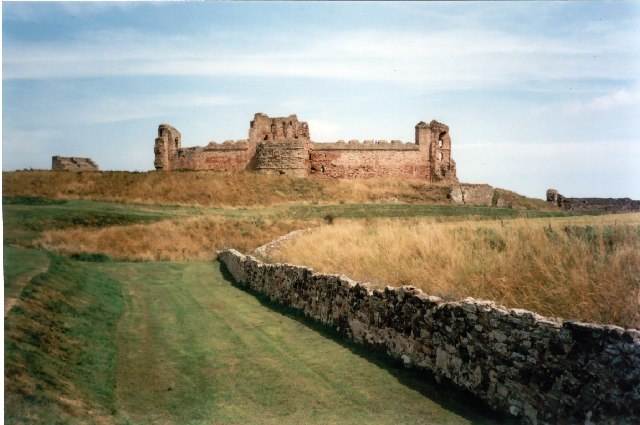
Hailes Castle
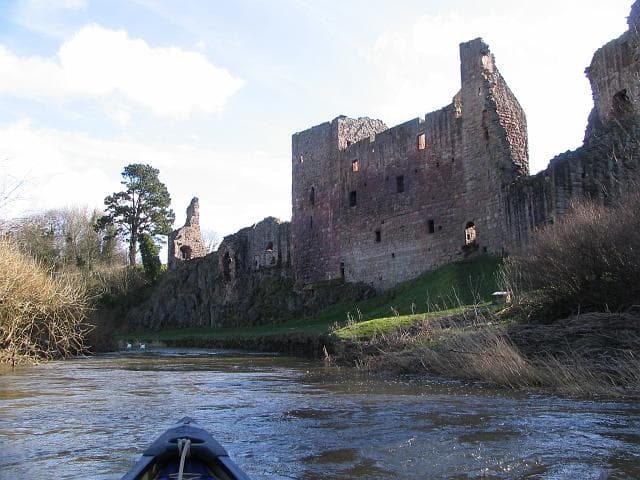
Hailes Castle stands as a remarkable example of a 13th-century hill castle nestled in a river valley near East Linton, East Lothian, Scotland. This castle is notable for its strategic location on a raised promontory above the River Tyne, controlling river access and the route toward Edinburgh. Established originally as a fortified tower house by Hugo de Gourlay before 1300, it is among the earliest surviving castles of its kind in Scotland, embodying significant medieval architectural and historical value.
The early origins and medieval foundation
The castle's foundation dates back to the High Medieval period, with the earliest construction phases attributed to the late 13th century. The initial structure was a fortified tower built by the de Gourlay family, who were prominent landowners during Scotland’s turbulent Wars of Independence. The castle's 13th-century curtain wall encloses the site, providing a strong defensive perimeter characteristic of the era’s military architecture.
Following political shifts, the castle passed into the hands of the Hepburn family under King David II. Sir Patrick Hepburn, the first Lord Hailes, significantly expanded the castle in the mid-15th century, receiving a royal charter in 1451 that established the Barony of Hailes. This expansion included the construction of a dominant four-storey West Tower and a lower eastern tower, forming a long north-facing range overlooking the river.
Architectural features and castle layout
The west tower and original central keep
The most prominent surviving feature of Hailes Castle is the West Tower, a large square donjon built in the 15th century by the Hepburns. This imposing tower dwarfs the remains of the original central tower, which was likely rebuilt in the 16th century. The original tower was later converted into a dovecot, reflecting changes in the castle’s function over time.
The eastern tower and northern range
The eastern tower, once part of the northern range, survives only as a fragment of stonework. The two towers are linked by a 15th-century range containing a vaulted basement that housed the bakehouse and brewhouse, essential for the castle’s self-sufficiency. This range also includes a roofless chamber identified as a chapel, distinguished by architectural features such as a piscina and an ambry, indicating its religious function.
Defensive structures and courtyard
The castle is enclosed by a substantial curtain wall, typical of 13th-century defensive design. A postern gate between the eastern tower and the range provided discreet access to the River Tyne. The Hepburn family added a walled courtyard on the south side, creating a protected inner space for daily activities and defense.
Historical significance and military events
Despite its non-strategic position relative to major battlefields, Hailes Castle played a role in several notable military events. Around 1400, it successfully withstood an assault led by Harry Hotspur Percy allied with the Earl of March. A counter-attack led by Archibald, Master of Douglas, defeated the attackers. However, in 1443, the castle fell to Archibald Dunbar, who massacred the defenders.
During the Rough Wooing (1547-48), the castle was occupied by John Lord Borthwick in support of the Scottish Regent Arran. English forces briefly held it after the Battle of Pinkie, but it was retaken and deliberately slighted by the Regent to prevent further use by the enemy. In 1567, Mary, Queen of Scots stayed at Hailes Castle hosted by James Hepburn, 4th Earl of Bothwell, shortly before the Battle of Carberry Hill. The castle later passed through several noble families, including the Stewarts, Setons, and Dalrymples.
In 1650, following the Battle of Dunbar, Oliver Cromwell’s forces partially slighted the castle. By the 19th century, the castle had lost its military role and was adapted as a granary, with the Dalrymple family relocating to nearby Newhailes House.
Preservation and current status
Since 1926, Hailes Castle has been under state guardianship, now managed by Historic Environment Scotland as a scheduled monument. The castle remains largely in ruinous condition, with roofless chambers and partial walls providing insight into its medieval past. Safety concerns have limited interior access since 2020, but the site remains an evocative destination for visitors interested in Scottish medieval history and architecture.
The castle’s riverside setting, extensive curtain walls, and surviving towers offer a vivid glimpse into the evolution of Scottish fortified residences from the 13th to the 17th centuries. Its connection to prominent historical figures and events, combined with its architectural features, make Hailes Castle a significant heritage site within East Lothian.
Visiting information and visitor experience
Hailes Castle is freely accessible to the public, offering a quiet and atmospheric ruin to explore. Its location near East Linton makes it an appealing destination for those interested in medieval architecture and Scottish history. Visitors can appreciate the castle’s dramatic setting on the River Tyne and examine the surviving elements of its defensive and domestic structures.
The castle’s peaceful environment, especially during off-peak seasons, provides a solitary experience that many visitors find rewarding. While interior access is restricted, the exterior remains open for exploration and photography, allowing a tangible connection to Scotland’s medieval heritage.
Frequently asked questions (FAQ)
- How do I get to Hailes Castle?
- Hailes Castle is located near East Linton in East Lothian, Scotland. It is accessible by car and public transport, with parking available nearby. The castle is situated on Brae Heads Loan, close to the River Tyne.
- What are the opening hours for visiting Hailes Castle?
- Hailes Castle is freely accessible to the public year-round. There are no official opening hours, but visitors should note that interior access may be restricted due to safety concerns.
- Is there an admission fee to visit Hailes Castle?
- Visiting Hailes Castle is free of charge. It is managed by Historic Environment Scotland and open to the public without an entry fee.
- What is the historical significance of Hailes Castle?
- Hailes Castle is historically significant as one of Scotland’s earliest fortified tower houses, with connections to the Hepburn family and key events such as the 1400 siege by Harry Hotspur Percy and Mary, Queen of Scots’ stay in 1567.
- Can I explore the interior of Hailes Castle?
- Due to safety concerns, interior access to Hailes Castle has been limited since 2020. Visitors can explore the exterior ruins and appreciate the castle’s architecture from outside.
- What architectural features can I see at Hailes Castle?
- Visitors can observe the substantial 13th-century curtain wall, the imposing 15th-century West Tower, the remains of the original central tower converted into a dovecot, a vaulted basement bakehouse and brewhouse, and a chapel chamber with a piscina and ambry.
- When is the best time to visit Hailes Castle?
- The best time to visit Hailes Castle is during the spring and summer months when the weather is milder. However, the castle’s peaceful atmosphere in off-peak seasons offers a unique and solitary experience.
Photo gallery

Information
Current owner
Historic Environment Scotland
Website
Visit websiteAddress
Brae Heads Loan, East Linton, East Lothian
Sources & official resources
Verify the information above using these authoritative references.
Loading map...
Visitor reviews
No reviews yet. Been here? Write the first review and help other travelers!
Write the first reviewVisited this castle? Share your experience
Your review helps other travelers and adds first-hand knowledge to our encyclopedia.