Yazlovets Castle — Ukraine castle

Yazlovets Castle

Yazlovets Castle in Ternopil Oblast, Ukraine
Yazlovets, Ukraine
Late Medieval (14th–15th c.)
Ruins

The Yazlovets Castle (Язловецький замок) stands as a significant example of a medieval fortress located in the village of Yazlovets, within the Ternopil Oblast of Ukraine. Originally constructed to serve as a defensive stronghold, the castle today exists primarily as ruins, offering insight into the region's turbulent history and architectural heritage.

Historical background and significance

The castle's origins trace back to the late 16th century when it was built as a fortified residence for the noble families ruling the area. Throughout its history, Yazlovets Castle played a strategic role in the defense against invasions and local conflicts, particularly during the period of the Polish-Lithuanian Commonwealth and later under the Austro-Hungarian Empire. The fortress witnessed multiple sieges and battles, reflecting the shifting political landscape of Eastern Europe.

Architectural features and layout

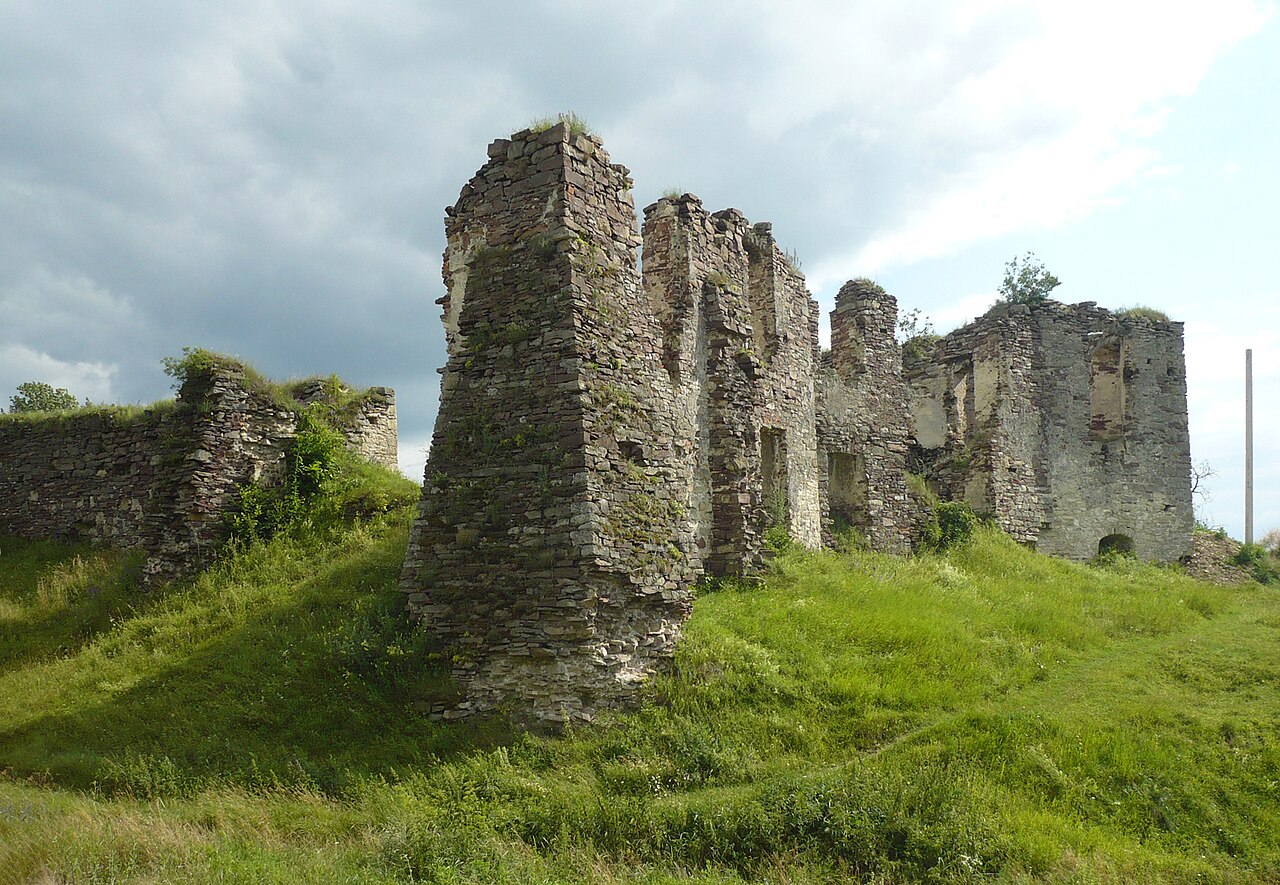
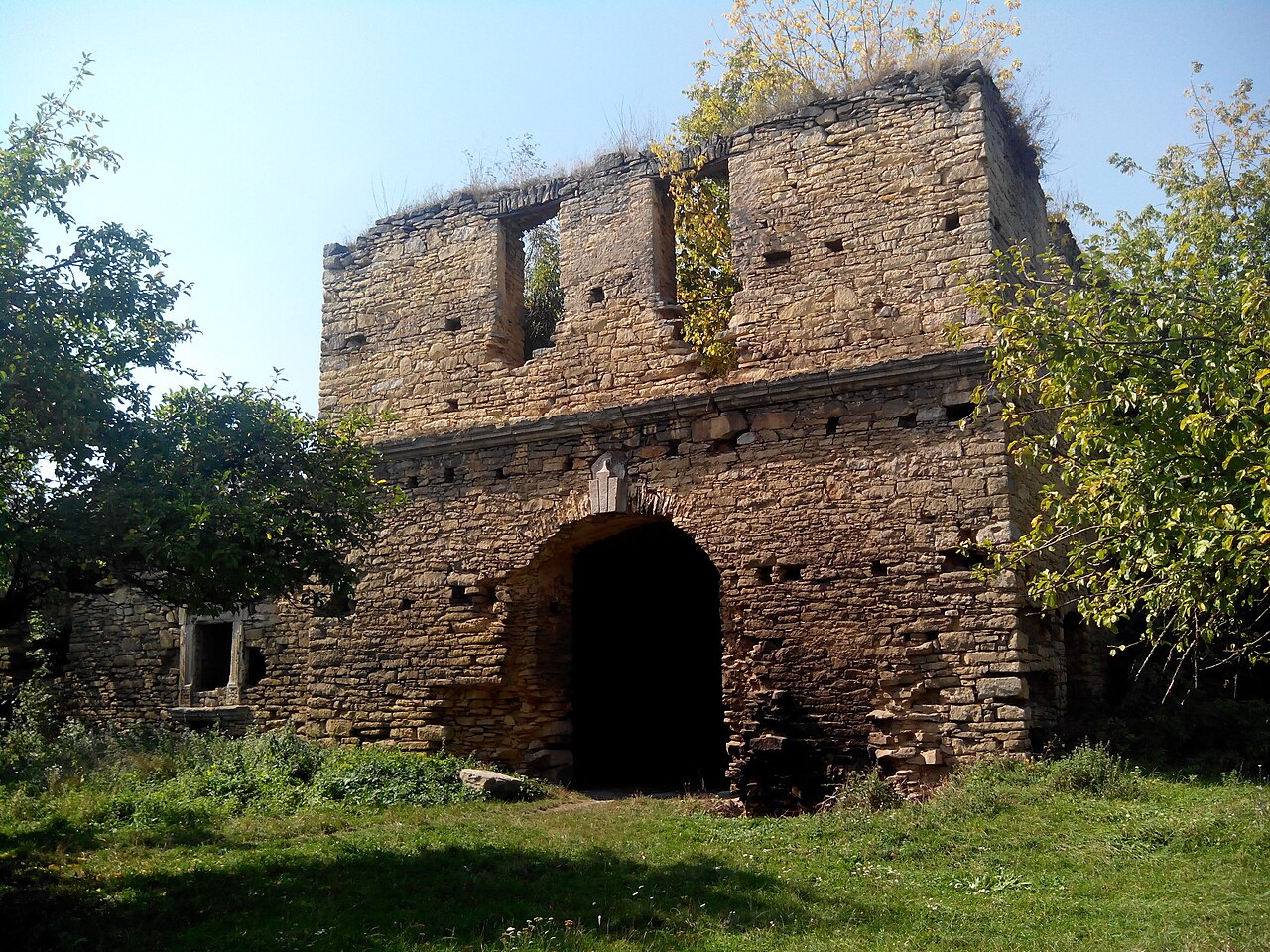
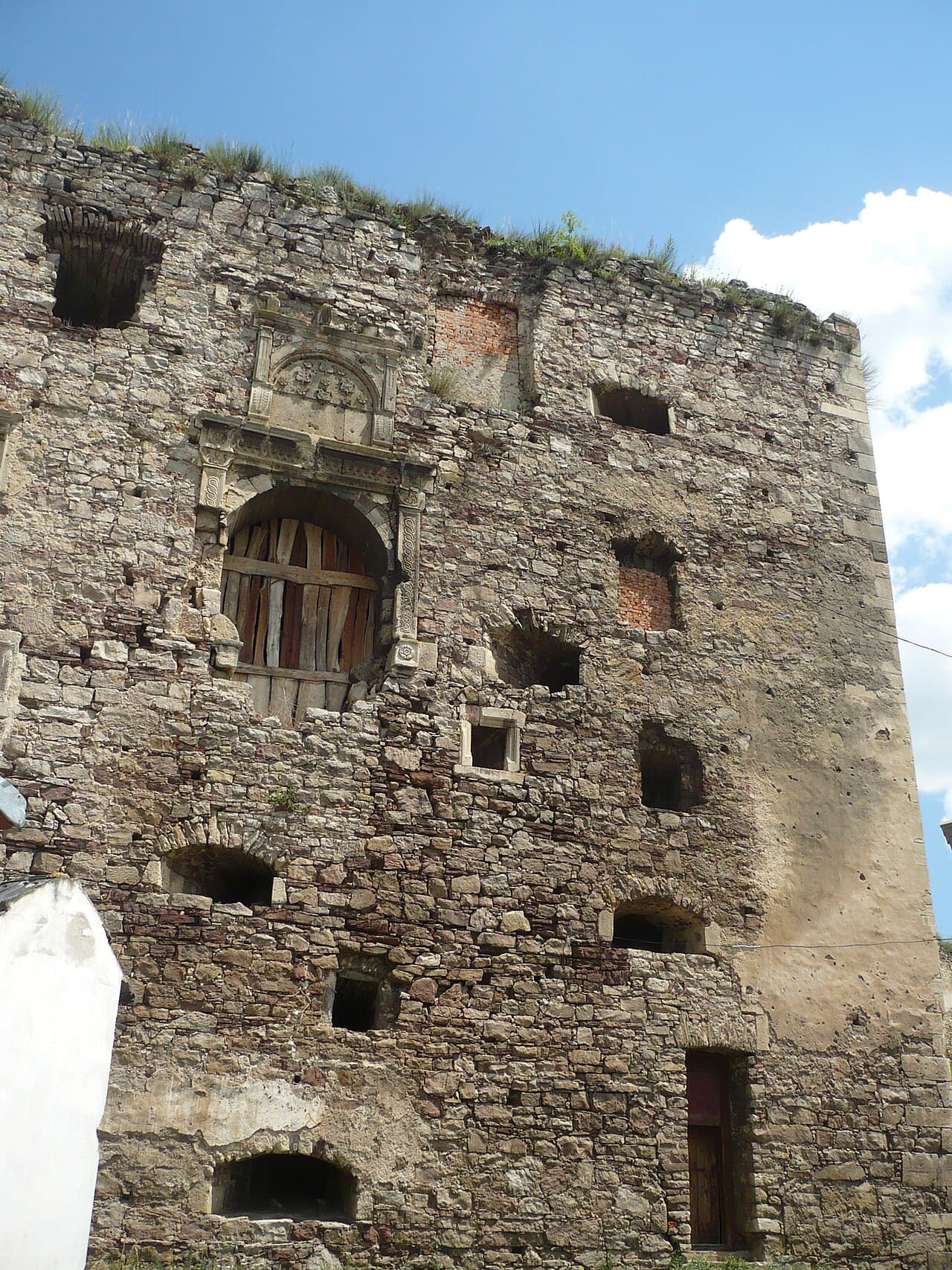
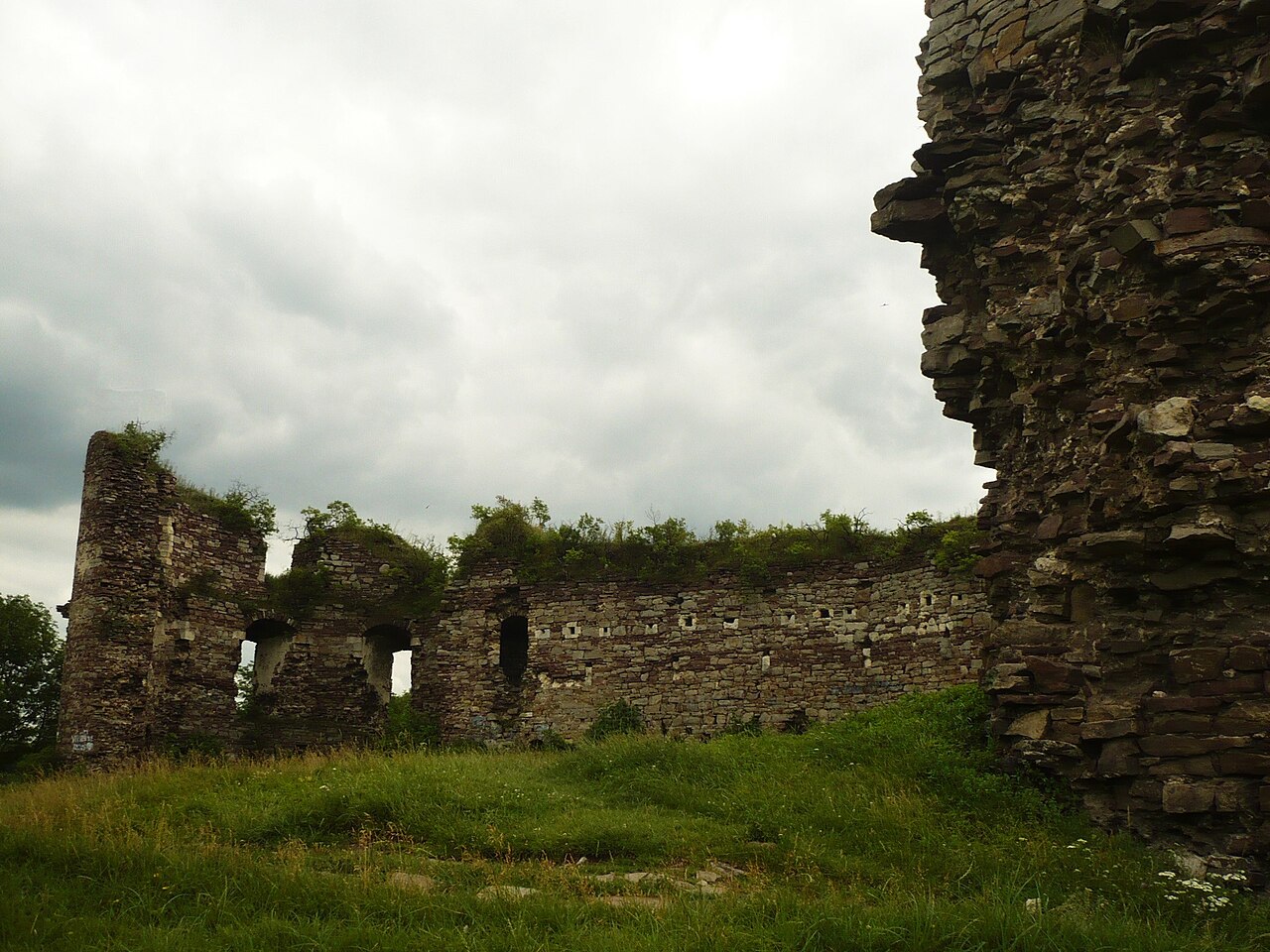
Although much of the original structure has been lost, the surviving remnants reveal key elements typical of a medieval hill castle. The site includes traces of defensive walls constructed from local stone, portions of towers that once provided vantage points for lookouts, and the foundations of a keep or central stronghold. The castle was strategically positioned on elevated terrain, allowing defenders to monitor and control the surrounding area effectively.

Defensive structures

The remaining walls exhibit the use of thick masonry designed to withstand artillery and siege engines common in the late medieval period. Some sections of the battlements and parapets are still visible, illustrating the defensive measures employed by the castle's occupants. Evidence of a moat or ditch surrounding parts of the fortress has been suggested by archaeological findings, though much of this feature has been eroded or filled in over time.

The castle's decline and current condition

By the 18th and 19th centuries, the military importance of Yazlovets Castle diminished due to advancements in warfare and changes in political control. The fortress gradually fell into disuse and disrepair, suffering damage from conflicts and neglect. Today, the castle remains as archaeological ruins, with efforts focused on preservation and study rather than restoration. The site attracts visitors interested in medieval architecture and Eastern European history.

Visiting Yazlovets Castle

Visitors to Yazlovets Castle can explore the ruins and gain an understanding of the site's historical context through informational displays and guided tours available locally. The castle's elevated position offers scenic views of the surrounding landscape, enhancing the experience of exploring this historical monument. While facilities are limited due to the castle's ruined state, the site remains an important cultural landmark within the Ternopil region.

Nearby attractions

The village of Yazlovets itself holds additional cultural and historical interest, including religious sites and traditional Ukrainian architecture. The broader Chortkiv Raion area features other castles and historical sites that collectively illustrate the rich heritage of Western Ukraine.

Frequently asked questions (FAQ)

What is the historical significance of Yazlovets Castle?
Yazlovets Castle, dating back to the 15th century, played a crucial role in the defense against invasions in the region. It is a remarkable example of medieval fortification architecture and reflects the rich history of Ukraine's cultural heritage.
When was Yazlovets Castle built?
The construction of Yazlovets Castle began in the late 1400s, with significant renovations and expansions occurring over the following centuries. Its enduring structure showcases the evolution of architectural styles throughout its history.
Can I visit Yazlovets Castle?
Yes, visitors are welcome to explore Yazlovets Castle and its grounds. The site offers guided tours that provide insights into its history and architecture, making it a great destination for history enthusiasts.
What are the opening hours for Yazlovets Castle?
Yazlovets Castle is open to visitors from 9 AM to 6 PM during the peak season, which typically runs from April to October. It is advisable to check for any seasonal changes or special events that may affect opening hours.
Is it possible to access Yazlovets Castle by public transport?
Yes, Yazlovets Castle can be reached by public transport from major cities in Ukraine, with bus and train services available. However, local taxis or ride-sharing options may provide a more convenient way to reach the castle directly.
What is the best time to visit Yazlovets Castle?
The best time to visit Yazlovets Castle is during the spring and early autumn when the weather is mild and pleasant. These seasons also offer beautiful landscapes, enhancing your experience as you explore the castle and its surroundings.
Are there any nearby attractions to visit after Yazlovets Castle?
Yes, visitors can explore nearby attractions such as the picturesque village of Yazlovets and the natural beauty of the surrounding countryside. Additionally, other historical sites in the region can provide further insights into Ukraine's rich heritage.
What are the ticket prices for visiting Yazlovets Castle?
Ticket prices for Yazlovets Castle are generally affordable, with discounts available for students and seniors. It's best to check the official website or local tourism information for the most current pricing and any special offers.
How do I get more information about Yazlovets Castle?
For more information about Yazlovets Castle, including events, ticketing, and guided tours, you can visit the official tourism website or contact the local tourism office directly. They provide the latest updates and resources for visitors planning their trip.

Photo gallery

Yazlovets Castle
Click to view

Photo by Tomasz Leśniowski•CC BY-SA 4.0

1 photo • Click any image to view in full screen

Information

Archaeological Site / Ruins

Loading map...

Visitor reviews

No reviews yet. Been here? Write the first review and help other travelers!

Write the first review

Visited this castle? Share your experience

Your review helps other travelers and adds first-hand knowledge to our encyclopedia.
Write a review

(5/5)

0/2000 characters

Your review will be visible after admin approval

Nearby castles

11.9 km
Buchach Castle — Ukraine castle

Buchach Castle

Buchach, Ukraine

Buchach Castle stands as a remarkable example of a medieval hill castle strategically perched on a triangular rocky promontory overlooking the Strypa River in the town of Buchach, Ukraine. Its origins trace back to the 12th century when the first wooden fortifications were established by local builders to exploit the natural defensive advantages of the site. This early phase laid the foundation for what would become a significant military stronghold in the region. By the late 14th century, the wooden structures were replaced with robust stone fortifications constructed under the auspices of the Buczacki family, who bore the distinguished coats of arms Abdank and Pilawa. The castle's architecture from this period incorporated Gothic elements, evident in fragmentary columns and capitals uncovered during archaeological excavations. These stone defenses were designed to protect the frontier of Podillia, a region frequently contested by various powers. Throughout the 16th century, Buchach Castle evolved into a critical military outpost, enduring repeated sieges from Crimean Tatars, Ottoman Turks, and Moldavian forces. These assaults inflicted considerable damage, necessitating cycles of repair and enhancement. In the early 17th century, ownership transitioned to the prominent Potocki family, who undertook significant expansions to the fortress’s defenses. Architectural evolution and defensive features Around 1620, under the direction of Stefan Potocki and his wife Maria Mohylanka, the castle underwent major fortification upgrades. They added two large semicircular bastions along the southern wall, a strategic enhancement that aligned Buchach Castle with other contemporary regional strongholds such as Yazlovets and Berezhany. These bastions were constructed to withstand artillery fire, featuring walls up to 4 meters thick and designed for gunfire defense from multiple angles. The southern wall’s distinctive semicircular shape and bastions fortified the most vulnerable approaches to the castle, especially facing the town and the main Castle Street. The northern section of the fortress is the oldest, resting on the original rocky promontory formed by the Strypa River. This part of the castle showcases construction techniques typical of the late medieval period, with a mix of red and light sandstone blocks bonded by lime mortar. The castle’s layout capitalized on the natural steep slopes on three sides, supplemented by man-made defenses such as a moat and drawbridge to control access. Renaissance palace within the enclosure Within the eastern enclosure of the castle once stood a Renaissance palace, likely built atop an earlier residential structure. This palace was notable for its arcaded galleries supported by columns, creating open walkways that added elegance to the fortress’s interior. Access to the palace was gained through a gate on the first floor, reached by a drawbridge spanning the moat, emphasizing the blend of residential comfort and military security. A courtyard fountain further enhanced this inner space, reflecting Renaissance architectural influences. Historical significance and notable sieges Buchach Castle's history is marked by its role as a bulwark on the volatile borderlands of Podillia. In 1614, during a siege led by Ivan-Yurii Radziwill, the castle’s defense was notably commanded by Zofia Zamiechowska. Despite her leadership, the fortress fell due to internal betrayal when members of the garrison were bribed to open the gates. This event underscores the castle’s strategic importance and the challenges of maintaining loyalty during protracted conflicts. The castle faced further sieges throughout the 17th century, including a significant assault in 1672 by forces under Sultan Mehmed IV. Local tradition recounts that the defense was led by a woman named Teresia or Ursula Danilovych, and the siege was lifted before the fortress could be captured. However, in 1676, the castle was seized and demolished by Turkish and Tatar troops commanded by Ibrahim Pasha of Damascus. This destruction was followed by reconstruction efforts led by Jan Potocki or his son Stefan Alexander Potocki, demonstrating the resilience and continued strategic value of the site. Decline and archaeological investigations By the mid-18th century, Buchach Castle had been abandoned as a military fortress and gradually fell into ruin. During the Austrian rule in the 19th century, parts of the castle walls were dismantled, and the stones were repurposed for local construction, further contributing to its dilapidation. Archaeological interest in the site began in the late 19th century, uncovering artifacts such as large cannonballs weighing up to 200 kilograms, alongside smaller ammunition of 50 and 15 pounds. Some of the smaller cannonballs were embedded in the outer wall of the nearby Assumption of the Blessed Virgin Mary Church, accompanied by inscriptions commemorating their capture during Tatar assaults on the castle. Minor excavations in the 1930s under Count Arthur Potocki added limited new findings but helped preserve the historical narrative of the fortress. Current state and conservation challenges Today, only scattered fragments of Buchach Castle’s walls and towers remain, situated on a rocky elevation with steep slopes on three sides and near a small stream flowing into the Strypa River. The ruins are fragile and require ongoing conservation efforts to prevent further deterioration. The site’s architectural remnants provide valuable insights into 16th-century bastion fortifications and earlier medieval defensive designs. Visitors to Buchach Castle can appreciate its historical significance as a fortress that witnessed centuries of conflict and resilience on the borderlands of Eastern Europe. The castle’s combination of natural topography and man-made fortifications exemplifies the strategic military architecture of the late medieval and Renaissance periods. Preservation initiatives aim to stabilize the ruins and enhance public understanding of this important cultural heritage site.

High Medieval (11th–13th c.)
Details
13.9 km
Pidzamochok Castle — Ukraine castle

Pidzamochok Castle

, Ukraine

Pidzamochok Castle (Ukrainian: Підзамочківський замок, romanized: Pidzamochkivs'kyi zamok) stands as a significant Renaissance-era fortress ruin located in Pidzamochok, within the Chortkiv Raion of Ternopil Oblast, Ukraine. Founded around 1600 by Jan Zbożny (Tworowski-Buczacki), the castle was originally constructed as a defensive stronghold by the Tworowski-Buchacki family. Its strategic location and robust design reflect the military architectural trends of the late 16th century in this region of Eastern Europe. Historical context and ownership The castle's initial construction was part of a broader effort by noble families to fortify their holdings during a turbulent period marked by frequent conflicts and shifting borders. The Tworowski-Buchacki family established the castle to assert control and provide protection against invasions and local unrest. In the 16th and 17th centuries, the fortress underwent significant rebuilding and enhancements under the ownership of the Potocki-Movile family, who remodeled the structure in the Renaissance architectural style. This transformation included the addition of more refined defensive features and aesthetic elements typical of Renaissance fortifications, blending military utility with stylistic advancements. Architectural features and design The castle was designed primarily as a defensive structure, featuring thick stone walls, battlements, and fortified towers that provided vantage points for surveillance and defense. The Renaissance rebuilding introduced elements such as symmetrical layouts, decorative stonework, and possibly embrasures adapted for artillery use, reflecting the evolving nature of military architecture during this period. Although much of the castle now lies in ruins, archaeological studies and remaining structures reveal the complexity of its original design, including a central courtyard and residential quarters for the noble inhabitants. Defensive elements Key defensive components included robust curtain walls and corner towers, which allowed defenders to monitor and repel attackers effectively. The castle's position in the landscape was selected for its natural defensive advantages, possibly on elevated ground or near water features that could serve as natural barriers. Residential and functional spaces Inside the walls, the castle contained living quarters, storage rooms, and possibly a chapel, serving both military and domestic functions. The layout was typical of Renaissance castles that balanced fortification needs with the requirements of noble residence and administration. Military history and decline Pidzamochok Castle saw several military engagements, notably during the late 17th century when it was attacked and destroyed by Ottoman forces. This event marked the beginning of the castle's decline as a military stronghold. Following its destruction, the castle was abandoned and fell into disrepair over the ensuing centuries. During the 19th century, when the region was part of the Austrian Partition after the partitions of Poland, the castle suffered further degradation. It was partially demolished to reclaim building materials, a common fate for many abandoned fortresses, which contributed to its current ruined state. Modern status and preservation Today, Pidzamochok Castle exists as an archaeological ruin and is recognized as a cultural heritage site within the Castles of Ternopil Oblast National Reserve. The ruins attract tourists interested in the history and architecture of the region. Preservation efforts focus on maintaining the remaining structures and providing educational information to visitors about the castle's historical significance and architectural features. Visitors to the site can explore the remnants of the castle walls, towers, and the layout of the former fortress, gaining insight into the defensive strategies and noble lifestyles of the Renaissance period in Ukraine. Visitor information and cultural significance The castle is accessible to the public, offering a glimpse into the past military and residential architecture of the region. Its ruins serve as a tangible connection to the turbulent history of Eastern Europe during the Renaissance and the shifting powers that influenced the area. As part of the national reserve, the castle is managed with an emphasis on conservation and education, ensuring that its legacy endures for future generations to study and appreciate.

Renaissance (15th–17th c.)
Details
17.6 km
Chernelytsia Castle — Ukraine castle

Chernelytsia Castle

Chernelytsia, Ukraine

Chernelytsia Castle (Ukrainian: Чернелицький замок; Polish: Zamek w Czernelicy) is a notable example of a 17th-century Renaissance hill castle located in the historical region of Pokuttia, now part of Ukraine. Constructed in 1659 under the direction of Bratslav Voivode Michał Jerzy Czartoryski, the castle served as a strategic fortress during a turbulent period in Eastern European history when the Kingdom of Poland controlled the area. Historical context and construction The castle was built during the mid-17th century, a period marked by frequent military conflicts such as the Khmelnytsky Uprising and wars involving the Polish-Lithuanian Commonwealth and neighboring powers. The choice of location on a hill provided a natural defensive advantage, typical of hill castles designed to oversee and control the surrounding landscape. Michał Jerzy Czartoryski, a member of the influential Czartoryski family, commissioned the castle to strengthen the region's defenses and assert Polish authority in Pokuttia. The castle's construction reflects the Renaissance architectural style prevalent in the Commonwealth at the time, blending military functionality with aesthetic elements. Architectural features Chernelytsia Castle exemplifies Renaissance military architecture adapted to local conditions. Its hilltop position is enhanced by thick defensive walls and bastions designed to withstand artillery attacks, which were becoming more common in 17th-century warfare. The castle likely included a keep or central stronghold, surrounded by curtain walls with towers at key points to provide overlapping fields of fire. The layout would have incorporated a courtyard, residential quarters, and storage facilities, supporting both military and administrative functions. Although detailed plans are scarce, surviving ruins suggest a compact fortress optimized for defense rather than elaborate palatial comfort. Role in regional history Throughout its history, Chernelytsia Castle played a defensive role in the volatile borderlands of the Polish-Lithuanian Commonwealth. It was part of a network of fortifications aimed at protecting against incursions by Cossacks, Tatars, and Ottoman forces. The castle's strategic importance declined as political control shifted and military technology evolved. Despite its military origins, the castle also served as a local administrative center, reflecting the dual nature of many Renaissance castles as both fortresses and noble residences. Over time, the castle fell into disuse and partial ruin, affected by wars and changing political landscapes. Current condition and preservation Today, Chernelytsia Castle remains as partially preserved ruins, with sections of its defensive walls and foundations still visible. The site offers insight into 17th-century fortification techniques and the regional history of Pokuttia. Preservation efforts have been limited, but the castle attracts interest from historians and tourists interested in Ukraine's medieval and early modern heritage. Visitors can explore the ruins and appreciate the castle's commanding position over the surrounding countryside, which continues to illustrate its original strategic purpose. Visiting information and cultural significance While not extensively developed as a tourist site, Chernelytsia Castle is recognized for its cultural and historical value. It represents a tangible link to the complex history of Eastern Europe during the Renaissance and the military architecture of the Polish-Lithuanian Commonwealth. The castle's ruins contribute to local identity and heritage tourism, encouraging preservation and scholarly interest in the region's past.

Renaissance (15th–17th c.)
Details