Buchach Castle
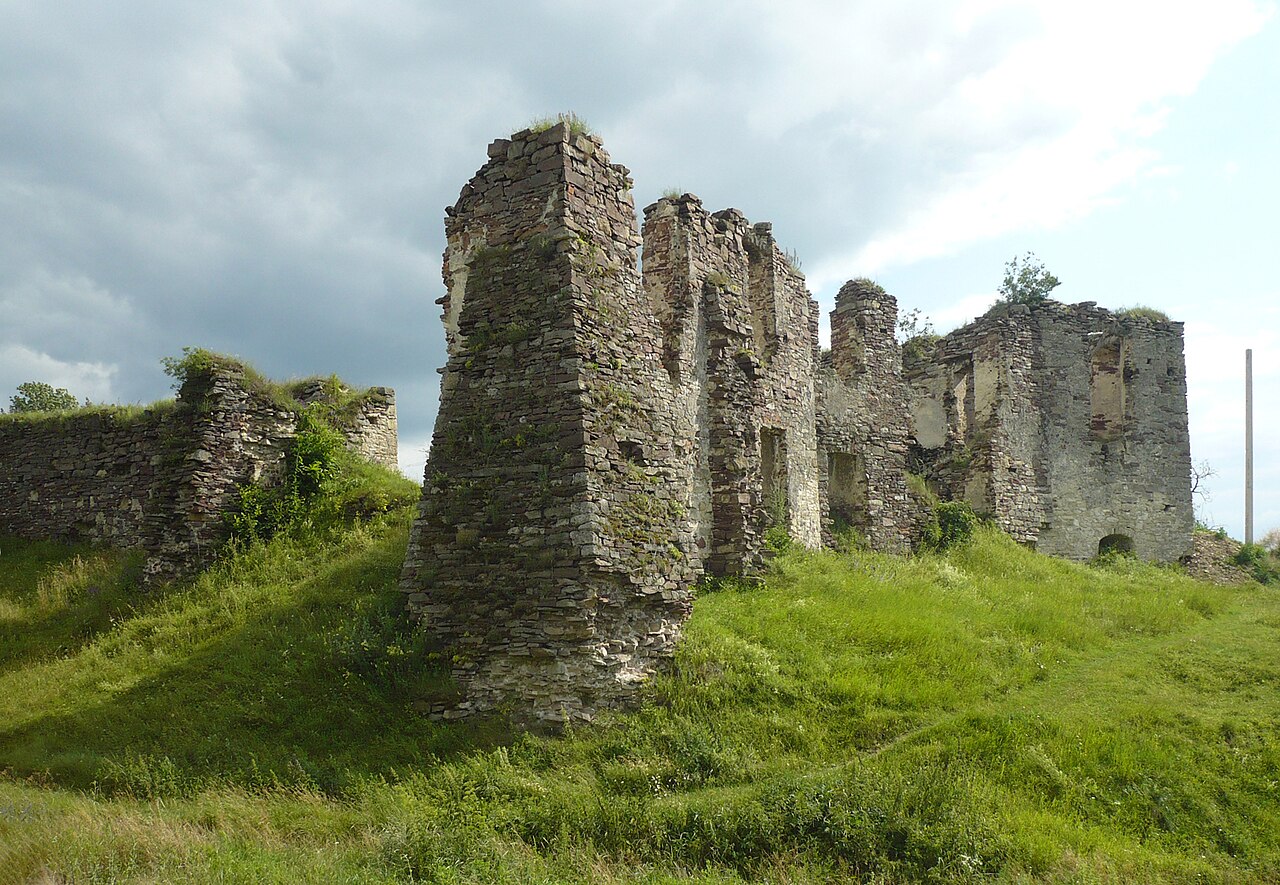
Buchach Castle stands as a remarkable example of a medieval hill castle strategically perched on a triangular rocky promontory overlooking the Strypa River in the town of Buchach, Ukraine. Its origins trace back to the 12th century when the first wooden fortifications were established by local builders to exploit the natural defensive advantages of the site. This early phase laid the foundation for what would become a significant military stronghold in the region.
By the late 14th century, the wooden structures were replaced with robust stone fortifications constructed under the auspices of the Buczacki family, who bore the distinguished coats of arms Abdank and Pilawa. The castle's architecture from this period incorporated Gothic elements, evident in fragmentary columns and capitals uncovered during archaeological excavations. These stone defenses were designed to protect the frontier of Podillia, a region frequently contested by various powers.
Throughout the 16th century, Buchach Castle evolved into a critical military outpost, enduring repeated sieges from Crimean Tatars, Ottoman Turks, and Moldavian forces. These assaults inflicted considerable damage, necessitating cycles of repair and enhancement. In the early 17th century, ownership transitioned to the prominent Potocki family, who undertook significant expansions to the fortress’s defenses.
Architectural evolution and defensive features
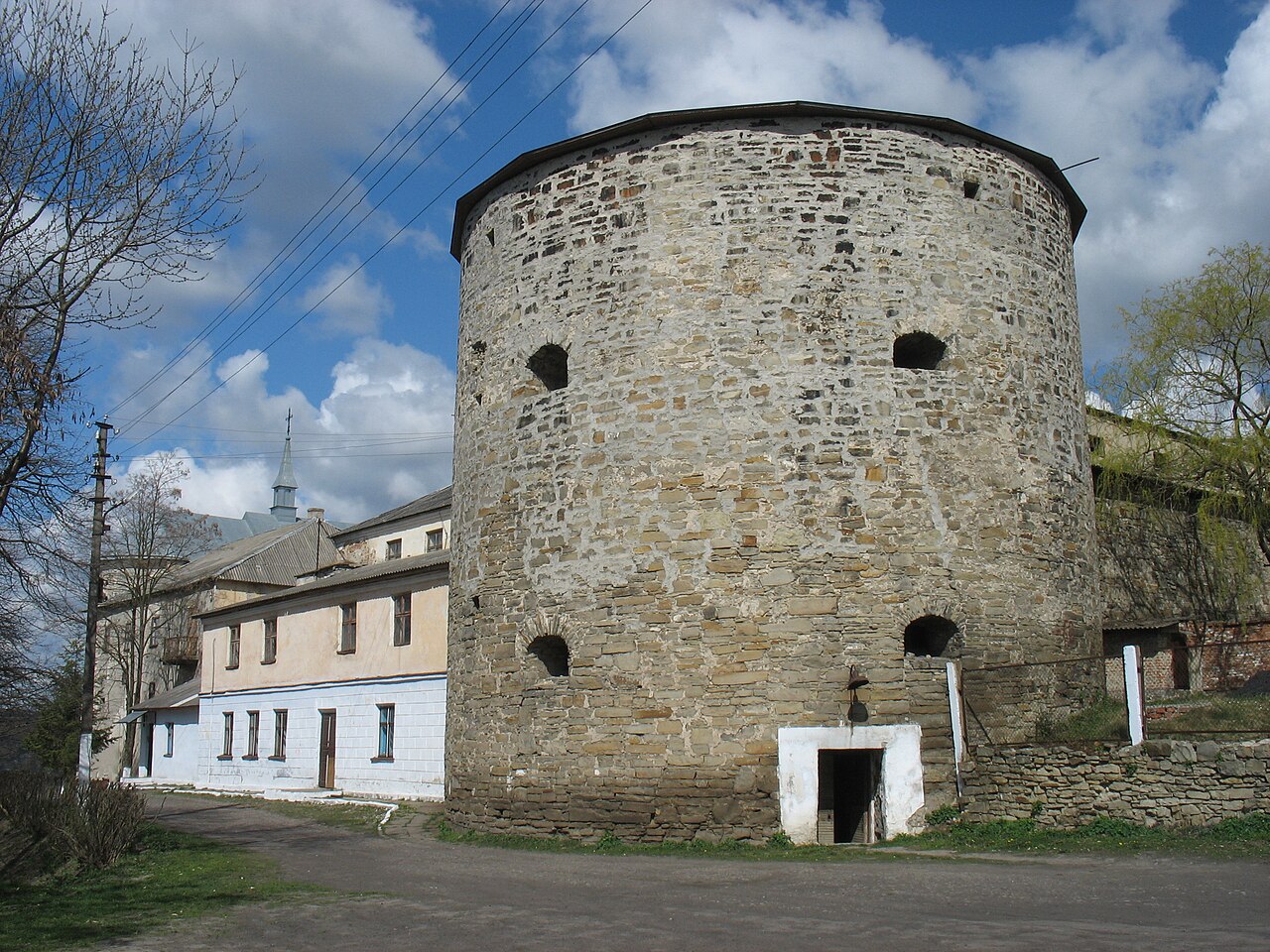
Around 1620, under the direction of Stefan Potocki and his wife Maria Mohylanka, the castle underwent major fortification upgrades. They added two large semicircular bastions along the southern wall, a strategic enhancement that aligned Buchach Castle with other contemporary regional strongholds such as Yazlovets and Berezhany. These bastions were constructed to withstand artillery fire, featuring walls up to 4 meters thick and designed for gunfire defense from multiple angles. The southern wall’s distinctive semicircular shape and bastions fortified the most vulnerable approaches to the castle, especially facing the town and the main Castle Street.
The northern section of the fortress is the oldest, resting on the original rocky promontory formed by the Strypa River. This part of the castle showcases construction techniques typical of the late medieval period, with a mix of red and light sandstone blocks bonded by lime mortar. The castle’s layout capitalized on the natural steep slopes on three sides, supplemented by man-made defenses such as a moat and drawbridge to control access.
Renaissance palace within the enclosure
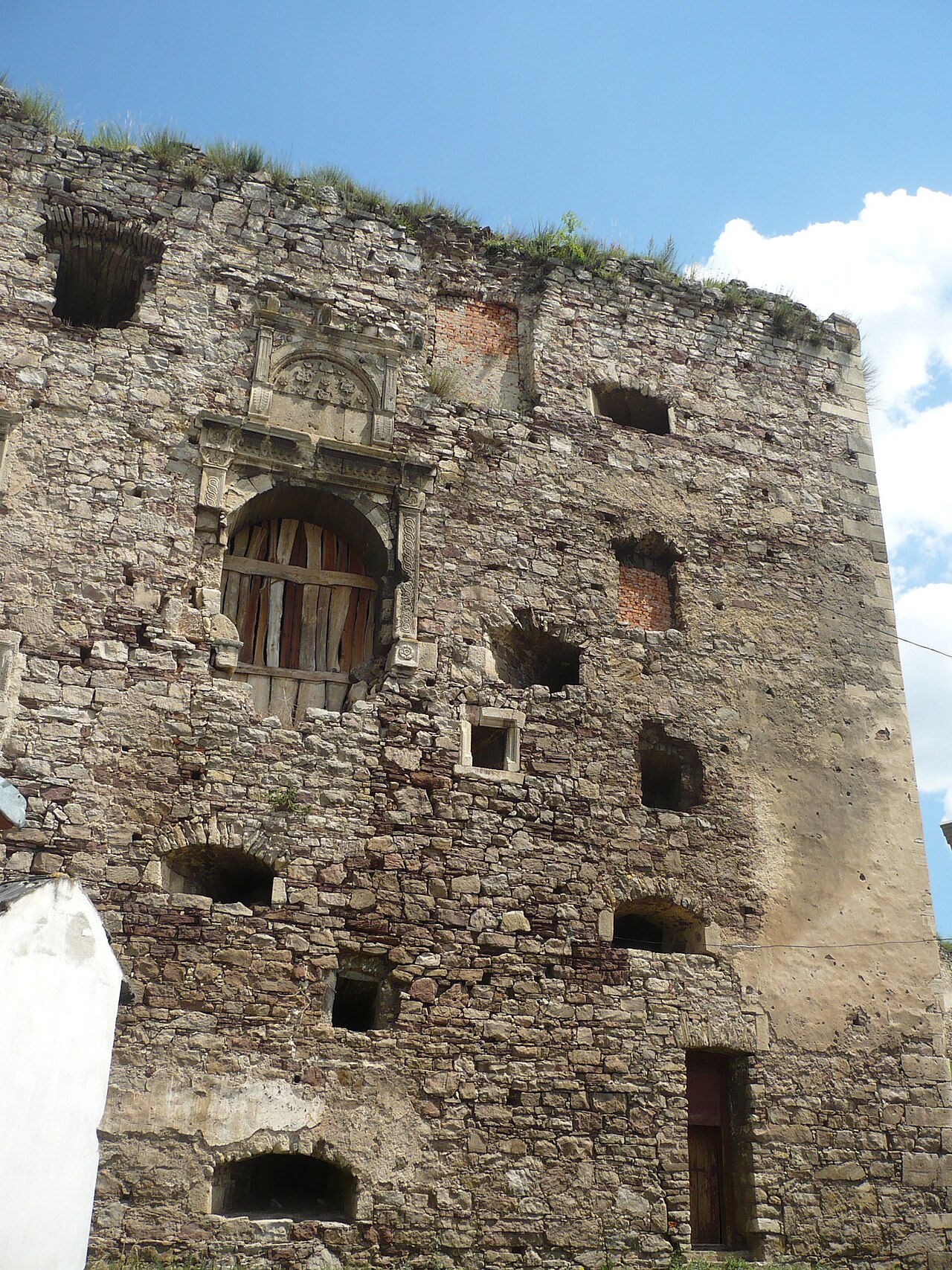
Within the eastern enclosure of the castle once stood a Renaissance palace, likely built atop an earlier residential structure. This palace was notable for its arcaded galleries supported by columns, creating open walkways that added elegance to the fortress’s interior. Access to the palace was gained through a gate on the first floor, reached by a drawbridge spanning the moat, emphasizing the blend of residential comfort and military security. A courtyard fountain further enhanced this inner space, reflecting Renaissance architectural influences.
Historical significance and notable sieges
Buchach Castle's history is marked by its role as a bulwark on the volatile borderlands of Podillia. In 1614, during a siege led by Ivan-Yurii Radziwill, the castle’s defense was notably commanded by Zofia Zamiechowska. Despite her leadership, the fortress fell due to internal betrayal when members of the garrison were bribed to open the gates. This event underscores the castle’s strategic importance and the challenges of maintaining loyalty during protracted conflicts.
The castle faced further sieges throughout the 17th century, including a significant assault in 1672 by forces under Sultan Mehmed IV. Local tradition recounts that the defense was led by a woman named Teresia or Ursula Danilovych, and the siege was lifted before the fortress could be captured. However, in 1676, the castle was seized and demolished by Turkish and Tatar troops commanded by Ibrahim Pasha of Damascus. This destruction was followed by reconstruction efforts led by Jan Potocki or his son Stefan Alexander Potocki, demonstrating the resilience and continued strategic value of the site.
Decline and archaeological investigations
By the mid-18th century, Buchach Castle had been abandoned as a military fortress and gradually fell into ruin. During the Austrian rule in the 19th century, parts of the castle walls were dismantled, and the stones were repurposed for local construction, further contributing to its dilapidation. Archaeological interest in the site began in the late 19th century, uncovering artifacts such as large cannonballs weighing up to 200 kilograms, alongside smaller ammunition of 50 and 15 pounds.
Some of the smaller cannonballs were embedded in the outer wall of the nearby Assumption of the Blessed Virgin Mary Church, accompanied by inscriptions commemorating their capture during Tatar assaults on the castle. Minor excavations in the 1930s under Count Arthur Potocki added limited new findings but helped preserve the historical narrative of the fortress.
Current state and conservation challenges
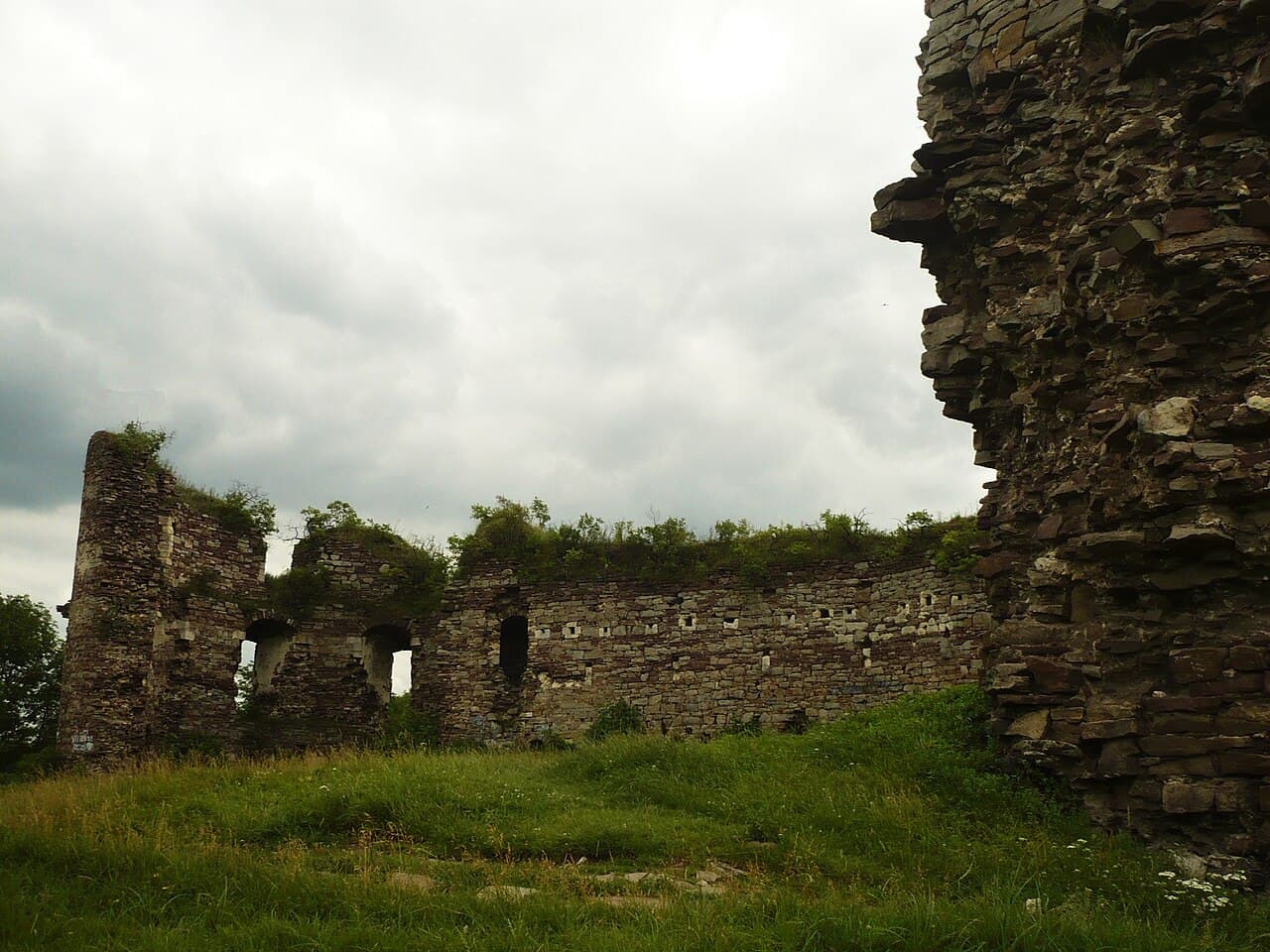
Today, only scattered fragments of Buchach Castle’s walls and towers remain, situated on a rocky elevation with steep slopes on three sides and near a small stream flowing into the Strypa River. The ruins are fragile and require ongoing conservation efforts to prevent further deterioration. The site’s architectural remnants provide valuable insights into 16th-century bastion fortifications and earlier medieval defensive designs.
Visitors to Buchach Castle can appreciate its historical significance as a fortress that witnessed centuries of conflict and resilience on the borderlands of Eastern Europe. The castle’s combination of natural topography and man-made fortifications exemplifies the strategic military architecture of the late medieval and Renaissance periods. Preservation initiatives aim to stabilize the ruins and enhance public understanding of this important cultural heritage site.
Frequently asked questions (FAQ)
- How do I get to Buchach Castle?
- Buchach Castle is located in the town of Buchach, Ternopil Oblast, Ukraine. It is accessible by local roads from the town center, and visitors can reach the castle on foot by following signs leading to the hilltop ruins.
- What is the best time to visit Buchach Castle?
- The best time to visit Buchach Castle is during late spring to early autumn when the weather is mild and the surrounding landscape is lush. This period offers comfortable conditions for exploring the outdoor ruins and enjoying panoramic views.
- Is Buchach Castle wheelchair accessible?
- Due to its location on a rocky hill with steep slopes and uneven terrain, Buchach Castle is not wheelchair accessible. Visitors should be prepared for a moderately challenging walk to reach the ruins.
- Are there guided tours available at Buchach Castle?
- Guided tours may be available through local tourism offices or private guides in Buchach. These tours provide detailed historical context and architectural insights, enhancing the visitor experience.
- What architectural features are notable at Buchach Castle?
- Notable architectural features include the semicircular bastions on the southern wall, thick defensive walls up to 4 meters, remnants of Gothic columns, and the Renaissance palace with arcaded galleries within the castle enclosure.
Photo gallery

Information
Website
Visit websiteSources & official resources
Verify the information above using these authoritative references.
Loading map...
Visitor reviews
No reviews yet. Been here? Write the first review and help other travelers!
Write the first reviewVisited this castle? Share your experience
Your review helps other travelers and adds first-hand knowledge to our encyclopedia.