Yarmouth Castle
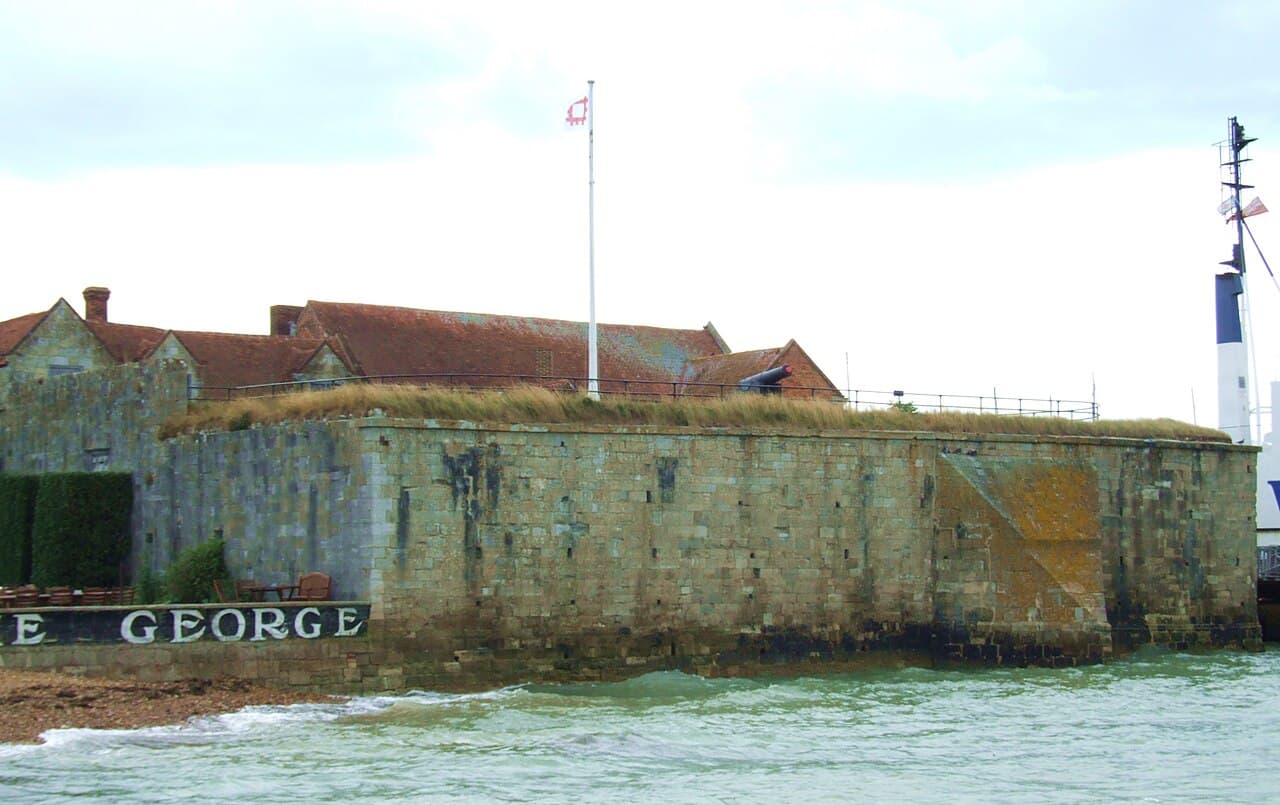
Yarmouth Castle stands as a significant example of Tudor coastal artillery fortifications, constructed in 1547 by order of King Henry VIII to protect the strategically important Yarmouth Harbour on the Isle of Wight from potential French naval threats. This compact, square fortification measures just under 30 meters across and is notable for its pioneering use of an Italianate arrow-head bastion on the landward side, a design innovation that marked a departure from the earlier circular bastions typical of Henry VIII's Device Forts and represented the first such bastion built in England.
Historical context and construction
The mid-16th century was a period of heightened international tension, with England facing threats from France and the Holy Roman Empire. As part of Henry VIII's comprehensive coastal defense program known as the second wave of Device Forts, Yarmouth Castle was constructed on Crown land, possibly replacing a former church site. The castle's stonework likely incorporated material from the nearby Quarr Abbey, dissolved during the Reformation. The project was overseen by Richard Worsley, with master mason George Mills managing the building process, culminating in the castle's completion in 1547.
Initially, the fort was armed with fifteen artillery guns and garrisoned by twenty men under the command of Captain Richard Udall. The garrison's living arrangements were split, with Udall residing within the castle and his men housed elsewhere in Yarmouth town.
Architectural features and military design
The castle's defining feature is its Italianate arrow-head bastion, designed to provide enhanced defensive coverage of the landward approach. This pointed bastion contrasts with the rounded bastions of earlier English forts and reflects contemporary advancements in military architecture imported from Italy. The seaward-facing north and west walls are fortified with angled buttresses, reinforcing the structure against naval assault.
Originally, a moat approximately ten meters wide protected the castle's south and east sides, though this has since been filled in. The fort's thick external walls are primarily constructed from finely cut ashlar stone, with some southern sections built from red brick. Narrow gunloops are positioned strategically, including in the raised "ears" of the bastion overlooking the former moat, allowing defenders to fire small arms or handguns.
The castle's interior originally featured several buildings arranged around a central courtyard. Early in its history, the southern half of this courtyard was filled in to create a solid, elevated gun platform capable of supporting heavier artillery. This platform was further raised in the 17th century to its present height and is surrounded by a parapet with rounded corners, added in the 19th century and now covered with turf. Four naval guns installed in 1855 rest on traversing rails across this platform, allowing flexible lateral movement to cover multiple firing angles.
Accommodation and internal structures
The southern section of the castle contains living quarters and utility spaces. The southwestern corner houses four barrel-vaulted rooms dating from the 17th century, originally used to accommodate the garrison and later partially converted into magazines for gunpowder and munitions. Some original fittings remain visible, illustrating the castle's adaptation over time.
The southeastern corner contains the Master Gunner's House, with a parlour, hall, and kitchen on the ground floor, and a chamber and attic above. The original interior layout featured a wooden screen dividing the parlour and hall, while the upper chamber was subdivided, reflecting the residential customs of the period. A small first-floor chamber supported by arches above the courtyard served as additional lodging quarters.
Above the vaulted rooms lies the Long Room on the second floor, notable for retaining its massive original roof structure. A now-destroyed small lodging room once existed on the gun platform, accessed by stairs.
Modifications and military use through the centuries
Throughout the 16th and 17th centuries, Yarmouth Castle underwent continuous maintenance and modifications to adapt to evolving military needs. Defensive walls were heightened and buttressed, and new accommodation was added for the garrison. The seaward half of the castle was converted into a solid gun platform, while a bulwark was constructed on the east side. Additionally, an extra gun battery was established on the town quay to the west, expanding the defensive perimeter.
During the English Civil War of the 1640s, the castle was initially held by Royalist forces but surrendered to Parliamentarians, who maintained control for most of the conflict. The garrison size increased to approximately seventy soldiers amid fears of foreign invasion during the Interregnum. Following the Restoration of the monarchy, the castle was refortified in the 1670s under Charles II. Military defenses were strengthened with new artillery, older earthworks were removed, and a nearby mansion was built by naval officer Robert Holmes, which hosted King Charles II on several occasions, underscoring the site's strategic and social importance.
Yarmouth Castle remained active through the 18th and 19th centuries, though with reduced garrisons and fewer guns. Repairs were undertaken during major conflicts such as the Napoleonic Wars and the Crimean War. In 1855, four naval guns were mounted on traversing rails across the gun platform to enhance defensive flexibility.
The castle's military role diminished after 1885 when its garrison and artillery were withdrawn. It briefly served as a coastguard signalling station from 1898 before being reactivated for military use during both World War I and World War II. The castle finally ceased military operations in the 1950s.
Present status and heritage significance
Today, Yarmouth Castle is managed by English Heritage as a public tourist attraction, preserving its distinctive Italianate bastion design and the adaptations made across its centuries of use. Visitors can explore the castle's well-preserved walls, gun platform, vaulted chambers, and the Master Gunner's House, gaining insight into Tudor military architecture and coastal defense history.
The castle's compact size and unique features make it an important study subject for the evolution of artillery fortifications in England. Its combination of Tudor construction techniques and later modifications illustrates changing military technologies and strategies from the Renaissance through the modern era.
Frequently asked questions (FAQ)
- How do I get to Yarmouth Castle?
- Yarmouth Castle is located in the town of Yarmouth on the Isle of Wight. You can reach it by taking a ferry from mainland England to Yarmouth or by driving around the island. There are also local bus services that connect key areas of the island to the castle.
- What is the historical significance of Yarmouth Castle?
- Yarmouth Castle was built in 1547 by order of King Henry VIII to protect the Solent from invasion. It played a crucial role during various conflicts including the English Civil War and has been a military fortification for centuries. Today, it is recognized for its rich history and is a scheduled monument.
- When was Yarmouth Castle built?
- Yarmouth Castle was constructed between 1547 and 1548, making it one of the prominent examples of Henry VIII’s coastal defenses. The castle's design reflects the military architecture of the Tudor period and has been preserved as a historical site for visitors to explore.
- Can I visit Yarmouth Castle all year round?
- Yes, Yarmouth Castle is open to visitors throughout the year, although opening hours may vary by season. It's advisable to check the official website for the most current information regarding visitor hours and any seasonal events.
- Why is Yarmouth Castle an important architectural site?
- Yarmouth Castle is an important architectural site due to its unique design and construction techniques from the Tudor era. The castle features a distinctive circular layout, thick stone walls, and a well-preserved gun platform, showcasing the military architecture of its time.
- Is it possible to access Yarmouth Castle for visitors with disabilities?
- Yes, Yarmouth Castle strives to be accessible to all visitors. While some areas may be challenging due to the historic structure, staff are available to assist you with any specific needs and to enhance your visit.
- What are the ticket prices for Yarmouth Castle?
- Ticket prices for Yarmouth Castle are generally affordable, with concessions available for children, seniors, and families. It's recommended to purchase tickets online in advance for discounts and to ensure entry during peak visiting times.
- What is the best time to visit Yarmouth Castle?
- The best time to visit Yarmouth Castle is during the spring and summer months when the weather is typically warmer and more conducive to exploring the grounds. Additionally, special events and guided tours often take place during these seasons, enhancing the visitor experience.
- Are there nearby attractions to explore while visiting Yarmouth Castle?
- Yes, there are several nearby attractions to explore, including the beautiful beaches of Yarmouth, local shops, and the Isle of Wight's scenic walking trails. The town itself offers charming cafes and restaurants for visitors looking to relax after their tour of the castle.
Photo gallery

Information
Website
Visit websiteSources & official resources
Verify the information above using these authoritative references.
Loading map...
Visitor reviews
No reviews yet. Been here? Write the first review and help other travelers!
Write the first reviewVisited this castle? Share your experience
Your review helps other travelers and adds first-hand knowledge to our encyclopedia.