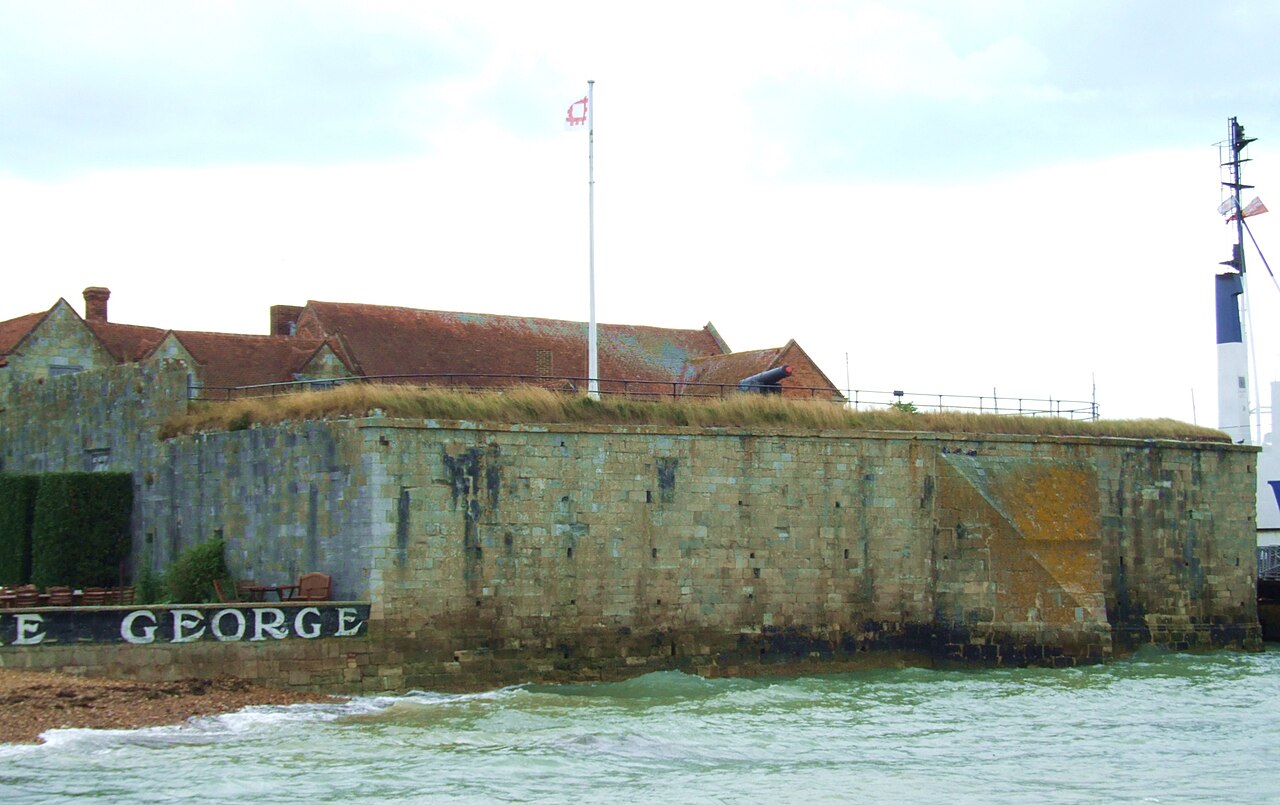
Golden Hill Fort
Golden Hill Fort is a hexagonal coastal fortification located in Freshwater on the Isle of Wight, England. Constructed in 1859 as part of the extensive Palmerston defences commissioned by the 1859 Royal Commission on the Defence of the United Kingdom, the fort was designed to bolster the western end of the Isle of Wight against potential seaborne threats. These defences were a response to the perceived threat of French invasion during the reign of Queen Victoria, leading to the construction of a network of forts along the southern coast of England.
The fort's hexagonal design was a strategic architectural choice, allowing for overlapping fields of fire and enhanced defensive capabilities. It was built to accommodate a garrison of 8 officers and 128 men, providing sufficient manpower to support the nearby Hatherwood Battery. The fort also contained its own hospital facilities, highlighting its role as a self-sufficient defensive position capable of sustaining prolonged operations.
Architectural features and layout
The fort's layout reflects mid-19th century military engineering principles, combining robust defensive walls with practical living quarters. The hexagonal shape optimized the use of artillery placements and allowed defenders to cover all approaches effectively. The fort's walls were constructed with thick masonry designed to withstand bombardment, and the interior included barracks, storage rooms, and a hospital to support the garrison's needs.
Strategically positioned on Golden Hill, the fort overlooks much of the surrounding land, providing expansive views southward towards Afton Down and across the Solent. This vantage point was crucial for early detection of enemy ships and coordination of defensive artillery fire. The surrounding area was deliberately kept clear of vegetation during the fort's operational period to maintain unobstructed sightlines for surveillance and defense.
Historical context and military significance
The construction of Golden Hill Fort was part of a wider programme of coastal defences initiated by the 1859 Royal Commission, often referred to as the Palmerston Forts after then-Prime Minister Lord Palmerston. This programme aimed to protect key naval bases and ports from French attack, reflecting the geopolitical tensions of the mid-19th century.
Golden Hill Fort served primarily as a defensible barracks, providing accommodation and support for artillery units stationed at the nearby Hatherwood Battery. In 1914, the fort was home to the 33 Company Royal Garrison Artillery, indicating its continued military relevance into the early 20th century. Its role was largely logistical and defensive, ensuring that artillery crews were housed and ready to man the coastal defences.
The name and local significance
The name Golden Hill does not derive from the abundant European gorse flowers that bloom on the site, which create a golden appearance during flowering seasons. Instead, it is believed to be connected to an historic landowner named Gauden, whose name evolved over time into the current toponym.
Today, Golden Hill Fort remains a prominent local landmark. Although no longer in military use, its commanding position and distinctive hexagonal form make it a notable feature of the Isle of Wight's coastal heritage. The fort exemplifies Victorian military architecture and the broader strategic efforts to defend the British coastline during a period of heightened international tensions.
Preservation and current status
Golden Hill Fort is classified as a well-preserved example of 19th-century coastal fortifications. While it no longer serves a defensive function, its structure remains largely intact, offering valuable insights into the design and operation of Palmerston-era forts. The fort is accessible to visitors who wish to explore its historical significance and enjoy the panoramic views of the surrounding landscape and the Solent.
Frequently asked questions (FAQ)
- What is the historical significance of Golden Hill Fort?
- Golden Hill Fort, built in the early 19th century, was designed to protect the Solent and the coastline from potential invasions. It played a crucial role during the Napoleonic Wars and is an important example of military architecture from that era, illustrating the strategic military thinking of its time.
- When was Golden Hill Fort built?
- The construction of Golden Hill Fort began in 1862 and was completed in 1870. It was part of a larger defense strategy to protect the British coastline during a period of heightened military tension.
- What are the opening hours for Golden Hill Fort?
- Golden Hill Fort is open to visitors from 10 AM to 5 PM, Wednesday through Sunday. It is advisable to check the official website for any seasonal changes or special event hours before your visit.
- Can I visit Golden Hill Fort year-round?
- Yes, Golden Hill Fort is open for visitors throughout the year, but accessibility may vary with the seasons. Some areas might be restricted during adverse weather conditions, so it's best to plan your visit accordingly.
- Is Golden Hill Fort accessible for visitors with mobility issues?
- Golden Hill Fort has made efforts to improve accessibility for all visitors, including pathways for those with mobility challenges. However, some parts of the fort may still be difficult to navigate due to historic architecture, so it is recommended to contact the site before your visit for specific arrangements.
- What are the ticket prices for Golden Hill Fort?
- Tickets for Golden Hill Fort are priced at £6 for adults, £4 for children, and free for under 5s. Family tickets and group discounts are also available, making it an affordable day out for everyone.
- What is the best time to visit Golden Hill Fort?
- The best time to visit Golden Hill Fort is during the late spring and early summer months when the weather is generally pleasant, and the surrounding scenery is at its most vibrant. Visiting during weekdays might also help you avoid larger crowds.
- Are there any nearby attractions to Golden Hill Fort?
- Yes, nearby attractions include the Freshwater Bay and the beautiful Isle of Wight Coastal Path, offering stunning views and walking opportunities. Additionally, the local area features charming shops and cafes to enhance your visit.
Information
Loading map...
Visitor reviews
No reviews yet. Been here? Write the first review and help other travelers!
Write the first reviewVisited this castle? Share your experience
Your review helps other travelers and adds first-hand knowledge to our encyclopedia.