Yapahuwa stands as a significant medieval fortress and former capital of Sri Lanka, notable for its strategic location atop a massive granite rock rising nearly 100 meters above the surrounding plains. Positioned midway between the cities of Kurunegala and Anuradhapura, this site was chosen for its natural defensive advantages and commanding views of the surrounding landscape.
The strategic importance and construction of Yapahuwa
The fortress was constructed around this imposing granite outcrop, which forms the core of the citadel. The rock itself served as a natural stronghold, with the man-made structures built to complement its defensive potential. The complex included steep staircases, fortified walls, and gates that controlled access to the summit. The architecture reflects the practical needs of defense during a turbulent period in Sri Lankan history.
Architectural features
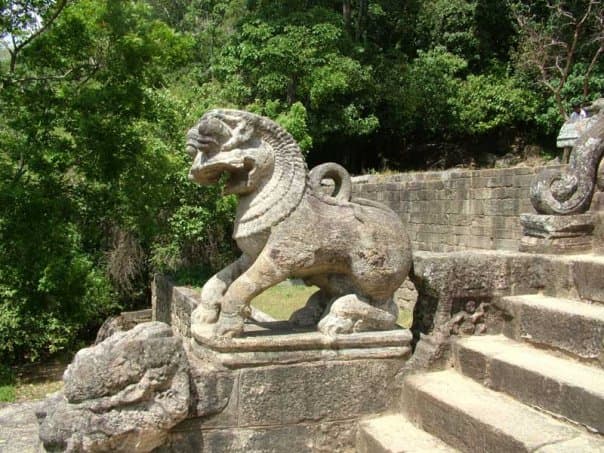
One of the most remarkable features of Yapahuwa is its grand staircase carved into the rock face, leading to the upper citadel. This staircase is flanked by intricately carved stone lions, symbolizing royal power and protection. The upper fortress area contained palatial buildings, temples, and residential quarters for the king and his retinue.
The historical context and significance
Yapahuwa rose to prominence in the late 13th century during a period of intense conflict and upheaval in Sri Lanka. In 1272, King Bhuvenakabahu I relocated the capital from Dambadeniya to Yapahuwa to better defend against invasions from the Dravidian kingdoms in South India. This move also involved transferring the sacred Tooth Relic of the Buddha, a symbol of sovereignty and religious legitimacy, to Yapahuwa, further enhancing its status as a royal center.
Despite its formidable defenses, Yapahuwa's tenure as a capital was brief. Following King Bhuvenakabahu's death in 1284, the fortress was attacked by the Pandyan invaders from South India, who succeeded in capturing the Sacred Tooth Relic. This loss significantly diminished Yapahuwa's political importance, leading to its abandonment as a royal capital.
Religious and cultural legacy
After the fall of Yapahuwa as a royal seat, the site remained inhabited primarily by Buddhist monks and religious ascetics. The temples and shrines within the fortress complex continued to serve as places of worship and meditation. The presence of the Tooth Relic had established Yapahuwa as a spiritual center, a legacy that persisted even after its political decline.
Artistic and religious artifacts
The ruins of Yapahuwa include remnants of Buddhist sculptures and stone carvings that reflect the artistic styles of the period. These artifacts provide insight into the religious practices and cultural priorities of medieval Sri Lanka.
Present condition and archaeological significance
Today, Yapahuwa is classified as an archaeological ruin, with much of the original fortress in a state of ruin. However, the site remains a valuable source of historical and architectural knowledge, attracting scholars and visitors interested in Sri Lanka's medieval past. The preservation of the rock fortress and its distinctive features, such as the lion-guarded staircase, make Yapahuwa a unique example of medieval military architecture in South Asia.
The site is managed with a focus on conservation and public education, allowing visitors to explore the remains of the fortress and gain an understanding of its historical context. Interpretive signage and guided tours help illuminate the significance of Yapahuwa's role in Sri Lankan history.
Access and visitor information
Yapahuwa is accessible to tourists interested in history and archaeology. Its location between Kurunegala and Anuradhapura makes it a convenient stop for travelers exploring the cultural triangle of Sri Lanka. Visitors can climb the steep staircases to reach the summit and experience the panoramic views that once offered strategic military advantage.
While the site lacks extensive modern facilities, it provides a compelling glimpse into the medieval period and the challenges faced by Sri Lankan kingdoms during times of foreign invasion and internal strife.
Frequently asked questions (FAQ)
- How do I get to Yapahuwa Castle?
- Yapahuwa Castle is located approximately 30 kilometers from the city of Kurunegala in Sri Lanka. You can reach it by car or take a bus from Kurunegala to the nearby town of Yapahuwa, followed by a short tuk-tuk ride to the site.
- What is the historical significance of Yapahuwa Castle?
- Yapahuwa Castle was built in the 13th century and served as a royal citadel during the reign of the Polonnaruwa Kingdom. It is known for its unique architectural features and has historical importance as a site where the Sacred Tooth Relic of the Buddha was temporarily housed.
- When was Yapahuwa Castle constructed?
- Yapahuwa Castle was constructed in the late 1200s, specifically around the time of King Bhuvanekabahu I. Its strategic location and formidable defenses made it an important stronghold during a turbulent period in Sri Lankan history.
- Can I visit Yapahuwa Castle year-round?
- Yes, Yapahuwa Castle is open to visitors throughout the year. However, the best time to visit is during the dry season from December to March when the weather is more pleasant for exploring the ruins.
- Why is Yapahuwa Castle known for its architecture?
- Yapahuwa Castle is renowned for its impressive rock-cut architecture and intricate stone carvings, particularly seen in its entrance and staircases. The design reflects the unique blend of Sinhalese and South Indian architectural styles, showcasing the craftsmanship of that era.
- Is it possible to take guided tours of Yapahuwa Castle?
- Yes, guided tours are available at Yapahuwa Castle, offering insights into its history, architecture, and significance. Local guides are knowledgeable and can enhance your visit with fascinating stories and details about the site.
- What are the opening hours for Yapahuwa Castle?
- Yapahuwa Castle is typically open to visitors from 8:00 AM to 5:00 PM daily. It's advisable to check for any changes in hours before your visit, especially during public holidays.
- What are the ticket prices for Yapahuwa Castle?
- The entrance fee for Yapahuwa Castle is quite affordable, with tickets generally costing around 300 LKR for local visitors and slightly higher for foreign tourists. Prices may vary, so it's best to check at the entrance for the current rates.
- Are there any nearby attractions to visit while at Yapahuwa?
- Yes, nearby attractions include the historical ruins of the ancient city of Polonnaruwa and the scenic beauty of the surrounding landscapes. Visitors often combine their trip to Yapahuwa with visits to other significant cultural sites in the region.
Photo gallery

Information
Loading map...
Visitor reviews
No reviews yet. Been here? Write the first review and help other travelers!
Write the first reviewVisited this castle? Share your experience
Your review helps other travelers and adds first-hand knowledge to our encyclopedia.