Mannar Fort
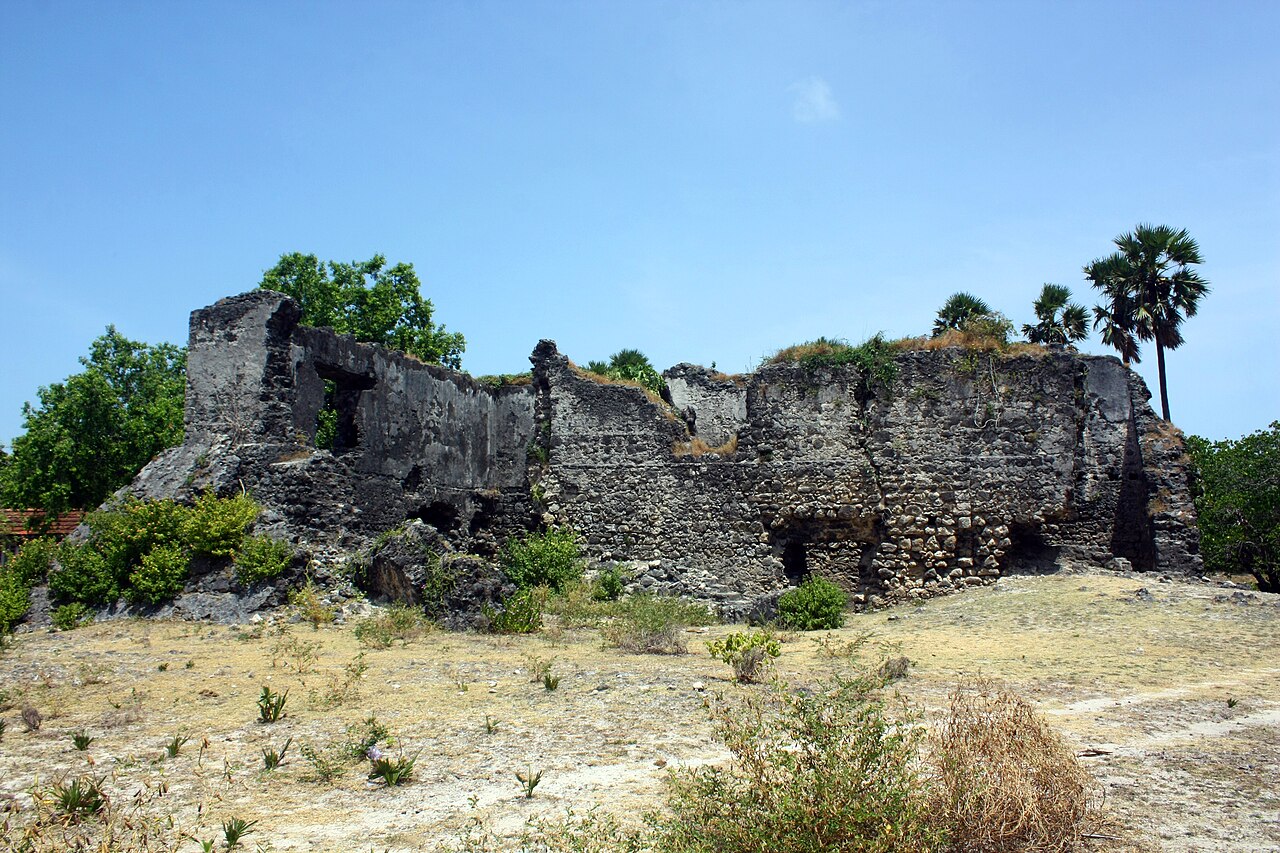
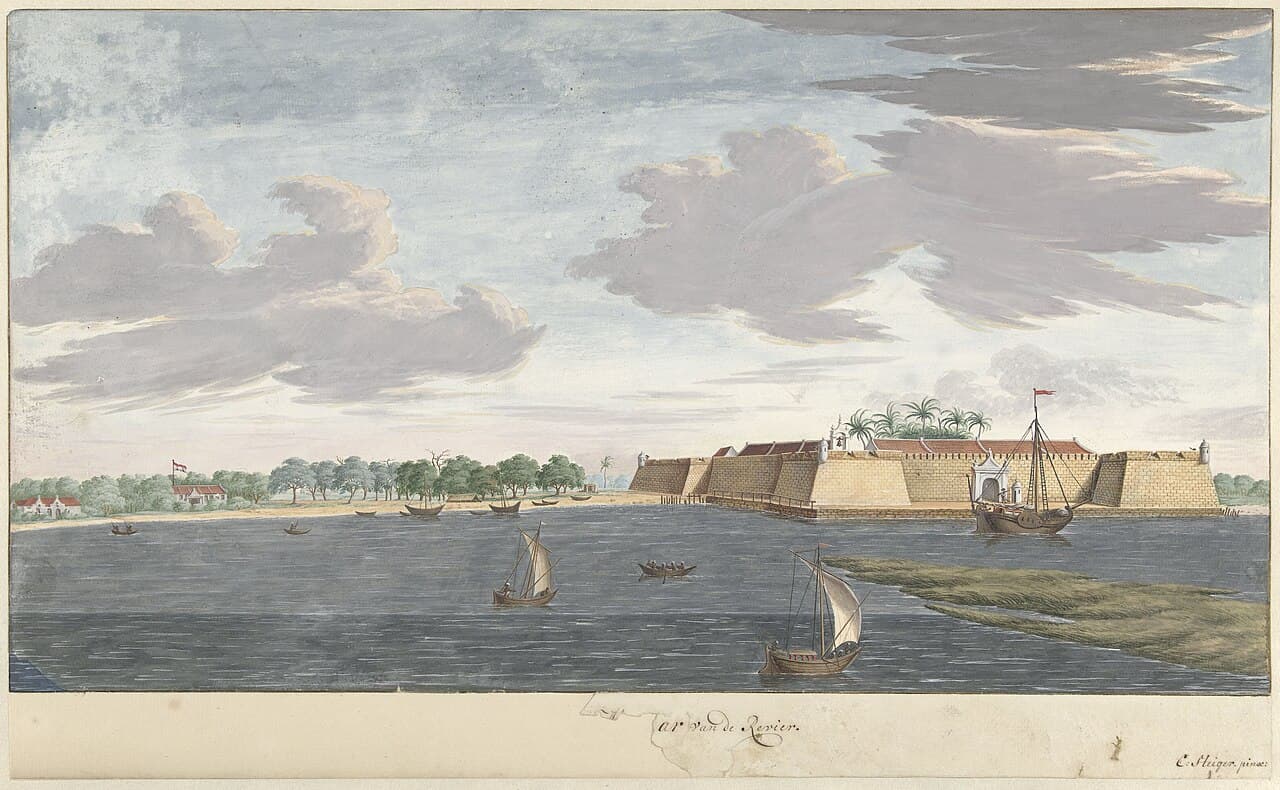
Mannar Fort (Tamil: மன்னார்க் கோட்டை, romanized: Maṉṉārk Kōṭṭai; Sinhala: මන්නාරම් බලකොටුව Mannaram Balakotuwa) stands as a significant 16th-century bastioned fortress located on Mannar Island, Sri Lanka. Originally constructed by the Portuguese in 1560 and named São Jorge, the fort played a crucial role in the colonial power struggles in the region. Its strategic position near the new bridge connecting the island to the mainland highlights its importance in controlling maritime and land routes.
The fort's history reflects the shifting colonial dominance in Sri Lanka. After its initial construction, it fell to the Dutch East India Company in 1658. The Dutch undertook significant reconstruction and strengthening of the fortifications in 1696, adapting the structure to the prevailing military architectural principles of the Renaissance period. This included the implementation of star-shaped bastions designed to withstand artillery attacks, a hallmark of the bastioned fortress style.
In 1795, the fort was captured by the British following the surrender of the Dutch, marking another chapter in its colonial history. Under British control, the fort's military significance declined as newer defense strategies and technologies emerged.
Architectural features and layout
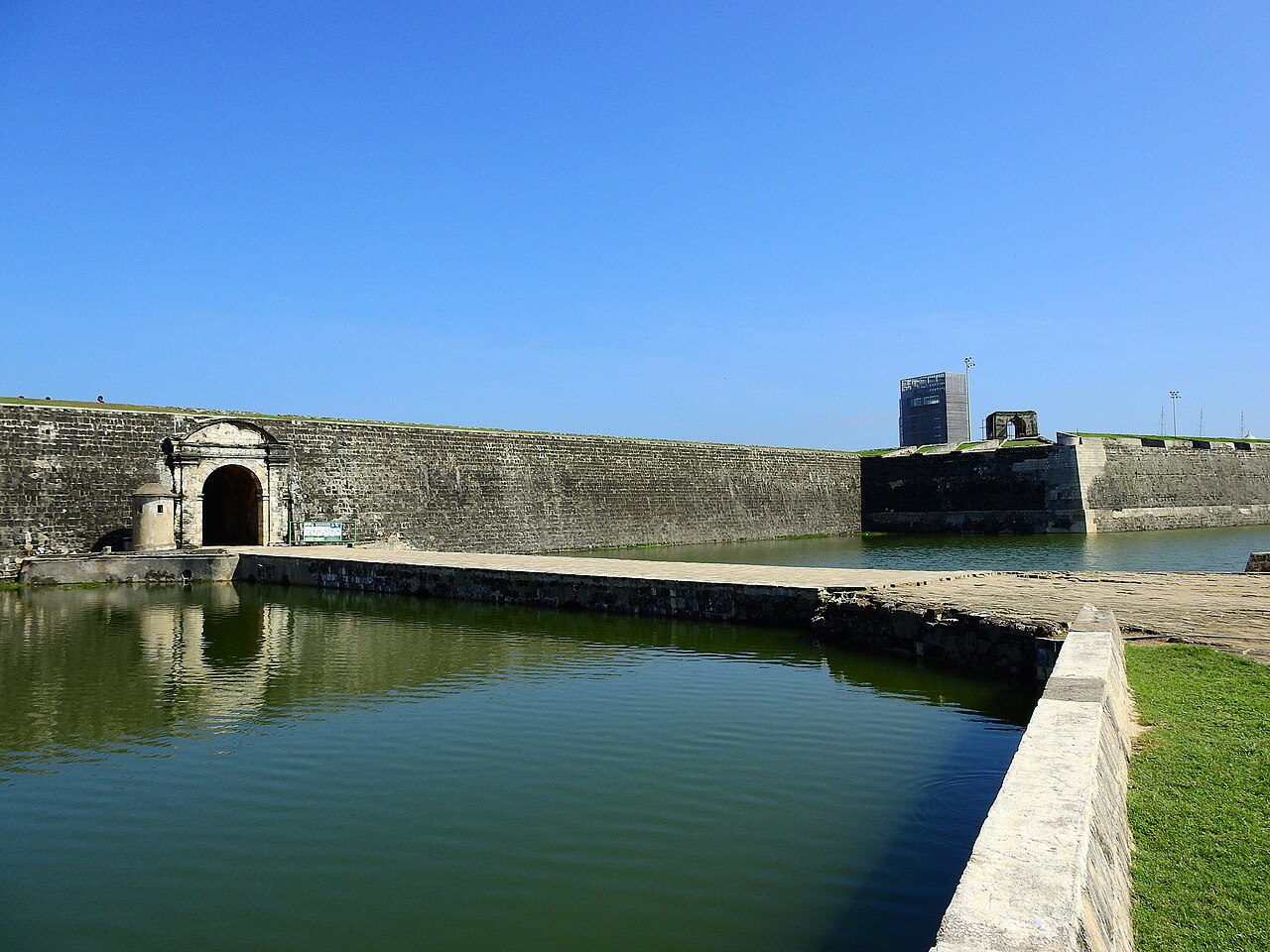
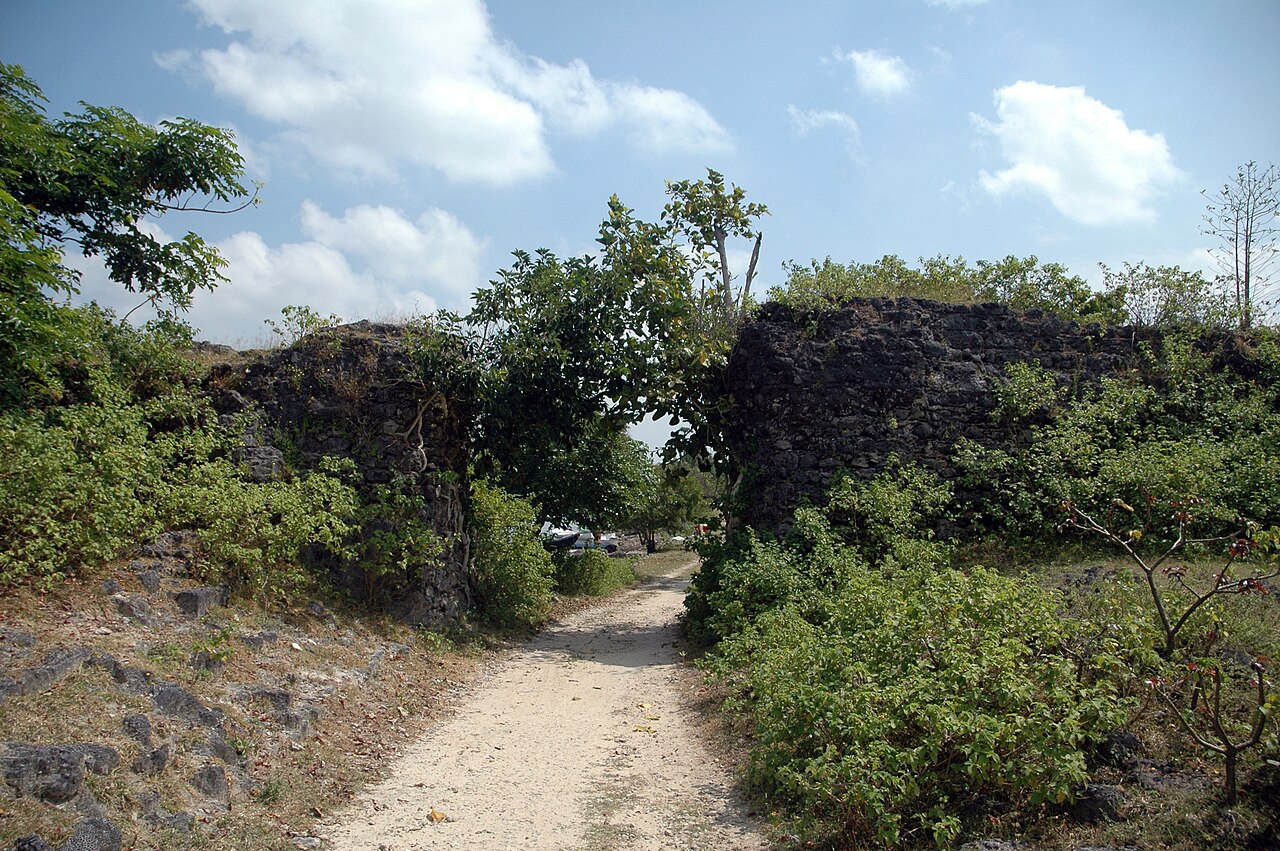
Mannar Fort is characterized by its square plan with four prominent bastions at each corner, a typical feature of bastioned fortresses designed to provide overlapping fields of fire and improved defense against cannon fire. The walls are constructed from coral and limestone, materials locally sourced, which give the fort its distinctive appearance and durability in the coastal environment.
The fort's design includes thick ramparts and a dry moat surrounding the perimeter, enhancing its defensive capabilities. The entrance gate, once heavily fortified, allowed controlled access to the interior, which housed military barracks, storage facilities, and administrative buildings.
Strategic location
Situated on Mannar Island, the fort commands views over the surrounding sea and the narrow land connection to the mainland. This location was critical for controlling trade routes and monitoring naval movements in the Palk Strait between Sri Lanka and India. The proximity to the new bridge linking the island to the mainland underscores the fort's continued relevance as a landmark and historical monument.
Historical context and colonial significance
The construction of Mannar Fort by the Portuguese in the mid-16th century was part of their broader strategy to establish and secure trading posts and military outposts along the coast of Sri Lanka. The fort enabled the Portuguese to control the lucrative pearl fisheries and trade routes in the region.
Following the Dutch conquest in 1658, the fort was rebuilt to enhance its defensive features in line with contemporary European military architecture. The Dutch modifications included strengthening the bastions and improving the internal layout to support a larger garrison and more effective artillery placement.
The British takeover in 1795 marked the fort's transition from an active military installation to a historical site. Over time, the fort's military role diminished, and it eventually came under the care of the Department of Archaeology, which manages its preservation and public access.
Current condition and preservation efforts
Today, Mannar Fort is well preserved relative to many other colonial forts in Sri Lanka. Its sturdy construction and ongoing maintenance have allowed it to retain much of its original character and defensive features. The fort is under the stewardship of the Department of Archaeology, which has undertaken efforts to conserve the structure and promote its historical significance.
Visitors to the fort can explore its bastions, walls, and interior spaces, gaining insight into the military engineering of the Renaissance period and the colonial history of Sri Lanka. The fort also serves as a cultural landmark reflecting the island's complex past and the interplay of European powers in the Indian Ocean.
Visitor information
The fort is accessible to the public, with visiting hours typically during daylight. While specific ticket prices and opening times may vary, the site remains an important destination for those interested in colonial history and military architecture.
Architectural legacy and influence
Mannar Fort exemplifies the adaptation of European bastioned fortress designs to the tropical coastal environment of Sri Lanka. Its combination of local materials and European military engineering principles demonstrates the fusion of cultural and technological influences during the Renaissance and early modern periods.
The fort's enduring presence highlights the strategic importance of Mannar Island throughout history and offers valuable insights into the evolution of fortification techniques in South Asia.

Information
Loading map...
Visitor reviews
No reviews yet. Been here? Write the first review and help other travelers!
Write the first reviewVisited this castle? Share your experience
Your review helps other travelers and adds first-hand knowledge to our encyclopedia.