Yam Fortress
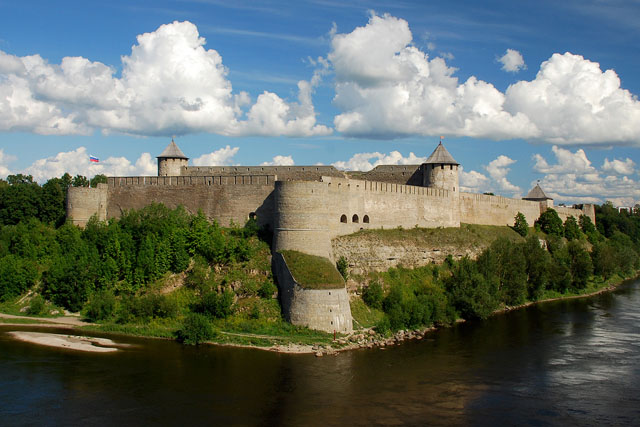
Yam fortress, also known as Yama or Yamgorod, is a significant late medieval fortress located on the eastern bank of the Luga river in Kingisepp, Leningrad Oblast, Russia. Constructed in 1384 by Ivan Fyodorovich, a boyar of the Novgorod Republic, this fortress was strategically built to protect the western borders of the Novgorod Republic against external threats. Its location along the river allowed it to serve as a key defensive point in the region, controlling access routes and safeguarding trade and military movements.
Historical background and strategic importance
The Novgorod Republic, a powerful medieval state, relied heavily on Yam fortress for border defense during the 14th and 15th centuries. The fortress successfully resisted numerous attacks and remained unconquered during this period, highlighting its robust construction and strategic placement. Following the incorporation of the Novgorod Republic into the Grand Principality of Moscow in the late 15th century, Yam fortress underwent significant reconstruction to strengthen its defenses in line with Moscow's military needs.
Architectural features and fortifications
Yam fortress was originally built as a stone fortress featuring thick defensive walls and a detinets—a central stronghold or citadel typical in Russian fortifications. The detinets served as the last line of defense and housed key administrative and military facilities. The fortress included battlements, towers, and designed to repel invaders and provide vantage points for archers and artillery.
After its initial construction, the fortress was rebuilt multiple times to adapt to evolving military technologies and threats. In particular, following its capture by Swedish forces and subsequent return to Russian control, efforts were made to transform Yam into a bastion-type fortress, reflecting the influence of Western European military architecture. However, this reconstruction was never fully completed due to shifting political and military priorities.
Conflicts and changes in ownership
Between the late 16th century and early 17th century, Yam fortress was a contested site during the conflicts between Russia and Sweden. It was captured twice by the Swedish army and officially ceded to Sweden under the Treaty of Stolbovo in 1612. The fortress was a focal point during the Russo-Swedish wars, with the Russian forces storming it in 1658 and capturing most of the fortress except the detinets, which the Swedish garrison held out in.
The Swedish army, recognizing the fortress's strategic importance, demolished most of the existing structures except the detinets and began constructing a new bastion fortress. However, this project remained incomplete. In 1703, during the Great Northern War, Russian forces under the command of Tsar Peter the Great recaptured Yam fortress. Peter the Great completed the fortress's construction, but as Russia's borders expanded westward, Yam's military significance declined.
Decline and preservation
By the late 18th century, the fortress had lost its defensive role. On the orders of Catherine the Great in 1781, the remaining structures of the detinets were demolished, and the bastions were abandoned. Over time, the fortress fell into ruin, with only archaeological remains surviving today. In the 19th century, the site was transformed into a town park, preserving the historical footprint of this once formidable stronghold.
Current status and archaeological significance
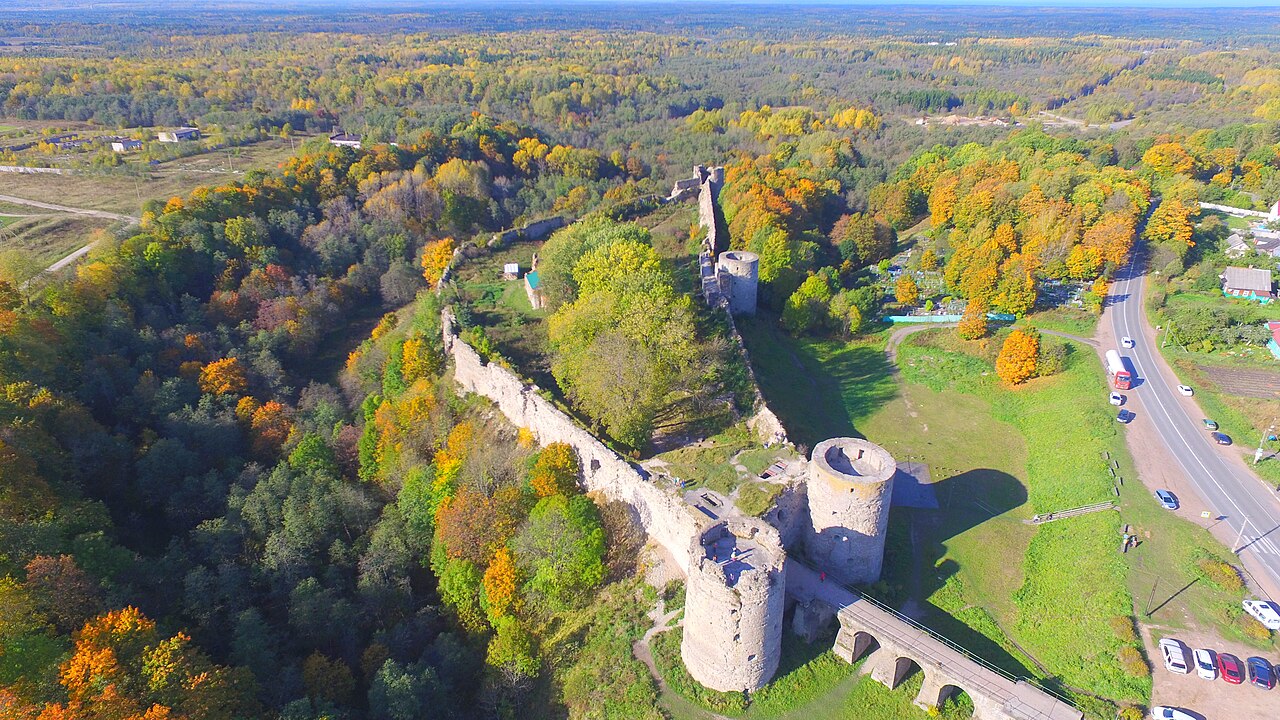
Today, Yam fortress stands as an archaeological ruin and a heritage site, offering insights into medieval Russian military architecture and the turbulent history of the region. The ruins include remnants of the detinets and bastion walls, which attract historians, archaeologists, and visitors interested in Russia's medieval past. The site provides a valuable case study of the transition from traditional medieval fortifications to early modern bastion fortresses influenced by European designs.
Visitors to the site can explore the remains scattered along the Luga riverbank, appreciating the fortress's historical context and its role in shaping the border dynamics between Russia and Sweden during the medieval and early modern periods.
Frequently asked questions (FAQ)
- When was Yam fortress built and by whom?
- Yam fortress was built in 1384 by Ivan Fyodorovich, a boyar of the Novgorod Republic, to protect its western borders.
- What is the architectural style of Yam fortress?
- Yam fortress originally featured medieval Russian fortification styles with a detinets and thick stone walls, later influenced by bastion fort designs during Swedish reconstruction attempts.
- Can I visit the ruins of Yam fortress today?
- Yes, Yam fortress is preserved as archaeological ruins and is accessible to visitors interested in medieval Russian history and architecture.
- Why did Yam fortress lose its military importance?
- After the construction of Ivangorod Fortress and the westward expansion of Russian borders, Yam fortress lost its strategic military role and was eventually abandoned.
- What happened to Yam fortress during the Russo-Swedish conflicts?
- Yam fortress was captured twice by Sweden and awarded to them in 1612; it was later recaptured by Russia in 1658 and again in 1703 during the Great Northern War.
Photo gallery

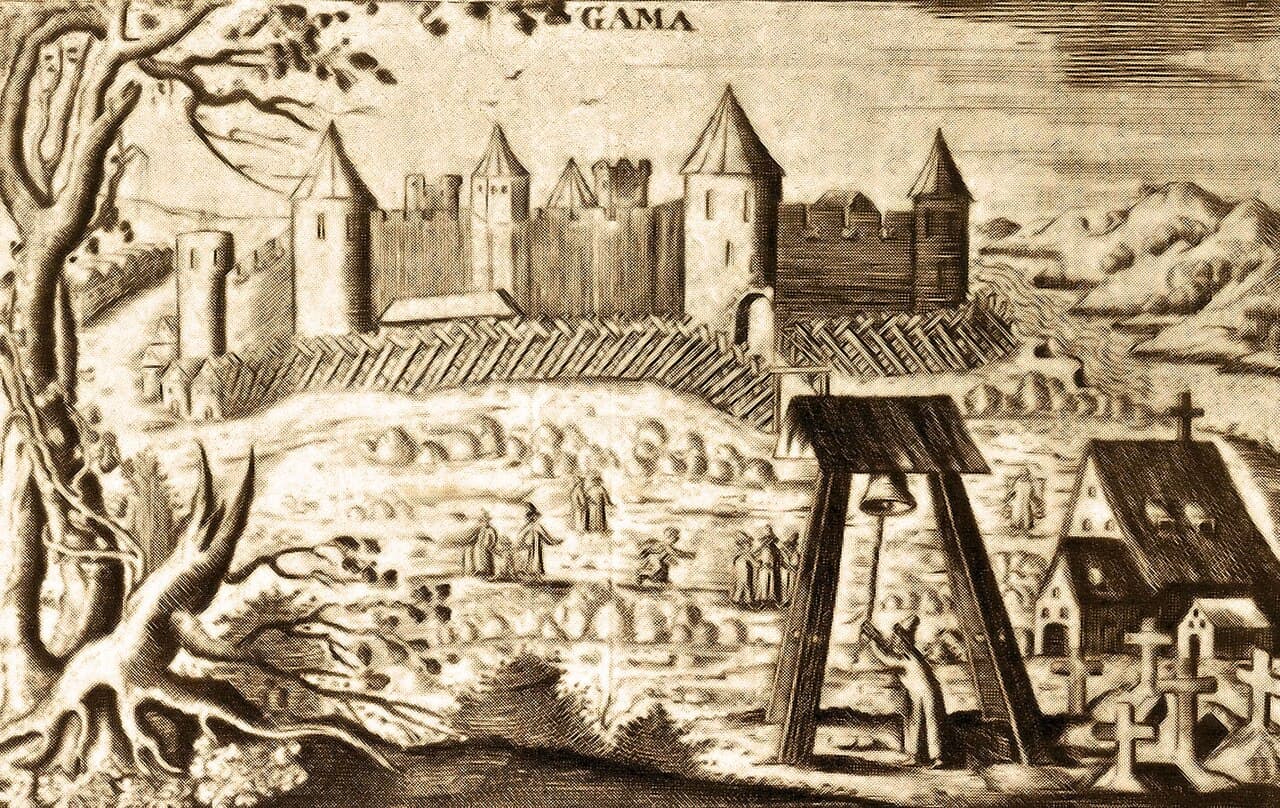
Photo by Olaerius, Reise-Beschreibungen•Public domain
Information
Current owner
State museum
Loading map...
Visitor reviews
No reviews yet. Been here? Write the first review and help other travelers!
Write the first reviewVisited this castle? Share your experience
Your review helps other travelers and adds first-hand knowledge to our encyclopedia.