Koporye Castle Ruins
Koporye Castle ruins represent one of the most significant medieval fortifications in Russia, located near the Baltic Sea coast in the Leningrad Oblast. This bastioned fortress traces its origins to the High Medieval period, specifically between 1240 and 1297, reflecting the turbulent history of the northwestern Russian frontier. The site occupies a strategic position near the Koporye Bay, controlling access to the Gulf of Finland and serving as a key military stronghold through centuries of conflict involving Russian principalities, Novgorod, Sweden, and Muscovy.
Early wooden fortress and foundation
The initial fortification at Koporye was a wooden fortress constructed in 1240 by the Teutonic Knights. This early structure was part of the military expansion by the Livonian Order along the Baltic coast. The wooden castle was short-lived, as it was destroyed in 1241 by Alexander Nevsky, the Prince of Novgorod, who sought to repel foreign incursions into Russian lands. This event marked the beginning of Koporye's role as a contested frontier fortress between Russian and Baltic powers.
Stone fortress construction and early conflicts
Following the destruction of the wooden fortress, a more durable stone fortress was erected by Dmitry Alexandrovich, son of Alexander Nevsky, in 1280. This reconstruction aimed to establish a permanent Russian presence and defend the region. However, the fortress was soon razed in 1282 by the Novgorodians themselves, who were displeased with Dmitry Alexandrovich's independent stance. The power vacuum allowed the Swedes to occupy the banks of the Narova River, intensifying regional hostilities.
In response, the Novgorodians restored the stone fortress in 1297, reaffirming Koporye's importance as a defensive bastion. Throughout the subsequent Swedish-Novgorodian Wars, Koporye withstood repeated assaults, earning a reputation as the strongest fortress in the area.
Fortress modernization and military significance
After the incorporation of Novgorod into the Grand Duchy of Muscovy in the late 15th century, Koporye underwent significant modernization. The fortress was reinforced to resist the emerging threat of cannon fire, a reflection of evolving military technology. Many of the surviving structures date from this period of reconstruction, including thick stone walls, bastions, and defensive towers designed to mount artillery.
Koporye's strategic value was highlighted during the Livonian War (1558–1583), when it temporarily fell to foreign forces but was regained by Russia under the Treaty of Tyavzino. The fortress continued to serve as a key defensive site during the Time of Troubles in the early 17th century, enduring a siege by a vastly superior Swedish force. Despite being outnumbered, the Russian garrison held out until forced to surrender, after which Koporye remained under Swedish control for nearly a century.
Swedish period and decline
During Swedish rule, Koporye was known as Koporje or Caporie, forming an integral part of Swedish Ingria. However, as the Gulf of Finland gradually silted up and the shoreline receded northward, the fortress lost much of its maritime importance. This natural geographic change diminished Koporye's strategic value as a coastal stronghold.
In 1703, during the Great Northern War, a large Russian army under Boris Sheremetev recaptured Koporye from a small Swedish garrison commanded by Captain Wasili Apolloff. The fortress suffered extensive damage from Russian artillery, with visible breaches in the walls that remain to this day.
Architectural features and current condition
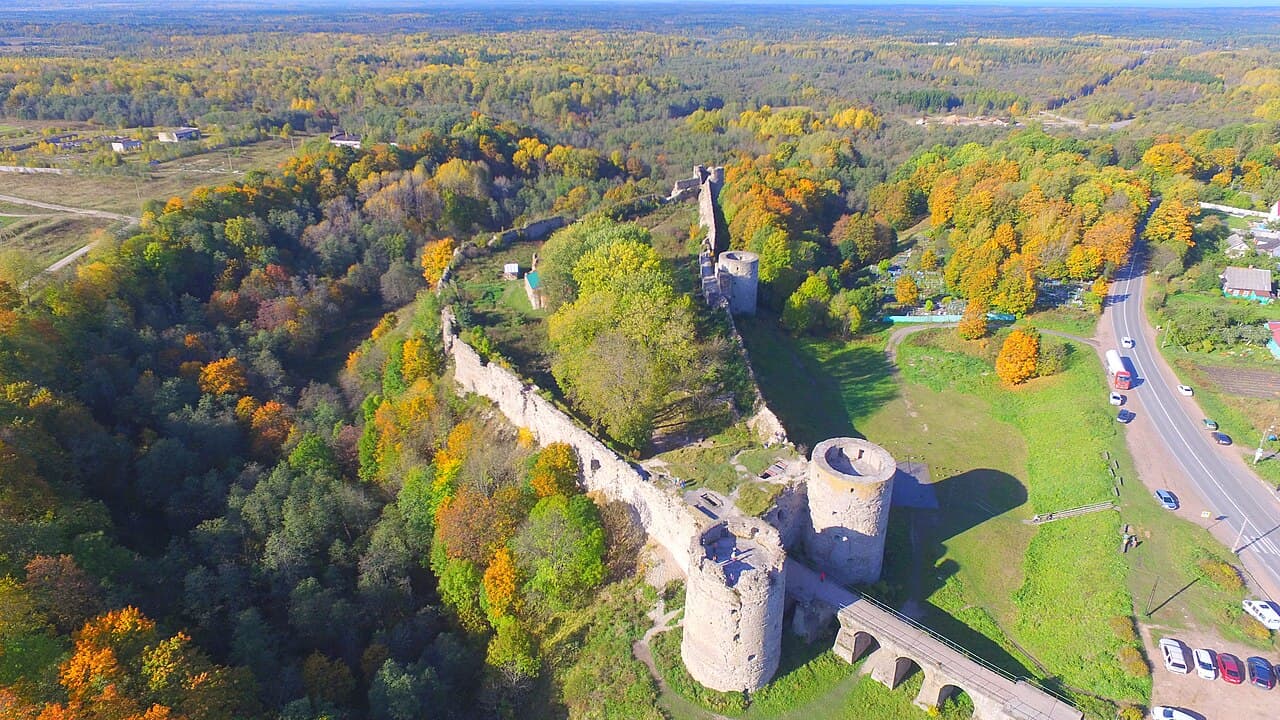
Koporye Castle is classified as a bastioned fortress, characterized by its polygonal stone walls and bastions designed for artillery defense. The fortress complex includes defensive walls, bastions, towers, and a moat, though much of the original wooden structures have not survived. The fortress also contained a 15th-century Church of the Transfiguration, now in ruins, which served both religious and symbolic functions within the castle grounds.
Despite some repair efforts in the 19th century, the fortress remains largely in a ruined state. The ruins provide valuable insight into medieval military architecture in northwestern Russia and attract historians and visitors interested in the region's complex history.
Historical legacy and cultural significance
Koporye Castle's history reflects the broader geopolitical struggles of the Baltic region, involving Russian principalities, the Novgorod Republic, Sweden, and Muscovy. Its repeated destruction and reconstruction illustrate the shifting power dynamics from the High Medieval period through the early modern era. The fortress stands as a testament to the military and architectural adaptations necessitated by advances in siege technology and changing political landscapes.
Today, Koporye is recognized for its cultural heritage value and is part of Russia's historical monuments. Its ruins offer a tangible connection to the medieval past and continue to be a site of archaeological and scholarly interest.
Visitor information and accessibility
The village of Koporye, where the castle is located, lies about 100 kilometers west of St. Petersburg. The site is accessible by road and attracts tourists interested in medieval history and architecture. Visitors can explore the ruins and the surrounding landscape, which includes views of the Koporye Bay and the Baltic coast. The castle's remote setting provides a quiet atmosphere for reflection on its historical significance.
While the fortress is in ruins, pathways and informational signage help visitors understand the layout and history of the complex. The site is open year-round, though weather conditions can affect accessibility during winter months.
Frequently asked questions (FAQ)
- How do I get to Koporye Castle Ruins?
- Koporye Castle Ruins are located in the town of Koporye, approximately 60 kilometers southwest of St. Petersburg. You can reach the castle by taking a train or bus from St. Petersburg to Koporye, followed by a short walk to the site. Make sure to check the local transport schedules for the most convenient options.
- What is the historical significance of Koporye Castle?
- Koporye Castle, built in the 14th century, played a crucial role in the defense of the region against invasions. It was strategically positioned on a trade route, serving as a fortress for various rulers throughout history. The ruins reflect the architectural style of medieval fortifications in Russia and offer insights into the turbulent history of the area.
- When was Koporye Castle built?
- Koporye Castle was constructed in the 14th century, specifically around 1370, during the reign of the Grand Duchy of Novgorod. It was designed to protect the territory from external threats, particularly from the Teutonic Knights. Over the centuries, the castle underwent various modifications and expansions.
- Can I explore the castle ruins?
- Yes, visitors are allowed to explore the ruins of Koporye Castle. You can walk around the site, taking in the remnants of the walls, towers, and the surrounding landscape. However, please be cautious as some areas may be unstable.
- Why is Koporye Castle a popular tourist attraction?
- Koporye Castle is popular for its rich history and picturesque ruins that tell the story of medieval Russian fortifications. The stunning views from the castle site overlooking the surrounding countryside also attract photographers and history enthusiasts alike. Additionally, its proximity to St. Petersburg makes it an accessible day trip for tourists.
- Is it possible to visit Koporye Castle year-round?
- Yes, Koporye Castle can be visited year-round, although accessibility may vary depending on the weather. During the winter months, snow may limit some areas, while spring and summer offer the best conditions for exploring the site. Check local guidelines for any seasonal events or restrictions before your visit.
- What are the opening hours for Koporye Castle?
- Koporye Castle Ruins are generally open to visitors from dawn until dusk, allowing ample time to explore the site. However, it is advisable to check for any specific opening hours or seasonal changes that may apply. Planning your visit during daylight hours will enhance your experience.
- Are there any nearby attractions to visit?
- Yes, there are several attractions near Koporye Castle, including the picturesque village of Koporye and the scenic landscapes of the Leningrad region. The nearby Pulkovo Observatory and historical sites in St. Petersburg also make for great day trips. Exploring these attractions can enrich your understanding of the region's history and culture.
- What are the ticket prices for visiting Koporye Castle?
- Visiting the Koporye Castle Ruins is typically free of charge, making it an accessible destination for all visitors. However, some guided tours or special events may have associated fees. It's a good idea to check local tourist information for any updates on pricing or special offerings.
Photo gallery

Information
Loading map...
Visitor reviews
No reviews yet. Been here? Write the first review and help other travelers!
Write the first reviewVisited this castle? Share your experience
Your review helps other travelers and adds first-hand knowledge to our encyclopedia.