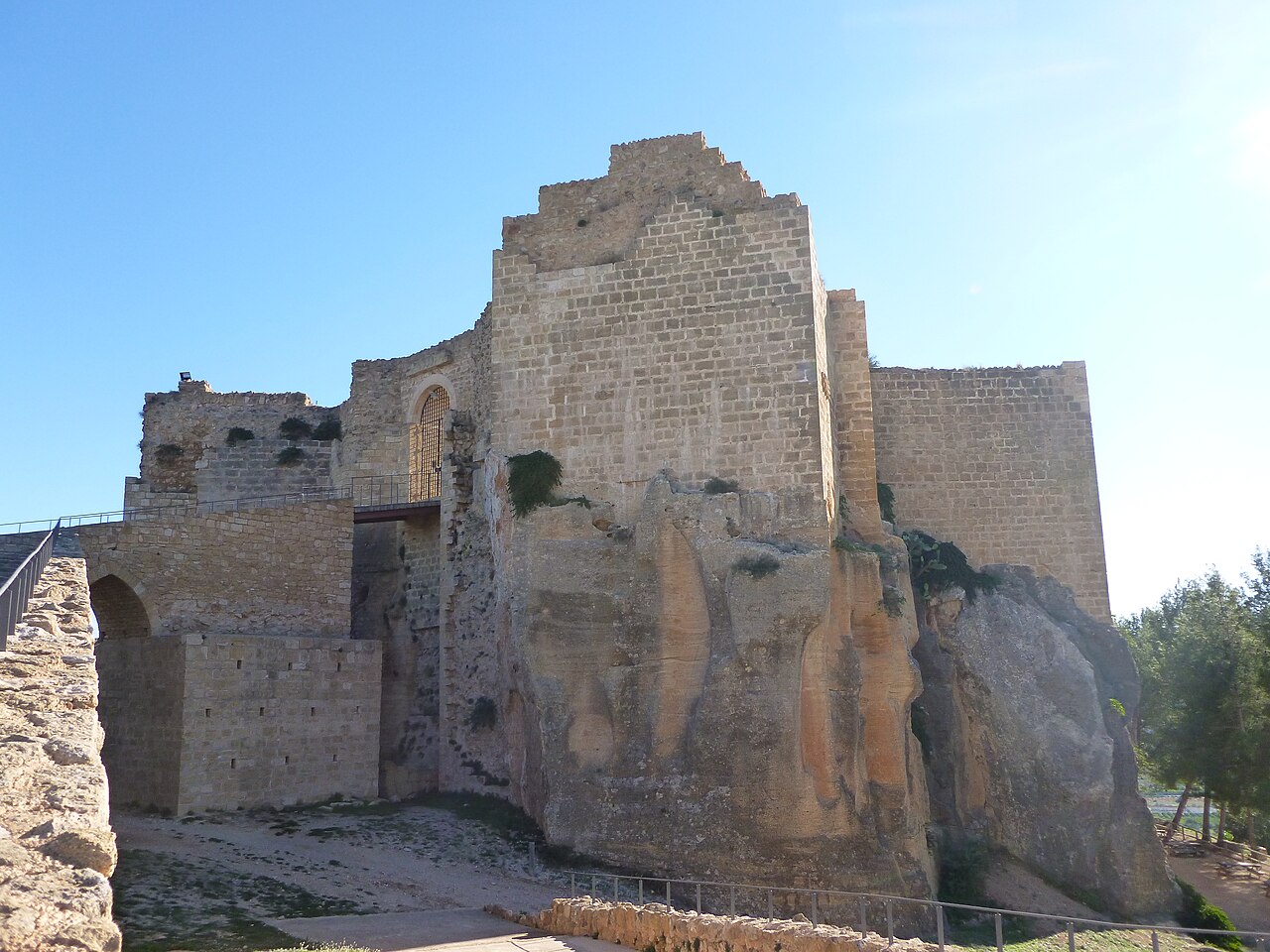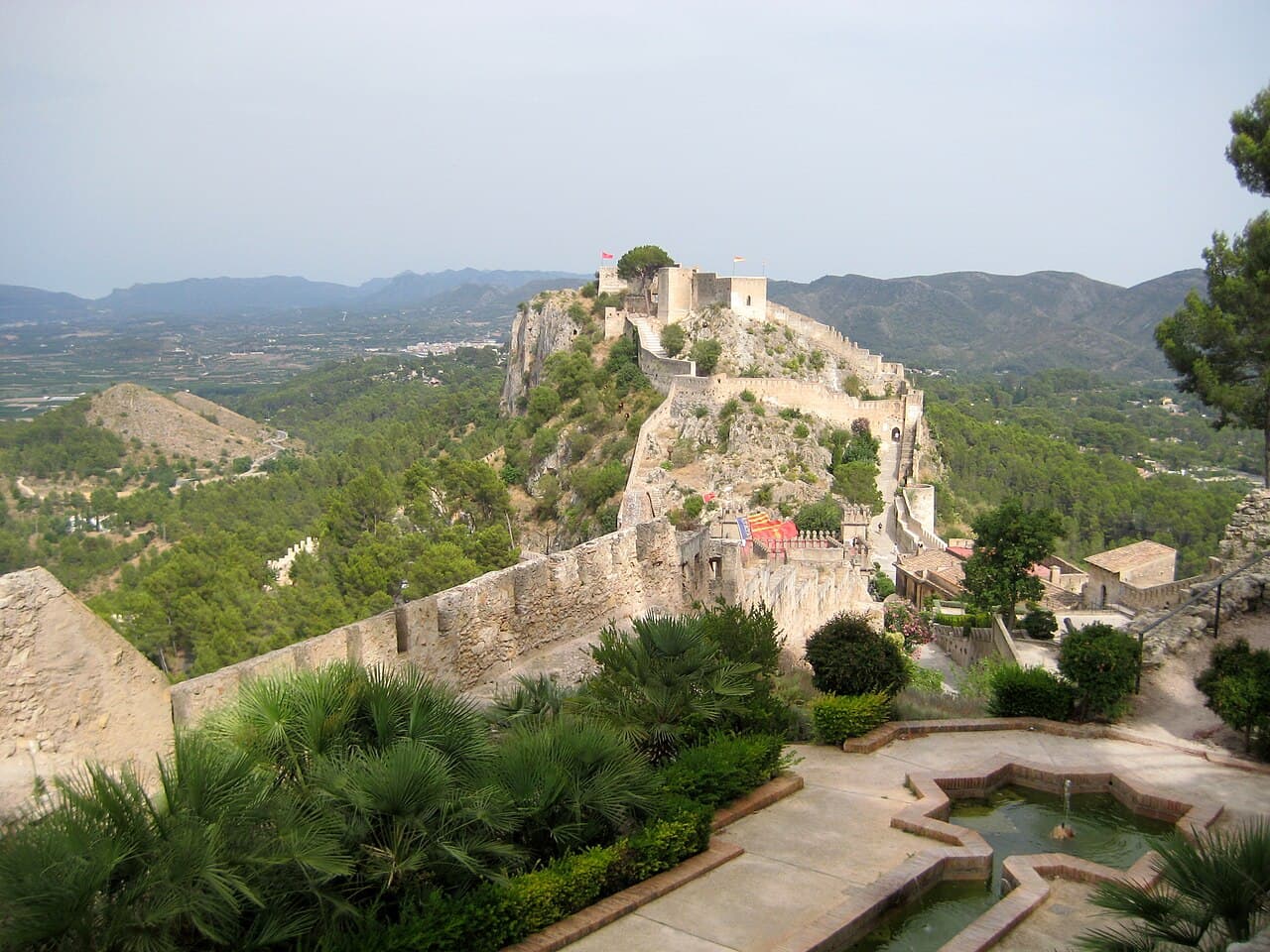
Xativa Castle
Xativa Castle stands as a monumental example of layered historical fortification in the region of Valencia, Spain. Perched strategically atop the Serra del Castell hill, this hill castle offers commanding views over the surrounding landscape and has played a pivotal role in the military and political history of the Iberian Peninsula across multiple eras. The castle complex is distinguished by its dual structure: the older Castillo Menor (minor castle) and the larger Castillo Mayor (main castle). These fortifications reflect a continuum of occupation from the Iberian and Roman periods through the High Medieval and later historical phases.
Originally, the site began as an Iberian stronghold, later adapted by the Romans who linked two separate fortresses to create a broader defensive complex. The Castillo Menor was built upon the remains of these early settlements, while the Castillo Mayor was expanded during the medieval period, particularly under Muslim rule. The castle's location along the ancient Via Augusta underscored its strategic importance, controlling access along this key Roman roadway that connected Rome to the western Mediterranean.
Historical significance and military role
The history of Xativa Castle is deeply intertwined with the broader conflicts and power shifts that shaped the Iberian Peninsula. The minor castle was originally a Celtiberian stronghold before being seized by the Carthaginians in the third century BC. It is famously linked to Hannibal Barca, who is said to have planned his campaign against the Roman city of Saguntum here, and where his son was purportedly born in 218 BC.
In the medieval period, the castle passed through various hands, reflecting the turbulent history of Muslim and Christian control in the region. It fell to the Almoravid dynasty in 1092 and later to the Almohads in 1171. The Christian reconquest began with King James I of Aragon, who captured Xativa in 1244 after a prolonged siege. The Treaty of Xàtiva allowed for a phased Christian takeover, initially permitting the Moors to remain in the larger castle for two additional years.
Following the conquest, the castle served as a significant military and administrative center. It was used as a state prison for the Crown of Aragon from the 13th to 16th centuries, detaining notable figures such as the Infantes de la Cerda and the Count of Urgell. The fortress also played a role in the War of the Spanish Succession, enduring sieges and artillery bombardments despite efforts to reinforce its defenses, including the construction of the Garita Basset tower by General Joan Baptista Basset.
Architectural features and fortifications
Dual fortresses and defensive layout
Xativa Castle is composed of two main sections: the Castell Mayor on the right and the Castell Menor on the left, connected by the plaza d’armes or central courtyard. The castle's walls exhibit a remarkable blend of Roman construction techniques and later medieval modifications, showcasing a complex layering of architectural styles and defensive strategies.
Access to the site is gained through the Porta Ferrisa (Iron Gate), a modern reconstruction adorned with the city’s coat of arms and royal emblems. This entrance leads visitors into the central courtyard, which integrates both historic elements and 20th-century neo-Gothic buildings designed for exhibitions and social functions.
Castell mayor highlights
Within the Castell Mayor, visitors encounter the neo-Gothic Chapel of Saint George, believed to be built on the site of the medieval Chapel of Santa Anna. The area also features a gardened terrace with a staircase flanked by three historic cannons, originally documented in the late 16th century and recast in 1690, which were active during the War of the Spanish Succession.
The Torre Redona (Round Tower) is a prominent defensive structure with maintenance records dating back to the early 15th century. Nearby are the remains of a second gate with a bent passage, designed for enhanced defense, and flanked by towers. The castle also contains remnants from the Arab period, including a Muslim-era oven and an aljub (cistern) for water storage.
The Portal de Santa Maria, rebuilt in 1415, leads to the Gothic Chapel of Santa Maria, a well-preserved religious building originally constructed in 1276 and rebuilt under Queen Maria in the 15th century. This chapel features a single nave with ribbed vaults supported by corbels bearing royal insignia and houses a modern sarcophagus reputed to contain the remains of the Count of Urgell.
The base of the Torre de Sant Jordi, originally Roman and repaired in the 15th century, remains partially intact despite damage from the 1748 earthquake and later conflicts. At the summit of Castell Mayor lies the seloquia, the highest Muslim castle zone, containing courtyards, Moorish chambers, and quarters once occupied by the Duke of Calabria. Gothic arches and opus spicatum paving survive here, marking the historic governor and guard spaces.
Castell menor and notable structures
Castell Menor, the older section, features the Porta d’Hanníbal, a 15th-century Gothic gate named after the legendary passage of Hannibal Barca and Scipio. A square tower with Roman foundations and a bent Gothic gate with a restored 15th-century tower provide access to the inner enclosure.
The Torre de la Reina within this section is associated with Queen Himilce, an Iberian woman linked by tradition to Hannibal's son. Today, it includes a modern balcony known as the Balcony of Queen Himilce. Other practical features include cisterns, stables, animal pens, latrines, and the defensive Torre de l’Esperó, noted since the 14th century for its strategic spur formation.
Both castle sections include albarrana towers, detached defensive towers connected to the main walls, serving as lookout points and strongholds, such as the Garita Basset tower outside the main fortifications, named after General Basset who reinforced it in 1705.
Cultural legacy and modern preservation
Throughout its extensive history, Xativa Castle has been a symbol of cultural and military significance in the Valencian region. It has witnessed the rise and fall of empires, religious conflicts, and social transformations. The castle's association with legendary figures like Hannibal Barca and Queen Himilce enriches its cultural narrative, blending historical fact with regional myth.
In the 20th century, the castle experienced a revival when industrialist Gregori Molina added a neo-Gothic complex, creating what locals call the "third castle." Ownership has since passed to financial institutions and the Generalitat Valenciana, with current management by the Xàtiva City Council. Today, the castle serves as a cultural heritage site, open to visitors who can explore its layers of history, architecture, and legend.
Visitors can experience the castle's diverse architectural features, from ancient Roman cisterns with Gothic vaults to medieval chapels and modern exhibition spaces. The site offers a unique opportunity to understand the military, political, and social evolution of this important fortress over more than two millennia.
With its well-preserved structures and evocative ruins, Xativa Castle remains a testament to the enduring legacy of fortifications in Spanish history and a must-visit destination for those interested in medieval architecture, military history, and cultural heritage.
Frequently asked questions (FAQ)
- How do I get to Xativa Castle?
- Xativa Castle is easily accessible by car, located just a short drive from the town center of Xàtiva. Public transport options, including trains and buses, are also available, making it convenient for visitors traveling from Valencia and other nearby cities.
- What is the historical significance of Xativa Castle?
- Xativa Castle is an important historical site that dates back to the Moorish period in the 11th century. It has witnessed numerous battles and changes in power, serving as a strategic military stronghold throughout its history.
- When was Xativa Castle built?
- The origins of Xativa Castle can be traced back to the 11th century, although it has undergone various renovations and expansions over the centuries. The castle's current structure reflects a mixture of architectural styles from different periods, showcasing its rich history.
- Can I take guided tours at Xativa Castle?
- Yes, guided tours are available at Xativa Castle, providing visitors with in-depth knowledge about its history and architecture. These tours are a fantastic way to explore the castle's highlights while learning from knowledgeable guides.
- Is Xativa Castle accessible for visitors with disabilities?
- Xativa Castle has made efforts to improve accessibility for all visitors. While some areas may have limited access due to the castle's historic architecture, staff is available to assist and provide information on the best routes for those with mobility challenges.
- What is the best time to visit Xativa Castle?
- The best time to visit Xativa Castle is during the spring and fall when the weather is mild, making it pleasant for exploring the outdoor spaces. Additionally, visiting early in the morning or later in the afternoon can help you avoid the crowds.
- What are the opening hours for Xativa Castle?
- Xativa Castle typically opens to visitors daily, but hours may vary by season. It is advisable to check the official website for the most current opening hours before planning your visit.
- How much are the ticket prices for Xativa Castle?
- Ticket prices for Xativa Castle are generally affordable, with discounts available for students, seniors, and children. Special rates may apply for guided tours, so be sure to inquire about any available packages when purchasing your tickets.
- Are there any nearby attractions to visit while at Xativa Castle?
- Yes, there are several nearby attractions worth exploring, such as the historic town of Xàtiva itself, featuring charming streets and local shops. Additionally, the Monastery of Sant Jeroni de Cotalba is a short distance away and offers beautiful architecture and serene gardens.
Photo gallery

Information
Website
Visit websiteSources & official resources
Verify the information above using these authoritative references.
Loading map...
Visitor reviews
No reviews yet. Been here? Write the first review and help other travelers!
Write the first reviewVisited this castle? Share your experience
Your review helps other travelers and adds first-hand knowledge to our encyclopedia.