Castle of Montesa
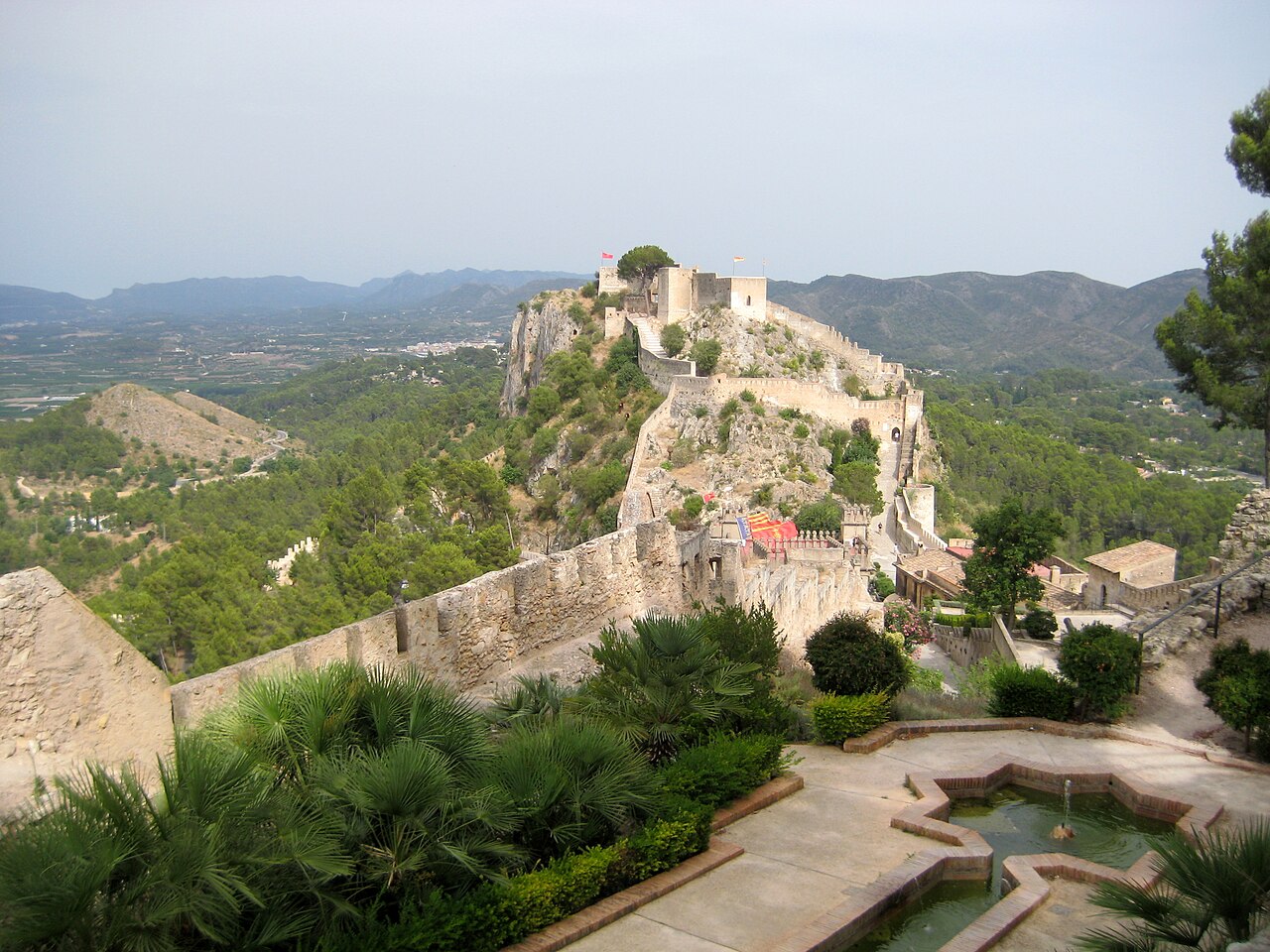
The Castle of Montesa stands as a significant historical and architectural monument in the Valencian region of Spain. Perched atop a rocky hill, this hill castle exemplifies the unique fusion of military fortification and monastic architecture characteristic of the Valencian Gothic style. Originally established by Islamic builders, the fortress controlled a vital transit route, securing the region against incursions and protecting the Muslim city of Xàtiva.
Following the Christian reconquest led by King James I of Aragon in 1244, the castle's control was contested until King Peter III of Aragon definitively incorporated it into the Crown of Aragon in 1277. This transition marked the beginning of a new chapter for the castle, culminating in its donation by King James II of Aragon to the newly founded Order of Montesa in 1317. This military-religious order was established by Pope John XXII after the suppression of the Knights Templar, inheriting Templar and Hospitaller properties within the Kingdom of Valencia.
Architectural evolution and military significance
The Order of Montesa undertook extensive rebuilding and expansion of the fortress throughout the 14th century. The castle's design reflects its dual purpose as both a convent for warrior monks living under the Rule of Saint Benedict and a strategic military outpost. Its formidable defensive walls, towers, and moat were engineered to withstand sieges and control the surrounding territory.
Fortifications and layout
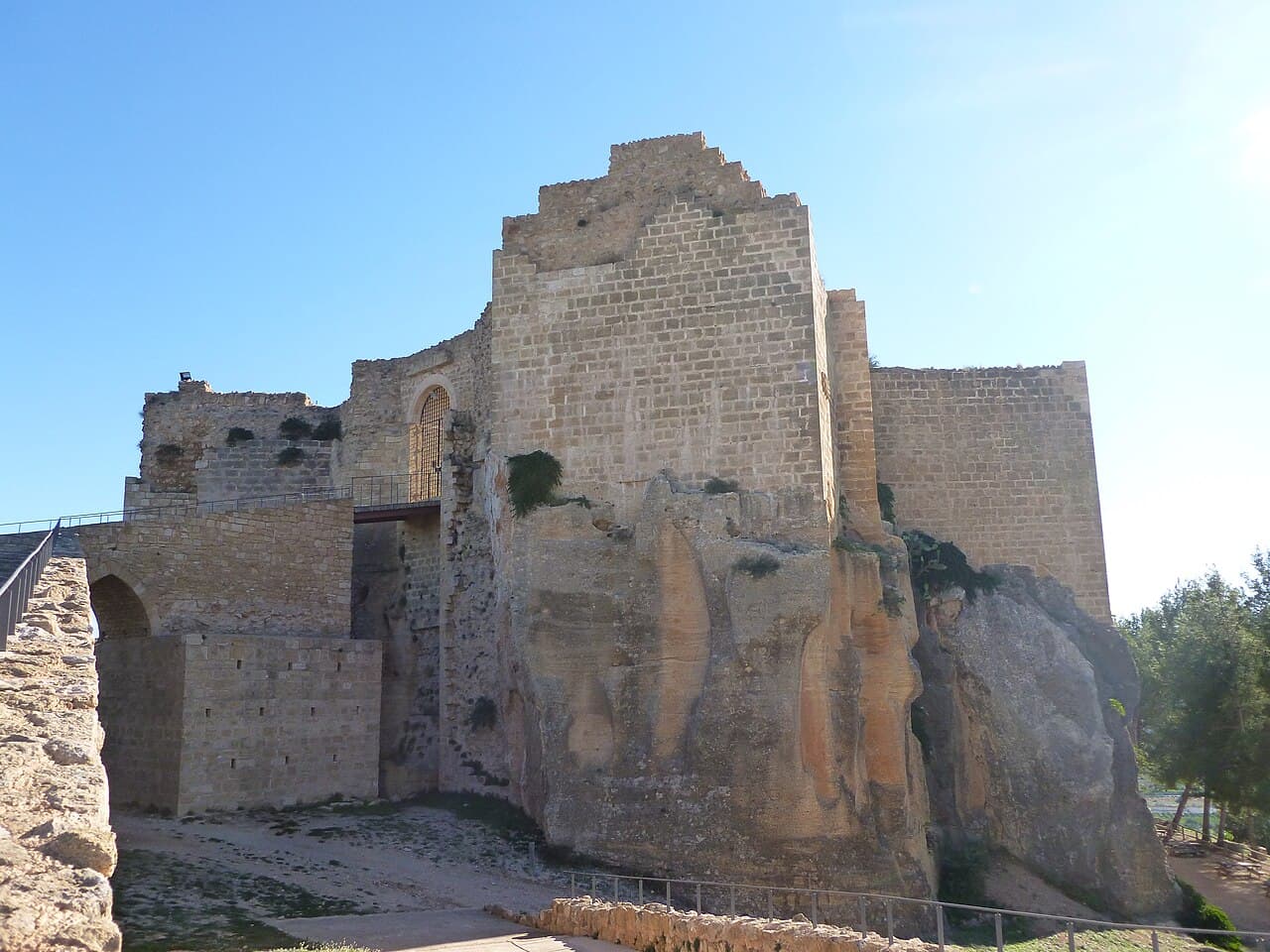
The castle features a large plaza de armas or main courtyard capable of accommodating up to 2,000 soldiers, underscoring its role as a significant military hub. The entrance is secured by a reinforced gate accessed via a drawbridge spanning a moat approximately 7.5 meters wide. The keep, known as the torre de l’Homenatge, is situated at the western end and was built atop an earlier Islamic tower, serving as the final defensive refuge.
Religious and communal spaces
Within the castle walls, the church and convent formed the spiritual heart of the monastic community. The church, constructed with finely cut ashlar masonry, features a single nave, main altar, choir, sacristy, and chapels dedicated to saints such as Saint Lucy, Saint George, and Saint John. The interior was once richly decorated with paintings of the Order’s saints and cedarwood choir stalls sourced from the Order’s lands.
The chapter house is a notable architectural highlight, characterized by thick walls and striking rib-vaulted ceilings with a central keystone bearing the Order’s cross. Adjacent to the chapter house lies the cloister, a rectangular courtyard with radial walkways supported by pentagonal pillars and cylindrical columns, featuring altars dedicated to Saint Anne, Saint Michael, and the Holy Cross.
The refectory on the upper story of the southern cloister side served as the communal dining hall, illuminated by large windows and furnished with a wooden pulpit and six large tables. Additional facilities included barracks for soldiers, a bakery, storerooms, a large cistern for water storage, and a prison tower of Islamic origin known as an albarrana tower. The master’s palace connected directly to the church, emphasizing the integration of religious and administrative functions.
Historical context and decline
Throughout the medieval period, the Castle of Montesa was a crucial element in the defensive network of the Kingdom of Valencia, working in concert with nearby fortresses such as the Castle of Xàtiva and the watchtower of Moixent to protect the region of La Costera. The Order of Montesa maintained both military vigilance and religious observance, embodying the dual nature of monastic knightly orders.
By the 18th century, the castle's military importance waned, and it suffered significant damage from two major earthquakes in 1748 and 1755. The 1755 earthquake, which struck during a religious service, caused severe structural damage leading to the fortress's abandonment. The Order subsequently relocated its headquarters to Valencia, where between 1761 and 1780, a new palace was constructed using materials salvaged from the castle ruins.
Archaeological discoveries and preservation efforts
Declared a historic-artistic monument in 1926, the Castle of Montesa has been the focus of archaeological excavations and restoration projects since the mid-20th century. These efforts have revealed numerous architectural fragments including rib vaulting, gargoyles, capitals, column shafts, baptismal fonts, and a Gothic stone angel, providing valuable insight into the castle’s construction and artistic heritage.
Modern restoration has stabilized key sections of the fortress, including partial reconstructions of the chapter house and segments of the defensive walls. Despite much of the castle remaining in ruins due to earthquake damage and stone removal for local construction, these conservation initiatives preserve the castle as a unique example of a monastic fortress in the Valencian community.
Cultural significance and visitor experience
Today, the Castle of Montesa stands not only as a monument to the military and religious history of medieval Spain but also as a testament to the architectural ingenuity of the Valencian Gothic tradition. Visitors can explore the imposing defensive structures, the evocative remains of the church and monastic quarters, and the atmospheric courtyards that once housed warrior monks.
The castle’s strategic hilltop location offers panoramic views of the surrounding landscape, enhancing its appeal as a cultural and historical destination. Preservation efforts continue to enrich the site’s accessibility and interpretive potential, making the Castle of Montesa a compelling attraction for those interested in medieval fortifications, monastic orders, and Spanish heritage.
Frequently asked questions (FAQ)
- When was the castle of montesa built and by whom?
- The Castle of Montesa was originally constructed by Islamic builders as a fortress controlling a key route before being taken over and expanded by the Order of Montesa in the 14th century.
- What architectural style characterizes the castle of montesa?
- The castle is a remarkable example of Valencian Gothic architecture, combining military and religious features typical of the late medieval period.
- Can visitors explore the interior of the castle?
- Visitors can explore the remains of the castle, including the defensive walls, towers, church ruins, and reconstructed chapter house, which offer insight into its historical and architectural significance.
- Why was the order of montesa founded?
- The Order of Montesa was founded in 1317 by Pope John XXII after the suppression of the Knights Templar to take over their properties and continue their military-religious mission in the Kingdom of Valencia.
- What caused the decline of the castle of montesa?
- The castle's decline was due to the diminishing military importance in the 18th century and severe damage from earthquakes in 1748 and 1755, leading to its abandonment.
Photo gallery

Information
Website
Visit websiteSources & official resources
Verify the information above using these authoritative references.
Loading map...
Visitor reviews
No reviews yet. Been here? Write the first review and help other travelers!
Write the first reviewVisited this castle? Share your experience
Your review helps other travelers and adds first-hand knowledge to our encyclopedia.