Wüstegarten — Germany castle

Wüstegarten

Wüstegarten hill castle in Hesse, Germany
Hessen, Germany

Wüstegarten is primarily known as a mountain located in the northern German state of Hesse, spanning the counties of Waldeck-Frankenberg and Schwalm-Eder-Kreis. It rises to an elevation of 675.3 metres (2,216 feet) and is part of the Kellerwald mountain range. The area is renowned for its natural beauty and is encompassed by the Kellerwald-Edersee National Park, which is the only national park in Hesse. This park is a protected area that preserves the extensive beech forests characteristic of the region and offers a variety of outdoor recreational activities such as hiking, nordic walking, mountain biking, and cross-country skiing.

Despite the prominence of the Wüstegarten mountain itself, there is no substantial evidence or recorded historical documentation confirming the existence of a castle or fortress on Wüstegarten. The term "Wüstegarten" in this context primarily refers to the natural landscape rather than a medieval or historic castle site. The region's topography and forested hills have been more significant for natural conservation and outdoor leisure than for medieval fortifications.

In the broader context of German castles, many hill castles (or HILL_CASTLE types) are strategically located on elevated terrain to provide defensive advantages and commanding views of the surrounding areas. However, without archaeological or historical records, Wüstegarten does not fit the typical profile of a castle site despite its classification as a hill castle in some records. The lack of ruins, fortifications, or documented historical use as a fortress suggests that the site is primarily valued for its natural environment.

Wüstegarten's natural and recreational significance

The Kellerwald-Edersee National Park, encompassing Wüstegarten, is celebrated for its extensive beech forests, which are part of a UNESCO World Heritage Site recognizing the ancient beech forests of Europe. The park's conservation efforts focus on maintaining the natural forest ecosystem, which supports diverse flora and fauna. Visitors to Wüstegarten can explore numerous trails that traverse the mountain and surrounding woodland, offering opportunities to experience the region's natural heritage.

Outdoor activities are well-developed around Wüstegarten, including marked hiking routes that range in difficulty and length. The park also supports winter sports such as cross-country skiing when conditions allow. The mountain biking trails attract enthusiasts seeking varied terrain within a protected natural setting.

Historical context and absence of castle structures

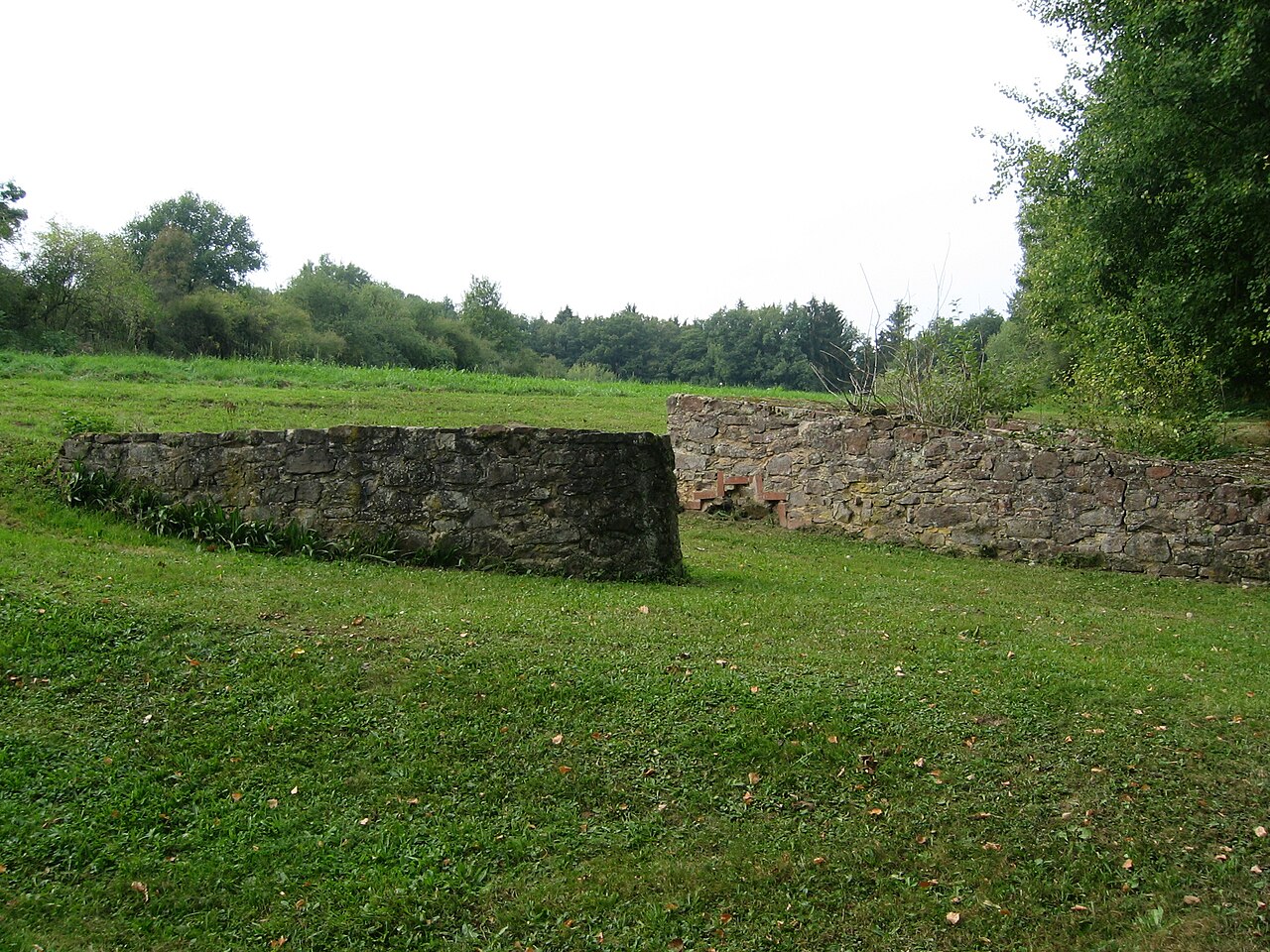
While many hills and mountains in Germany host medieval castles or fortifications, Wüstegarten does not have a recorded history as a castle site. There are no visible remains of walls, towers, or other typical castle features such as moats or baileys. The name "Wüstegarten" itself does not appear in historical records relating to nobility or military architecture.

This absence of castle structures distinguishes Wüstegarten from other hill castles in Hesse, where ruins or preserved castles often mark historical sites. Instead, Wüstegarten's significance lies in its role within the landscape and the conservation of natural heritage rather than architectural or military history.

Geographical location and accessibility

Wüstegarten is situated within the Kellerwald mountain range, which is part of the larger Central Uplands of Germany. The mountain lies near the towns within Waldeck-Frankenberg and Schwalm-Eder-Kreis counties, though no specific city or village is directly associated with it. The region is accessible by road and is a popular destination for nature tourism within Hesse.

The national park's visitor centers provide information and maps for exploring Wüstegarten and the surrounding Kellerwald area. The mountain's trails are well-maintained and marked, making it accessible for visitors of varying fitness levels and interests.

Frequently asked questions (FAQ)

What is Wüstegarten known for?
Wüstegarten is primarily known as a mountain in Hesse, Germany, within the Kellerwald-Edersee National Park, famous for its natural beech forests and outdoor activities.
Is there a castle on Wüstegarten?
There is no documented evidence of a castle or fortress on Wüstegarten; it is mainly recognized for its natural landscape rather than historical fortifications.
What activities can visitors enjoy at Wüstegarten?
Visitors can enjoy hiking, nordic walking, mountain biking, and cross-country skiing within the Kellerwald-Edersee National Park surrounding Wüstegarten.
Where is Wüstegarten located?
Wüstegarten is located in the Kellerwald mountains in northern Hesse, Germany, spanning the counties of Waldeck-Frankenberg and Schwalm-Eder-Kreis.
How can I access Wüstegarten?
Wüstegarten is accessible by road with visitor centers in the Kellerwald-Edersee National Park providing maps and information for exploring the area.

Photo gallery

Wüstegarten
Click to view

Photo by Jörg Braukmann•CC BY-SA 4.0

1 photo • Click any image to view in full screen

Information

Hill Castle

Loading map...

Visitor reviews

No reviews yet. Been here? Write the first review and help other travelers!

Write the first review

Visited this castle? Share your experience

Your review helps other travelers and adds first-hand knowledge to our encyclopedia.

Write a review

(5/5)

0/2000 characters

Your review will be visible after admin approval

Nearby castles

5.2 km

Burg Jesberg

Jesberg, Germany

Burg Jesberg stands as a significant medieval hill castle ruin nestled near the town of Jesberg in northern Hesse, Germany. Constructed in the late 12th or early 13th century, this fortress was strategically positioned to oversee and protect an important historic trade route known as the Fritzlarer Straße. Its elevated location at approximately 280 meters above sea level provided commanding views of the surrounding landscape, including the nearby Kellerwald forest, making it a vital stronghold in the region. The castle's origins trace back to Germanic builders who employed the Romanesque architectural style, characterized by thick stone walls, narrow windows, and a compact, sturdy layout adapted to the hilltop terrain. The castle's design reflects the military and residential needs of the period, combining defensive features with living quarters suitable for noble families and their retainers. Historical development and ownership The earliest documented mention of Burg Jesberg dates to 1241, when the brothers Ludwig and Wortwin von Linsingen sold the castle and its jurisdiction, then called "Lenswideshusen," to Archbishop Siegfried III of Mainz. Despite this sale, the von Linsingen family retained the castle as a fief under Mainz, indicating a feudal relationship where local noble authority was balanced with submission to ecclesiastical overlords. Over the next two centuries, Burg Jesberg remained a crucial stronghold for the Archbishopric of Mainz in the region of Lower Hesse. It served as a counterbalance to other Mainz-controlled castles such as those at Fritzlar, Naumburg, and Heiligenberg near Felsberg. The castle was managed by various ministerial families, including the von Falkenberg, von Linsingen, von Gilsa, and von Grifte, who acted as pledge holders and castellans, reflecting the fluid noble stewardship typical of the medieval period. Conflicts and sieges By the mid-14th century, around 1350, Burg Jesberg suffered significant damage, likely due to ongoing conflicts between the Archbishopric of Mainz and the expanding Landgraves of Hesse. These tensions culminated in 1400, when the von Linsingen family shifted allegiance to the Hessian Landgrave, prompting Mainz forces to besiege and capture the castle. The castle underwent extensive rebuilding from 1425 to 1426 under the direction of Happel Katzmann, a ministerial figure from Fritzlar. This reconstruction preserved the original Romanesque bergfried but added substantial fortifications, including a newly excavated defensive moat. These enhancements reflected evolving military architecture and the castle's ongoing strategic importance. In 1427, Burg Jesberg played a pivotal role during a decisive conflict between Landgrave Ludwig I of Hesse and Archbishop Konrad of Mainz. After Mainz troops were defeated near Fritzlar, survivors sought refuge within the castle, underscoring its continued military value. The castle's most dramatic siege occurred in 1469 during the Hessian Brother War. Defended by von Linsingen castellans loyal to Mainz, Burg Jesberg was attacked by forces led by Landgrave Ludwig II, who employed 500 Bohemian mercenaries and 300 horsemen. The fortress was stormed after a prolonged siege, resulting in the death of all defenders and near-total destruction of the castle. Decline and preservation Although rebuilt again in 1524, Burg Jesberg gradually lost its military and administrative significance after 1586, when control definitively passed to the Landgraviate of Hesse. Over subsequent centuries, the castle fell into disuse and decay. Many stones were removed and repurposed for local construction, a common fate for abandoned medieval fortifications. The von Linsingen family's Hesse branch became extinct in 1721, marking the castle's final transition to Hessian control. By around 1820, a merchant named Appell acquired the ruins and prevented their complete destruction. Eventually, in 1964, the municipality of Jesberg assumed ownership of Burg Jesberg and the surrounding Schlossberg area. Between 1980 and 1987, restoration efforts focused on stabilizing the remaining structures, preserving the Romanesque bergfried, parts of the palas, cellars, and curtain walls. These works ensured that the castle's historical and architectural legacy would endure for future generations. Architectural features and remains The bergfried: central defensive tower The most prominent surviving feature of Burg Jesberg is its bergfried, a tall, robust Romanesque keep that served as the castle's primary defensive tower and last refuge during attacks. This tower was deliberately preserved during the 15th-century reconstruction, highlighting its enduring strategic importance. Constructed of thick stone masonry, the bergfried remains largely intact and was stabilized during late 20th-century restoration efforts. Today, visitors can ascend a modern staircase to an observation platform atop the bergfried, which offers expansive views over Jesberg and the surrounding Kellerwald forest. This vantage point underscores the castle's original purpose as a lookout and stronghold overseeing key trade routes and territories. Palas and residential quarters Adjacent to the bergfried lie the remains of the palas, the castle's main residential building. While only fragments of its walls survive, these remnants provide insight into the living spaces occupied by the noble families and their retainers. Archaeological traces also reveal cellars used for storage and service functions essential to daily castle life. Fortifications and defensive structures Significant modifications in the 15th century included the excavation of a defensive moat, or wall ditch, carved directly into the hill to encircle and protect the castle. This moat enhanced the fortress's defenses against siege and assault, reflecting advances in military architecture of the period. Remnants of the curtain walls, which enclosed the castle grounds, still stand today. These fortified outer walls were integral to the castle's defense system and were a focus of the restoration efforts in the 1980s. Together with the bergfried and moat, they illustrate the castle's layered defensive design. Burg jesberg today and visitor experience Today, Burg Jesberg is a well-preserved ruin that offers visitors a tangible connection to medieval German history and architecture. The site features a circular hiking trail around the ruins, providing scenic views and educational opportunities. Modern amenities such as sanitary facilities and a nearby music pavilion enhance the visitor experience, although these lie outside the core archaeological area. The castle's location near Jesberg and its historical significance as a strategic stronghold of the Archbishopric of Mainz and later Hesse make it a valuable cultural heritage site. The restored bergfried stands as a landmark, inviting exploration and reflection on the turbulent history of the region. Visitors interested in medieval military architecture, feudal history, and the evolution of castle fortifications will find Burg Jesberg a compelling destination. Its combination of Romanesque origins and later medieval modifications offers a vivid illustration of castle development over several centuries.

High Medieval (11th–13th c.)
Details
15.7 km
Büraburg — Germany castle

Büraburg

Fritzlar, Germany

Büraburg castle stands as an important early medieval hill castle ruin located on the Büraberg hill overlooking the Eder river near the town of Fritzlar in northern Hesse, Germany. Today, only the foundation walls of the fortress remain, alongside a small church dedicated to St. Brigida, marking the site’s long-standing religious significance. Historical background and frankish occupation The site of Büraburg has a history that dates back to at least the 7th century, when a Christian monastery was established on the hill. Around circa 690 AD, the Franks took control of the hill and fortified it, transforming it into a strategic hill castle with a mounted garrison. This fortification served as a military and administrative center in the region during the early medieval period. The Franks played a crucial role in supporting the missionary work of Saint Boniface, a key figure in the Christianization of the Germanic peoples. Saint Boniface famously felled the Donar Oak near Geismar, a sacred pagan site, as part of his efforts to establish Christian dominance. Following this, he established a bishopric at Büraburg, though this ecclesiastical seat was relatively short-lived. Architectural features and fortifications As a hill castle, Büraburg was strategically positioned to command views over the surrounding landscape, particularly the Eder river valley. The fortifications included substantial stone foundation walls which are still visible today, outlining the castle’s perimeter. The castle likely featured defensive structures typical of the period, such as ramparts and wooden palisades, although these have not survived. The presence of a mounted garrison indicates the castle’s role as a military stronghold capable of rapid response and patrol across the region. The castle’s design would have balanced both residential and defensive needs, housing Frankish soldiers and possibly serving as a local administrative center. Religious significance and the church of st. brigida The site’s religious importance is underscored by the early establishment of a Christian monastery and the later foundation of a bishopric. The surviving church dedicated to St. Brigida is a notable feature of the site today, reflecting the long-standing Christian heritage of the location. St. Brigida, an Irish saint, was venerated widely in medieval Europe, and the church’s dedication points to cultural and religious connections beyond the immediate region. The church structure, while modest, serves as a tangible link to the spiritual life that once flourished on Büraberg hill. Archaeological findings suggest that the church and the castle coexisted, with the religious community likely playing a role in the castle’s daily life and governance. Archaeological research and preservation status Today, Büraburg is classified as archaeological ruins, with only the foundation walls and the church of St. Brigida remaining intact. Archaeological excavations have revealed important insights into the castle’s layout, construction techniques, and historical phases of occupation. The site’s preservation as ruins offers valuable opportunities for study of early medieval fortifications and the Frankish presence in Hesse. Conservation efforts focus on maintaining the structural remains and protecting the site from further deterioration, allowing visitors to explore this significant historical landmark. Visitor information and cultural heritage Büraburg’s location near Fritzlar makes it accessible to those interested in early medieval history and castle architecture. While the ruins are modest, the site offers a unique glimpse into the Frankish era and the Christianization of Germany. Interpretive signage and guided tours help visitors understand the castle’s historical context and architectural features. The castle and church remain important cultural heritage sites in Hesse, reflecting the region’s transition from paganism to Christianity and the establishment of Frankish power. Büraburg continues to attract historians, archaeologists, and tourists who seek to connect with Germany’s early medieval past.

Early Medieval (5th–10th c.)
Details
18 km
Hessenstein Castle — Germany castle

Hessenstein Castle

Vöhl, Germany

Hessenstein Castle stands as a remarkable example of a 14th-century hill castle in the German state of Hesse, embodying centuries of regional history, architectural evolution, and cultural adaptation. Situated near the small municipality of Vöhl, this fortress was originally constructed under the auspices of Landgrave Heinrich II of Hesse between 1342 and 1348, replacing the earlier Keseburg fortress destroyed in 1277. The castle occupies a strategic position on the southern ridge of the Keseberg hill, approximately 327 meters above sea level, overlooking the surrounding landscape and the Lengelbach stream to the south, which naturally demarcates its boundaries. The castle’s origins are rooted in medieval power dynamics, serving as a fortified administrative center for local bailiffs, known as Vögte. Its construction on the remains of the earlier Silburg fortification reflects the ongoing efforts of the Hessian nobility to consolidate territorial control during the High to Late Medieval period. Hessenstein Castle's robust stone masonry and defensive features exemplify typical 14th-century military architecture, designed to withstand sieges and assert dominance over the surrounding lands. Historical significance and ownership transitions In 1348, a pivotal moment in Hessenstein Castle’s history occurred when the Archbishop of Mainz compelled Landgrave Heinrich II to pledge the castle to the nearby Haina Monastery. This transfer marked the beginning of a close relationship between the castle and ecclesiastical authorities. Over subsequent centuries, the castle was managed by officials tied to the monastery, including ministeriales, unfree knights who served as castle administrators, blending secular and religious governance. The Protestant Reformation of 1555 brought significant changes to Hessenstein Castle’s role. It became the seat of the landgravial Amt Hessenstein, an administrative district governed by stewards or Rentmeister. This transition reflected broader shifts in political and religious structures across Germany, as the castle adapted to new administrative functions while retaining its strategic importance. By the 19th century, the castle's function evolved further, accommodating forestry officials. From 1890 onward, a district forester resided within its walls, highlighting the castle’s integration into modern state functions beyond military or administrative uses. 20th-century adaptation and modern use Hessenstein Castle experienced a new chapter in the 20th century when it was converted into a youth hostel in 1922, becoming the first of its kind in Hesse and among the earliest in Germany. Initially operated by the resident forester, the hostel aimed to provide affordable accommodation for young travelers, promoting outdoor education and cultural exchange. Between 1967 and 1970, extensive renovations modernized the hostel facilities while preserving much of the castle’s original 14th-century façade. Despite financial difficulties leading to a temporary closure in late 2024, the hostel reopened in 2025 under the auspices of the German Youth Hostel Association (DJH), continuing its longstanding tradition of youth accommodation. Since 2008, Hessenstein Castle has expanded its role to include a youth education center focused on nature, traditional crafts, and medieval heritage. Collaborations with environmental organizations such as NABU and the Nationalpark Kellerwald-Edersee emphasize ecological awareness alongside historical learning, integrating sustainable practices into the castle’s ongoing mission. Architectural features and preservation Location and structural layout Perched on a hilltop, Hessenstein Castle’s location was chosen for its defensive advantages and commanding views of the surrounding forested terrain. The castle complex includes a main building, a gatehouse, and an economic wing, all constructed primarily from medieval stone masonry that has been carefully preserved. The southern ridge position near the Lengelbach stream provided natural protection and delineation of the site. Medieval masonry and restoration efforts The castle’s stonework reflects typical 14th-century construction techniques, characterized by thick walls, narrow windows for defense, and robust fortifications. A fire during World War II damaged the economic wing, but it was promptly rebuilt in 1945 to restore functional use. Further structural connections were added in 1987 to unify the main building, gatehouse, and economic wing into a cohesive complex suitable for modern use. Modern adaptations and facilities Recent renovations completed between 2016 and 2017 focused on upgrading sanitary facilities and improving accessibility, ensuring the castle meets contemporary safety and comfort standards. Despite these modernizations, the preservation of the original masonry and architectural elements remains a priority, maintaining the castle’s historic character. Cultural and environmental significance Hessenstein Castle’s isolated location amidst the forests of Hesse places it along several notable hiking trails, including the Kellerwaldsteig and Barbarossaweg. These trails connect the castle to the natural landscape and encourage eco-tourism and outdoor recreation. The castle has earned recognition for its commitment to environmental stewardship. It holds certifications for sustainable education and conservation efforts, notably being designated by NABU Hessen as a "bat-friendly house" due to measures protecting local bat populations. This ecological focus complements the castle’s educational programs and reflects a harmonious integration of heritage preservation and nature conservation. Today, Hessenstein Castle continues to serve as a vibrant center for youth education, cultural heritage, and environmental awareness, embodying a unique blend of medieval history and modern ecological responsibility.

Late Medieval (14th–15th c.)
Details