Hessenstein Castle
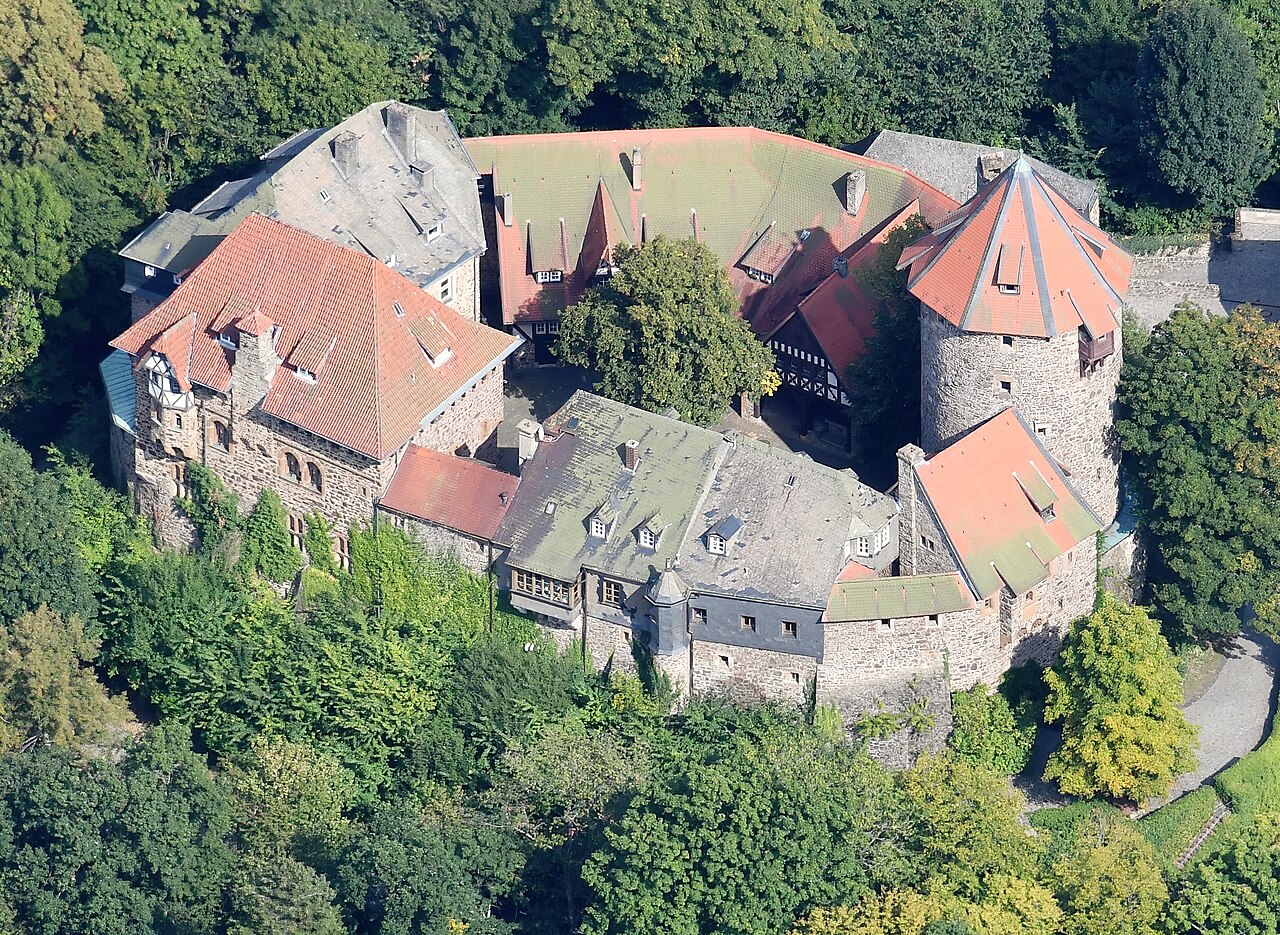
Hessenstein Castle stands as a remarkable example of a 14th-century hill castle in the German state of Hesse, embodying centuries of regional history, architectural evolution, and cultural adaptation. Situated near the small municipality of Vöhl, this fortress was originally constructed under the auspices of Landgrave Heinrich II of Hesse between 1342 and 1348, replacing the earlier Keseburg fortress destroyed in 1277. The castle occupies a strategic position on the southern ridge of the Keseberg hill, approximately 327 meters above sea level, overlooking the surrounding landscape and the Lengelbach stream to the south, which naturally demarcates its boundaries.
The castle’s origins are rooted in medieval power dynamics, serving as a fortified administrative center for local bailiffs, known as Vögte. Its construction on the remains of the earlier Silburg fortification reflects the ongoing efforts of the Hessian nobility to consolidate territorial control during the High to Late Medieval period. Hessenstein Castle's robust stone masonry and defensive features exemplify typical 14th-century military architecture, designed to withstand sieges and assert dominance over the surrounding lands.
Historical significance and ownership transitions
In 1348, a pivotal moment in Hessenstein Castle’s history occurred when the Archbishop of Mainz compelled Landgrave Heinrich II to pledge the castle to the nearby Haina Monastery. This transfer marked the beginning of a close relationship between the castle and ecclesiastical authorities. Over subsequent centuries, the castle was managed by officials tied to the monastery, including ministeriales, unfree knights who served as castle administrators, blending secular and religious governance.
The Protestant Reformation of 1555 brought significant changes to Hessenstein Castle’s role. It became the seat of the landgravial Amt Hessenstein, an administrative district governed by stewards or Rentmeister. This transition reflected broader shifts in political and religious structures across Germany, as the castle adapted to new administrative functions while retaining its strategic importance.
By the 19th century, the castle's function evolved further, accommodating forestry officials. From 1890 onward, a district forester resided within its walls, highlighting the castle’s integration into modern state functions beyond military or administrative uses.
20th-century adaptation and modern use
Hessenstein Castle experienced a new chapter in the 20th century when it was converted into a youth hostel in 1922, becoming the first of its kind in Hesse and among the earliest in Germany. Initially operated by the resident forester, the hostel aimed to provide affordable accommodation for young travelers, promoting outdoor education and cultural exchange.
Between 1967 and 1970, extensive renovations modernized the hostel facilities while preserving much of the castle’s original 14th-century façade. Despite financial difficulties leading to a temporary closure in late 2024, the hostel reopened in 2025 under the auspices of the German Youth Hostel Association (DJH), continuing its longstanding tradition of youth accommodation.
Since 2008, Hessenstein Castle has expanded its role to include a youth education center focused on nature, traditional crafts, and medieval heritage. Collaborations with environmental organizations such as NABU and the Nationalpark Kellerwald-Edersee emphasize ecological awareness alongside historical learning, integrating sustainable practices into the castle’s ongoing mission.
Architectural features and preservation
Location and structural layout
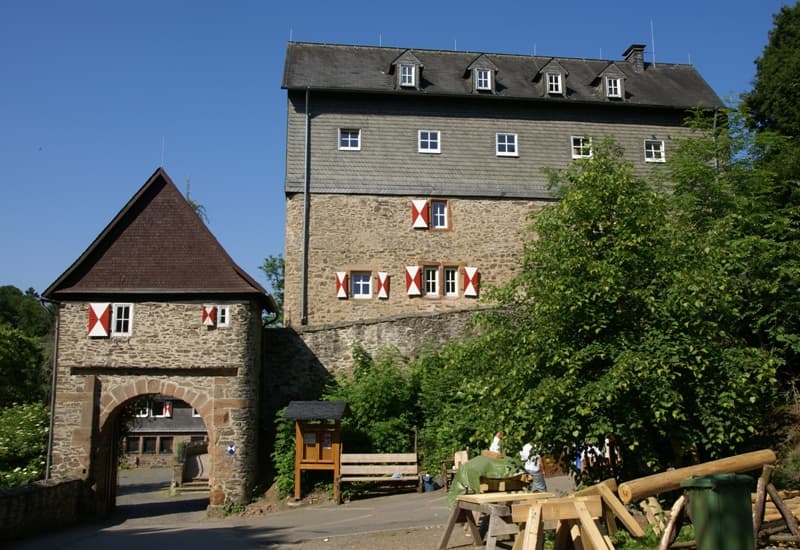
Perched on a hilltop, Hessenstein Castle’s location was chosen for its defensive advantages and commanding views of the surrounding forested terrain. The castle complex includes a main building, a gatehouse, and an economic wing, all constructed primarily from medieval stone masonry that has been carefully preserved. The southern ridge position near the Lengelbach stream provided natural protection and delineation of the site.
Medieval masonry and restoration efforts
The castle’s stonework reflects typical 14th-century construction techniques, characterized by thick walls, narrow windows for defense, and robust fortifications. A fire during World War II damaged the economic wing, but it was promptly rebuilt in 1945 to restore functional use. Further structural connections were added in 1987 to unify the main building, gatehouse, and economic wing into a cohesive complex suitable for modern use.
Modern adaptations and facilities
Recent renovations completed between 2016 and 2017 focused on upgrading sanitary facilities and improving accessibility, ensuring the castle meets contemporary safety and comfort standards. Despite these modernizations, the preservation of the original masonry and architectural elements remains a priority, maintaining the castle’s historic character.
Cultural and environmental significance
Hessenstein Castle’s isolated location amidst the forests of Hesse places it along several notable hiking trails, including the Kellerwaldsteig and Barbarossaweg. These trails connect the castle to the natural landscape and encourage eco-tourism and outdoor recreation.
The castle has earned recognition for its commitment to environmental stewardship. It holds certifications for sustainable education and conservation efforts, notably being designated by NABU Hessen as a "bat-friendly house" due to measures protecting local bat populations. This ecological focus complements the castle’s educational programs and reflects a harmonious integration of heritage preservation and nature conservation.
Today, Hessenstein Castle continues to serve as a vibrant center for youth education, cultural heritage, and environmental awareness, embodying a unique blend of medieval history and modern ecological responsibility.
Frequently asked questions (FAQ)
- How do I get to Hessenstein Castle?
- Hessenstein Castle is located near the municipality of Vöhl in Hesse, Germany. It is accessible by car and local roads, with nearby hiking trails such as the Kellerwaldsteig and Barbarossaweg providing scenic routes for visitors arriving on foot.
- What is the historical significance of Hessenstein Castle?
- Hessenstein Castle was built in the 14th century by Landgrave Heinrich II of Hesse as a fortified administrative center. It played a key role in regional governance, especially after being pledged to Haina Monastery in 1348, and later served as the seat of the landgravial Amt Hessenstein.
- Can I visit Hessenstein Castle as a tourist?
- Yes, Hessenstein Castle operates as a youth hostel and education center open to visitors. While primarily serving guests staying overnight, the castle also hosts educational programs and events related to nature and medieval heritage.
- When was Hessenstein Castle converted into a youth hostel?
- Hessenstein Castle was converted into a youth hostel in 1922, becoming the first youth hostel in Hesse and one of the earliest in Germany.
- What architectural features are notable at Hessenstein Castle?
- The castle features well-preserved 14th-century stone masonry, a main building, gatehouse, and economic wing. Despite damage during World War II, restoration efforts have maintained its medieval character while adapting it for modern use.
Photo gallery

Information
Sources & official resources
Verify the information above using these authoritative references.
Loading map...
Visitor reviews
No reviews yet. Been here? Write the first review and help other travelers!
Write the first reviewVisited this castle? Share your experience
Your review helps other travelers and adds first-hand knowledge to our encyclopedia.