Worth Castle — Switzerland castle

Worth Castle

Worth Castle at Rheinfall, Neuhausen am Rheinfall
Neuhausen am Rheinfall, Switzerland
High Medieval (11th–13th c.)
Well Preserved

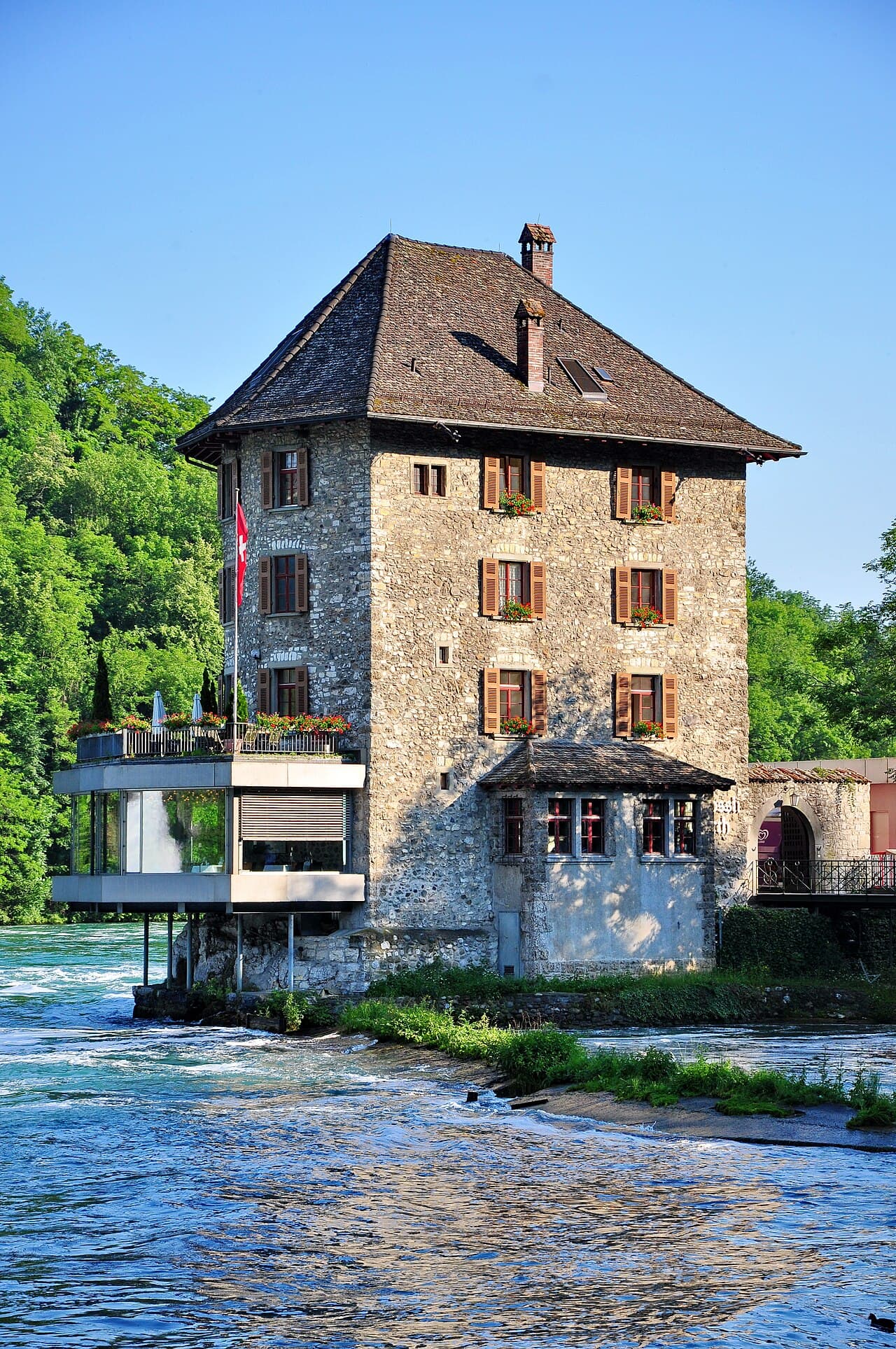
Worth Castle, located on a small island in the Rhine river at the spectacular Rheinfall waterfalls, is a remarkable example of a water castle with a rich history dating back to the 13th century. Situated in the municipality of Neuhausen am Rheinfall, Switzerland, it stands opposite the Laufen Castle in the canton of Zurich, forming a striking pair of medieval fortifications guarding this significant natural landmark.

The strategic location and early history

The castle's name derives from the old term "Werd," meaning a river island, reflecting its unique position surrounded by the powerful waters of the Rhine. This location was of great strategic and economic importance, as it controlled a major east-west trade route running from Lake Constance to Basel. The route was interrupted by the imposing Rheinfall, necessitating transshipment of goods, which made Worth Castle a vital customs and control point.

Archaeological excavations in 2004 confirmed that the present structure was built in 1348 AD, replacing an earlier fortress known as Burg im Fischerhölzli from the mid-11th century. This predecessor also functioned as a customs house and defensive stronghold securing the area around the falls.

Architectural features and modifications

Worth Castle is classified as a water castle, uniquely sited on an island in the river, surrounded by water that provided natural defense. The castle includes a ring wall enclosing a courtyard, with a gate leading to a bridge connecting the island to the right bank of the Rhine. On the north side, a palace-like building was constructed, notable for its third floor featuring a cantilevered clerestory timbered design, which was later replaced by a stone floor in 1621.

Over the centuries, the castle underwent various alterations: new floors and windows were added, and parts of the original ring wall and gate were modified or removed. These changes reflect the castle’s transition from a fortified customs station to a more residential and commercial function.

Defensive and economic functions

Initially, the castle served as a customs house controlling river traffic and collecting duties on goods transported along the Rhine. It also managed the local salmon fisheries, an important economic resource. The custodian, known as the "Gertzler," was responsible for delivering a significant portion of the salmon catch to the Kloster Allerheiligen Schaffhausen, which held the castle as a fief from 1429.

The castle’s role as a customs and fisheries center was intertwined with feudal obligations. The "Schupf-Lehn" system allowed the monastery to revoke the fief if the administrator failed to meet his duties, ensuring tight control over the valuable resources.

Ownership and historical significance

Throughout its history, Worth Castle passed through the hands of several notable owners. The earliest recorded were the Herren von Jestetten, followed by the Schultheiss of Randenburg in 1291, and later the Herren von Fulach in 1422. From 1429 onwards, the Kloster Allerheiligen Schaffhausen held the castle, reflecting its ecclesiastical and economic importance in the region.

By the late 18th century, the castle had evolved into the "Schlösschen Wörth," with the custodian managing not only customs but also vineyards, forests, and fisheries, paying lease fees and fulfilling feudal duties to the monastery.

Transformation in the modern era

The advent of the railway in the 19th century diminished the importance of river traffic and the castle’s role in customs control. Recognizing this shift, the Canton of Schaffhausen repurposed the castle in 1835-36, converting it into a restaurant. The former customs station and salmon farming facilities were adapted to serve visitors, with the restaurant opening in 1837.

Today, Worth Castle houses the Schlössli Wörth restaurant, renowned for its gourmet cuisine and spectacular views of the Rheinfall. The castle complex includes a gift shop and a fast food outlet, complemented by a terrace that offers visitors breathtaking panoramas of the cascading waterfalls.

Additionally, Worth Castle serves as the starting point for the popular Rheinfall tour boats, which provide close-up views of the falls and the surrounding landscape.

Architectural and cultural heritage

Worth Castle is an outstanding example of a high medieval water castle adapted over centuries to changing economic and social functions. Its location on a river island, surrounded by the powerful Rhine, highlights the medieval strategy of utilizing natural defenses. The castle’s evolution from a fortified customs post to a cultural and culinary landmark illustrates the dynamic history of the region.

Its preservation and adaptation for tourism and dining ensure that Worth Castle remains a vibrant part of Swiss heritage, offering visitors a unique combination of history, architecture, and natural beauty.

Frequently asked questions (FAQ)

What is the historical significance of Worth Castle?
Worth Castle has a rich history dating back to the 13th century, serving as a strategic fortification and residence for various noble families. It played a significant role in regional conflicts and has witnessed many historical events that shaped the area. Today, it stands as a symbol of the architectural and cultural heritage of Switzerland.
When was Worth Castle built?
Worth Castle was constructed in the early 13th century, with its foundations laid around 1200 AD. Over the centuries, it has undergone several renovations and expansions, reflecting the architectural styles of different eras. This long history makes it a fascinating site for visitors interested in medieval architecture.
Can I visit Worth Castle year-round?
Yes, Worth Castle is open to visitors throughout the year, although specific opening hours may vary by season. It's advisable to check the official website or contact the visitor center for the most current information on access and guided tours. This ensures you can plan your visit accordingly.
What are the opening hours for Worth Castle?
Worth Castle typically opens its doors to visitors from 9 AM to 6 PM, with extended hours during the summer months. However, it is closed on certain public holidays, so it's best to verify the schedule before your visit. This will help you make the most of your time at the castle.
How do I get to Worth Castle?
Worth Castle is easily accessible by public transport, with regular train and bus services connecting it to nearby cities. If you are driving, there are parking facilities available close to the castle. Consider using a navigation app for the best route and travel times.
What are the ticket prices for Worth Castle?
Admission to Worth Castle is priced reasonably, with discounts available for students, seniors, and children. Tickets can be purchased at the entrance or online, which is recommended to avoid queues during peak visiting times. This way, you can enjoy a smooth entry into the castle.
Is it possible to take guided tours of Worth Castle?
Yes, guided tours are available and highly recommended for those looking to delve deeper into the history and architecture of Worth Castle. These tours typically last about an hour and are led by knowledgeable guides who can share fascinating stories. Be sure to check the schedule and book in advance for popular tour times.
When is the best time to visit Worth Castle?
The best time to visit Worth Castle is during the spring and early autumn months when the weather is mild, and the surrounding scenery is at its most beautiful. These seasons offer a pleasant experience for exploring the grounds and enjoying the panoramic views. Additionally, visiting during weekdays can help you avoid larger crowds.
Are there any nearby attractions to Worth Castle?
Yes, Worth Castle is located close to several attractions, including the stunning Rhine Falls and picturesque towns like Schaffhausen. Visitors can easily plan a day trip to explore these sites along with the castle. This makes it an excellent destination for those looking to discover more of Switzerland's natural beauty and history.

Photo gallery

Worth Castle
Click to view

Photo by Roland zh•CC BY-SA 3.0

1 photo • Click any image to view in full screen

Information

Water Castle

Sources & official resources

Verify the information above using these authoritative references.

Loading map...

Visitor reviews

No reviews yet. Been here? Write the first review and help other travelers!

Write the first review

Visited this castle? Share your experience

Your review helps other travelers and adds first-hand knowledge to our encyclopedia.
Write a review

(5/5)

0/2000 characters

Your review will be visible after admin approval

Nearby castles

2.5 km
Herblingen Castle — Switzerland castle

Herblingen Castle

Stetten, Switzerland

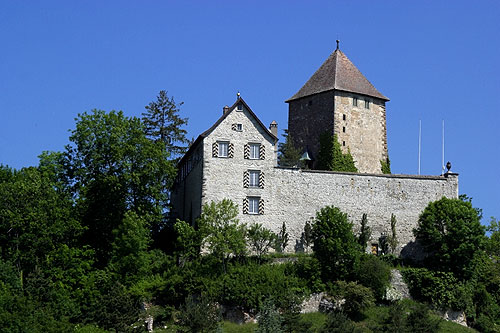
Herblingen Castle in Stetten, Switzerland, stands as a remarkable example of a high medieval hill castle that has undergone significant transformations over the centuries. Originally constructed in the early 13th century by the noble Lords of Herblingen, the castle's enduring presence reflects the architectural and historical shifts from a fortified medieval stronghold to an elegant aristocratic residence. The castle's origins trace back to the early 1200s, with the bergfried—a tall, robust defensive tower—being the oldest surviving structure. This tower exemplifies the typical medieval masonry techniques used in fortifications of that era, designed for surveillance and defense. The castle's strategic location on a hill provided commanding views of the surrounding landscape, an essential feature for military and territorial control during the high medieval period. Historical records indicate that the chapel within the castle complex was rebuilt in 1281 by Konrad von Herblingen, a significant figure in the castle's early history. While local legend attributes the chapel's consecration to Pope Leo IX in the 11th century, this claim lacks documentary evidence, and the earliest confirmed consecration was performed by Bishop Albert on behalf of the Bishop of Constance in the late 13th century. The chapel's religious function persisted through turbulent times, including the Reformation, when Catholic worship continued despite widespread religious changes in the region. Medieval ownership and architectural features The castle originally belonged to the Herblingen family, who maintained possession until their extinction in the 15th century. Following their demise, ownership passed through various hands, including the Dukes of Austria, who managed the property by appointing stewards and pledging it to local noble families such as the Truchsess family of Diessenhofen in the 14th century. This period saw the castle serving both as a military fortification and an administrative center. Throughout the 14th and 15th centuries, the castle's fortifications included a ring wall, battlements, a drawbridge, and moats, all typical defensive features designed to protect the stronghold from siege and attack. The castle's layout featured a central courtyard surrounded by these defensive structures, with the bergfried providing a last refuge in case of breach. Transition of ownership in the late medieval period In 1469, the castle was acquired by Adam Cron, a prominent citizen of Schaffhausen, marking a shift from noble to bourgeois ownership. The 16th century saw several changes in proprietors, including Hans Löw and Beringer von Landenberg, before the city of Schaffhausen took control in 1534. That same year, the property was transferred to the Brümsi family. The castle also served as the administrative center for the Obervogtei Reiat from 1566 until the early 18th century, underscoring its continued regional importance. 18th-century transformation and architectural evolution A major turning point in Herblingen Castle's history came in 1733 when Johann Wilhelm Gestefeld, a Viennese bank director, purchased the property. Gestefeld undertook extensive renovations that dramatically altered the castle's medieval character. The defensive walls, battlements, drawbridge, and moats were removed or filled in, reflecting a shift from military utility to residential elegance. The castle was converted into a refined palatial residence, with architectural modifications that emphasized comfort and aesthetic appeal over defense. This transformation included the removal of the ring wall and other fortifications, replaced by landscaped gardens and open grounds. The manor house was remodeled to reflect contemporary tastes, incorporating elements more typical of noble residences of the 18th century rather than a fortress. These changes illustrate the broader trend in castle architecture during the post-medieval period, where many former fortresses were adapted into stately homes. Later ownership and modern use Following Gestefeld's financial collapse in 1779, the castle passed to the von Meyenburg family until 1833. Over the 19th and 20th centuries, Herblingen Castle saw a succession of over twenty owners, reflecting its changing role and the evolving social and economic landscape. In the 20th century, the castle gained regional recognition for housing a restaurant and an antique shop, activities that ceased with subsequent ownership changes. In 1998, artworks from the castle were auctioned publicly at Christie's, marking a moment of cultural dispersal. Since 2000, the castle has been privately owned by the Günthart brothers, who use it as both a corporate site and private residence. Despite its private status, the castle remains an important cultural property in Switzerland, recognized for its historical significance and architectural heritage. Architectural remains and cultural significance Today, the most prominent surviving feature of Herblingen Castle is the bergfried, which offers a tangible connection to its medieval origins. The tower's robust construction and imposing height continue to dominate the castle silhouette, serving as a landmark in the region. The surrounding manor house, reflecting 18th-century renovations, complements the medieval tower, illustrating the site's layered architectural history. Although the castle is not open to the public, its status as a cultural property of national importance in Switzerland ensures its preservation and recognition. The castle's history encapsulates the evolution of medieval fortifications into noble residences, mirroring broader socio-political and architectural trends in Swiss history. The site also lends its name to the former municipality of Herblingen, now part of Schaffhausen since 1964, underscoring its local historical significance. Herblingen Castle stands as a testament to the dynamic history of Swiss castles, embodying centuries of architectural innovation, noble lineage, and cultural transformation. Its preserved structures offer valuable insights into the defensive strategies of the high medieval period and the aesthetic shifts of the 18th century, making it a significant monument in Switzerland's heritage landscape.

High Medieval (11th–13th c.)
Details
3.2 km

Munot Fortress

Schaffhausen, Switzerland

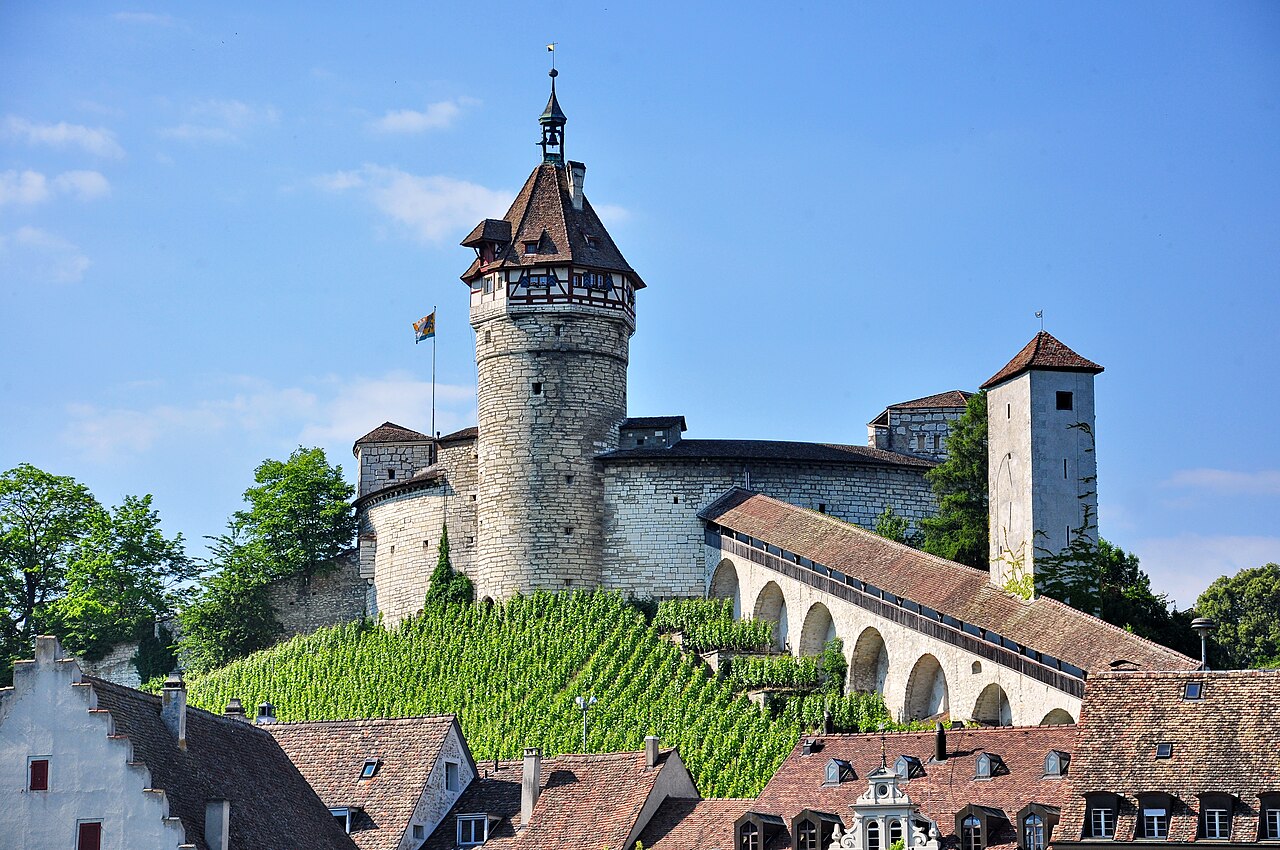
Munot Fortress stands as an iconic symbol in the heart of Schaffhausen, Switzerland, embodying the city's rich history and Renaissance architectural heritage. Constructed between 1564 and 1589, this circular fortress was built during a period of commercial prosperity, reflecting the strategic and defensive needs of the time. Surrounded by lush vineyards, the fortress overlooks the city and the nearby Rhine River, offering panoramic views that connect visitors to the region's natural and historical landscape. The origins of the site date back to at least 1379, when an earlier fortification occupied the round hill above the river. However, the present structure is a product of the Renaissance period, designed to serve as a military stronghold rather than a noble residence. Its name, derived from the Middle High German word "Annot," meaning "without danger," evolved into "Munot," reflecting its intended role as a secure fortress. Architectural features and design The Munot Fortress is a remarkable example of Renaissance military architecture, characterized by its circular layout and robust stone construction. Unlike many castles that evolved over centuries, Munot was completed in a relatively short span, preserving its original design with minimal alterations. This makes it a rare and authentic representation of 16th-century fortification principles. Defensive structures The fortress features cavernous camponiere galleries embedded within its foundations. These galleries were designed for defense, allowing soldiers to fire upon attackers while being protected by thick walls. The entrance to the castle is approached via a winding stone path that ascends through a turret, adding both defensive advantage and architectural interest. A prominent element of the fortress is its large round tower, which rises from the open stone platform at the top of the structure. This tower provides extensive views over the Rhine River and the surrounding Emmersberg hills. Adjacent to the fortress is the Roman Turret, named for its architectural style rather than its historical period, which complements the fortress's defensive ensemble. Historical context and significance The fortress was constructed during a time when Schaffhausen was a flourishing commercial center, benefiting from its strategic location near the Rhine Falls, which historically impeded navigation and necessitated control over river traffic. The presence of a guardian responsible for maintaining order at the fortress is documented as far back as 1377, indicating the site's longstanding role in regional security. Munot Fortress itself was never intended as a residential palace but served primarily military and administrative functions. Its relatively short active use as a fortress has contributed to its exceptional preservation, allowing modern visitors to experience a near-original Renaissance fortification. Cultural and modern-day role Today, Munot Fortress is a cherished cultural landmark and a focal point for community events in Schaffhausen. The fortress grounds host various festivals, including a popular children’s festival and open-air cinema screenings, enhancing its role as a vibrant public space. One unique feature of the fortress is the presence of fallow deer introduced into the moat in 1905. These deer continue to graze peacefully within the moat area, adding a distinctive natural element to the historic site and delighting visitors of all ages. The old town of schaffhausen and architectural heritage The fortress overlooks the historic center of Schaffhausen, renowned for its 171 oriels and artistically painted house facades. Many of these buildings date back to the Renaissance period, featuring richly decorated exteriors and numerous bay windows that contribute to the town's unique charm. Walking through the old town offers a vivid journey back in time, with the fortress serving as a constant reminder of the city's historical importance and architectural legacy. Visitors to Schaffhausen can explore the harmonious blend of natural beauty, historical architecture, and cultural vibrancy, all centered around the imposing presence of the Munot Fortress. Its preservation and continued use as a community hub make it a standout example of how historical sites can remain relevant and engaging in the modern era.

Renaissance (15th–17th c.)
Details
3.2 km
Munot — Switzerland castle

Munot

Schaffhausen, Switzerland

The Munot fortress stands as an iconic symbol in the heart of Schaffhausen, Switzerland. This circular Renaissance fortification dates back to the 16th century and is renowned for its unique ring-shaped design. Surrounded by lush vineyards, the Munot dominates the city skyline and has become a cherished cultural landmark and tourist destination. Historical background and construction The construction of the Munot fortress began in the early 16th century, specifically between 1564 and 1589, during a period marked by the rise of artillery warfare in Europe. Schaffhausen, a prosperous city on the Rhine River, commissioned the fortress to strengthen its defenses against potential invasions and to assert its autonomy within the Swiss Confederation. The fortress was designed by the architect Albrecht Dürer the Younger, a relative of the famous painter and theorist Albrecht Dürer, who applied contemporary military architectural principles to the project. The Munot was built as a ringwork fortress, a style characterized by a circular layout with thick, sloped walls designed to deflect cannonballs. Its robust curtain walls and bastions provided comprehensive coverage of the surrounding area, making it a formidable defensive structure. The fortress also included a deep moat and drawbridge, enhancing its protection against attackers. Architectural features and design The Munot fortress is distinguished by its perfectly circular shape, measuring approximately 45 meters in diameter. Its walls are constructed of local sandstone and reach up to 7 meters in height and 3 meters in thickness. The fortress features a series of battlements and embrasures, allowing defenders to fire upon enemies while remaining protected. The interior includes a spacious courtyard that once housed barracks, storage rooms, and a chapel. One of the most notable architectural elements is the Munot tower, which rises above the walls and offers panoramic views of Schaffhausen and the surrounding vineyards. The fortress's design reflects the transition from medieval fortifications to early modern military architecture, emphasizing artillery defense and strategic visibility. Cultural significance and modern use Today, the Munot serves as a prominent cultural landmark and a symbol of Schaffhausen's heritage. The fortress is open to visitors year-round and hosts a variety of events, including concerts, festivals, and traditional celebrations. Its location amidst the vineyards also makes it a popular spot for wine tastings and outdoor gatherings. The fortress has undergone several preservation and restoration efforts to maintain its structural integrity and historical character. It remains a well-preserved example of Renaissance military architecture and continues to attract tourists, historians, and architecture enthusiasts from around the world. Visiting information and accessibility The Munot fortress is centrally located in Schaffhausen, making it easily accessible on foot from the city center. Visitors can explore the ramparts, enjoy the scenic views, and learn about the fortress's history through informational displays and guided tours. The site is also wheelchair accessible in certain areas, ensuring a welcoming experience for all guests. Seasonal events and exhibitions further enrich the visitor experience, providing insight into the fortress's role in Swiss history and its ongoing cultural importance.

Renaissance (15th–17th c.)
Details