Munot Fortress

Munot Fortress in Schaffhausen, Switzerland
Schaffhausen, Schaffhausen, Switzerland
Renaissance (15th–17th c.)
Well Preserved

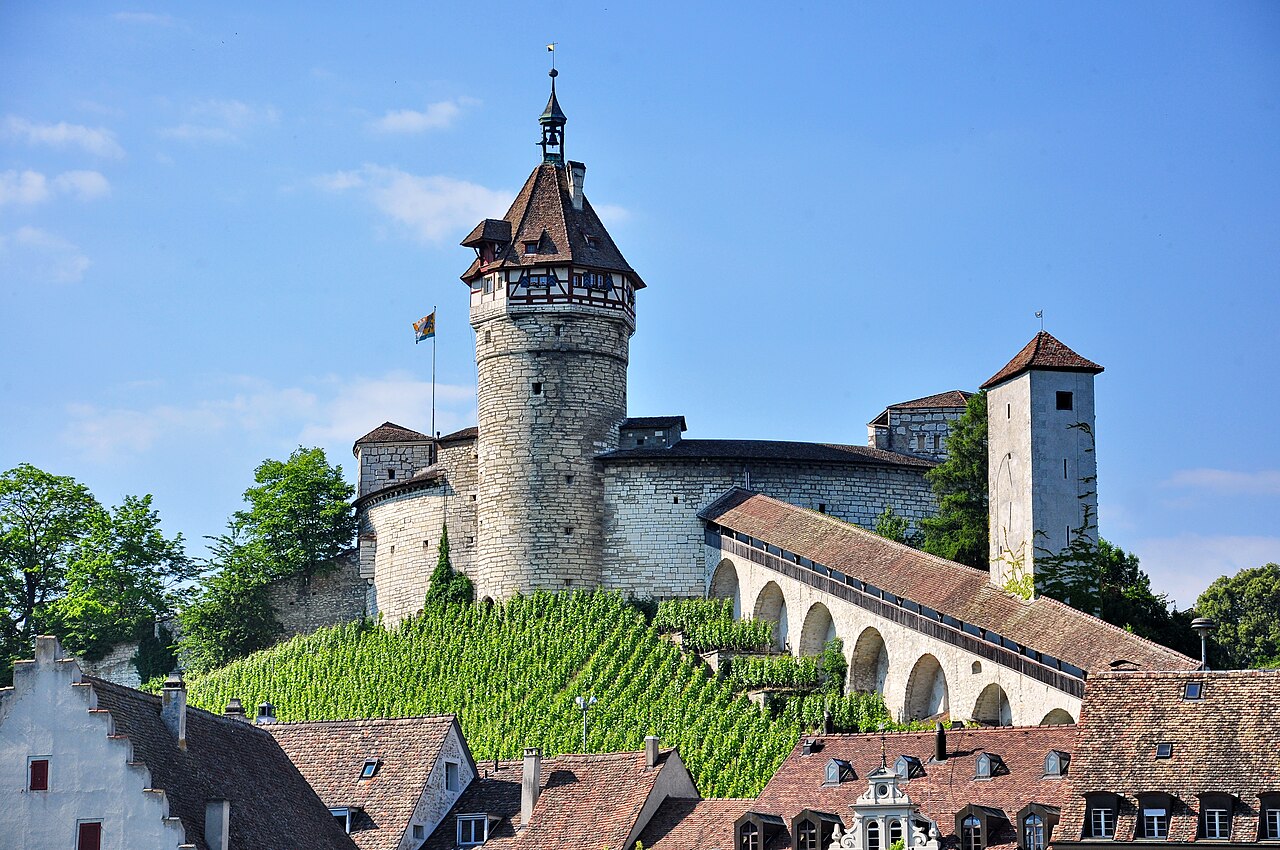
Munot Fortress stands as an iconic symbol in the heart of Schaffhausen, Switzerland, embodying the city's rich history and Renaissance architectural heritage. Constructed between 1564 and 1589, this circular fortress was built during a period of commercial prosperity, reflecting the strategic and defensive needs of the time. Surrounded by lush vineyards, the fortress overlooks the city and the nearby Rhine River, offering panoramic views that connect visitors to the region's natural and historical landscape.

The origins of the site date back to at least 1379, when an earlier fortification occupied the round hill above the river. However, the present structure is a product of the Renaissance period, designed to serve as a military stronghold rather than a noble residence. Its name, derived from the Middle High German word "Annot," meaning "without danger," evolved into "Munot," reflecting its intended role as a secure fortress.

Architectural features and design

The Munot Fortress is a remarkable example of Renaissance military architecture, characterized by its circular layout and robust stone construction. Unlike many castles that evolved over centuries, Munot was completed in a relatively short span, preserving its original design with minimal alterations. This makes it a rare and authentic representation of 16th-century fortification principles.

Defensive structures

The fortress features cavernous camponiere galleries embedded within its foundations. These galleries were designed for defense, allowing soldiers to fire upon attackers while being protected by thick walls. The entrance to the castle is approached via a winding stone path that ascends through a turret, adding both defensive advantage and architectural interest.

A prominent element of the fortress is its large round tower, which rises from the open stone platform at the top of the structure. This tower provides extensive views over the Rhine River and the surrounding Emmersberg hills. Adjacent to the fortress is the Roman Turret, named for its architectural style rather than its historical period, which complements the fortress's defensive ensemble.

Historical context and significance

The fortress was constructed during a time when Schaffhausen was a flourishing commercial center, benefiting from its strategic location near the Rhine Falls, which historically impeded navigation and necessitated control over river traffic. The presence of a guardian responsible for maintaining order at the fortress is documented as far back as 1377, indicating the site's longstanding role in regional security.

Munot Fortress itself was never intended as a residential palace but served primarily military and administrative functions. Its relatively short active use as a fortress has contributed to its exceptional preservation, allowing modern visitors to experience a near-original Renaissance fortification.

Cultural and modern-day role

Today, Munot Fortress is a cherished cultural landmark and a focal point for community events in Schaffhausen. The fortress grounds host various festivals, including a popular children’s festival and open-air cinema screenings, enhancing its role as a vibrant public space.

One unique feature of the fortress is the presence of fallow deer introduced into the moat in 1905. These deer continue to graze peacefully within the moat area, adding a distinctive natural element to the historic site and delighting visitors of all ages.

The old town of schaffhausen and architectural heritage

The fortress overlooks the historic center of Schaffhausen, renowned for its 171 oriels and artistically painted house facades. Many of these buildings date back to the Renaissance period, featuring richly decorated exteriors and numerous bay windows that contribute to the town's unique charm. Walking through the old town offers a vivid journey back in time, with the fortress serving as a constant reminder of the city's historical importance and architectural legacy.

Visitors to Schaffhausen can explore the harmonious blend of natural beauty, historical architecture, and cultural vibrancy, all centered around the imposing presence of the Munot Fortress. Its preservation and continued use as a community hub make it a standout example of how historical sites can remain relevant and engaging in the modern era.

Frequently asked questions (FAQ)

How do I get to Munot Fortress?
Munot Fortress is located in Schaffhausen, Switzerland, easily accessible by public transportation. You can take a train to Schaffhausen station and then a short walk uphill to reach the fortress.
What is the historical significance of Munot Fortress?
Munot Fortress was built in the 16th century and served as a fortification to protect the city of Schaffhausen. It is a symbol of the city’s independence and has played a crucial role in its defense throughout history.
When was Munot Fortress constructed?
Construction of Munot Fortress began in 1564 and was completed in 1589. The fortress is an excellent example of Renaissance military architecture and has been preserved as a historical site.
Can I enter Munot Fortress?
Yes, visitors can enter Munot Fortress and explore its grounds. There are no entrance fees, making it an accessible site for everyone interested in history and architecture.
Is it possible to take guided tours of Munot Fortress?
Guided tours are available for visitors who wish to learn more about the history and architecture of the fortress. These tours are often conducted during the peak tourist season, so it's advisable to check in advance to secure a spot.
What are the opening hours of Munot Fortress?
Munot Fortress is open to visitors year-round, but the best times to visit are from late spring to early autumn. During these months, the fortress is generally accessible throughout the day, allowing ample time for exploration.
What is the best time to visit Munot Fortress?
The best time to visit Munot Fortress is during the warmer months, from May to September, when the weather is pleasant and the views from the fortress are spectacular. Additionally, this period often features various events and activities.
Are there any nearby attractions to visit?
Yes, near Munot Fortress, you can explore the charming old town of Schaffhausen, which features beautiful medieval buildings and the famous Rhine Falls, just a short distance away. These attractions make for a delightful day trip.
What are the ticket prices for visiting Munot Fortress?
Visiting Munot Fortress is free, allowing everyone to enjoy its rich history and stunning views without the burden of entrance fees. However, donations are appreciated to help maintain the site.
Is Munot Fortress accessible for people with disabilities?
The fortress has some accessibility features, but due to its historical structure, certain areas may be challenging to navigate for those with mobility issues. It is recommended to contact the visitor center for detailed information on accessible routes.

Information

Hill Castle

Loading map...

Visitor reviews

No reviews yet. Been here? Write the first review and help other travelers!

Write the first review

Visited this castle? Share your experience

Your review helps other travelers and adds first-hand knowledge to our encyclopedia.
Write a review

(5/5)

0/2000 characters

Your review will be visible after admin approval

Nearby castles

0.4 km
Munot — Switzerland castle

Munot

Schaffhausen, Switzerland

The Munot fortress stands as an iconic symbol in the heart of Schaffhausen, Switzerland. This circular Renaissance fortification dates back to the 16th century and is renowned for its unique ring-shaped design. Surrounded by lush vineyards, the Munot dominates the city skyline and has become a cherished cultural landmark and tourist destination. Historical background and construction The construction of the Munot fortress began in the early 16th century, specifically between 1564 and 1589, during a period marked by the rise of artillery warfare in Europe. Schaffhausen, a prosperous city on the Rhine River, commissioned the fortress to strengthen its defenses against potential invasions and to assert its autonomy within the Swiss Confederation. The fortress was designed by the architect Albrecht Dürer the Younger, a relative of the famous painter and theorist Albrecht Dürer, who applied contemporary military architectural principles to the project. The Munot was built as a ringwork fortress, a style characterized by a circular layout with thick, sloped walls designed to deflect cannonballs. Its robust curtain walls and bastions provided comprehensive coverage of the surrounding area, making it a formidable defensive structure. The fortress also included a deep moat and drawbridge, enhancing its protection against attackers. Architectural features and design The Munot fortress is distinguished by its perfectly circular shape, measuring approximately 45 meters in diameter. Its walls are constructed of local sandstone and reach up to 7 meters in height and 3 meters in thickness. The fortress features a series of battlements and embrasures, allowing defenders to fire upon enemies while remaining protected. The interior includes a spacious courtyard that once housed barracks, storage rooms, and a chapel. One of the most notable architectural elements is the Munot tower, which rises above the walls and offers panoramic views of Schaffhausen and the surrounding vineyards. The fortress's design reflects the transition from medieval fortifications to early modern military architecture, emphasizing artillery defense and strategic visibility. Cultural significance and modern use Today, the Munot serves as a prominent cultural landmark and a symbol of Schaffhausen's heritage. The fortress is open to visitors year-round and hosts a variety of events, including concerts, festivals, and traditional celebrations. Its location amidst the vineyards also makes it a popular spot for wine tastings and outdoor gatherings. The fortress has undergone several preservation and restoration efforts to maintain its structural integrity and historical character. It remains a well-preserved example of Renaissance military architecture and continues to attract tourists, historians, and architecture enthusiasts from around the world. Visiting information and accessibility The Munot fortress is centrally located in Schaffhausen, making it easily accessible on foot from the city center. Visitors can explore the ramparts, enjoy the scenic views, and learn about the fortress's history through informational displays and guided tours. The site is also wheelchair accessible in certain areas, ensuring a welcoming experience for all guests. Seasonal events and exhibitions further enrich the visitor experience, providing insight into the fortress's role in Swiss history and its ongoing cultural importance.

Renaissance (15th–17th c.)
Details
2.9 km
Laufen Castle — Switzerland castle

Laufen Castle

Laufen-Uhwiesen, Switzerland

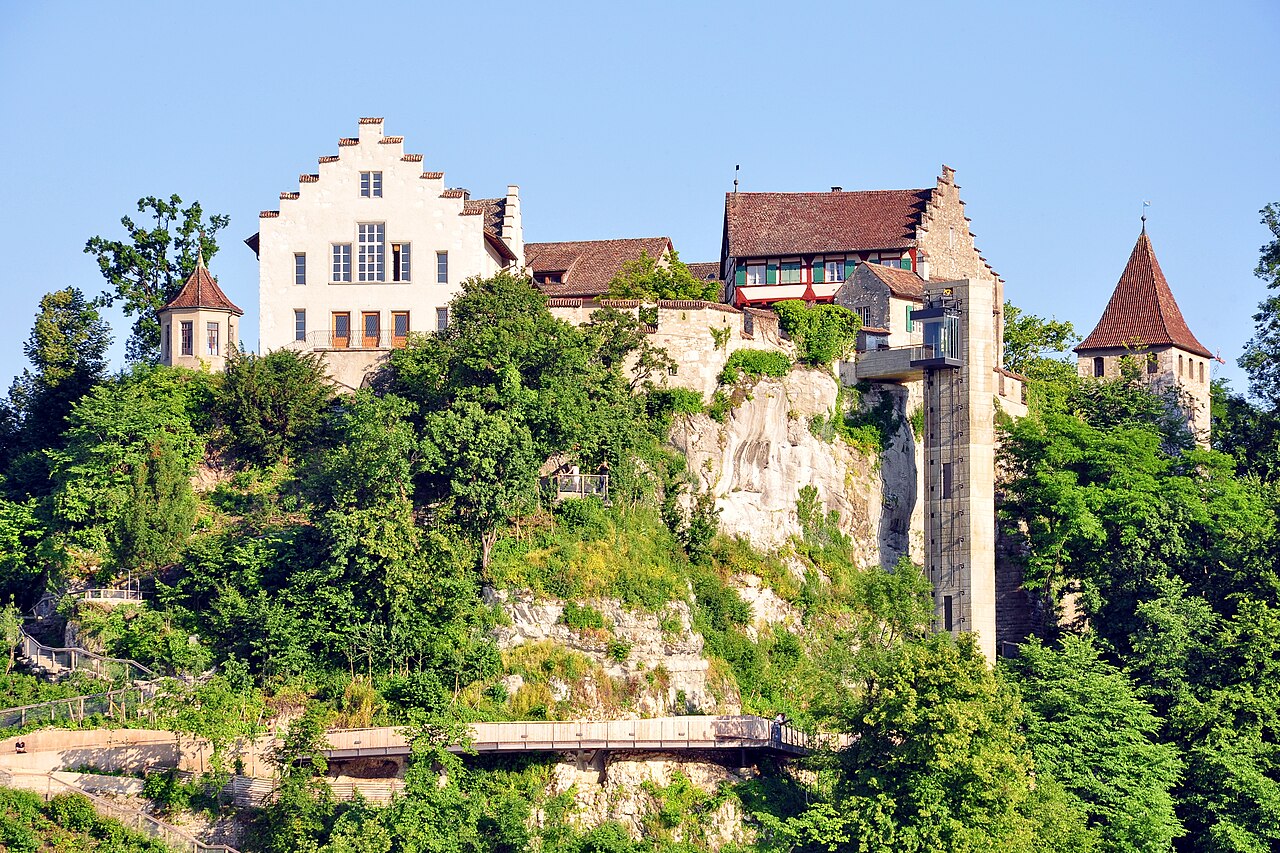
Laufen Castle is a prominent hill castle situated in the municipality of Laufen-Uhwiesen within the Swiss canton of Zurich. It commands a strategic position overlooking the spectacular Rhine Falls, one of Europe's largest waterfalls, making it a site of both natural and historical significance. Recognized as a Swiss heritage site of national importance, the castle combines centuries of medieval architecture with modern visitor amenities. Early history and medieval origins The earliest documented mention of Laufen Castle dates back to the year 858 AD, placing its origins firmly in the early medieval period. Initially, it served as the residence of the Barons of Laufen. The castle's location was chosen for its commanding views over the Rhine River and its falls, providing both defensive advantages and control over river traffic. Over the centuries, the castle changed hands multiple times, reflecting the turbulent political landscape of medieval Switzerland. During the Old Zurich War (1439–1450), a conflict that involved territorial disputes and power struggles within the region, the castle was acquired by the Fulach family. This period marked a significant chapter in the castle's history as it became a focal point of regional power dynamics. Ownership transitions and architectural evolution In 1544, the city of Zurich purchased Laufen Castle from the Fulach family, integrating it into the city's defensive and administrative network. The castle's architecture likely underwent modifications during this period, adapting to Renaissance military and residential needs, although much of its original medieval structure remains evident. The upheavals of the Helvetic Republic (1798–1803) led to the castle returning to private ownership, reflecting the broader political changes sweeping Switzerland at the time. However, the city of Zurich reacquired the property in 1941, reaffirming its commitment to preserving this historic monument. Modern restoration and visitor facilities Between 2009 and 2010, an extensive restoration and expansion project was undertaken to enhance the castle's accessibility and visitor experience. This included the transformation of the former staff quarters into a modern visitors’ centre, the creation of an exhibition space in the northern part of the castle, and the installation of a wheelchair-accessible circular walkway with a glass lift connecting the castle to the river level. Today, Laufen Castle functions as a popular tourist attraction featuring a restaurant and a youth hostel, allowing visitors to immerse themselves in the historic atmosphere while enjoying modern comforts. Architectural features and strategic location The castle's hilltop position provides commanding views not only of the Rhine Falls but also of Wörth Castle, located across the river in the canton of Schaffhausen. This proximity highlights the historical strategic importance of controlling both sides of the river. The castle complex includes robust defensive walls, towers, and a courtyard, typical of early medieval hill castles. The integration of modern infrastructure, such as the nearby Rheinfall railway line that passes through a tunnel beneath the castle, demonstrates the blend of historic preservation and contemporary utility. The Schloss Laufen am Rheinfall railway station is conveniently linked to the castle by a walkway, facilitating easy access for visitors arriving by train. Cultural significance and heritage status As a heritage site of national significance, Laufen Castle represents an important chapter in Swiss medieval history and architecture. Its preservation and adaptation for tourism reflect Switzerland's broader efforts to maintain its cultural landmarks while making them accessible and engaging for modern audiences. The castle's setting near one of Europe's most impressive natural wonders enhances its appeal, offering visitors a unique combination of historical exploration and natural beauty. Visitor information and accessibility The castle is equipped to welcome a diverse range of visitors, including those with mobility challenges, thanks to the recent accessibility improvements. The wheelchair-accessible pathways and glass lift ensure that all guests can experience the castle's scenic views and historic interiors. Visitors can enjoy the castle's restaurant, which provides local cuisine in a historic setting, and the youth hostel offers affordable accommodation within the castle grounds, making extended stays possible for travelers.

Early Medieval (5th–10th c.)
Details
3 km

Schlösschen Wörth

Neuhausen am Rheinfall, Switzerland

Schlösschen Wörth is a striking example of a high medieval hill castle nestled in the picturesque town of Neuhausen am Rheinfall in the Schaffhausen region of Switzerland. Built in the 12th century, this castle occupies a strategic position near the famous Rhine Falls, Europe's largest waterfall, which has historically provided both natural defense and a rich resource environment. The castle's location on a small island in the Rhine River enhances its defensive capabilities and scenic appeal.Historical background and significanceThe origins of Schlösschen Wörth date back to the high medieval period, a time characterized by the construction of many fortifications across Europe to secure trade routes and assert territorial control. The castle was likely established by local nobility or ecclesiastical authorities to monitor and protect the vital waterways around the Rhine Falls. Over the centuries, it played a role in regional power dynamics, witnessing various conflicts and ownership changes typical of medieval Swiss castles.Its name, "Wörth," is derived from the old German word for a river island or river meadow, which aptly describes the castle's unique setting. The castle's proximity to the Rhine Falls made it an important point for controlling river traffic and collecting tolls, contributing to its economic and strategic importance in the region.Architectural features and layoutSchlösschen Wörth exemplifies typical high medieval castle architecture with adaptations to its river island site. The castle's compact footprint includes a central keep or donjon that served as the main defensive stronghold and residence. Surrounding the keep are curtain walls fortified with battlements and defensive towers, designed to repel attackers and provide vantage points over the river and surrounding terrain.The castle's construction primarily utilizes local stone, with thick walls that reflect the military architectural needs of the period. The island setting necessitated a robust foundation and defensive moat-like water barriers provided by the river itself. Access to the castle was historically controlled by a wooden or stone bridge connecting it to the mainland, enhancing its defensibility.Interior and functional spacesInside, the castle housed essential medieval features such as a great hall for gatherings and administrative functions, private chambers for the lord and his family, storage rooms, and possibly a chapel. The compact size of the castle reflects its role as a fortified residence rather than a large military fortress.Restoration and current conditionToday, Schlösschen Wörth is restored and well-maintained, preserving many of its original medieval features while incorporating necessary repairs to ensure structural stability. Restoration efforts have focused on maintaining the castle's historical authenticity, using traditional materials and techniques where possible.The castle is accessible to visitors and serves as a cultural landmark in the Neuhausen am Rheinfall area. Its picturesque setting near the Rhine Falls makes it a popular destination for tourists interested in medieval architecture and natural beauty.Visiting Schlösschen WörthVisitors to Schlösschen Wörth can enjoy exploring the castle's historic rooms, walking along its defensive walls, and appreciating panoramic views of the Rhine River and Rhine Falls. The castle often hosts cultural events and exhibitions that highlight its medieval heritage and the natural environment surrounding it.The combination of historical significance, architectural charm, and stunning natural scenery makes Schlösschen Wörth a unique and enriching destination for history enthusiasts and casual tourists alike.

High Medieval (11th–13th c.)
Details