Worcester Castle
Worcester Castle was constructed between 1068 and 1069 as a Norman motte-and-bailey fortress by Urse d'Abetot under the orders of William the Conqueror. Situated on the southern edge of the old Anglo-Saxon city of Worcester, the castle was strategically placed to control the city and assert Norman dominance. Its location was notable for encroaching on the grounds of the Worcester Cathedral, reflecting the military and political tensions of the period.
Architectural design and strategic importance
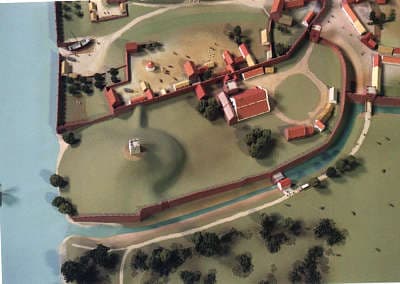
The castle featured a classic motte-and-bailey design, typical of early Norman fortifications. The motte was an artificial earthwork mound topped by a wooden or stone keep, providing a vantage point over the surrounding landscape. The bailey was an enclosed courtyard, protected by palisades and earthworks, which housed the garrison, stables, workshops, and other essential facilities. This design allowed for rapid construction and effective defense.
As a hill castle, Worcester Castle leveraged its elevated position to oversee the city and the River Severn nearby. This gave it strategic military value during the High Medieval period, especially throughout the turbulent 12th and early 13th centuries.
Political control and hereditary constableship
Worcester Castle was a royal castle, meaning it was owned by the king but managed locally by an appointed constable. The role of constable at Worcester became hereditary within the Beauchamp family, granting them significant influence and control over the castle and the city. This hereditary constableship allowed the Beauchamps to wield considerable power, which sometimes brought them into conflict with the crown.
Role in medieval conflicts
The castle was a focal point in several significant conflicts. During the Anarchy (1135–1153), a civil war over the English throne, Worcester Castle was a contested stronghold. It also played a part in the First Barons' War (1215–1217), a rebellion against King John. These wars underscored the castle's military importance in controlling the region.
Reduction of military significance
In 1217, the government of Henry III sought to diminish the Beauchamps' power and the castle's military threat by returning much of the castle's bailey land to Worcester Cathedral. This action effectively reduced the castle's defensive capabilities by eliminating the bailey, which was critical for housing troops and supplies. Although the castle saw some involvement in the Second Barons' War in the 1260s, its role as a fortress was largely diminished.
Transformation into a county gaol and later redevelopment
By the early 13th century, a gaol (prison) had been established within the castle grounds. Worcester Castle continued to function as the county gaol for Worcestershire for several centuries, reflecting a shift from military to civil use. The gaol remained in operation until the 19th century, when a new prison was constructed on the north side of Worcester.
Following the closure of the gaol, the castle site underwent extensive redevelopment, resulting in the loss of almost all original structures. Today, no significant remains of Worcester Castle survive except for Edgar's Tower, a gatehouse built as part of the cathedral precincts on what was once the castle's entrance. This tower stands as a solitary reminder of the castle's historic presence within the city.
Legacy and historical significance
Worcester Castle exemplifies the typical Norman military architecture introduced to England after the Conquest of 1066. Its evolution from a defensive stronghold to a county prison reflects broader social and political changes over several centuries. The castle's history is intertwined with the power struggles of medieval England and the development of Worcester as a significant urban center.
Frequently asked questions (FAQ)
- What are the opening hours of Worcester Castle?
- Worcester Castle is typically open from 10 AM to 5 PM, but hours may vary seasonally. It's advisable to check the official website for the most up-to-date information before your visit.
- How do I purchase tickets for Worcester Castle?
- Tickets for Worcester Castle can be purchased online through the official website or at the entrance. Prices are generally reasonable, and discounts may be available for families, seniors, and children.
- When was Worcester Castle built?
- Worcester Castle was originally constructed in the 11th century, during the Norman Conquest of England. It has since undergone various renovations and expansions, reflecting different architectural styles throughout its history.
- Is it possible to access Worcester Castle with a wheelchair?
- Yes, Worcester Castle is committed to accessibility and offers facilities for visitors with mobility challenges. Wheelchair access is available, and staff members are on hand to assist if needed.
- What is the historical significance of Worcester Castle?
- Worcester Castle played a crucial role in English history, especially during the Civil War and the power struggles of the medieval period. Today, it stands as a testament to Worcester's rich past and is a key attraction for history enthusiasts.
- Can I bring my children to Worcester Castle?
- Absolutely! Worcester Castle is a family-friendly destination with activities and exhibits that appeal to children of all ages. There are also picnic areas nearby where families can relax and enjoy their visit.
- What is the best time to visit Worcester Castle?
- The best time to visit Worcester Castle is during the spring and summer months when the weather is pleasant, and the gardens are in full bloom. Additionally, many events and guided tours are hosted during this time, enhancing the visitor experience.
- Are there any nearby attractions to visit after Worcester Castle?
- Yes, there are several attractions close to Worcester Castle, including the Worcestershire County Museum and the beautiful Gheluvelt Park. Exploring the city center also offers charming shops, cafes, and historical sites.
Photo gallery

Information
Loading map...
Visitor reviews
No reviews yet. Been here? Write the first review and help other travelers!
Write the first reviewVisited this castle? Share your experience
Your review helps other travelers and adds first-hand knowledge to our encyclopedia.