Wolvesey Castle
Wolvesey Castle stands as a remarkable example of a fortified episcopal palace located in Winchester, England. Its origins trace back to a site historically known as Wulveseye or Wulf's island, an eyot in the River Itchen with a history reaching back to Roman times. The castle's location, approximately 34 meters above sea level, occupies a small island in a generally flat valley, providing natural defensive advantages that were enhanced by medieval fortifications.
The castle's significance lies not only in its military and defensive roles but also in its ecclesiastical function as the residence of the Bishop of Winchester. This dual purpose shaped its architecture and historical trajectory, intertwining religious authority with feudal power during the medieval and early modern periods.
Early foundations and episcopal development
The earliest documented construction on the site began around 970 AD when Bishop Æthelwold of Winchester established a palace on the island. This marked the beginning of Wolvesey Castle's role as a central episcopal residence. The location was strategically chosen for its defensible position and proximity to Winchester, a major ecclesiastical and political center in England.
In the early 12th century, around 1110, Bishop William Giffard undertook significant building works, including the addition of a new hall on the southwest side of the complex. This expansion reflected the growing importance of the bishopric and the need for more substantial residential and administrative spaces.
The fortifications of henry of blois
Between 1135 and 1138, the castle underwent major enhancements under Henry of Blois, Bishop of Winchester and brother to King Stephen. Henry fortified the palace by constructing a curtain wall around the site and adding a second hall on the western side. These defensive measures were a response to the volatile political climate of the time, particularly the civil war known as The Anarchy.
The curtain walls, built in the mid-12th century, remain one of the castle's most prominent features today. They exemplify the medieval military architecture of the period, combining robust stone construction with strategic design to protect the bishop's residence from siege and attack.
Military significance and sieges
Wolvesey Castle played a notable role in several conflicts during the 12th and early 13th centuries. In 1141, it withstood a siege during the Rout of Winchester, a critical event during The Anarchy that underscored the castle's defensive strength.
Later, in June 1216, during the First Barons' War, the castle was again besieged. At that time, Oliver fitz Regis defended the stronghold against forces led by Prince Louis of France. This siege highlighted Wolvesey's strategic importance as a fortified episcopal seat capable of resisting military assaults.
Renaissance and early modern transformations
By the 16th century, Wolvesey Castle had evolved to accommodate not only military and ecclesiastical functions but also royal ceremonial uses. Notably, the palace hosted the wedding breakfast of Queen Mary I of England and Philip II of Spain in 1554, demonstrating its continued prestige and suitability for significant state occasions.
The castle's fortunes declined sharply during the English Civil War. In 1646, Parliamentary forces largely destroyed the palace, leaving it in ruins. This destruction marked the end of Wolvesey's role as a major episcopal residence and military fortress.
Following the medieval period, a Baroque palace was constructed nearby in 1684 by Thomas Finch for Bishop George Morley. Most of this later structure was demolished by 1786, except for the west wing, which was refurbished in 1926 and returned to use as an episcopal residence. This continuity of ecclesiastical habitation links the historic site to the present day.
Architectural remains and features
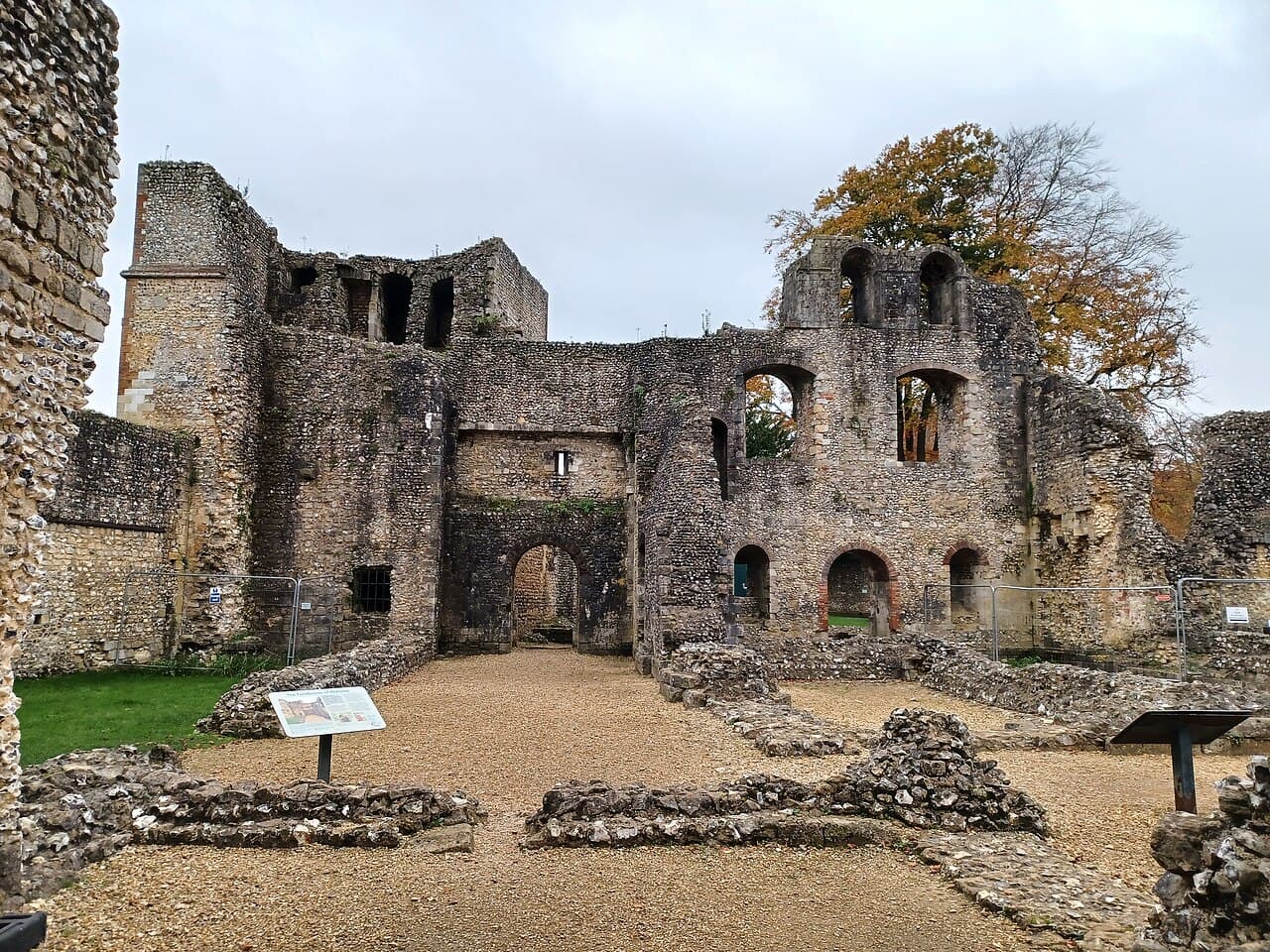
The surviving ruins of Wolvesey Castle provide a vivid glimpse into its medieval past. The curtain walls, primarily from the mid-12th century, still stand prominently, enclosing the site and conveying its fortified character.
Within the enclosure, the footprint of the principal hall remains visible, including a large round arch and a well-preserved Norman window. These architectural elements reveal the castle's original Romanesque style and construction techniques.
The most significant intact medieval structure is the 15th-century chapel attached to the southern range of the palace. This chapel remains in active use, serving as a direct link to the site's religious heritage and continuing episcopal functions.
Surrounding landscape and context
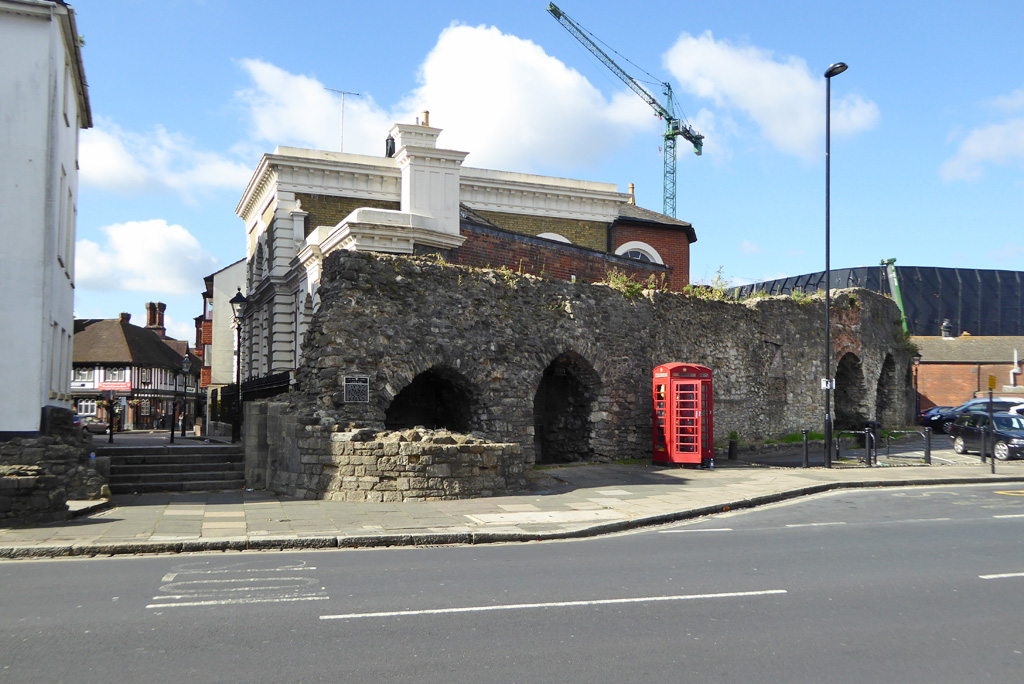
Wolvesey Castle is situated amidst agricultural land with a moderate rural population density, providing a peaceful setting that contrasts with its historic military and administrative roles. Adjacent to the castle are portions of the old city walls of Winchester, which themselves hold historical significance and contribute to the site's heritage value.
Cultural significance and preservation
Today, the ruins of Wolvesey Castle are recognized as a Grade I listed site, reflecting their exceptional cultural and historic importance. The site is maintained by English Heritage, ensuring the preservation of its architectural features and facilitating public access and education.
The castle's layered history as a fortified episcopal palace, a military stronghold during key historical conflicts, and a venue for royal ceremonies makes it a compelling destination for visitors interested in medieval architecture, English history, and ecclesiastical heritage.
Frequently asked questions (FAQ)
- How do I visit Wolvesey Castle?
- Wolvesey Castle is managed by English Heritage and is accessible to the public. Visitors should check the official English Heritage website for current opening hours and any ticketing requirements before planning their visit.
- What is the historical significance of Wolvesey Castle?
- Wolvesey Castle served as the fortified residence of the Bishops of Winchester, playing key roles in medieval military conflicts like The Anarchy and the First Barons' War, as well as hosting royal events such as Queen Mary I's wedding breakfast.
- What architectural features remain at Wolvesey Castle?
- Visitors can see the mid-12th century curtain walls, the footprint of the principal hall with a large round arch and Norman window, and the 15th-century chapel which is still in use, showcasing Romanesque and medieval architecture.
- Is Wolvesey Castle wheelchair accessible?
- Due to the site's ruined condition and uneven terrain, wheelchair access may be limited. Visitors with mobility concerns should contact English Heritage in advance for detailed accessibility information.
- When is the best time to visit Wolvesey Castle?
- The castle is best visited in late spring through early autumn when the weather is mild and the surrounding landscape is at its most attractive. Checking seasonal opening times is recommended.
Photo gallery

Information
Sources & official resources
Verify the information above using these authoritative references.
Loading map...
Visitor reviews
No reviews yet. Been here? Write the first review and help other travelers!
Write the first reviewVisited this castle? Share your experience
Your review helps other travelers and adds first-hand knowledge to our encyclopedia.