Danebury Hill Camp
Danebury hill camp is a prominent Iron Age hillfort located in Hampshire, England, approximately 19 kilometres northwest of Winchester. This extensive archaeological site covers about 5 hectares (12 acres) and stands as one of the most intensively excavated hillforts in Britain. The site was systematically excavated during the 1970s by the renowned archaeologist Barry Cunliffe, whose work significantly advanced the understanding of Iron Age fortifications and settlements.
Historical context and significance
Constructed in the 6th century BC, Danebury was occupied for nearly 500 years, spanning much of the Iron Age. This period saw a proliferation of hillforts across the Wessex region, reflecting social and political changes among the communities. Danebury is considered a type site for hillforts due to the depth of archaeological research conducted here, which has provided crucial insights into the construction, use, and evolution of such sites.
Architectural features and fortifications
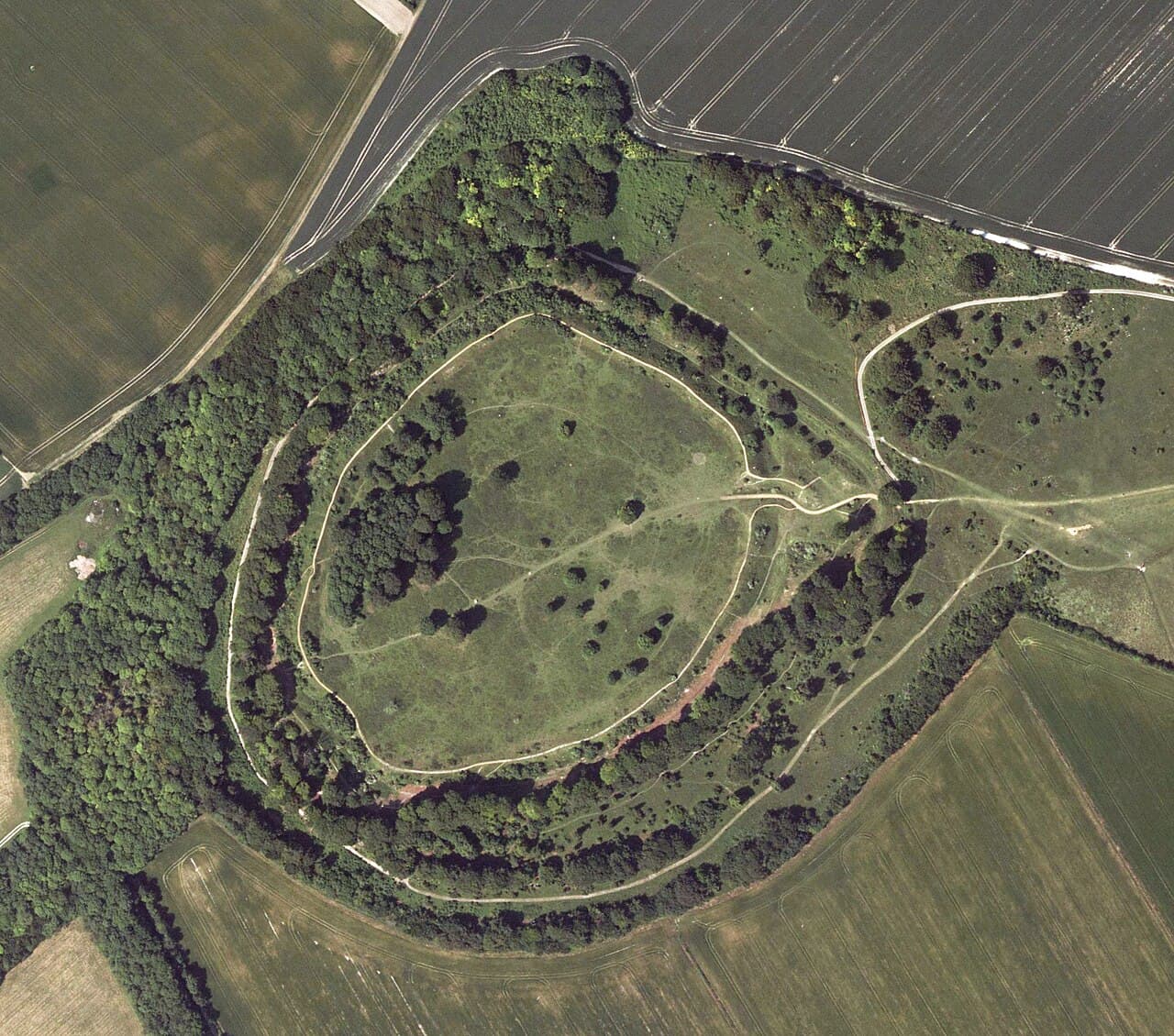
Danebury hill camp is classified as a hill castle rather than a bastioned fortress, as it predates medieval fortification styles. The fort is situated on a prominent hilltop, utilizing natural contours to enhance its defensive capabilities. Its fortifications include multiple concentric ramparts and ditches that were remodelled several times during its occupation, resulting in a complex and developed defensive system.
The ramparts were constructed using earth and timber, forming substantial banks that would have been topped with wooden palisades. The entrances were carefully designed to control access, with evidence of inturned gateways that would have been easily defensible. The interior of the hillfort likely contained domestic structures, storage pits, and areas for craft production, reflecting a vibrant community life.
Archaeological discoveries and research impact
The excavations led by Barry Cunliffe uncovered a wealth of material culture including pottery, metalwork, animal bones, and evidence of agricultural practices. These findings have shed light on the daily lives, economy, and social organization of the Iron Age inhabitants. The site also revealed evidence of seasonal occupation and possible ritual activities, contributing to broader interpretations of hillfort functions beyond mere military defense.
Danebury's excavation methodology set new standards in archaeological practice, combining detailed stratigraphic analysis with environmental sampling. This comprehensive approach has made Danebury a benchmark for studying prehistoric hillforts across Europe.
Preservation and current status
Today, Danebury hill camp is protected as a Scheduled Monument and is part of a Local Nature Reserve known as Danebury Hillfort. The surrounding area is designated as a Site of Special Scientific Interest (SSSI), highlighting its ecological as well as historical importance. Visitors can explore the earthworks and enjoy panoramic views of the Hampshire countryside, though no standing stone structures remain.
Interpretive signage and public access paths provide educational opportunities, making Danebury a valuable resource for both heritage tourism and academic study.
Frequently asked questions (FAQ)
- What is Danebury hill camp?
- Danebury hill camp is an Iron Age hillfort in Hampshire, England, dating back to the 6th century BC. It served as a fortified settlement for nearly 500 years.
- When was Danebury hill camp excavated?
- The site was extensively excavated in the 1970s by archaeologist Barry Cunliffe, whose work greatly enhanced understanding of Iron Age hillforts.
- Can visitors explore Danebury hill camp today?
- Yes, Danebury hill camp is a Scheduled Monument and Local Nature Reserve open to the public, featuring visible earthworks and walking paths.
- What architectural features characterize Danebury hill camp?
- Danebury features multiple concentric earth ramparts and ditches, timber palisades, and inturned gateways typical of Iron Age hillfort design.
- Why is Danebury hill camp important archaeologically?
- It is a type site for hillforts due to its intensive excavation and rich finds, providing key insights into Iron Age social organization and defensive strategies.
Photo gallery

Information
Loading map...
Visitor reviews
No reviews yet. Been here? Write the first review and help other travelers!
Write the first reviewVisited this castle? Share your experience
Your review helps other travelers and adds first-hand knowledge to our encyclopedia.