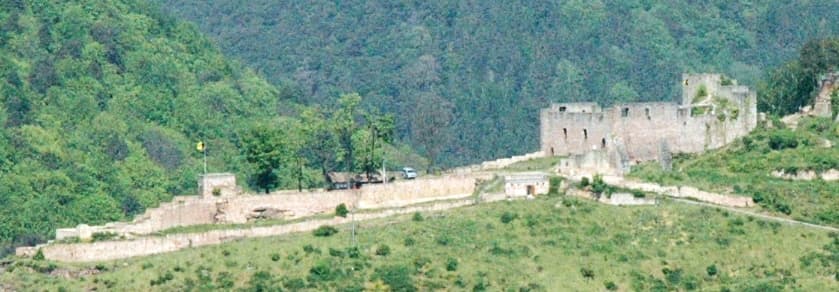
Wolfsburg Castle (Neustadt) — Germany castle

Wolfsburg Castle (Neustadt)

Wolfsburg Castle ruins near Neustadt an der Weinstraße
Neustadt an der Weinstraße, Germany
High Medieval (11th–13th c.)
Ruins

The ruins of Wolfsburg Castle stand prominently on the Wolfsberg hill, overlooking the western approach to Neustadt an der Weinstraße in the German state of Rhineland-Palatinate. This high medieval hill castle was constructed in the 12th century on a rocky crag approximately 130 metres above the left bank of the Speyerbach river at an elevation of 270 metres above sea level. The strategic location provided commanding views of the surrounding landscape and control over the ancient valley route towards Lambrecht.

Historical context and early significance

The site of Wolfsburg Castle holds a longer history of human settlement, as evidenced by archaeological findings. Traces of Roman settlements have been uncovered along the original thalweg or valley floor in the direction of Lambrecht, indicating the area's importance as a transit and habitation zone well before the castle's construction. The castle itself was likely built to assert territorial control and oversee trade routes during the High Medieval period.

Architectural features and layout

Although now in ruins, the castle's remnants reveal typical hill castle characteristics of the 12th century. The castle was constructed on a rocky crag providing natural defensive advantages. The surviving structures suggest a compact layout with fortified curtain walls adapted to the uneven terrain. Defensive features possibly included battlements and a gatehouse controlling access to the inner ward.

The elevation and position above the Speyerbach river would have enhanced the castle's defensive capabilities and allowed surveillance over the valley approaches. The castle's design reflects the medieval military architecture priorities of defense and control over the surrounding region.

Ruins and archaeological importance

Today, Wolfsburg Castle remains a significant archaeological site. The ruins provide valuable insights into medieval castle construction techniques and regional history. The rocky hilltop location has preserved foundation walls and some structural elements that allow historians and archaeologists to reconstruct aspects of its original form and function.

The castle's ruins also contribute to understanding the broader network of medieval fortifications in the Rhineland-Palatinate region, illustrating how castles were positioned strategically to guard important routes and settlements.

Surrounding landscape and accessibility

The castle's placement on the Wolfsberg hill offers panoramic views of the Speyerbach valley and the surrounding forested hills. The natural environment around the ruins is typical of the Palatinate Forest region, characterized by mixed woodlands and rocky outcrops.

Visitors to the site can explore the ruins and enjoy hiking opportunities in the vicinity, connecting with the area's rich cultural and natural heritage. The proximity to Neustadt an der Weinstraße makes the site accessible for those interested in medieval history and castle architecture.

Frequently asked questions (FAQ)

How do I get to Wolfsburg Castle?
Wolfsburg Castle is located in Neustadt an der Weinstraße, Germany, and is easily accessible by car or public transport. If you are traveling by train, the nearest station is Neustadt (Weinstr) Bahnhof, from where you can take a short bus or taxi ride to the castle.
What is the historical significance of Wolfsburg Castle?
Wolfsburg Castle dates back to the 12th century and has served as a residence for various noble families throughout its history. It is an important example of medieval architecture in the region and has witnessed many significant events that shaped the area.
When was Wolfsburg Castle built?
Wolfsburg Castle was originally constructed in the early 12th century, making it over 800 years old. It has undergone several renovations and restorations over the centuries, reflecting changes in architectural styles and the needs of its inhabitants.
Can I take guided tours of the castle?
Yes, guided tours of Wolfsburg Castle are available, providing visitors with in-depth information about its history and architecture. These tours are typically conducted in both German and English, making them accessible to a wider audience.
Is it possible to host events at Wolfsburg Castle?
Wolfsburg Castle offers facilities for hosting various events, including weddings and corporate functions. The picturesque setting and historic ambiance make it a unique venue for special occasions.
What are the opening hours for Wolfsburg Castle?
Wolfsburg Castle is open to visitors from Tuesday to Sunday, with varying hours depending on the season. It is recommended to check the official website for the most current opening times before planning your visit.
What are the ticket prices for visiting Wolfsburg Castle?
Ticket prices for Wolfsburg Castle are generally affordable, with discounts available for students and seniors. Children under a certain age may enter for free, making it a great family-friendly destination.
When is the best time to visit Wolfsburg Castle?
The best time to visit Wolfsburg Castle is during the spring and early fall when the weather is pleasant, and the gardens are in full bloom. Additionally, visiting during weekdays can help you avoid the larger crowds typically present on weekends.
Are there any nearby attractions to visit after exploring the castle?
Yes, after visiting Wolfsburg Castle, you can explore the beautiful vineyards surrounding Neustadt an der Weinstraße or visit the historic town center, which features charming shops and local restaurants. The Palatinate Forest, a UNESCO Biosphere Reserve, is also nearby, offering scenic hiking trails.

Photo gallery

Wolfsburg Castle (Neustadt)
Click to view

Photo by No machine-readable author provided. Palatinatian assumed (based on copyright claims).•CC BY-SA 2.5

1 photo • Click any image to view in full screen

Information

Hill Castle

Loading map...

Visitor reviews

No reviews yet. Been here? Write the first review and help other travelers!

Write the first review

Visited this castle? Share your experience

Your review helps other travelers and adds first-hand knowledge to our encyclopedia.
Write a review

(5/5)

0/2000 characters

Your review will be visible after admin approval

Nearby castles

4 km
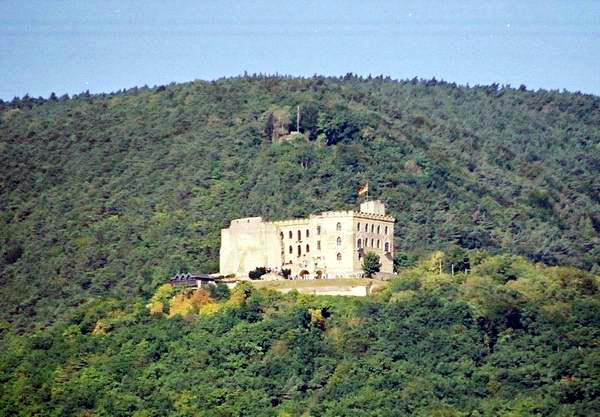
Hambach Castle — Germany castle

Hambach Castle

Neustadt an der Weinstraße, Germany

Hambach Castle, located in Neustadt an der Weinstraße, Germany, stands as a powerful symbol of the German democracy movement due to its association with the historic Hambacher Fest of 1832. This hill castle is perched atop the Schlossberg hill, offering commanding views over the Palatinate Forest and the German Wine Route. Its strategic location and rich history span from late Roman times through the High Medieval period and into the modern era, reflecting a complex architectural evolution that blends Romanesque, Renaissance, and neo-Gothic styles. Archaeological evidence confirms that the site of Hambach Castle was used as early as the late Roman period. During the Carolingian and Ottonian dynasties, an early refuge castle was constructed here, with remnants still visible beneath and in front of the outer ring wall. The first documented ownership transfer occurred between 1090 and 1104 when Bishop Johann I of Speyer acquired the estate, including Hambach Castle, for the Bishopric of Speyer. The castle remained under ecclesiastical control until the late 18th century, serving as a residence and administrative center for the bishops of Speyer. Medieval origins and episcopal significance The castle's medieval construction was notably expanded during the 13th century, a period marked by significant building projects that shaped much of its surviving structure. In 1388, Bishop Nikolaus I was consecrated in the castle chapel, underscoring the site's religious importance. Further construction occurred in the late 14th and 15th centuries under bishops Nikolaus I and Matthias I, who also established the castle as the repository for the Episcopalian document archive by the end of the 14th century. Throughout the Middle Ages, Hambach Castle functioned as both a defensive fortress and an administrative hub. It guarded vital trade routes and served as a toll collection point, reflecting its strategic significance. The castle's governance included notable figures such as Trushard von Kästenburg, who served as treasurer and held imperial offices in Italy during the late 12th century. The castle's importance declined after the early 15th century, particularly following the construction of the new estate at Hanhofen. Destruction and decline in the early modern period Hambach Castle endured significant turmoil during the 16th century. In 1525, during the German Peasants' War, it was occupied and looted by rebellious forces. Later, in 1552, the castle was conquered and burned by troops under Margrave Albrecht Alcibiades of Brandenburg, a mercenary leader known for his destructive campaigns. The devastation left the castle in ruins, and although Bishop Marquard of Speyer (in office 1560–1581) initiated a provisional restoration, the castle was repurposed as the seat of a forester rather than fully rebuilt. The castle escaped damage during the Thirty Years' War but was again destroyed in 1688 during the War of the Palatine Succession by French forces. Partial restoration efforts took place between 1701 and 1703, but the castle largely remained a ruin. The French government declared the castle property in 1797, and following the Congress of Vienna in 1816, it became part of the Kingdom of Bavaria. Symbol of democracy: the hambacher fest and 19th-century restoration Hambach Castle gained enduring fame as the focal point of the Hambacher Fest in 1832, a six-day gathering of approximately 25,000 to 30,000 people advocating for German national unity, civil liberties, and democracy. The event was a direct response to the repressive measures imposed by the Bavarian administration, which had rescinded rights granted during the French Revolutionary period. This festival cemented the castle's legacy as a symbol of democratic aspirations in Germany and Europe. In 1844, the ruined castle was granted to Crown Prince Maximilian II of Bavaria, who was affectionately nicknamed "Maxburg" in connection with the site. Architect August von Voit led a neo-Gothic restoration inspired by Hohenschwangau Castle, blending medieval elements with 19th-century romantic historicism. The reconstruction included the addition of pointed-arch windows, battlements with decorative merlons, and sandstone rustication on façades. However, the project was interrupted by the revolutions of 1848 and 1849, leaving parts of the castle incomplete for over a century. 20th-century preservation and modern adaptations In 1969, ownership transferred to the district of Bad Dürkheim, and in 2002, the Stiftung Hambacher Schloss foundation assumed guardianship, supported by regional and federal authorities. Extensive restoration took place from 1980 to 1982 to commemorate the 150th anniversary of the Hambacher Fest, involving significant investment to restore structural integrity and install permanent exhibitions. Further renovations between 2006 and 2008 enhanced accessibility, including the installation of an elevator to accommodate visitors with disabilities. Controversial features such as a wooden ceiling were removed to better preserve the historic fabric. From 2009 to 2011, Swiss architect Max Dudler designed a modern restaurant within the castle grounds. This facility, seating over 100 guests, integrates contemporary materials like cherry wood, sandstone, glass, and steel, harmonizing with the historic environment. Dudler's work earned the 2012 DAM Architecture Prize. Architectural features and site description Hambach Castle's architecture reflects its layered history. The main building is L-shaped and rises over 12 meters high. Its principal façade features three vertical rows of pointed-arch windows, including two semicircular openings set into niches supported by corbels—stone projections that likely supported a now-lost balcony. The façade is clad in sandstone rustication, a Renaissance masonry technique that gives a textured, block-like appearance. The battlements alternate between plain and cross-shaped merlons, combining defensive and decorative elements. A prominent rises above the northern façade, flying the German national flag. Remnants of the original Romanesque curtain wall survive around the bastion, constructed using the opus incertum technique, which employs irregular stones arranged without precise uniformity for strength. The castle chapel, dedicated to Archangel Michael, remains a significant historic feature. Rebuilt and reconsecrated in 1723 after earlier destruction, it suffered desecration during the French Revolution but continues to be an integral part of the castle complex. Modern interventions include a discreet visitor entrance and the award-winning restaurant, which respect the castle’s historic character while providing contemporary amenities. Accessibility improvements ensure that Hambach Castle remains welcoming to a broad audience. Cultural significance and current use Today, Hambach Castle functions as both a museum and a conference center. It attracts approximately 200,000 visitors annually, hosting official events and dignitary visits, including a notable speech by U.S. President Ronald Reagan in 1985. The castle's designation with the European Heritage Label in 2015 recognizes its enduring role as a symbol of European unity and democratic ideals. Hambach Castle's rich history, architectural evolution, and symbolic importance make it a unique cultural landmark in Germany. Its preservation and adaptive reuse demonstrate a successful balance between honoring the past and serving contemporary educational and cultural needs.

High Medieval (11th–13th c.)
Details
5.7 km

Neidenfels Castle

Lambrecht, Germany

Neidenfels Castle stands as a significant medieval ruin perched on a rocky hilltop above the village of Neidenfels in the German region of Rhineland-Palatinate. Constructed around 1330 by Count Rudolf II of the Palatinate, the castle was built to replace the nearby Burg Lichtenstein, reflecting the strategic and feudal dynamics of the early 14th century. Its elevated position on the "Schlossberg" hill at approximately 258 meters above sea level classifies it as a hill castle, offering commanding views over the surrounding landscape and serving defensive purposes during its active use. Historical development and feudal significance The first documented mention of Burg Neidenfels dates to 1338, confirming its establishment in the early late medieval period under the auspices of the Palatinate rulers. Throughout the 14th and 15th centuries, the castle was held by various noble families closely tied to the regional aristocracy, including the Lords of Lichtenstein, the von Odenbach family, and the Wachenheim and Moosbach families. Notably, in 1356, Johann von Wachenheim contributed a substantial loan of 500 gold guilders to support the castle's expansion, underscoring its ongoing strategic importance. Further financial investments were made in 1409 when vassal Dieter II Landschad von Steinach and his wife Irmgard contributed 400 guilders for maintenance, illustrating the castle's continued role within the feudal hierarchy and its upkeep as a fortified residence. Control of the castle shifted in 1410 when Elector Ludwig III granted it as a fief to the noble Steinhausen family, followed by stewardship under the Angelloch family. These transitions reflect the castle's integration into the complex feudal system of the Palatinate territory. In the late 16th century, specifically in 1577, the castle was bestowed upon Peter Beutterich by Elector Johann Casimir, known as the "Hunter from the Palatinate." Beutterich was a prominent cavalry colonel and diplomat, serving as the elector's foreign minister, which highlights the castle's connection to significant military and political figures of the era. Destruction and post-medieval history The military relevance of Neidenfels Castle came to a decisive end during the Nine Years' War (1688–1697), also known as the War of the Palatine Succession. In 1689, French troops deliberately destroyed the castle as part of their campaign to weaken the Palatinate's defenses. This act left the castle in ruins, marking the conclusion of its active military and residential use. In the 18th century, attempts were made to repurpose the castle's durable stonework. Around 1749, a forest official named Glöckle endeavored to use stones from the ruins to construct vineyard terraces on the hill, though this project was ultimately unsuccessful. The reuse of castle materials for agricultural infrastructure reflects common practices in post-medieval Europe, where abandoned fortifications often served as convenient quarries. In the 20th century, the local community formally accepted the ruins as a gift in 1935, initiating preservation efforts. A significant restoration project was undertaken in 1986, investing over 300,000 Deutsche Marks to stabilize and maintain the fragile remains, ensuring that the castle's historical footprint would be preserved for future generations. Architectural features and remaining structures The castle was primarily constructed of stone, with substantial masonry walls designed to withstand sieges and provide defense. Its location on a rocky hilltop provided natural fortification advantages, supplemented by man-made defensive structures typical of late medieval hill castles. Today, the visible ruins consist mainly of fragmented stone walls and remnants of the castle's fortifications. Although detailed architectural elements such as gates, staircases, or towers are not well documented, the ruins convey the castle's former scale and robust construction. The solidity of the masonry is evidenced by the fact that stones from the ruins were later sought for reuse in local vineyard terraces. No significant decorative carvings, inscriptions, or archaeological artifacts such as pottery or tools have been reported from the site, which limits detailed understanding of the castle's internal arrangements and daily life. However, the ruins serve as a powerful testament to the castle's medieval origins and its strategic role in the Palatinate region. Cultural significance and name origins The name "Neidenfels" is thought to derive either from Old or Middle High German. One interpretation suggests it refers to the castle's position on a lower rock formation compared to the nearby Burg Lichtenstein, emphasizing its geographical relationship within the landscape. Alternatively, the name may be connected to the "zeal and anger of a warrior," symbolizing the castle's martial purpose and defensive character. This dual significance—both geographical and symbolic—reflects the castle's identity as a fortified noble residence and its role in regional military history. The preservation of the ruins and their integration into local heritage efforts underscore the cultural importance of Neidenfels Castle as a historical landmark. Visiting the ruins today Neidenfels Castle remains an evocative historical site accessible to visitors interested in medieval architecture and regional history. Its hilltop location offers scenic views of the surrounding Palatinate landscape, while the ruins themselves provide a tangible connection to the area's feudal past. Preservation initiatives have stabilized parts of the ruins, making the site safe for exploration. Visitors can appreciate the castle's strategic setting and imagine its former prominence in the medieval period. Although the castle is in a state of ruin, it continues to attract historians, tourists, and cultural enthusiasts drawn by its rich history and dramatic location.

Late Medieval (14th–15th c.)
Details
6.9 km

Erfenstein Castle

Lambrecht, Germany

Erfenstein Castle is a notable example of a medieval spur castle situated in the German state of Rhineland-Palatinate, prominently located within the scenic Palatine Forest above the Elmstein Valley. This castle, dating back to the 13th century, was constructed during the high medieval period and is historically linked with the nearby Spangenberg Castle through the intriguing legend of the Leather Bridge. The origins of Erfenstein Castle remain somewhat uncertain, but it is widely accepted that the House of Leiningen, a significant noble family in the region, were its founders. The castle was likely established as a strategic stronghold to protect the extensive forest lands owned by the Leiningen counts. The first documented mention of the castle appears in 1272, referencing a ministerialis named Bock of Erfenstein, a member of the lesser nobility who resided at the castle with his family. This early record highlights the castle's role as a noble residence and administrative center within the Leiningen territories. Historical ownership and significance Throughout its history, Erfenstein Castle experienced a complex succession of ownership, primarily within branches of the Leiningen family. The castle's ownership oscillated between the Leiningen-Hardenburg and Leiningen-Rixingen lines as a result of inheritance and familial division. The Rixingen branch held the castle along with the village of Esthal until 1345, after which the castle became a Ganerbenburg, or a jointly inherited castle, shared among multiple co-heirs. This joint ownership led to numerous disputes among the co-owners, eventually resulting in the castle passing to the counts of Sponheim in 1415. Upon the extinction of the Sponheim family line, ownership reverted to the Leiningen-Hardenburgs. The castle's history is intertwined with regional power struggles, especially between the lords of Erfenstein and Spangenberg, who were often rivals due to their competing allegiances and territorial claims. The legend of the leather bridge and castle rivalry The famous Leather Bridge legend connects Erfenstein Castle with nearby Spangenberg Castle. Historically, these castles were owned by different lords—the Spangenberg by the prince-bishops of Speyer and Erfenstein by the Leiningen family. This ownership division fostered competition and conflict between the two castles, reflecting broader feudal rivalries in the region. In 1470, during the Weißenburg Feud, a conflict between Elector Frederick I of the Palatinate and his cousin Duke Louis I of Palatinate-Zweibrücken, both castles were destroyed. Erfenstein was attacked and ruined first, followed by the destruction of Spangenberg Castle. Since then, Erfenstein has remained in a state of ruin, a testament to the turbulent medieval history of the Palatinate region. Architectural features and layout The two sites: Old Erfenstein and New Erfenstein Erfenstein Castle is unique in that it comprises two distinct sites: Old Erfenstein (Alt-Erfenstein) and New Erfenstein (Neu-Erfenstein). The older site, located above the newer one, has largely succumbed to time, with only remnants such as an outer neck ditch filled with earth and the remains of a square bergfried visible. This bergfried stands on an eight-meter-high sandstone rock and features rusticated ashlars, indicating its original robust construction. The newer site, situated below, is dominated by a well-preserved bergfried with a high entrance on its eastern side, a common defensive feature designed to protect against invaders. Adjacent to the tower are fragments of a curtain wall, with right-angled sockets that once supported wooden beams, suggesting the presence of multiple internal floors within the tower. Defensive structures and lower wards Separating Old and New Erfenstein is a wide inner neck ditch, a defensive trench that would have hindered attackers moving between the two sites. At the base of the sandstone rock supporting New Erfenstein, there was a lower ward (Unterburg), remnants of which still survive. This lower ward likely contained auxiliary buildings and served as an additional line of defense. Compared to Spangenberg Castle, Erfenstein's ruins are in poorer condition, with significant deterioration caused by natural elements and human activity. Vegetation growth and visitors climbing on the ruins have accelerated the decay, particularly affecting the tower stump of the upper ward. Conservation efforts have been proposed to stabilize the site and protect its historical fabric. Erfenstein Castle in the context of the Palatine Forest Situated in the Palatine Forest, Erfenstein Castle was strategically placed to oversee and protect the surrounding woodland and valleys. The castle's location on a spur provided natural defensive advantages, leveraging the steep terrain to deter attackers. This setting also allowed control over trade routes and forest resources, which were valuable assets during the medieval period. The castle's proximity to Spangenberg and other fortifications created a network of strongholds that shaped the political and military landscape of the region. Despite its ruinous state, Erfenstein remains an important cultural landmark within the Palatine Forest, attracting historians, archaeologists, and visitors interested in medieval architecture and history. Preservation and visitor information Today, Erfenstein Castle stands as a ruin that offers insight into medieval fortification techniques and noble life. While much of the castle has been lost, the surviving structures provide valuable information about high medieval castle design and construction. Visitors to the site can explore the remains of the bergfried, curtain walls, and ditches, although caution is advised due to the fragile condition of the ruins. Efforts to secure and preserve the castle are ongoing, with proposals to stabilize the upper ward and protect the neck ditches from further erosion. The site is accessible from the nearby town of Lambrecht and is a popular destination for hiking and historical tours within the Palatine Forest.

High Medieval (11th–13th c.)
Details

