Neidenfels Castle
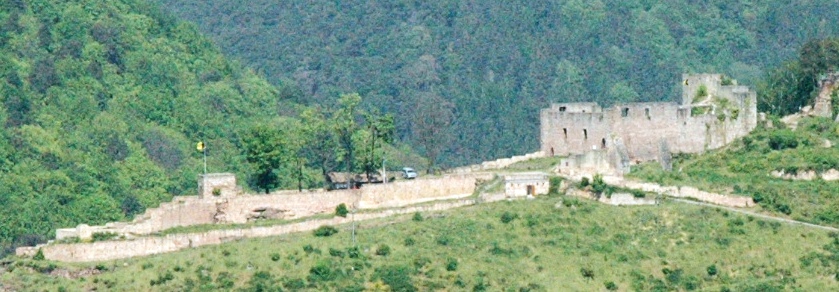
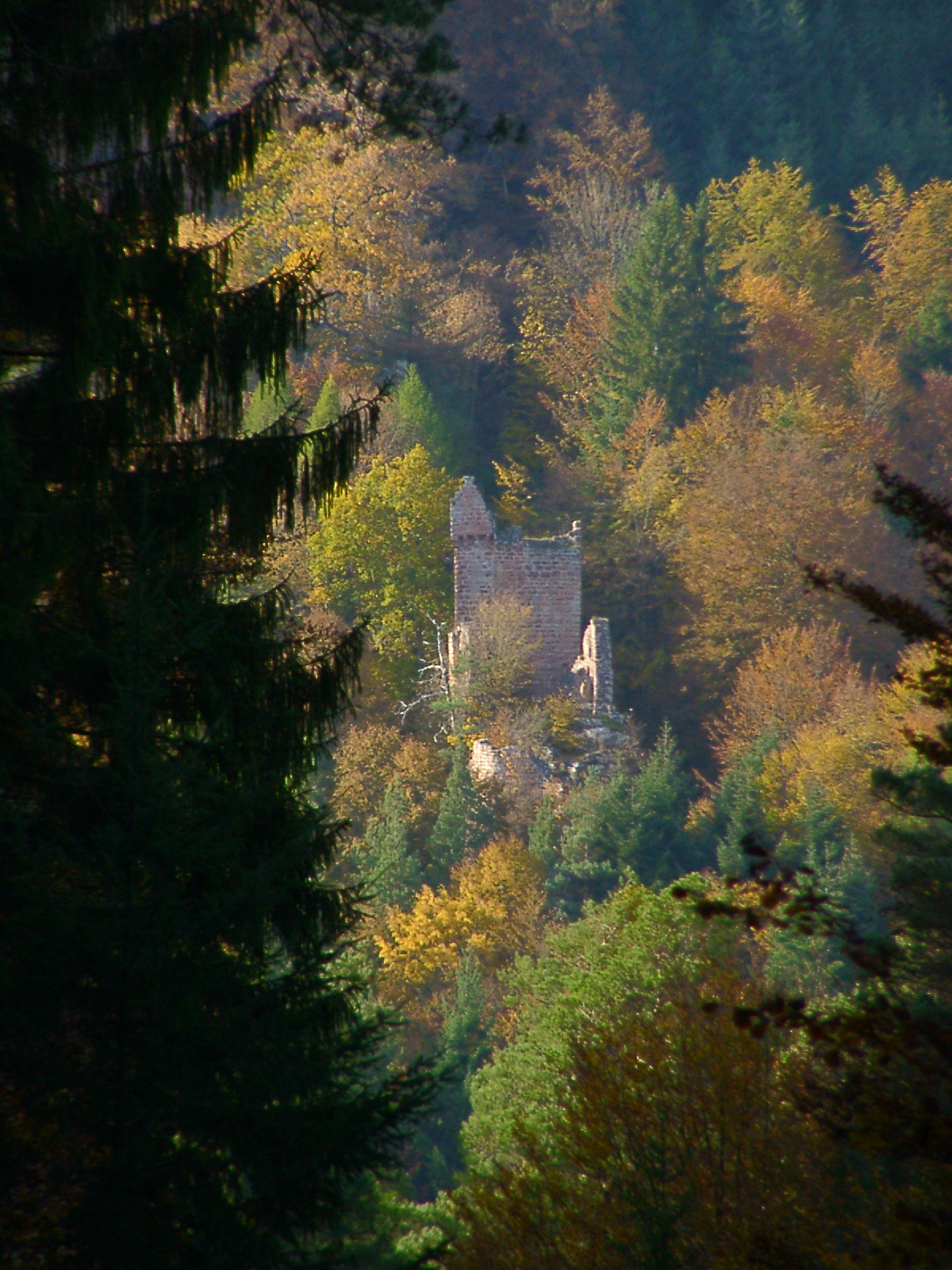
Neidenfels Castle stands as a significant medieval ruin perched on a rocky hilltop above the village of Neidenfels in the German region of Rhineland-Palatinate. Constructed around 1330 by Count Rudolf II of the Palatinate, the castle was built to replace the nearby Burg Lichtenstein, reflecting the strategic and feudal dynamics of the early 14th century. Its elevated position on the "Schlossberg" hill at approximately 258 meters above sea level classifies it as a hill castle, offering commanding views over the surrounding landscape and serving defensive purposes during its active use.
Historical development and feudal significance
The first documented mention of Burg Neidenfels dates to 1338, confirming its establishment in the early late medieval period under the auspices of the Palatinate rulers. Throughout the 14th and 15th centuries, the castle was held by various noble families closely tied to the regional aristocracy, including the Lords of Lichtenstein, the von Odenbach family, and the Wachenheim and Moosbach families. Notably, in 1356, Johann von Wachenheim contributed a substantial loan of 500 gold guilders to support the castle's expansion, underscoring its ongoing strategic importance.
Further financial investments were made in 1409 when vassal Dieter II Landschad von Steinach and his wife Irmgard contributed 400 guilders for maintenance, illustrating the castle's continued role within the feudal hierarchy and its upkeep as a fortified residence. Control of the castle shifted in 1410 when Elector Ludwig III granted it as a fief to the noble Steinhausen family, followed by stewardship under the Angelloch family. These transitions reflect the castle's integration into the complex feudal system of the Palatinate territory.
In the late 16th century, specifically in 1577, the castle was bestowed upon Peter Beutterich by Elector Johann Casimir, known as the "Hunter from the Palatinate." Beutterich was a prominent cavalry colonel and diplomat, serving as the elector's foreign minister, which highlights the castle's connection to significant military and political figures of the era.
Destruction and post-medieval history
The military relevance of Neidenfels Castle came to a decisive end during the Nine Years' War (1688–1697), also known as the War of the Palatine Succession. In 1689, French troops deliberately destroyed the castle as part of their campaign to weaken the Palatinate's defenses. This act left the castle in ruins, marking the conclusion of its active military and residential use.
In the 18th century, attempts were made to repurpose the castle's durable stonework. Around 1749, a forest official named Glöckle endeavored to use stones from the ruins to construct vineyard terraces on the hill, though this project was ultimately unsuccessful. The reuse of castle materials for agricultural infrastructure reflects common practices in post-medieval Europe, where abandoned fortifications often served as convenient quarries.
In the 20th century, the local community formally accepted the ruins as a gift in 1935, initiating preservation efforts. A significant restoration project was undertaken in 1986, investing over 300,000 Deutsche Marks to stabilize and maintain the fragile remains, ensuring that the castle's historical footprint would be preserved for future generations.
Architectural features and remaining structures
The castle was primarily constructed of stone, with substantial masonry walls designed to withstand sieges and provide defense. Its location on a rocky hilltop provided natural fortification advantages, supplemented by man-made defensive structures typical of late medieval hill castles.
Today, the visible ruins consist mainly of fragmented stone walls and remnants of the castle's fortifications. Although detailed architectural elements such as gates, staircases, or towers are not well documented, the ruins convey the castle's former scale and robust construction. The solidity of the masonry is evidenced by the fact that stones from the ruins were later sought for reuse in local vineyard terraces.
No significant decorative carvings, inscriptions, or archaeological artifacts such as pottery or tools have been reported from the site, which limits detailed understanding of the castle's internal arrangements and daily life. However, the ruins serve as a powerful testament to the castle's medieval origins and its strategic role in the Palatinate region.
Cultural significance and name origins
The name "Neidenfels" is thought to derive either from Old or Middle High German. One interpretation suggests it refers to the castle's position on a lower rock formation compared to the nearby Burg Lichtenstein, emphasizing its geographical relationship within the landscape. Alternatively, the name may be connected to the "zeal and anger of a warrior," symbolizing the castle's martial purpose and defensive character.
This dual significance—both geographical and symbolic—reflects the castle's identity as a fortified noble residence and its role in regional military history. The preservation of the ruins and their integration into local heritage efforts underscore the cultural importance of Neidenfels Castle as a historical landmark.
Visiting the ruins today
Neidenfels Castle remains an evocative historical site accessible to visitors interested in medieval architecture and regional history. Its hilltop location offers scenic views of the surrounding Palatinate landscape, while the ruins themselves provide a tangible connection to the area's feudal past.
Preservation initiatives have stabilized parts of the ruins, making the site safe for exploration. Visitors can appreciate the castle's strategic setting and imagine its former prominence in the medieval period. Although the castle is in a state of ruin, it continues to attract historians, tourists, and cultural enthusiasts drawn by its rich history and dramatic location.
Frequently asked questions (FAQ)
- When was Neidenfels Castle built and by whom?
- Neidenfels Castle was built around 1330 by Count Rudolf II of the Palatinate to replace the nearby Burg Lichtenstein.
- What led to the destruction of Neidenfels Castle?
- The castle was destroyed in 1689 by French troops during the Nine Years' War as part of military campaigns in the Palatinate region.
- Who were some of the notable owners of Neidenfels Castle?
- Notable owners included the Lords of Lichtenstein, von Odenbach family, Wachenheim family, Steinhausen family, Angelloch family, and Peter Beutterich, a cavalry colonel and diplomat.
- Can visitors access the ruins of Neidenfels Castle today?
- Yes, the ruins are accessible to visitors and have been stabilized through restoration efforts to ensure safety and preservation.
- What is the significance of the castle's name?
- The name Neidenfels may refer to its position on a lower rock compared to Burg Lichtenstein or symbolize the martial spirit of its defenders.
Information
Sources & official resources
Verify the information above using these authoritative references.
Loading map...
Visitor reviews
No reviews yet. Been here? Write the first review and help other travelers!
Write the first reviewVisited this castle? Share your experience
Your review helps other travelers and adds first-hand knowledge to our encyclopedia.