Wiston Castle
Wiston Castle is a remarkable example of a high medieval motte-and-bailey castle located in the village of Wiston, Pembrokeshire, Wales. Founded in the early 12th century by Wizo, a Flemish settler granted the land by King Henry I of England, the castle played a significant role in the turbulent border region known as the Marcher Lordship of Dungleddy. This strategic fortress witnessed multiple sieges and changes of control during the 12th and 13th centuries, reflecting the ongoing conflicts between the Welsh princes and Norman-English lords.
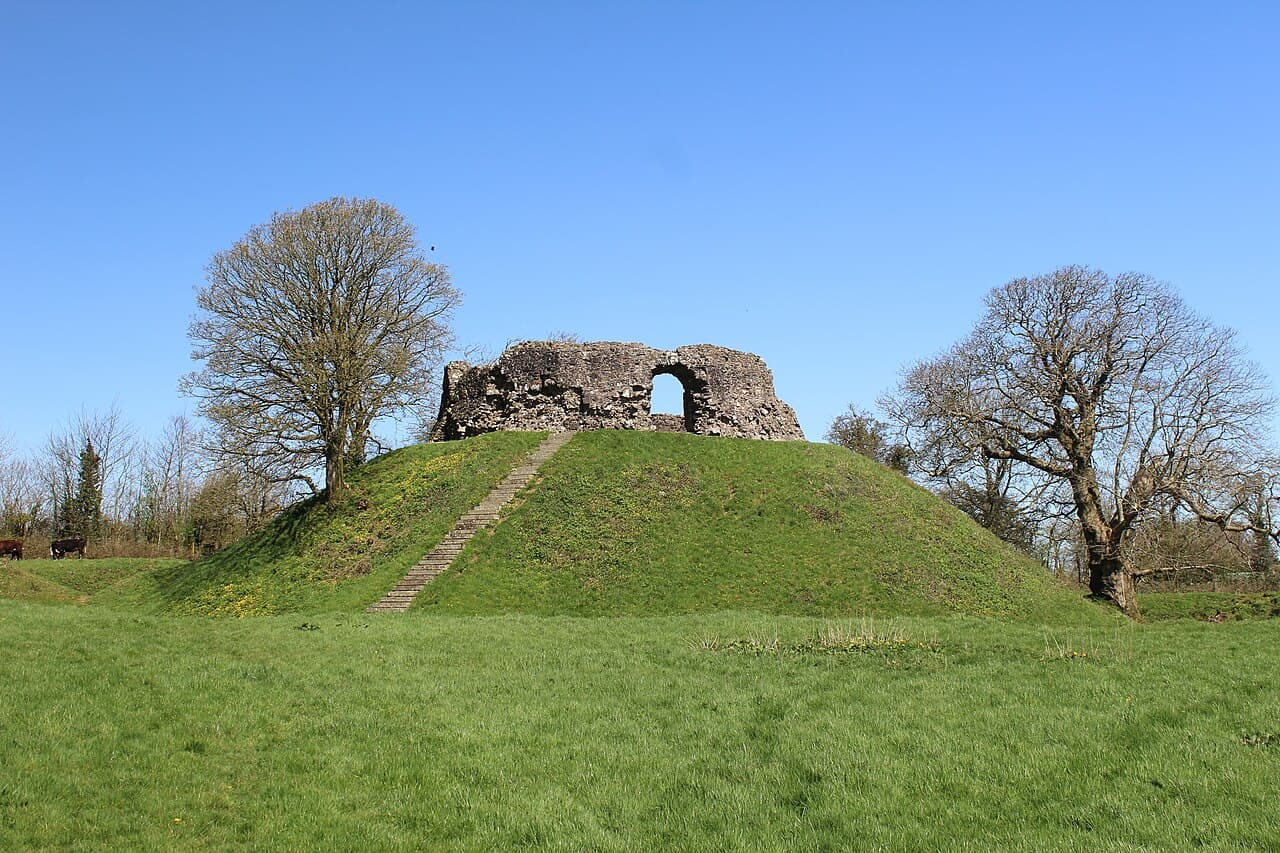
Constructed atop a natural hill, the castle’s motte rises approximately 9 meters above the surrounding ditch, crowned by a polygonal stone shell-keep typical of early Norman military architecture. The shell-keep encloses a circular interior where timber buildings once stood, serving as the lord's residence and defensive structures. Surrounding the motte is a large, oval-shaped bailey protected by a substantial earth bank, which housed the main domestic buildings. The castle's design exemplifies the transitional phase from wooden fortifications to more durable stone constructions in the Norman period.
Founding and early history
Wiston Castle was established in the early 1100s after Henry I confiscated the lands from Arnulf de Montgomery, a rebellious noble. The king granted the territory to Wizo, a Flemish settler, who founded the castle and the adjacent village, which took its name from his own. The name "Wiston" derives from Old Flemish and Saxon origins meaning "Wizo’s enclosure" or "town." This settlement became an important stronghold on the Welsh-English border.
Medieval conflicts and sieges
Throughout the 12th and early 13th centuries, Wiston Castle was a focal point of military conflict. The Welsh forces captured the castle on several occasions, including notable sieges in 1147, 1193, and 1220. The 1193 siege was led by Hywel the Saxon, who imprisoned Philip fitz-Wizo, the grandson of the castle’s founder. In 1220, the castle endured a significant assault orchestrated by the powerful Welsh prince Llywelyn the Great, resulting in substantial damage.
Following the 1220 attack, restoration efforts were initiated under William Marshall the younger, an influential noble of the period. Despite these repairs, the castle was eventually abandoned in the late 13th century when Sir John Wogan relocated his residence to nearby Picton Castle. This marked the end of Wiston Castle’s active military and residential use.
Architectural features and layout
The motte and shell-keep
The castle’s defining feature is its motte, an artificial earthen mound approximately 9 meters high, surrounded by a deep ditch. Atop the motte stands a polygonal stone shell-keep, constructed in the early 12th century. The shell-keep’s external walls form an irregular polygon with eighteen short stone sections, some of which have partially collapsed on the northern side into the ditch below.
Inside, the shell-keep encloses a circular space roughly 12 meters in diameter, with walls about 1.6 meters thick. This interior space originally contained timber buildings that served as living quarters and defensive structures. The main entrance is located on the south side, featuring an arched doorway secured by draw-bar holes that allowed a wooden bar to be slid across to lock the gate from within.
The bailey and outer defenses
Encircling the motte is a large, oval-shaped bailey protected by a well-preserved earth bank. This enclosed area contained the lord’s main residence and various support buildings essential for daily life and the castle’s administration. The bailey’s earthworks remain remarkably intact, providing valuable insight into the castle’s original defensive layout.
Later history and preservation
In the 17th century, during the English Civil War, Royalist troops briefly occupied Wiston Castle in 1643. However, they withdrew without engaging in battle after Parliamentary forces advanced in the region, particularly following the Royalists’ defeat at the Battle of Colby Moor in 1644. Since then, the castle has remained largely a ruin but retains significant historical and architectural value.
Today, Wiston Castle is recognized as one of the best-preserved examples of a motte-and-bailey castle in Wales. It is protected as a Grade I listed building and a Scheduled Monument, ensuring its conservation under the care of Cadw, the Welsh historic environment agency. Visitors can access the site via a flight of approximately 50 steps from the village, with the castle situated directly opposite St Mary Magdalene Church.
Cultural significance and visitor experience
Wiston Castle offers a unique window into the Norman military architecture and the complex history of the Welsh Marches. Its well-preserved earthworks, stone shell-keep, and surrounding bailey provide tangible evidence of medieval defensive strategies and feudal lordship. The castle’s location atop a hill affords commanding views over the surrounding Pembrokeshire countryside, enhancing its historical ambiance.
For visitors, the site presents an evocative experience of medieval life and conflict, with interpretive signage available to explain its historical context. The proximity to the village and the church enriches the cultural landscape, making Wiston Castle a valuable heritage destination in Wales.
Frequently asked questions (FAQ)
- How do I get to Wiston Castle?
- Wiston Castle is located in the village of Wiston, Pembrokeshire, Wales. Visitors can reach the castle by following local roads to the village and then ascending a flight of about 50 steps leading directly to the castle site from the village center.
- What is the historical significance of Wiston Castle?
- Wiston Castle was a key stronghold in the Marcher Lordship of Dungleddy during the 12th and 13th centuries. It witnessed multiple sieges and played a significant role in the conflicts between Welsh princes and Norman-English lords.
- Can I explore the interior of Wiston Castle?
- As a ruin, Wiston Castle does not have intact interiors to explore. However, visitors can walk around the motte, shell-keep remains, and bailey earthworks to appreciate the castle's layout and defensive features.
- When is the best time to visit Wiston Castle?
- The best time to visit Wiston Castle is during the spring and summer months when weather conditions are favorable for outdoor exploration and the surrounding Pembrokeshire countryside is at its most scenic.
- Is there an entrance fee to visit Wiston Castle?
- Wiston Castle is managed by Cadw and typically does not charge an entrance fee. Visitors should check the Cadw website or local visitor information for any updates on access or special events.
- What architectural style is Wiston Castle built in?
- Wiston Castle is built in the Norman style typical of early 12th-century motte-and-bailey castles, featuring a polygonal stone shell-keep and earthwork defenses.
Photo gallery

Information
Current owner
Cadw
Loading map...
Visitor reviews
No reviews yet. Been here? Write the first review and help other travelers!
Write the first reviewVisited this castle? Share your experience
Your review helps other travelers and adds first-hand knowledge to our encyclopedia.