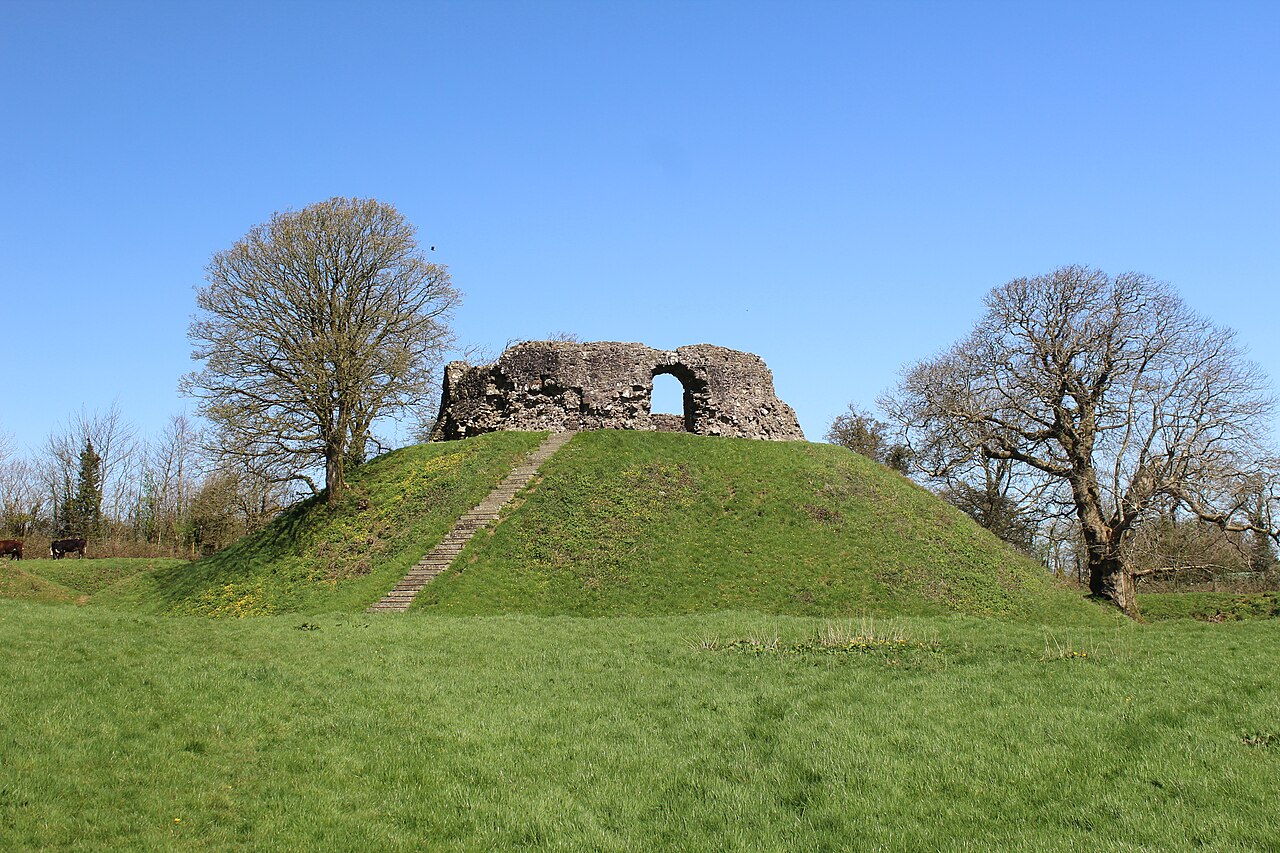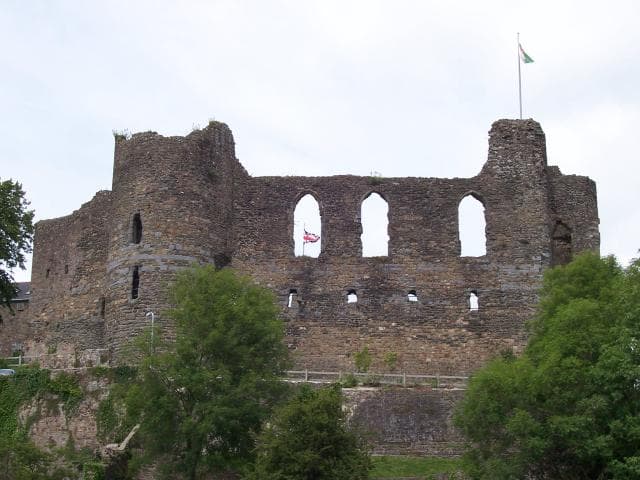
Haverfordwest Castle — United Kingdom castle

Haverfordwest Castle

Haverfordwest Castle: a high medieval hill castle in Pembrokeshire
Haverfordwest, United Kingdom
High Medieval (11th–13th c.)

Haverfordwest Castle stands prominently in the town centre of Haverfordwest, Pembrokeshire, South Wales, occupying a naturally defensive position on a strong, isolated ridge. This high medieval hill castle was originally established around 1120 during the Norman expansion into West Wales. Although the site is traditionally believed to have hosted an Iron Age hill fort, no physical remains confirm this earlier occupation. The castle's location was strategically chosen to control the surrounding area and protect Norman interests against Welsh incursions.

The castle's history is entwined with the complex political landscape of medieval Wales. Before the Norman conquest of West Wales in 1093/94, the area was thought to be a Danish settlement. Following the conquest, the Normans settled Flemish colonists in the region around 1108 to safeguard the main Norman stronghold at Pembroke Castle from northern Welsh raids. Haverfordwest Castle was constructed as part of this defensive network, with much of its surviving architecture dating from the late 13th century, notably the extensive curtain walls built around 1290.

Medieval origins and strategic importance

The castle's initial construction likely featured a typical Norman motte-and-bailey design, evolving over time into a more complex stone fortress. The surviving curtain walls and towers reflect the architectural advancements of the high medieval period. The castle served as a vital royal stronghold for centuries, with ownership passing to the English crown between 1381 and 1385. During this time, significant restoration work was undertaken to strengthen its defenses.

Defense during owain glyndŵr's rebellion

These improvements proved crucial during the Welsh uprising led by Owain Glyndŵr in the early 15th century. In 1405, the castle successfully withstood an attack, demonstrating the effectiveness of its fortifications. The surrounding town walls, although now lost, also contributed to the castle's defense by protecting the high ground around the fortress.

Architectural features and layout

Haverfordwest Castle showcases a combination of round and square towers positioned at strategic points along the curtain walls. The north-west and south-west corners are defended by round towers, while the south-east corner features a distinctive square tower with an additional projecting turret. The south-west and south-east towers rise to three storeys, with the south-east tower containing a basement and a postern gate that could be used for counter-attacks during sieges.

The castle's great hall is located on the southern side, notable for its large, high windows and features that include scaling ladders, indicative of its defensive as well as residential function. The outer ward retains little of its original medieval defenses, but the curtain wall remains largely intact along the north side, including a semicircular turret and a square tower to the east.

Castle entrance and defensive structures

The original main entrance was on the west side, protected by a gatehouse, though no physical traces of this survive today. The castle's design reflects the military architecture of the late 13th century, emphasizing strong curtain walls and strategically placed towers to maximize defense against attackers.

Later history and use

By the 16th century, Haverfordwest Castle had fallen into disrepair. It was re-fortified during the English Civil War, with records from 1644 indicating that the castle was occupied by Royalist forces. Interestingly, the Royalists abandoned the castle after mistaking the sounds of cows for an approaching Parliamentary army. The castle was subsequently recaptured and held for the king until surrendering following the nearby Battle of Colby Moor.

In 1648, Oliver Cromwell ordered the castle's destruction, threatening imprisonment for the townsfolk if they failed to comply. Letters bearing these orders were discovered in 1986 and are now displayed in the local museum, providing a direct link to this turbulent period.

Conversion to prison

In the late 18th century, the castle was repurposed as a prison, with a new prison building constructed within the inner bailey in 1820. This adaptive reuse reflects the changing needs and functions of the site over time. Today, the castle is managed by the Pembrokeshire Coast National Park Authority and is accessible to the public as a historical monument.

Regional context and related sites

Haverfordwest Castle is part of a network of medieval fortifications in Pembrokeshire. Nearby castles include Wiston Castle, located approximately 6 miles to the northeast, and the prominent Pembroke Castle, about 12 miles to the south. These castles collectively illustrate the strategic importance of the region during the Norman and medieval periods.

The castle's enduring presence in the town centre and its extensive medieval fabric make it a significant heritage site, offering insights into the military, political, and social history of South Wales.

Frequently asked questions (FAQ)

What is the historical significance of Haverfordwest Castle?
Haverfordwest Castle is a medieval fortress that dates back to the 12th century, originally built to control the town and surrounding lands. It played a crucial role in the defense against invasions and has witnessed significant historical events, including conflicts during the Welsh uprisings. Today, it stands as a testament to medieval architecture and local heritage.
When was Haverfordwest Castle built?
Construction of Haverfordwest Castle began in the early 12th century, around 1110, under the rule of the Norman invaders. Over the centuries, the castle has undergone several alterations and expansions, reflecting various architectural styles. Its long history makes it an essential landmark in understanding the evolution of defensive structures in Wales.
Can I visit Haverfordwest Castle?
Yes, Haverfordwest Castle is open to visitors, allowing them to explore its rich history and impressive architecture. The castle grounds provide stunning views of the surrounding area, making it a perfect spot for photography and leisurely walks. Be sure to check the opening hours before your visit to ensure you can make the most of your experience.
What are the opening hours for Haverfordwest Castle?
Haverfordwest Castle typically opens to visitors from 10 AM to 5 PM, with extended hours during the summer months. It is advisable to check the official website or local tourism information for any seasonal changes or special events that may affect opening hours. Planning your visit accordingly will help you enjoy the castle fully.
Is Haverfordwest Castle accessible for visitors with disabilities?
Yes, Haverfordwest Castle strives to be accessible for all visitors, including those with disabilities. The site offers various facilities to assist with mobility, although some historical areas may have limitations due to the castle's ancient structure. It's recommended to contact the castle administration in advance for specific accessibility arrangements.
What are the ticket prices for Haverfordwest Castle?
Entry to Haverfordwest Castle is generally free, making it an attractive destination for budget-conscious travelers. However, there may be charges for guided tours or special events. Always check the official site for the most current information on ticket prices and any available discounts.
When is the best time to visit Haverfordwest Castle?
The best time to visit Haverfordwest Castle is during the spring and summer months when the weather is pleasant and the gardens are in full bloom. This period also coincides with various historical reenactments and events that enhance the visitor experience. Early mornings or late afternoons are ideal for avoiding crowds and enjoying a more tranquil visit.
What nearby attractions can I explore after visiting Haverfordwest Castle?
After exploring Haverfordwest Castle, visitors can enjoy nearby attractions such as the beautiful Pembrokeshire Coast National Park, offering stunning scenery and hiking opportunities. The town itself features charming shops, cafes, and other historical sites, including the Haverfordwest Town Museum. These locations provide a well-rounded experience of the area's culture and natural beauty.

Photo gallery

Haverfordwest Castle
Click to view

Photo by Cered•CC BY-SA 2.0

1 photo • Click any image to view in full screen

Information

Hill Castle

Loading map...

Visitor reviews

No reviews yet. Been here? Write the first review and help other travelers!

Write the first review

Visited this castle? Share your experience

Your review helps other travelers and adds first-hand knowledge to our encyclopedia.
Write a review

(5/5)

0/2000 characters

Your review will be visible after admin approval

Nearby castles

6.2 km
Picton Castle — United Kingdom castle

Picton Castle

Haverfordwest, United Kingdom

Picton Castle stands as a remarkable example of medieval military architecture in Pembrokeshire, Wales, near the town of Haverfordwest. Originally constructed at the end of the 13th century, this hill castle was built by a Flemish knight before passing into the hands of the prominent Wogan family. The castle's evolution from a wooden motte-and-bailey to a formidable stone fortress between 1295 and 1308 under Sir John Wogan marks a significant chapter in its history. The castle's design is highly distinctive, featuring a rectangular stone keep protected by seven circular towers projecting from the walls, an unusual defensive layout that lacks an internal courtyard. The eastern end hosts a pair of towers forming a gatehouse with a portcullised entrance that leads directly into the lower vault of the great hall. Originally equipped with narrow slit windows for defense, these were replaced around 1400 with larger glazed windows and a grand recessed arch in the gatehouse, reflecting the castle's adaptation to changing architectural and residential needs. Medieval origins and ownership transitions The earliest fortification at the site was a motte-and-bailey castle situated on a mound east of the current stone structure. The transition to stone construction under Sir John Wogan was a strategic move to enhance the castle's defensive capabilities during the high medieval period. The Wogan family maintained ownership until the 15th century when the male line ended, and through marriage, the estate passed to the Dunn family. Subsequently, the castle entered the possession of the Philipps family in the 1490s through the marriage of Jane Dunn to Sir Thomas ap Philipps of Cilsant. Throughout its history, Picton Castle has been a site of military significance. In 1405, it was captured by French troops allied with the Welsh rebel leader Owain Glyndŵr. Later, during the English Civil War in 1645, it was seized by Parliamentary forces. These events underscore the castle's strategic importance in regional conflicts. Architectural evolution and renovations The castle's seven circular towers are positioned with one at each corner, two flanking the eastern gatehouse, and one on the western side, creating a formidable defensive perimeter. The gatehouse's portcullis and direct access to the great hall were innovative features for the period. In the late 17th century, John Philipps, 4th Baronet, implemented significant modifications including the construction of parallel walls before the gatehouse, creating a terraced approach to a newly established first-floor entrance. He also added an additional floor above the great hall and altered windows and interiors to reflect contemporary tastes. The 18th century saw further transformation under John Philipps, 6th Baronet, who refurbished the castle's interiors in the Georgian style between 1749 and 1752. This included renewing plasterwork, wood paneling, flooring, installing sash windows, and marble fireplaces. Around 1800, the main entrance was modified, replacing the large arch with a smaller round-arched window and adding a portico with balcony, later replaced by a Gothic round-arched doorway with twin windows, giving the entrance its present appearance. A Regency-style four-story wing was added on the west side shortly after 1800, and by 1820, the terraced approach was expanded into a rounded form. These architectural layers demonstrate the castle's continuous adaptation while preserving its medieval core. Gardens, modern use, and cultural significance The castle is set within approximately 40 acres of gardens, including a walled garden and a Mediterranean garden created around 1800, showcasing diverse horticultural styles. Today, Picton Castle is managed by the Picton Castle Trust, a charitable organization dedicated to its preservation and public engagement. Visitors can explore the castle through guided tours available from spring to autumn, while the gardens remain open year-round. The site also features a restaurant, shop, and self-catering accommodations in the gatehouse lodges. The castle hosts various events such as exhibitions, fairs, workshops, and weddings, making it a vibrant cultural venue. Historical figures and legacy The castle's history is intertwined with notable figures such as Sir John Wogan, who rebuilt it in stone, and the Philipps family, who influenced its development over centuries. Of particular historical interest is Cesar Picton, a black man believed to have been brought from Senegal in 1672, who lived on the estate and adopted its name, reflecting the complex social history of the period. Today, Picton Castle stands as a testament to medieval military architecture, later Georgian and Regency adaptations, and the rich tapestry of Welsh history. Its preservation allows visitors to experience a unique blend of architectural styles and historical narratives in a picturesque setting.

High Medieval (11th–13th c.)
Details
7.4 km
Wiston Castle — United Kingdom castle

Wiston Castle

Wiston, United Kingdom

Wiston Castle is a remarkable example of a high medieval motte-and-bailey castle located in the village of Wiston, Pembrokeshire, Wales. Founded in the early 12th century by Wizo, a Flemish settler granted the land by King Henry I of England, the castle played a significant role in the turbulent border region known as the Marcher Lordship of Dungleddy. This strategic fortress witnessed multiple sieges and changes of control during the 12th and 13th centuries, reflecting the ongoing conflicts between the Welsh princes and Norman-English lords. Constructed atop a natural hill, the castle’s motte rises approximately 9 meters above the surrounding ditch, crowned by a polygonal stone shell-keep typical of early Norman military architecture. The shell-keep encloses a circular interior where timber buildings once stood, serving as the lord's residence and defensive structures. Surrounding the motte is a large, oval-shaped bailey protected by a substantial earth bank, which housed the main domestic buildings. The castle's design exemplifies the transitional phase from wooden fortifications to more durable stone constructions in the Norman period. Founding and early history Wiston Castle was established in the early 1100s after Henry I confiscated the lands from Arnulf de Montgomery, a rebellious noble. The king granted the territory to Wizo, a Flemish settler, who founded the castle and the adjacent village, which took its name from his own. The name "Wiston" derives from Old Flemish and Saxon origins meaning "Wizo’s enclosure" or "town." This settlement became an important stronghold on the Welsh-English border. Medieval conflicts and sieges Throughout the 12th and early 13th centuries, Wiston Castle was a focal point of military conflict. The Welsh forces captured the castle on several occasions, including notable sieges in 1147, 1193, and 1220. The 1193 siege was led by Hywel the Saxon, who imprisoned Philip fitz-Wizo, the grandson of the castle’s founder. In 1220, the castle endured a significant assault orchestrated by the powerful Welsh prince Llywelyn the Great, resulting in substantial damage. Following the 1220 attack, restoration efforts were initiated under William Marshall the younger, an influential noble of the period. Despite these repairs, the castle was eventually abandoned in the late 13th century when Sir John Wogan relocated his residence to nearby Picton Castle. This marked the end of Wiston Castle’s active military and residential use. Architectural features and layout The motte and shell-keep The castle’s defining feature is its motte, an artificial earthen mound approximately 9 meters high, surrounded by a deep ditch. Atop the motte stands a polygonal stone shell-keep, constructed in the early 12th century. The shell-keep’s external walls form an irregular polygon with eighteen short stone sections, some of which have partially collapsed on the northern side into the ditch below. Inside, the shell-keep encloses a circular space roughly 12 meters in diameter, with walls about 1.6 meters thick. This interior space originally contained timber buildings that served as living quarters and defensive structures. The main entrance is located on the south side, featuring an arched doorway secured by draw-bar holes that allowed a wooden bar to be slid across to lock the gate from within. The bailey and outer defenses Encircling the motte is a large, oval-shaped bailey protected by a well-preserved earth bank. This enclosed area contained the lord’s main residence and various support buildings essential for daily life and the castle’s administration. The bailey’s earthworks remain remarkably intact, providing valuable insight into the castle’s original defensive layout. Later history and preservation In the 17th century, during the English Civil War, Royalist troops briefly occupied Wiston Castle in 1643. However, they withdrew without engaging in battle after Parliamentary forces advanced in the region, particularly following the Royalists’ defeat at the Battle of Colby Moor in 1644. Since then, the castle has remained largely a ruin but retains significant historical and architectural value. Today, Wiston Castle is recognized as one of the best-preserved examples of a motte-and-bailey castle in Wales. It is protected as a Grade I listed building and a Scheduled Monument, ensuring its conservation under the care of Cadw, the Welsh historic environment agency. Visitors can access the site via a flight of approximately 50 steps from the village, with the castle situated directly opposite St Mary Magdalene Church. Cultural significance and visitor experience Wiston Castle offers a unique window into the Norman military architecture and the complex history of the Welsh Marches. Its well-preserved earthworks, stone shell-keep, and surrounding bailey provide tangible evidence of medieval defensive strategies and feudal lordship. The castle’s location atop a hill affords commanding views over the surrounding Pembrokeshire countryside, enhancing its historical ambiance. For visitors, the site presents an evocative experience of medieval life and conflict, with interpretive signage available to explain its historical context. The proximity to the village and the church enriches the cultural landscape, making Wiston Castle a valuable heritage destination in Wales.

High Medieval (11th–13th c.)
Details
9.1 km

Roch Castle

Haverfordwest, United Kingdom

Roch Castle stands as a remarkable example of Norman military architecture in Pembrokeshire, Wales. Constructed in the 12th century by the Norman knight Adam de Rupe, the castle was strategically located on a rocky hilltop some 112 meters above sea level, dominating the surrounding landscape near the southwestern coast of Wales. Its position on a rocky outcrop, reflected in its name derived from the French word "roche" meaning rock, was deliberately chosen for both defense and surveillance, overseeing vital borderlands between English-speaking and Welsh-speaking territories known historically as the "Landsker" line. The castle's origins likely trace back to an earlier wooden fortification, typical of early Norman expansion, before Adam de Rupe replaced it with a robust stone structure. This transition from wood to stone was common in the High Medieval period as the Normans consolidated control in Wales, fortifying their holdings with durable keeps and curtain walls. Roch Castle was part of a broader defensive network including nearby establishments like Pill Priory, reinforcing the region's military and administrative presence. Architectural features and medieval design Roch Castle exemplifies the characteristics of a hill castle with a compact, fortified stone keep designed for defense rather than comfort. While detailed architectural plans are scarce, the castle originally featured thick stone walls, battlements, and narrow windows or arrow slits for archers. Its elevated position on a rocky promontory provided natural defenses augmented by man-made fortifications. The castle's layout would have included a central keep or donjon, surrounded by a curtain wall enclosing a courtyard and ancillary buildings. During its early existence, the castle's defensive capabilities were paramount, designed to withstand sieges and raids common in the turbulent borderlands of medieval Wales. The stone construction replaced earlier timber defenses, reflecting advances in military architecture and the need for permanent, imposing strongholds to assert Norman authority. Historical significance and royal connections Roch Castle's history is closely intertwined with notable figures and events in British history. After the de Rupe family line ended in the 15th century, ownership passed to the Walter family in the 17th century. A significant historical figure born at the castle was Lucy Walter, daughter of the Walter family, who became a mistress to King Charles II. She bore him an acknowledged son, James Scott, 1st Duke of Monmouth, linking the castle to the royal lineage and the political intrigues of the Stuart monarchy. During the English Civil War, the Walter family supported King Charles I, placing Roch Castle in the midst of conflict. Pembrokeshire initially leaned Royalist, but Parliamentary Puritan forces eventually gained control. The castle changed hands twice during the war and was ultimately captured and burned by Parliamentary forces in 1644. This destruction led to the castle's abandonment and decay. The castle's fortunes briefly revived during the Monmouth Rebellion of 1685, when the Duke of Monmouth attempted to claim the throne. After his defeat at the Battle of Sedgemoor, he was captured and executed, and Roch Castle remained a symbol of this turbulent period. 20th-century restoration and modern use Following centuries of neglect, Roch Castle underwent significant restoration beginning around 1900 under the ownership of John Philipps, 1st Viscount St Davids. The restoration was notable for its use of modern construction techniques, including a steel framework installed internally to support the medieval stone walls and concrete floors replacing or supplementing the original wooden surfaces. These interventions were designed by D. E. Thomas of Haverfordwest, with further work carried out by D. F. Ingleton between 1910 and circa 1920. In 2008, the castle was purchased by Keith Griffiths for the Griffiths-Roch Foundation, leading to an extensive restoration that transformed the site into a luxury hotel. The modern renovations, completed by 2013 in collaboration with architectural firm Acanthus Holden, preserved the castle's historic fabric while adapting it for contemporary use. Today, Roch Castle operates as a six-bedroom luxury hotel, offering visitors a unique opportunity to experience medieval history combined with modern comfort. Location and surrounding landscape Roch Castle is situated near the town of Haverfordwest in Pembrokeshire, Wales, within a pastoral landscape of grasslands close to the sea. Its elevated position on a rocky hill provides commanding views over the coastal plain and surrounding countryside, a strategic advantage that was crucial during its active military use. The castle's location reflects the Norman strategy of controlling key points along the border between English and Welsh territories, contributing to regional stability and governance. The surrounding environment retains much of its rural character, with low population density and natural scenery that enhances the castle's historic ambiance. The preservation of the castle and its setting offers valuable insights into medieval defensive architecture and the geopolitical landscape of Wales in the Middle Ages. Architectural legacy and cultural importance Roch Castle remains a significant cultural and historical landmark in Pembrokeshire. Its survival through centuries of conflict, decay, and restoration exemplifies the resilience and enduring appeal of Norman castles in Britain. The castle's association with prominent historical figures such as Lucy Walter and the Duke of Monmouth adds layers of narrative that enrich its heritage value. The castle's restoration and adaptation into a luxury hotel demonstrate a successful model of heritage conservation that balances preservation with sustainable use. Visitors to Roch Castle can appreciate both its medieval origins and the careful modern interventions that have ensured its survival into the 21st century. As a High Medieval hill castle, Roch Castle offers a tangible connection to the Norman conquest and settlement of Wales, the turbulent history of the English Civil War, and the complex social dynamics of the Stuart period. Its stone walls and strategic location continue to evoke the martial spirit and architectural ingenuity of the medieval period, making it a valuable site for historians, architects, and visitors alike.

High Medieval (11th–13th c.)
Details