Wirtemberg Castle
Wirtemberg Castle stands as a significant medieval fortress near Stuttgart, Germany, intimately tied to the rise and legacy of the House of Württemberg. Founded in the late 11th century, this hill castle occupies the strategic Rotenberg hill, which rises to an elevation of 411 meters, providing commanding views over the surrounding landscape. The castle's origins mark a pivotal moment in the establishment of one of the most influential noble families in southern Germany.
The castle's foundation is traced to the year 1080, when the Württemberg family relocated from their earlier seat at Beutelsbach to this elevated site. The earliest documentary evidence of the family's connection to the castle comes from the consecration of its chapel on February 7, 1083. This ceremony, conducted by Bishop Adalbert II of Worms, is recorded on the original dedication stone, which remains preserved to this day. This event is historically significant as it provides the first recorded mention of the Württemberg name, underscoring the castle's role as the ancestral seat and symbol of the family's emerging power.
Medieval origins and architectural layout
The original Wirtemberg Castle was a formidable fortified complex designed with defensive depth. It featured three concentric ring walls that enclosed a variety of essential structures, including stables, auxiliary buildings, a central courtyard, and the main manor house. The castle chapel, dedicated to Saint Nicholas, served as a spiritual center for the inhabitants. This multi-layered fortification was typical of high medieval defensive architecture, emphasizing protection through successive barriers.
The castle was not only a residence but also a symbol of authority and governance. From 1092 onward, it regularly served as the domicile of the Counts of Württemberg. The castle was also managed by ministeriales, unfree knights who administered the estate on behalf of the counts. Among these was Swenegar von Wirtenberg, a documented figure in the castle's administration, illustrating the feudal hierarchy and governance structures of the time.
Conflicts and transformations in the late medieval period
The castle's history was marked by significant military and political upheavals. In 1311, forces from nearby imperial cities, acting under the authority of Emperor Henry VII, attacked and destroyed the original fortress during a dispute involving Count Eberhard I. This destruction was a critical turning point, leading to the construction of a smaller, less grand castle on the same site. The downsizing likely reflected both military strategy and economic constraints following the conflict.
The early 16th century brought further turmoil. In 1519, during the occupation of Württemberg by the Swabian League, the castle was set ablaze amid the political struggles surrounding Duke Ulrich, who had been exiled. Ulrich's return in 1534, aided by Hessian allies, marked a restoration of his rule and influence. Despite efforts to rebuild the castle after the burning, it gradually fell into neglect over the following centuries.
Decline and neoclassical transformation
By the early 19th century, the castle had lost its military and residential importance. In 1819, King Wilhelm I ordered the dismantling of the castle, a decision influenced by the recent death of his wife, Queen Katharina. In place of the medieval fortress, a neoclassical mausoleum was constructed between 1820 and 1824. Designed by the architect Giovanni Salucci, the mausoleum serves as the final resting place for Queen Katharina and stands as a monumental contrast to the former medieval castle. It has been accessible to the public since 1907.
The mausoleum's construction marked a significant shift in the site's function and symbolism—from a defensive stronghold to a commemorative monument. This transition reflects broader cultural and political changes in the region during the post-Napoleonic era.
Historical significance and legacy
The castle and hill's name evolved linguistically over centuries, with early forms such as Wirdeberch, Werdenberc, and Wirtinsberk. Scholars suggest a Celtic-Roman origin from the term Wirodunum, meaning "fortified place." The name Württemberg was officially adopted following the establishment of the Kingdom of Württemberg under Napoleon. In 1907, King Wilhelm II formalized the hill's name as Württemberg, cementing the connection between the site and the region's identity.
Today, the original castle no longer stands, but its historical footprint remains visible through archaeological remains and preserved artifacts, such as the 1083 dedication stone, now housed within the Russian Orthodox Church built on the former castle grounds. This stone is a tangible link to the castle's early history and the origins of the Württemberg dynasty.
Situated on a spur of the Schurwald forest between Cannstatt and Esslingen am Neckar, the site continues to attract visitors interested in medieval history, architecture, and the legacy of one of Germany's most prominent noble families.
Architectural remnants and archaeological insights
While the original fortress was destroyed and rebuilt multiple times, archaeological studies and historical records provide insight into its layout and construction. The three concentric ring walls suggest a complex defensive strategy, while the presence of extensive stables and auxiliary buildings indicates the castle's role as a self-sufficient stronghold.
The second castle, built after the 1311 destruction, was notably smaller, reflecting a change in military needs and economic resources. The final castle iteration, destroyed by fire in 1519 and later dismantled, was documented through architectural plans before its removal, offering valuable information about late medieval castle design in the region.
Visiting the site today
Visitors to the site can explore the Württemberg Mausoleum, which stands as a prominent neoclassical monument on the hilltop. The mausoleum is open to the public and provides historical context about Queen Katharina and the transformation of the site from a medieval fortress to a royal funerary chapel.
The surrounding area offers scenic views of the Schurwald forest and the Neckar valley, making it a popular destination for both history enthusiasts and nature lovers. Interpretive signage and guided tours help illuminate the castle's rich history and architectural evolution.
Frequently asked questions (FAQ)
- When was Wirtemberg Castle originally built?
- Wirtemberg Castle was originally constructed in 1080, marking the establishment of the House of Württemberg's ancestral seat.
- What remains of Wirtemberg Castle can be seen today?
- Today, visitors can see archaeological remains of the castle's three concentric ring walls and the neoclassical Württemberg Mausoleum built on the site.
- What is the significance of the dedication stone from 1083?
- The dedication stone from 1083 commemorates the consecration of the castle chapel by Bishop Adalbert II of Worms and is the first recorded mention of the Württemberg name.
- Can I visit the Württemberg Mausoleum?
- Yes, the Württemberg Mausoleum is open to the public and offers insight into the site's history and Queen Katharina's legacy.
- Why was the original castle destroyed in 1311?
- The original castle was destroyed in 1311 during a conflict involving Emperor Henry VII and Count Eberhard I, reflecting political tensions in the region.
Photo gallery

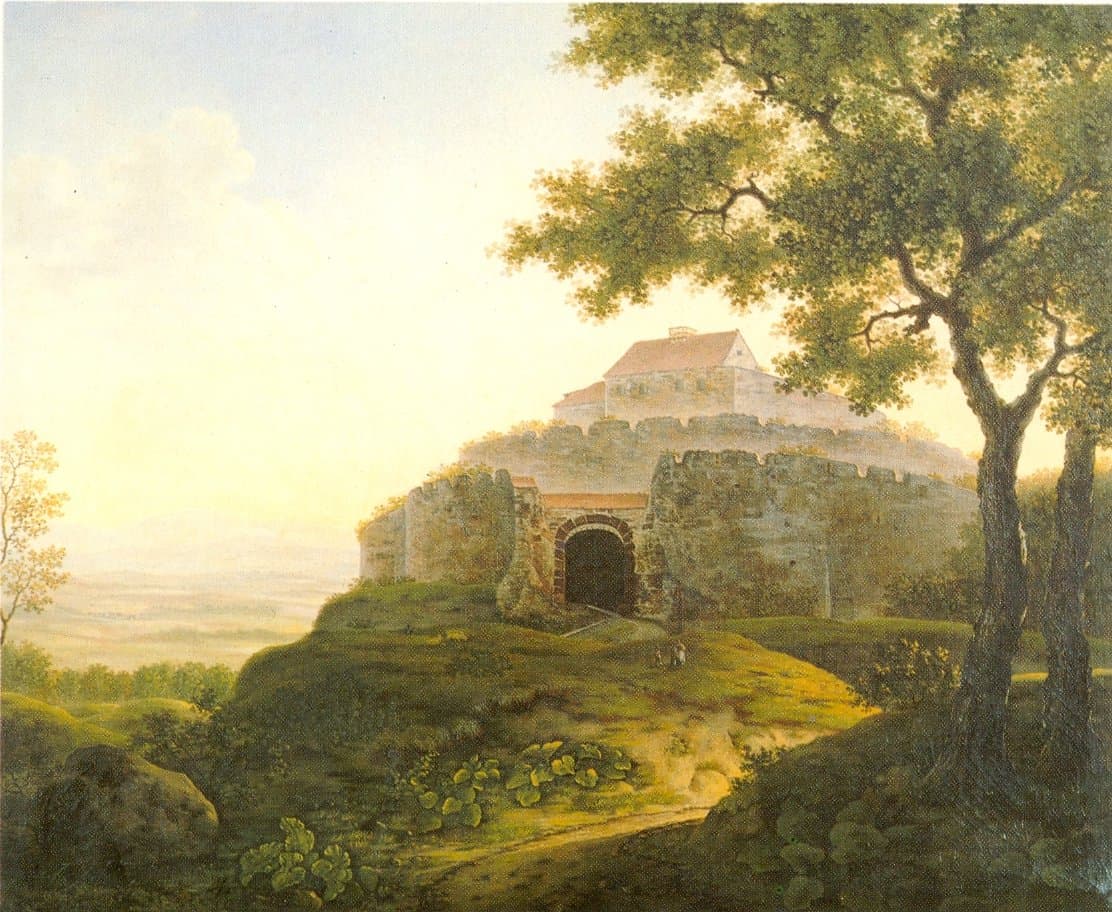
Photo by Franz Xaver Odo Müller•Public domain
Information
Website
Visit websiteSources & official resources
Verify the information above using these authoritative references.
Loading map...
Visitor reviews
No reviews yet. Been here? Write the first review and help other travelers!
Write the first reviewVisited this castle? Share your experience
Your review helps other travelers and adds first-hand knowledge to our encyclopedia.