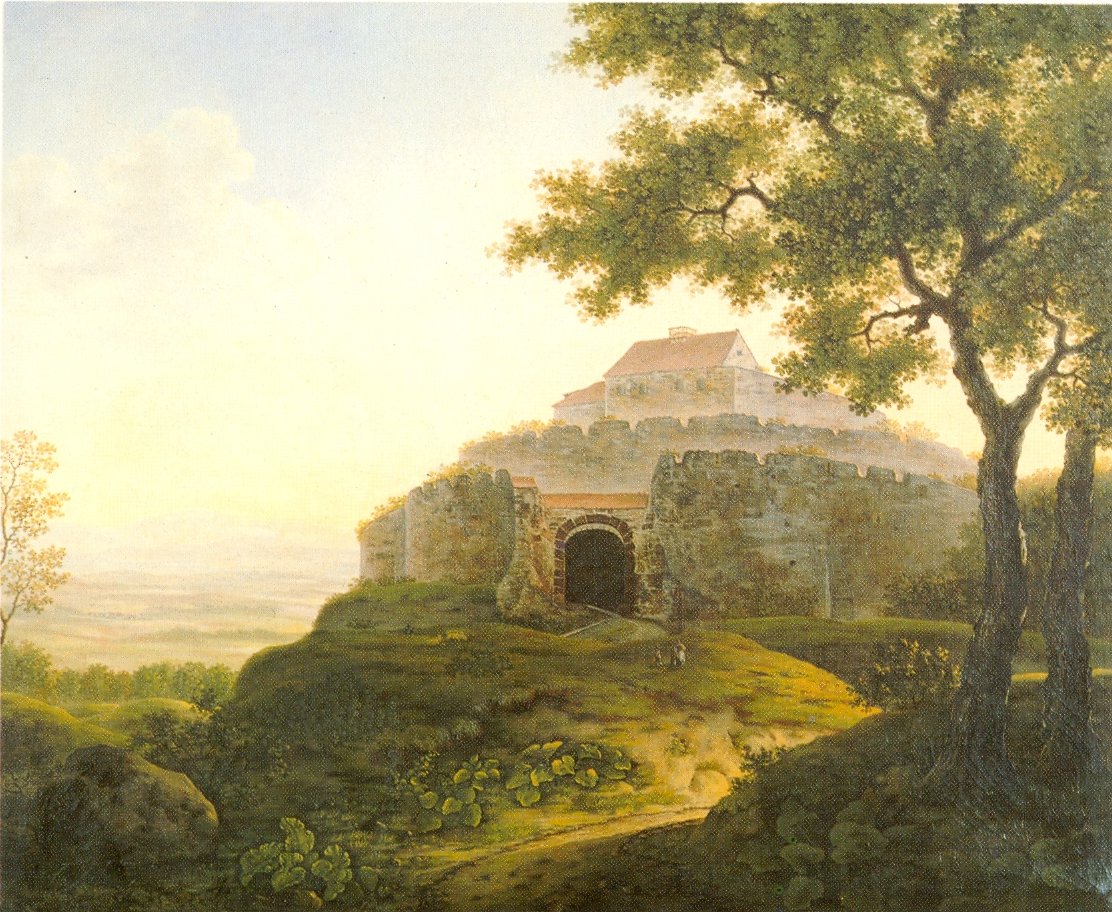
Castle Hofen is a historically significant hill castle located in the Hofen district of Stuttgart, Germany. Established in the mid-13th century by the Counts of Württemberg, it served as a strategic fortification overseeing a vital crossing of the Neckar River and protecting an important commercial route in the region. The castle's origins are closely tied to the nearby settlement of Hofen, first documented in 1120, which highlights the area's longstanding importance in regional trade and defense.
Historical background and ownership
The castle was initially managed as a fief under the lordship of Cuno von Mühlhausen. Control later passed to the Lords of Hofen, with Luithart IV being the last private holder until 1369. That year marked a significant change when ownership reverted to Count Eberhard II of Württemberg, bringing Castle Hofen directly under the count's authority once again. From the late 14th century through much of the early modern period, the castle remained a fief held by the Edelknechte of Neuhausen, a noble knightly family who stewarded the property until the mid-18th century.
In the 18th century, Joseph Athanasius Freiherr von Neuhausen sold the castle and the village of Hofen to Duke Carl Eugen of Württemberg for 28,000 florins, marking another pivotal transfer within the Württemberg nobility. This transaction reflected the castle's continued significance within the regional power structure, even as its military importance declined.
Destruction and decline
Castle Hofen suffered severe damage during the Thirty Years' War in the 17th century when it was set ablaze and destroyed by Swedish troops. This devastation led to the castle's abandonment as a noble residence and its gradual decline into ruin. In the 19th century, parts of the remaining structure were deliberately dismantled, further altering the site. However, the ruins were preserved as a historical monument, and at the end of the 20th century, the city of Stuttgart acquired the property and undertook restoration efforts to stabilize the remnants. Since 2000, the castle ruins have been accessible to the public without restrictions, preserving its cultural and historical legacy.
Architectural features and layout
Location and defensive design
Situated on a small hill approximately 240 meters above sea level, Castle Hofen commands a strategic vantage point overlooking the Neckar River. The castle's design reflects typical medieval defensive architecture with a compact, fortified core protected by multiple layers of walls and ditches.
Shield wall and palas
One of the most prominent surviving features is the eight-meter-high shield wall on the side facing potential attackers. This wall, about 2.5 meters thick, was constructed to block direct assaults and protect the inner buildings from artillery or siege engines. Adjacent to this shield wall are the remnants of the palas, the main residential building of the castle, believed to have been located in the southeastern part of the inner courtyard.
Keep and ring wall
The castle's keep, or bergfried, remains standing at a height of approximately 13 meters with a footprint of roughly 6.5 by 6.5 meters. This tall tower served a dual purpose as a lookout post and a last refuge during attacks. Surrounding the central area is a ring wall nearly two meters thick, forming the primary fortification line that enclosed the castle's core.
Outer wards and zwingers
Beyond the ring wall, Castle Hofen featured an outer ward known as a zwinger, a narrow enclosed space designed to trap or slow attackers who breached the outer defenses. The castle includes a zwinger encircling the core area and a larger zwinger to the west. From this western enclosure, visitors can enjoy clear views toward the castle's entrance bridge and the nearby St. Barbara Church, which was constructed much later in 1873.
Additional structures and remains
Additional features include a tower stump and scattered wall fragments that provide insight into the castle's original layout and construction techniques. In the southwest corner of the grounds, archaeological evidence suggests the presence of a wooden structure likely used for auxiliary or service purposes. Though partially dismantled in the 19th century, the ruins have been consolidated and preserved as tangible witnesses to the castle's medieval heritage.
Cultural significance and public access
Castle Hofen stands today as a testament to the medieval history of the Stuttgart region and the strategic importance of river crossings in territorial defense. The ruins offer valuable insights into medieval fortification techniques and the evolution of noble residences over several centuries. Managed by the city of Stuttgart, the site is open to visitors year-round, allowing exploration of the ruins and appreciation of the panoramic views of the Neckar valley.
The castle's preservation and restoration efforts underscore its importance as a cultural heritage site. It serves as an educational resource for those interested in medieval architecture, regional history, and the legacy of the Württemberg nobility.
Frequently asked questions (FAQ)
- How do I get to Castle Hofen in Stuttgart?
- Castle Hofen is located in the Hofen district of Stuttgart. It is accessible by local public transport and car, with nearby parking available. Walking paths lead up to the hilltop ruins.
- What is the historical significance of Castle Hofen?
- Castle Hofen was established in the mid-13th century by the Counts of Württemberg to protect a key Neckar River crossing and commercial route. It played a strategic role in regional defense and trade control.
- Can I visit the ruins of Castle Hofen year-round?
- Yes, the ruins of Castle Hofen are open to the public without restrictions throughout the year, allowing visitors to explore the site freely and enjoy views of the Neckar valley.
- What architectural features remain at Castle Hofen?
- Visitors can see the eight-meter-high shield wall, the bergfried keep standing about 13 meters tall, remnants of the palas, ring walls, zwingers, and scattered tower and wall fragments.
- Is Castle Hofen wheelchair accessible?
- Due to its hilltop location and uneven terrain, Castle Hofen is not fully wheelchair accessible. Visitors should be prepared for some uphill walking and uneven surfaces.
Information
Current owner
City of Stuttgart
Loading map...
Visitor reviews
No reviews yet. Been here? Write the first review and help other travelers!
Write the first reviewVisited this castle? Share your experience
Your review helps other travelers and adds first-hand knowledge to our encyclopedia.