Wingfield Castle
Wingfield Castle is a notable example of a fortified manor house located in the parish of Wingfield, Suffolk, England. This Grade I listed building dates back to the 14th century and served as the ancestral home of the influential Wingfield family and their heirs, the de la Pole family, who rose to prominence as Earls and Dukes of Suffolk.
Historical background and lineage
The castle's origins are closely tied to Sir John de Wingfield (died circa 1361), a key figure who served as chief administrator to Edward the Black Prince (1330–1376). Sir John was the last male of the Wingfield line, and through his daughter and heiress, Catherine Wingfield, the estate passed by marriage to Michael de la Pole. Michael de la Pole was seated at Wingfield Castle and was elevated to the peerage as Earl of Suffolk in 1385. The de la Pole family maintained control of the castle for generations, with notable descendants including Edmund de la Pole, 3rd Duke of Suffolk (1472–1513), who was compelled to surrender his dukedom in 1493 amid political turmoil.
Association with Tudor nobility
The dukedom of Suffolk was later revived by King Henry VIII in 1514 for his close confidant Charles Brandon, 1st Duke of Suffolk (1484–1545). Brandon was connected to the Wingfield family as the great-grandson of Sir Robert Wingfield (died 1454) of Letheringham, Suffolk. Charles Brandon frequently used Wingfield Castle during his tours of the county and resided there with his third wife, Mary Tudor, sister of Henry VIII, when not at their main residence, Westhorpe Hall. This association highlights the castle's importance as a noble residence during the Tudor period.
Architectural features and structure
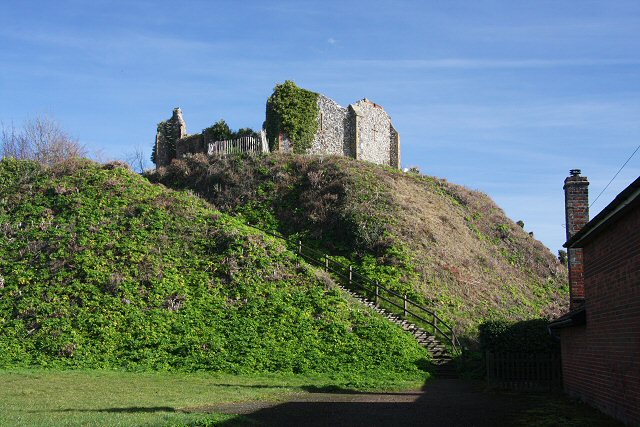
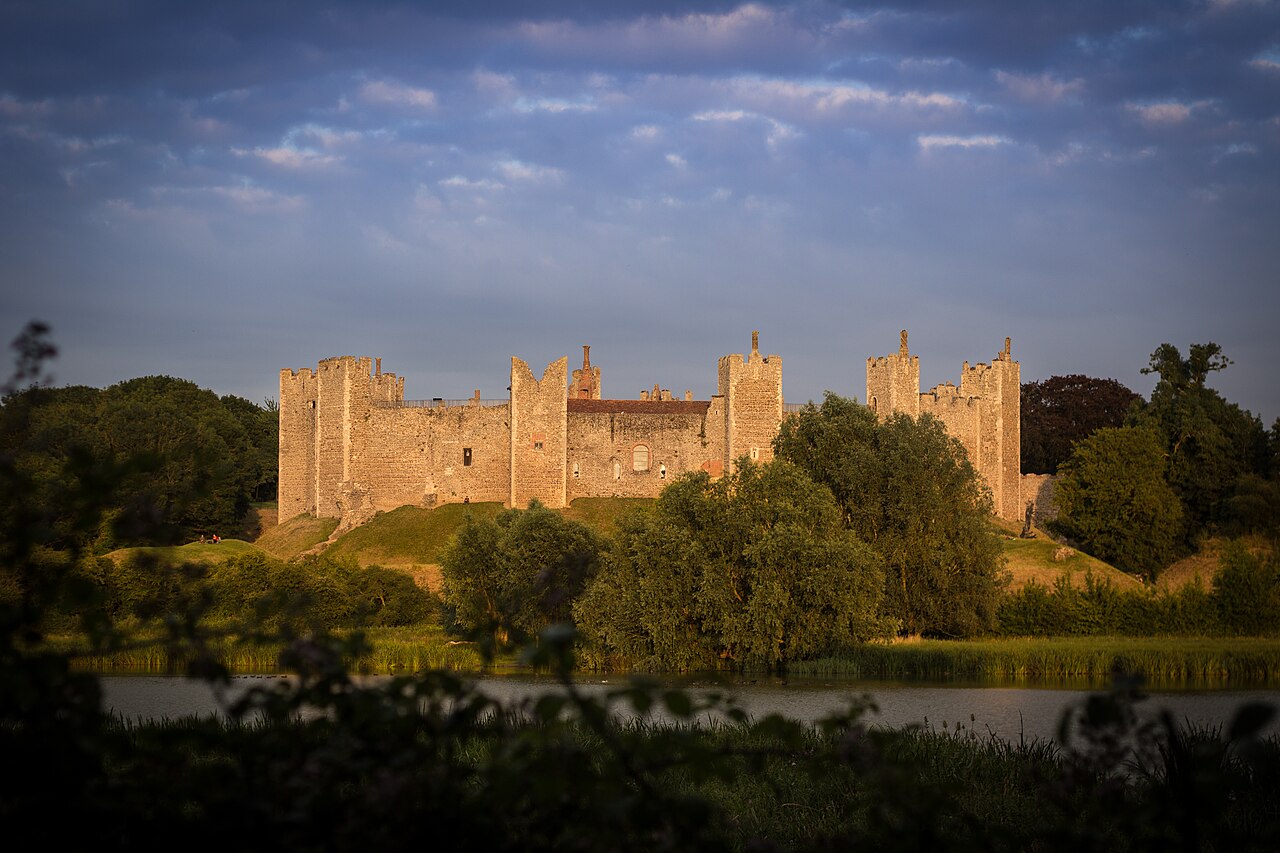
Wingfield Castle exemplifies the characteristics of a hill castle with defensive features typical of the late medieval period. As a fortified manor house, it combines residential comfort with military functionality. The castle's layout includes moats and stone curtain walls designed to protect against attackers, while its gatehouse and battlements reflect its defensive purpose. The surviving structures reveal the adaptation of medieval fortifications to accommodate the lifestyle of the English nobility during the 14th and 15th centuries.
Moats and defensive walls
The castle is surrounded by a water-filled moat that provided a significant obstacle to invaders. The curtain walls are constructed from local stone and brick, featuring arrow slits and other defensive openings. These walls enclose a courtyard that once contained various domestic buildings and service areas.
Residential buildings and interiors
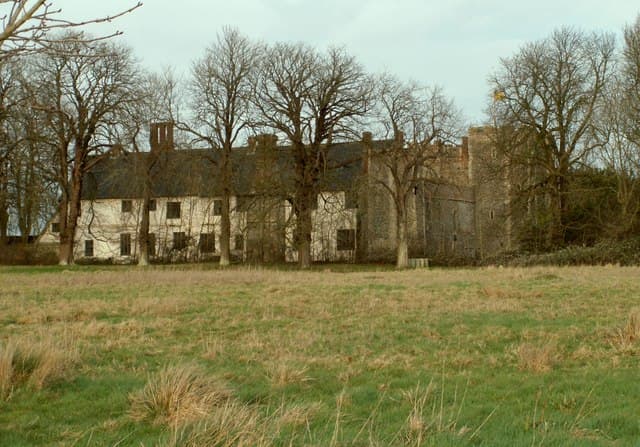
Within the fortified enclosure, the manor house includes great halls, private chambers, and service rooms arranged to support both noble living and administrative functions. The interiors would have been decorated to reflect the status of the Wingfield and de la Pole families, although many original features have been altered or lost over time due to later modifications and private ownership.
Later history and current status
Today, Wingfield Castle remains a private residence and is not generally open to the public. Despite this, it retains much of its late medieval architectural character and stands as a significant monument to the history of Suffolk's nobility. The castle's designation as a Grade I listed building ensures its protection and recognition as a site of exceptional historical and architectural interest.
Preservation and heritage significance
The castle's preservation status reflects its importance as a rare example of a fortified manor house that has survived largely intact. Its association with prominent historical figures and noble families adds to its cultural value. Conservation efforts have aimed to maintain the structural integrity of the castle while respecting its historical fabric.
Wingfield Castle in the context of English castles
Wingfield Castle represents a transitional form of medieval fortification, blending the defensive features of a traditional castle with the domestic requirements of a manor house. This hybrid nature illustrates broader trends in English castle architecture during the late medieval period, when the need for military defense began to coexist with the desire for comfortable noble residences.
Its location in Suffolk places it among a cluster of important medieval sites in East Anglia, a region known for its rich medieval heritage. The castle's history intertwines with the political and social developments of England from the 14th to the 16th centuries, reflecting changes in aristocratic power, royal favor, and architectural fashion.
Frequently asked questions (FAQ)
- What is the historical significance of Wingfield Castle?
- Wingfield Castle is a remarkable example of late medieval architecture, built in the 15th century by the Wingfield family. It served as a stronghold during the Wars of the Roses and has ties to notable historical figures, making it an important site for understanding English history.
- When was Wingfield Castle built?
- Wingfield Castle was constructed starting in the early 1400s, with significant development occurring throughout the 15th century. Its construction reflects the evolving architectural styles of the period and the strategic importance of the location.
- What are the opening hours for Wingfield Castle?
- Wingfield Castle is typically open to visitors from 10 AM to 5 PM during the summer months, and reduced hours may apply during the winter. It is advisable to check the official website for the most current opening times before planning your visit.
- Can I visit Wingfield Castle year-round?
- Yes, Wingfield Castle welcomes visitors year-round; however, certain areas may be restricted during the winter months for preservation purposes. It's recommended to check for any seasonal events or special closures before your visit.
- Is Wingfield Castle accessible for visitors with mobility challenges?
- While Wingfield Castle strives to be accessible, some areas may have limited access due to the historic nature of the site and its uneven terrain. Visitors with mobility challenges should contact the castle's management in advance to discuss available accommodations.
- What is the ticket price to enter Wingfield Castle?
- The ticket prices for Wingfield Castle vary based on age and group size, with discounts available for children, students, and seniors. Family tickets are also offered, making it an affordable option for visitors of all ages.
- When is the best time to visit Wingfield Castle?
- The best time to visit Wingfield Castle is during the late spring and early autumn when the weather is generally mild, and the surrounding gardens are in full bloom. These seasons also often feature fewer crowds, allowing for a more enjoyable experience.
- Are there any nearby attractions to Wingfield Castle?
- Yes, there are several nearby attractions including beautiful walking trails and historic sites that complement a visit to Wingfield Castle. Local towns offer charming shops and eateries, making it easy to spend a full day exploring the area.
Photo gallery

Information
Loading map...
Visitor reviews
No reviews yet. Been here? Write the first review and help other travelers!
Write the first reviewVisited this castle? Share your experience
Your review helps other travelers and adds first-hand knowledge to our encyclopedia.