Wineck Castle
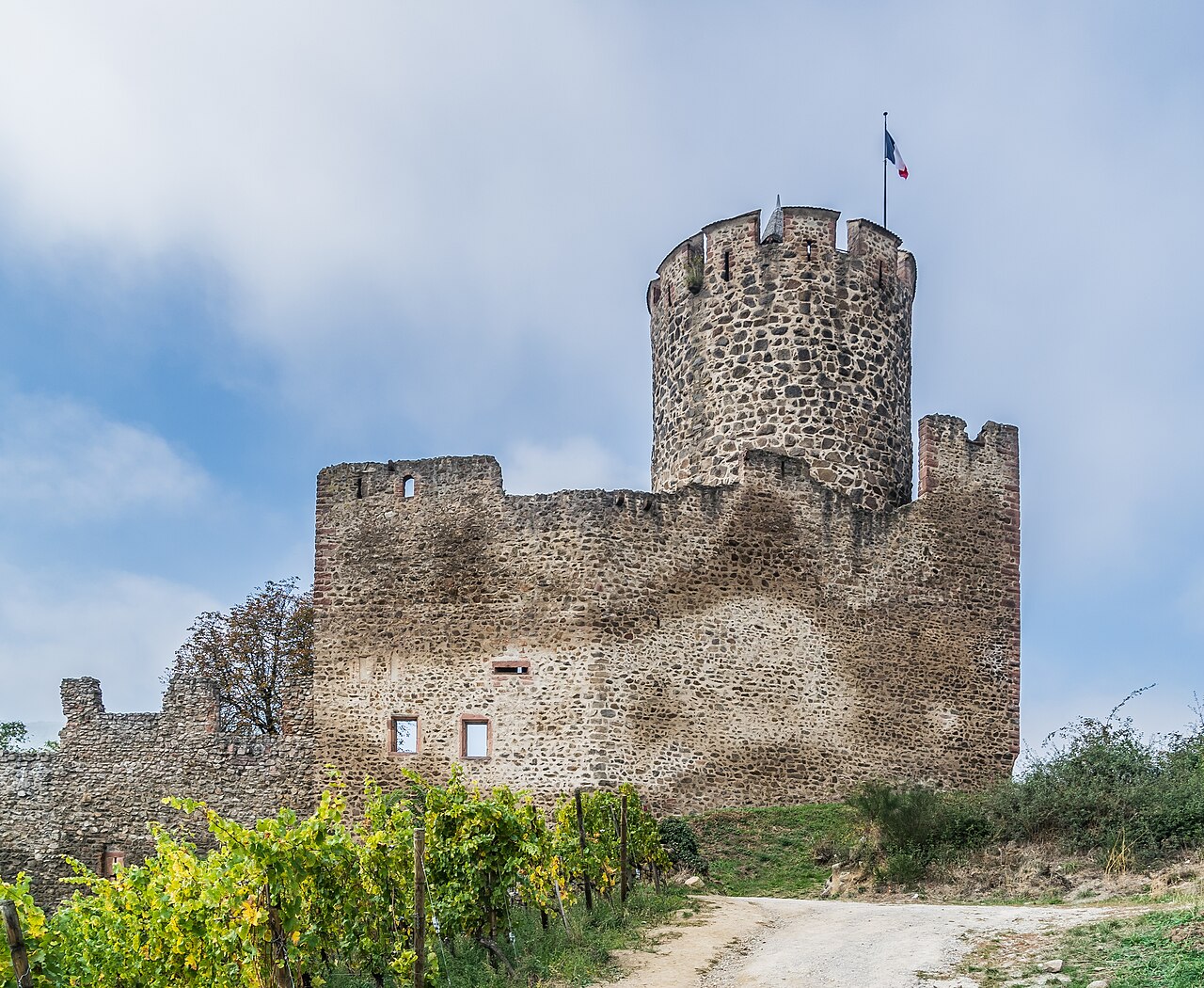
Wineck Castle, also known as Château de Wineck or Burg Wineck, is a remarkable example of a high medieval hill castle nestled in the picturesque vineyards of Katzenthal, in the Haut-Rhin department of France's Alsace region. Perched on a granitic rocky outcrop at an elevation of 330 meters, the castle overlooks the renowned Alsace Grand Cru Riesling vineyards that surround it, blending natural beauty with historical significance.
Constructed around the 13th century, Wineck Castle served as a defensive stronghold and noble residence for various aristocratic families over several centuries. Its strategic location on a small hill, separated from the surrounding terrain by a dry ditch and a rock-cut moat, provided excellent natural and man-made defenses against potential invaders. The castle's architecture reflects the military and residential needs of the period, featuring a 20-meter-high keep with thick granite walls, a horseshoe-shaped enceinte, and multiple fortified enclosures.
Historical background and ownership
The origins of Château du Wineck trace back to the early 1200s when it was built by the Egisheim-Dagsburg family to protect their domain from the expanding influence of the Staufer dynasty. The first documented mention of the castle occurs in 1251, during legal disputes involving the Counts of Pfirt and the Bishop of Strasbourg, highlighting the castle's importance in regional power dynamics.
Throughout the late 13th century and beyond, the castle became a fief under the Bishopric of Basel and passed through the hands of several noble families, including the Counts of Pfirt, the Habsburgs (who took possession in 1324), and the Wineck family, a prominent patrician lineage from Colmar. The Barons of Rathsamhausen were the last noble owners, maintaining the castle until 1828.
Despite its initial strength, the castle suffered damage from a fire in the mid-15th century and was described as a ruin by 1499. After centuries of neglect, it was transferred in 1866 to a society dedicated to preserving Alsace's historical monuments. Restoration efforts began in earnest in 1972, led by specialized groups, and the castle's core was officially designated a historic monument in 1984, with its outer defensive walls gaining protection in 1991.
Architectural features and layout
The keep and defensive structures
The centerpiece of Wineck Castle is its imposing keep, which stands nearly 21 meters tall and measures approximately 7 by 7.4 meters in plan. Its walls are exceptionally thick—over two meters—and constructed from carefully shaped granite and greywacke stone. The lower exterior walls feature a facing of light limestone with prominent bossage, a rare characteristic in this region, while the upper floors incorporate red sandstone.
The original entrance to the keep was located on the south side at the second-floor level, accessible via a pointed gothic arch and a wooden balcony that once connected to the residence's roof. In the 19th century, a new ground-level entrance was cut into the west wall, accompanied by a modern external staircase. Inside, a modern interior staircase provides access to the upper floors.
Notable features of the keep include a latrine on the third floor's north side and a gargoyle on the southeast corner of the roof, which served as part of the drainage system. The original parapet has been carefully restored, preserving the medieval defensive character.
Enceintes, courtyards, and auxiliary buildings
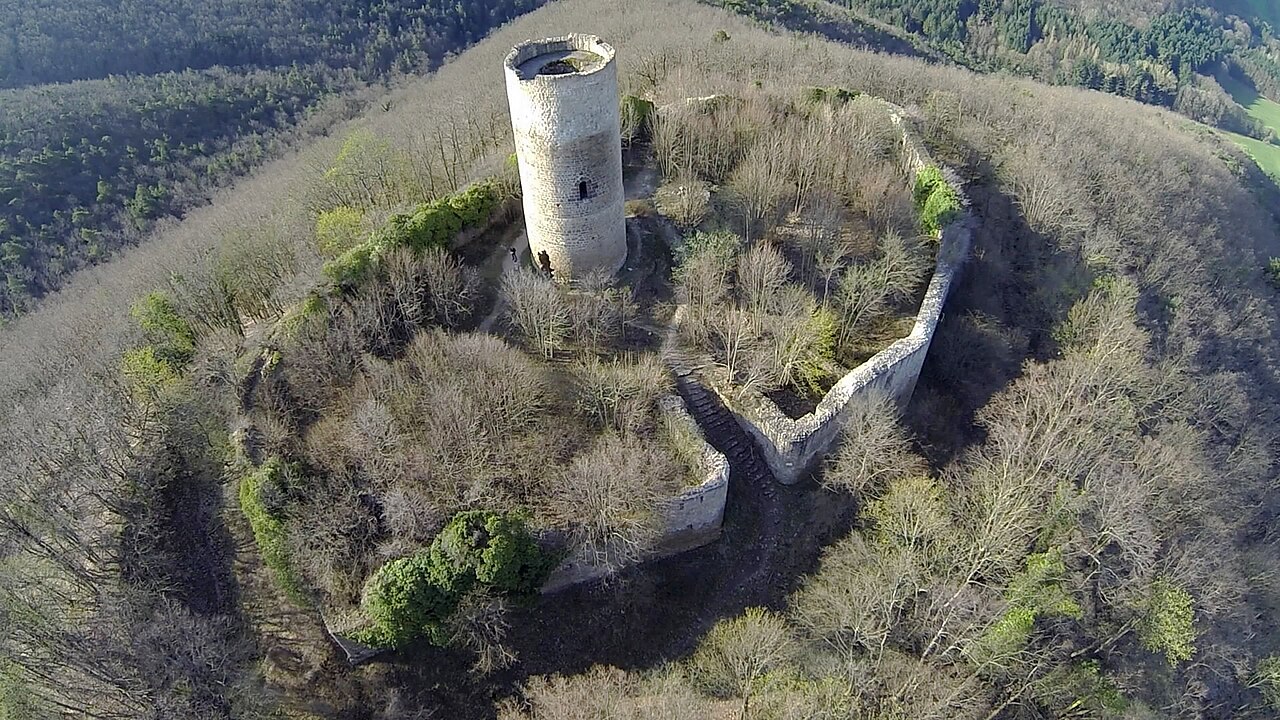
The keep is enclosed by a horseshoe-shaped inner enceinte that forms a roughly 25 by 25 meter courtyard. This defensive wall is complemented by deep ditches carved into the granite rock, including an 18-meter-wide neck ditch to the north and a moat over 10 meters wide to the east, enhancing the castle's defensive perimeter.
Within the courtyard, the remains of a residential building lie to the west of the keep, constructed from granite blocks, while the eastern side housed the stables. A functional garden was also part of the courtyard, reflecting the castle's role as a noble residence.
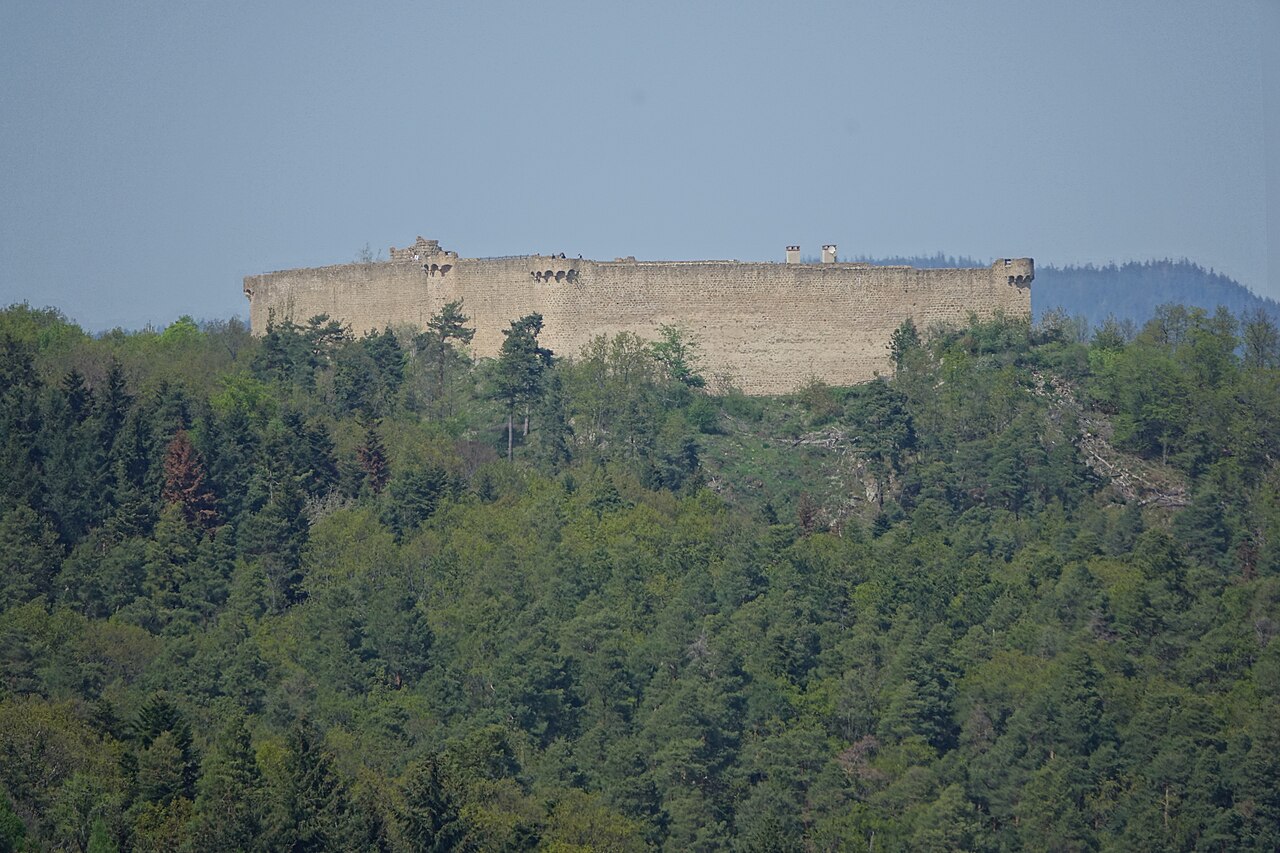
Beyond the inner defenses, a second enceinte protects the lower bailey to the south and southwest. This outer wall, largely reconstructed in the 20th century, retains an original 15-meter section on the southwestern side. Built from granite rubble stone, it reaches heights of up to 8 meters with thicknesses varying from 1.5 to 2 meters. The main gate is located on the eastern side of this enclosure, with remnants of battlements still visible.
Restoration and archaeological findings
Since the 1970s, extensive restoration has stabilized and preserved Wineck Castle's structures. Archaeological excavations uncovered architectural elements predating the earliest written records, shedding light on the castle's evolution. Among the finds is a Romanesque double window originally part of a cistern, now displayed inside the keep, connecting visitors to the castle's medieval heritage.
Modern interventions include the installation of staircases and a 19th-century entrance to facilitate visitor access, although the castle remains private property and its interior is not generally open to the public. Nevertheless, the castle's exterior and surroundings offer a compelling glimpse into medieval fortification and noble life in Alsace.
Cultural significance and setting
Wineck Castle stands as a testament to the turbulent history of the Alsace region, reflecting the shifting allegiances and power struggles between noble families, ecclesiastical authorities, and imperial forces. Its hilltop position and robust construction illustrate the strategic importance of controlling territory in medieval Europe.
Today, the castle is surrounded by vineyards that produce some of the region's finest wines, linking its historical legacy to the cultural and economic fabric of Alsace. The castle's preservation as a restored medieval fortress contributes to the rich heritage tourism of the area, attracting visitors interested in history, architecture, and viticulture.
While the interior remains inaccessible, the castle's imposing silhouette, detailed masonry, and surviving defensive features make it a striking landmark in the Haut-Rhin landscape.
Frequently asked questions (FAQ)
- When was Wineck Castle originally built?
- Wineck Castle was originally constructed around the 13th century, circa 1200, as a defensive residence for the Egisheim-Dagsburg family.
- Is Wineck Castle open to the public for interior visits?
- Wineck Castle is private property and its interior is generally not open to visitors, though the exterior and surrounding grounds can be viewed from outside.
- What are the main architectural features of Wineck Castle?
- Key features include a nearly square 20-meter-high granite keep with thick walls, a horseshoe-shaped enceinte, rock-cut moats, and remnants of residential and stable buildings within the courtyard.
- What is the historical significance of Wineck Castle?
- Wineck Castle played a strategic role in medieval Alsace, serving various noble families and ecclesiastical authorities, and reflecting the region's turbulent history and power struggles.
- Are there any notable restoration efforts at Wineck Castle?
- Restoration began in the 1970s to preserve the castle’s structure, with the core designated a historic monument in 1984 and the outer walls protected since 1991.
Information
Sources & official resources
Verify the information above using these authoritative references.
Loading map...
Visitor reviews
No reviews yet. Been here? Write the first review and help other travelers!
Write the first reviewVisited this castle? Share your experience
Your review helps other travelers and adds first-hand knowledge to our encyclopedia.