Pflixbourg Castle
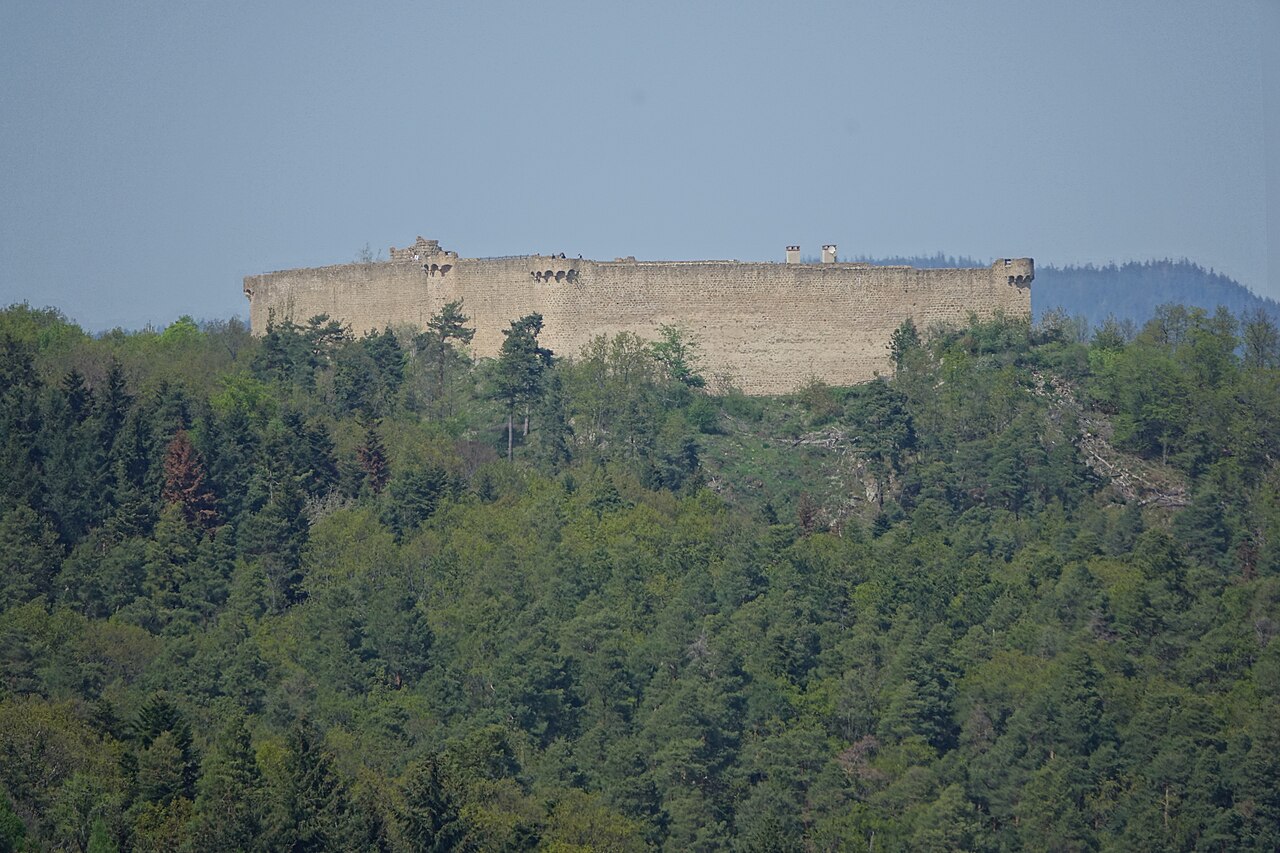
Pflixbourg Castle, also known locally as Château de Pflixbourg or Pflixburg, is a striking medieval fortress perched atop a 454-meter-high hill overlooking the Fecht valley near the village of Wintzenheim in the Haut-Rhin department of France. This castle is situated in the region historically known as Southern Alsace or the Vosges, a mountainous area renowned for its dense forests and strategic vantage points. The castle's commanding position has made it a notable landmark since its construction in the early 13th century.
The castle's origins trace back to between 1212 and 1219, with the first documented mention occurring in 1220 under the name "Blickisberc." It was built by Albin Wolflin, the imperial bailiff under Frederick II of Hohenstaufen, as part of the Holy Roman Empire's efforts to secure control over the region and protect the nearby town of Colmar. Pflixbourg served as a residence for successive imperial bailiffs, including the notable Conrad Werner of Hattstatt in 1276. The castle's primary function was administrative and military, overseeing the upper Alsace territory and acting as a support base for imperial forces.
Historical significance and ownership
Throughout the 13th and 14th centuries, Pflixbourg Castle was a focal point of regional power, frequently changing hands among noble families. The nearby acquisition of Château du Hohlandsbourg by the Habsburgs diminished Pflixbourg's strategic importance, relegating it to a noble estate. Ownership passed through several families, including the Haus d’Issenheim and later the Schlick family, with Gaspard of Schlick serving as vice-chancellor to Emperor Sigismund. In 1434, the castle was sold to Smassmann of Ribeaupierre, after which it appears to have been deliberately destroyed during a local conflict, rendering it uninhabitable and leading to its abandonment.
Despite its abandonment, the castle was never captured or significantly damaged in warfare. Its decline was more a result of political shifts and changing military technology than direct conflict. During the 19th and 20th centuries, restoration efforts were undertaken to stabilize the ruins, including consolidations in 1864 and further work in the 1980s and early 2000s. The site was officially designated a historic monument in 1968. During World War I, German forces recognized the site's strategic vantage and reinforced it, although it did not see combat.
Architectural features and layout
Fortifications and defensive structures
Pflixbourg Castle is an excellent example of a late medieval hill castle constructed primarily from local granite, with sandstone used sparingly for decorative and structural elements such as window frames and door surrounds. The castle is built on a natural rocky plateau approximately 81 meters long and 40 meters wide, shaped into an irregular polygonal plan aligned northeast to southwest.
The castle's curtain walls are notably thick and robust, rising directly from the granite bedrock and bonded with imported lime mortar. These walls enclose the entire site, providing formidable defense. The main entrance is particularly distinctive, featuring a rare 13-meter-long gate passage with sharp angled turns inside the curtain wall, designed to slow and expose attackers. Although much of this gate structure is lost, it remains one of the few surviving examples of such a defensive corridor in Alsace.
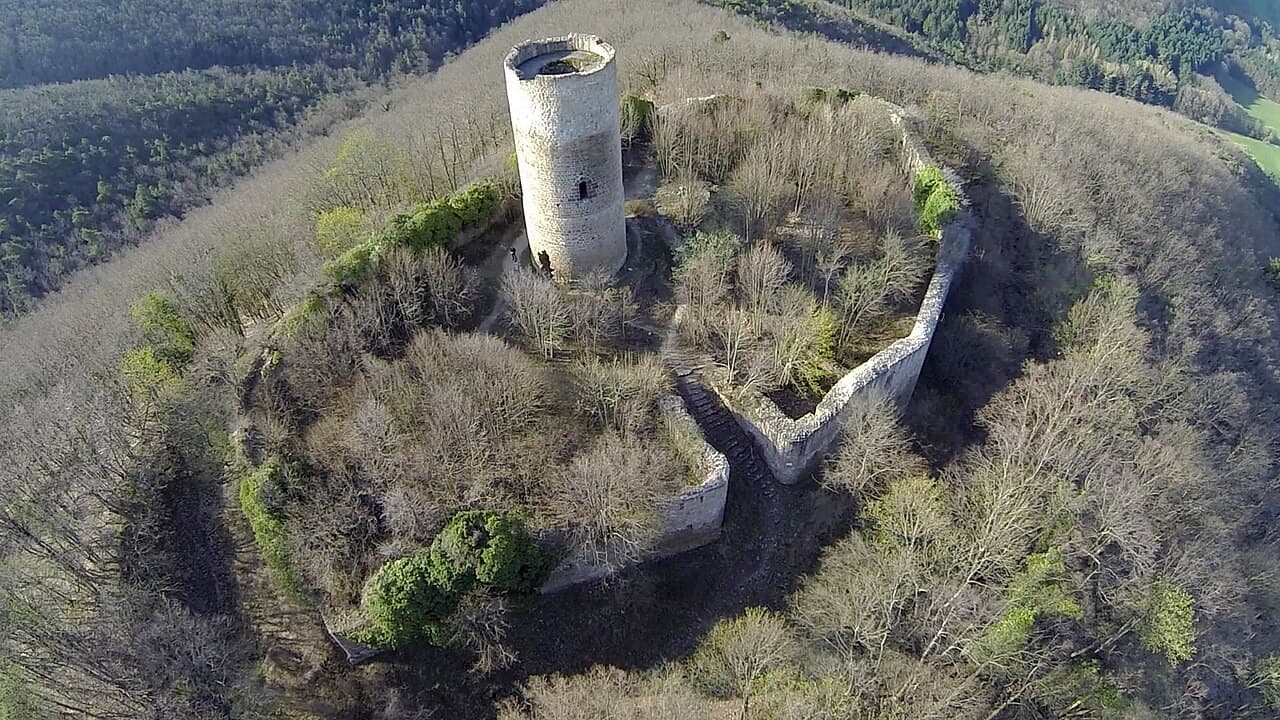
Guarding the entrance is a massive cylindrical bergfried or keep, standing 23 meters tall and nearly 10 meters in diameter at its base. This tower was primarily solid, with an elevated pointed sandstone doorway nearly 10 meters above ground level, originally accessed by removable wooden stairs for defensive purposes. Inside, the bergfried contained two upper chambers supported by corbels and topped with crenellated parapets, some of which were modified with brickwork in the 15th century.
Internal buildings and living quarters
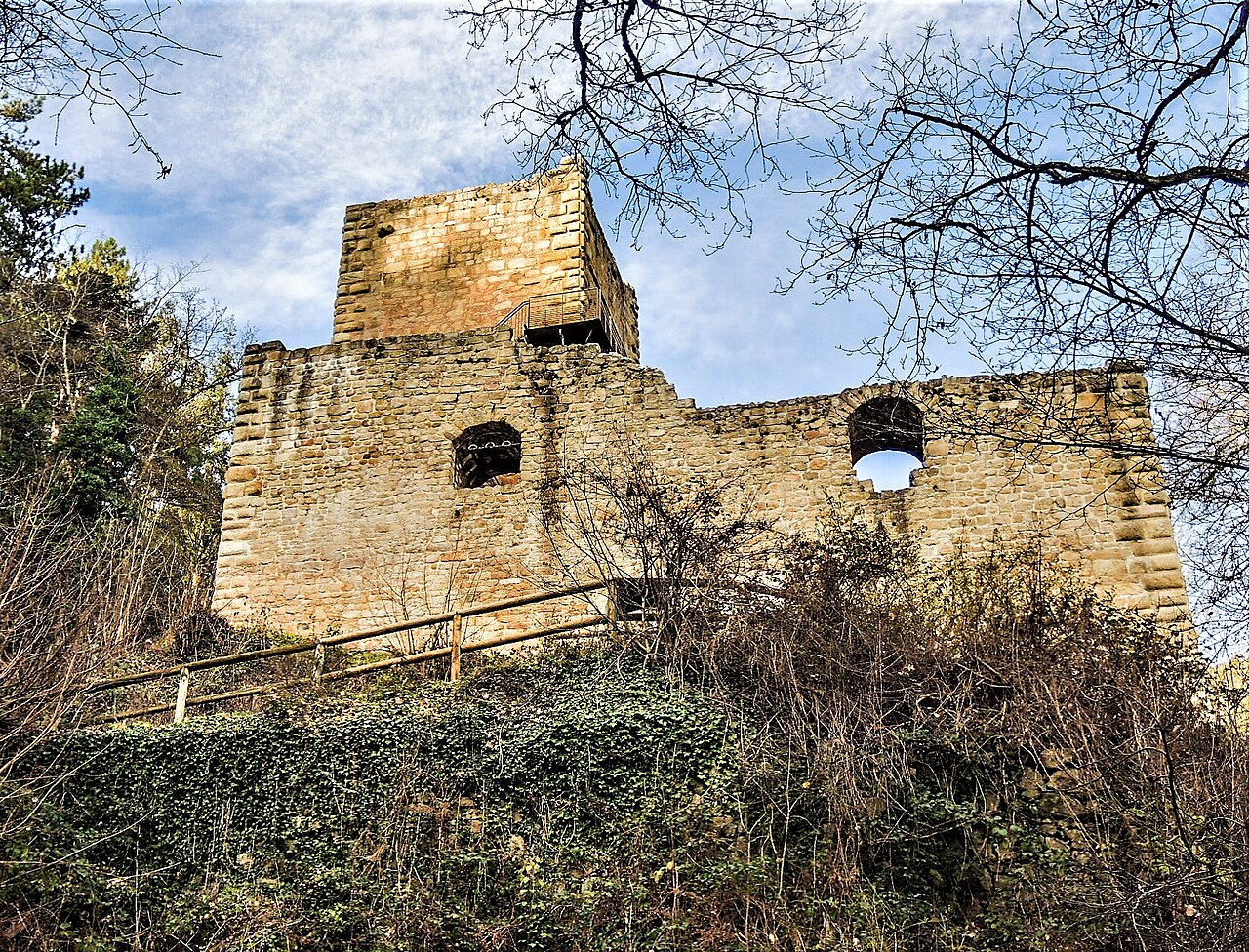
Within the castle walls, the living quarters are arranged mainly along the western curtain wall, where preservation is best. These buildings include vaulted cellars subdivided by transverse walls, illuminated by narrow windows designed for light rather than defense. The upper floors contained residential rooms with latrines, large windows with seating, and pairs of windows framed in sandstone adorned with decorative motifs such as the fleur-de-lys and regional symbols dating from the early 13th century.
On the eastern side, cellar remains survive but evidence of upper floors is scarce, likely due to exposure to attack and subsequent decay. The northeastern and eastern walls are largely windowless, reflecting their defensive role facing the mountain ridge and potential attackers.
Water supply system
A critical feature of Pflixbourg Castle was its sophisticated water supply. The castle lacked natural springs, so water was collected and stored in a large vaulted cistern measuring approximately 5 by 7 meters. This cistern was partially carved from the rock and lined with waterproof lime mortar mixed with tile fragments, capable of holding about 140 cubic meters of water. It included a circular basin for maintenance and separate openings for filling and drawing water.
Water was manually transported uphill from a large well called a puisard, located nearly 100 meters below the castle to the northwest. This granite-lined shaft, about 1.1 meters wide, could store at least 17 cubic meters of filtered groundwater. A stone-paved path allowed pack animals to carry water up the steep incline to the cistern, highlighting the logistical effort required to sustain the castle's inhabitants.
Modern condition and accessibility
Today, Pflixbourg Castle remains a ruin, partially restored and stabilized to prevent further deterioration. The site is heavily overgrown in places, which can obscure views and make navigation challenging. Visitors can access the castle freely, although caution is advised due to the risk of falling masonry. The castle is reachable by a short five-minute walk through the forest from the nearest road.
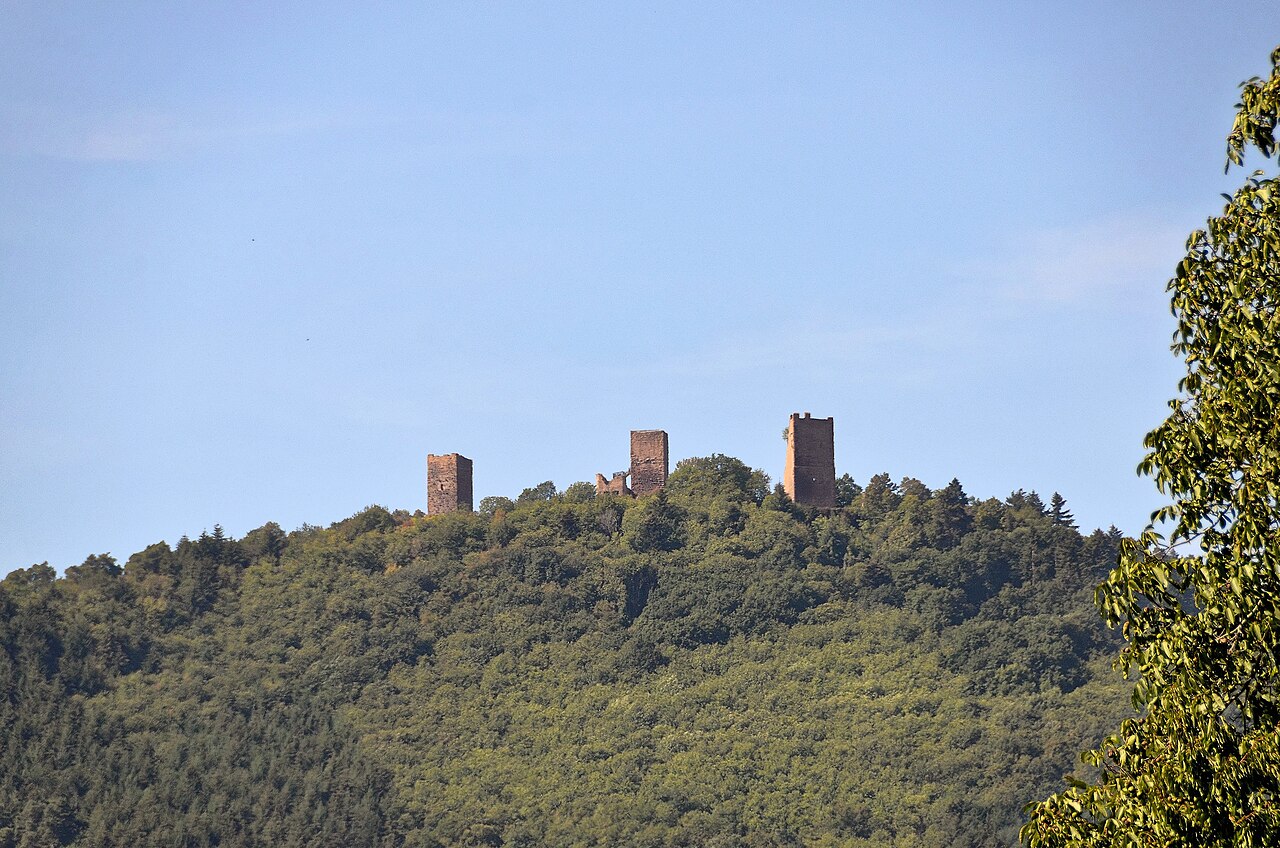
The castle is part of the famous Route of the 5 Castles, a scenic tourist trail that includes nearby Hohlandsbourg Castle and the group of three castles in Éguisheim. This route is closed to vehicles from mid-November to mid-March, encouraging visitors to explore on foot during the winter months.
Despite its ruinous state, Pflixbourg Castle offers a remarkable glimpse into medieval military architecture and regional history. Its elevated position provides commanding views over the upper Munster valley, and its well-preserved bergfried remains a striking symbol of the castle's former strength and significance.
Frequently asked questions (FAQ)
- What is the historical significance of Pflixbourg Castle?
- Pflixbourg Castle, located in Wintzenheim, France, dates back to the 13th century and played a crucial role in the region's defense during the Middle Ages. Its strategic position allowed it to oversee important trade routes, making it a vital stronghold for the local nobility.
- When was Pflixbourg Castle built?
- Pflixbourg Castle was constructed in the early part of the 13th century, around 1230. It has undergone various renovations and restorations over the centuries, which have contributed to its historical architecture.
- What are the opening hours for Pflixbourg Castle?
- Pflixbourg Castle is typically open to visitors from April to October, with hours varying by season. It is advisable to check the official website or contact the visitor center for the most current information on opening times before your visit.
- Is it possible to access Pflixbourg Castle with a wheelchair?
- While Pflixbourg Castle offers stunning views and historical insights, accessibility can be challenging due to its hilly terrain and uneven paths. Visitors with mobility issues are encouraged to contact the castle staff in advance to discuss potential accommodations.
- Can I purchase tickets online for Pflixbourg Castle?
- Yes, tickets for Pflixbourg Castle can be purchased online through the official website. This is highly recommended during peak tourist seasons to avoid long lines and ensure your entry on your preferred date.
- When is the best time to visit Pflixbourg Castle?
- The best time to visit Pflixbourg Castle is during the spring and early autumn months when the weather is mild, and the surrounding landscapes are particularly picturesque. These seasons typically see fewer crowds, allowing for a more enjoyable experience.
- What nearby attractions can I explore after visiting Pflixbourg Castle?
- After visiting Pflixbourg Castle, you can explore the beautiful Alsace region, including the charming town of Colmar and the picturesque vineyards of the Alsace Wine Route. These attractions offer a great way to immerse yourself in the local culture and scenery.
Photo gallery

Information
Sources & official resources
Verify the information above using these authoritative references.
Loading map...
Visitor reviews
No reviews yet. Been here? Write the first review and help other travelers!
Write the first reviewVisited this castle? Share your experience
Your review helps other travelers and adds first-hand knowledge to our encyclopedia.