Wimmis Castle
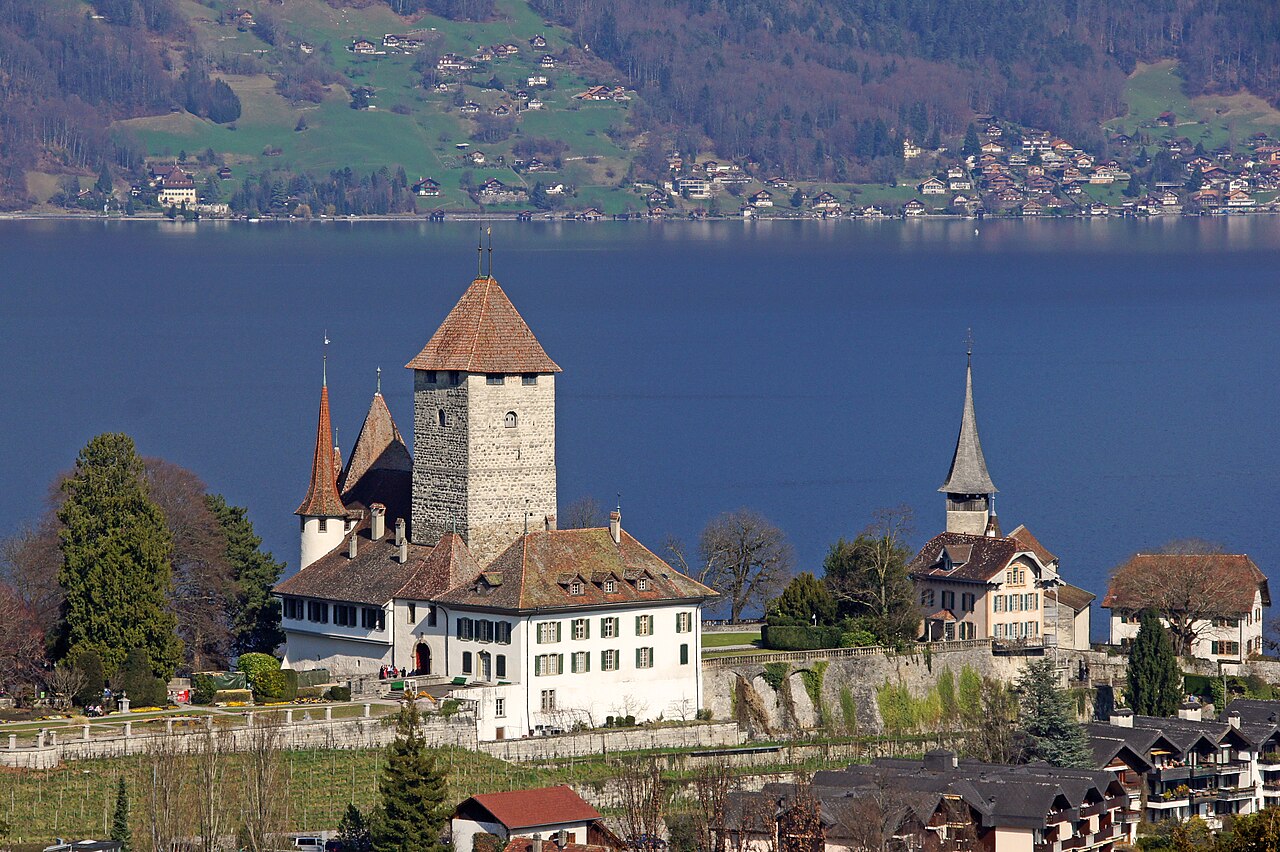
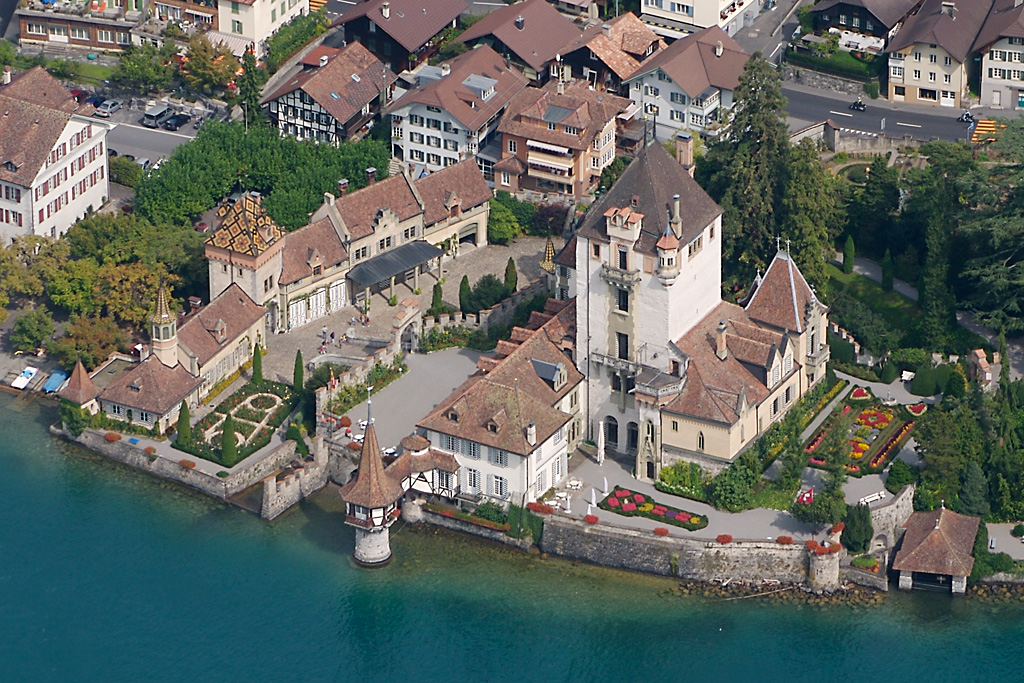
Wimmis Castle stands prominently above the village of Wimmis in the Bernese Oberland region of Switzerland. Constructed in the 13th century, this hill castle embodies the architectural and historical evolution of medieval fortifications in the Swiss Alps. Originally built by the local noble families—the Lords of Wimmis or Strättligen—it became a strategic stronghold overseeing the entrance to the Niedersimmental valley. The castle's commanding position on a rocky hill provided natural defense advantages, which were later enhanced through extensive fortifications.
The castle's early structure centered around a bergfried, a tall defensive tower typical of medieval castles, serving both as a lookout and a refuge during sieges. Attached living quarters and a surrounding curtain wall formed the initial defensive complex. Over time, the castle underwent significant expansions, particularly under the Freiherr von Weissenburg, who fortified the site with a double curtain wall and constructed the Letzi Spissi, a detached defensive wall about one kilometer southwest, guarding the valley's entrance.
Medieval origins and noble ownership
The castle's origins trace back to the 12th or 13th century, with the Lords of Wimmis or Strättligen as its probable founders. The exact relationship between these families remains unclear, but by the mid-13th century, the Wimmis line had become extinct. Ownership passed to the Freiherr von Strättligen around 1260, and shortly thereafter, the castle and its lands were incorporated into the extensive holdings of the Freiherr von Weissenburg. This transition marked the beginning of a period of significant development and increased regional influence.
Conflicts and sieges in the 13th and 14th centuries
During the late 13th and early 14th centuries, Wimmis Castle and its surrounding settlement were embroiled in regional conflicts. Bernese troops attacked and burned the castle town twice, in 1298 and again in 1334. The latter attack culminated in the capture of the castle during the Weissenburger War. The defeat forced Freiherr Johann the Elder von Weissenburg to sign a treaty with Bern, acknowledging the city's growing power in the region.
Transition of ownership and bernese governance
Following the war, ownership of Wimmis Castle changed hands several times. In 1368, it was inherited by the Freiherr von Brandis, who later sold half the estates to the von Scharnachtal family in 1398 and the remaining half by 1437. A pivotal moment came in 1449 when the city of Bern purchased the castle and its associated lands, integrating them into the Bernese administrative system.
Under Bernese rule, Wimmis Castle became the residence of the Bernese Vogt, the local bailiff responsible for governing the Niedersimmental district. The castle was extensively renovated and expanded from the 15th through the 18th centuries to suit its administrative function, reflecting the architectural styles and needs of each period.
Architectural modifications under bernese rule
The original western gatehouse was replaced by a long covered stairway on the southern side, improving access and security. In 1696, Vogt Albrecht Manuel added a south residence wing, and in 1741–42, Vogt Franz Ludwig Steiger constructed a large northeast wing, both contributing to the castle's current appearance. Further renovations occurred in 1789–90, mid-20th century, and the 1980s, ensuring the castle's preservation and adaptation to modern uses.
The castle town and later developments
The castle town surrounding Wimmis Castle suffered a devastating fire in 1708, which destroyed the entire settlement. Instead of rebuilding, the area was cleared and transformed into the castle gardens, enhancing the site's aesthetic and recreational value. The castle itself continued to serve as the district center after the 1803 Act of Mediation, maintaining its administrative importance well into the modern era.
In 1967, the district administration relocated to a modern building, but the district court remained housed within the castle until 2010. After administrative restructuring in the Canton of Bern, the court moved to Thun, and ownership of Wimmis Castle was transferred to the local municipality, marking a new chapter in its stewardship.
Architectural features and interior details
Wimmis Castle's architectural evolution reflects its varied functions over centuries. The original bergfried remains a central feature, symbolizing its medieval defensive origins. The double curtain walls and the detached Letzi Spissi wall highlight the strategic military considerations of its builders, designed to control access to the Niedersimmental valley.
The interior of the castle includes a hall renewed in 1950, adorned with decorative capitals on 15 surfaces crafted by Swiss artist Erwin Friedrich Baumann. These artistic details enrich the castle's cultural heritage and provide insight into 20th-century restoration efforts that sought to blend historical preservation with modern aesthetics.
Current status and cultural significance
Today, Wimmis Castle is well preserved and recognized as a Swiss heritage site of national significance. It houses cantonal forestry offices on its lower floors, while the upper floor contains a privately rented apartment, demonstrating adaptive reuse of historic structures. The castle's layered history, architectural features, and scenic location continue to attract visitors and scholars interested in medieval Swiss fortifications and regional governance.
Wimmis Castle remains a testament to the complex feudal and political history of the Bernese Oberland, illustrating the transition from medieval noble stronghold to modern administrative center. Its preservation and continued use underscore the importance of maintaining cultural heritage sites as living monuments within their communities.
Frequently asked questions (FAQ)
- How do I visit Wimmis Castle?
- Wimmis Castle is accessible to the public, with visiting hours typically during daytime. Check local tourist information for seasonal opening times and guided tours availability.
- What is the historical significance of Wimmis Castle?
- Wimmis Castle played a key role in regional defense and governance from the 13th century, serving as a noble residence and later as the seat of the Bernese Vogt.
- Can I explore the castle gardens?
- Yes, the castle gardens were established after the 1708 fire that destroyed the castle town. They offer a scenic area for visitors to enjoy the castle's surroundings.
- When was Wimmis Castle expanded?
- Major expansions occurred under Bernese rule during the 17th and 18th centuries, including additions in 1696 and 1741-42, reflecting evolving architectural styles.
- Is Wimmis Castle wheelchair accessible?
- Due to its medieval architecture and hilltop location, accessibility may be limited. Visitors with mobility concerns should inquire in advance about accommodations.
Information
Current owner
Municipality
Loading map...
Visitor reviews
No reviews yet. Been here? Write the first review and help other travelers!
Write the first reviewVisited this castle? Share your experience
Your review helps other travelers and adds first-hand knowledge to our encyclopedia.