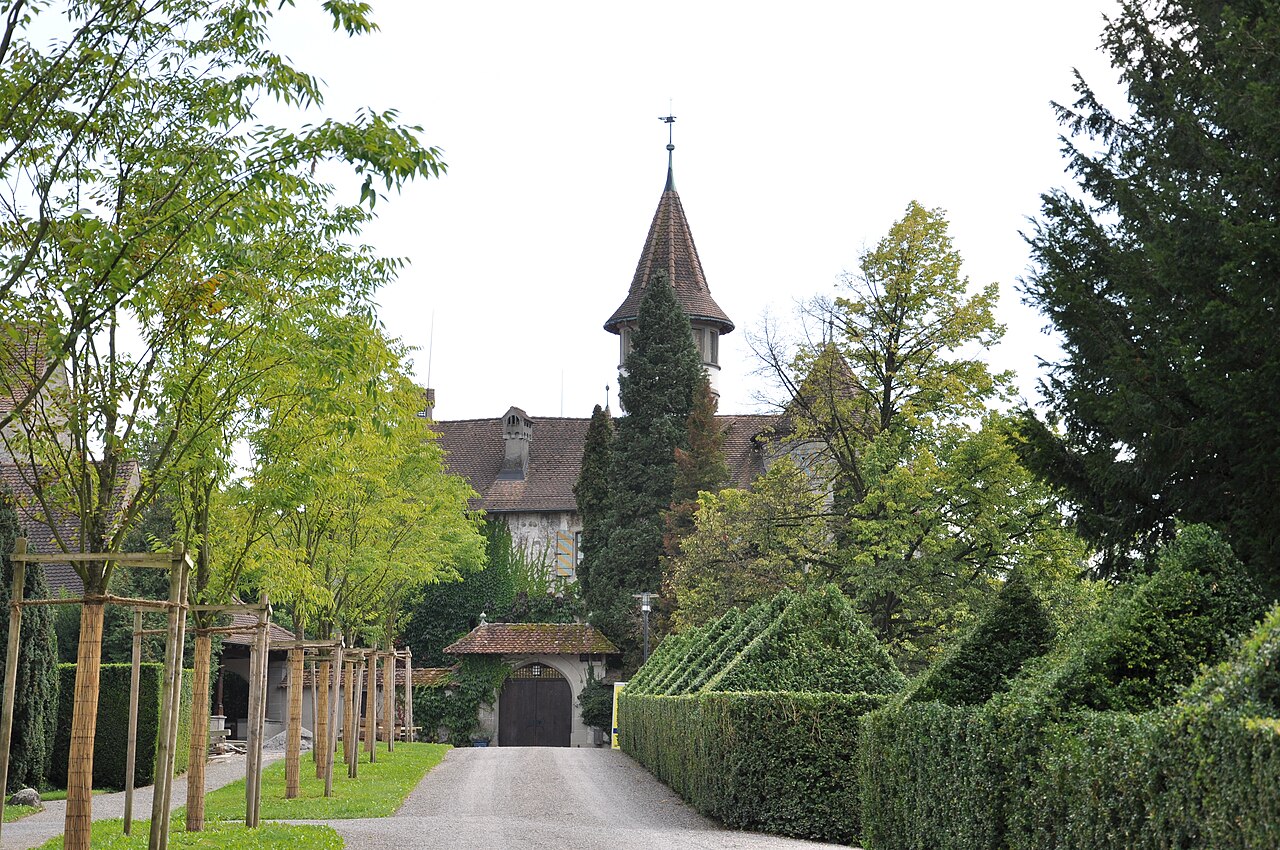
Wildenburg Castle

Wildenburg Castle in Baar, Switzerland
Baar, Zug, Switzerland
High Medieval (11th–13th c.)
Ruins

Wildenburg Castle is a historic hill castle located in Baar, Switzerland, dating back to the 13th century. Founded by the Lords of Hünenberg, who were vassals to the powerful counts of Kyburg and later the Habsburg dynasty, the castle played a strategic role in the medieval power struggles of the region. Its origins lie in a simple stone ring wall enclosure that initially protected wooden buildings, a common defensive design in the High Medieval period.

Architectural evolution and features

The earliest phase of Wildenburg Castle likely consisted of a stone curtain wall encircling the site, providing a fortified perimeter. Over time, the castle was enhanced with more substantial stone structures. Notably, a round keep was constructed, serving as a last line of defense and a symbol of lordly power. Additionally, a palas or great hall was added in the northeastern corner, which functioned as the main residential and ceremonial building within the castle complex. This layout reflects typical high medieval castle architecture in the region, combining military and domestic functions within a compact fortified area.

Historical significance and destruction

The castle's history is closely tied to the political conflicts of the late 14th century. In 1386, the knights of Hünenberg allied with the Habsburgs and fought against the Old Swiss Confederacy at the Battle of Sempach. This battle was a decisive conflict in the struggle for regional control, resulting in a major defeat for the Habsburg forces. Following this defeat, Wildenburg Castle was destroyed as part of the punitive actions against Habsburg supporters. The destruction marked the end of the castle's military and residential use.

Post-destruction fate and current condition

After its destruction, Wildenburg Castle was abandoned and gradually fell into ruin. By the 16th century, the site was repurposed as a quarry, with stones from the castle being removed for other building projects in the area. Today, the castle remains a ruined site, with remnants of the stone walls and foundational structures still visible. Its ruins offer valuable insights into medieval fortification techniques and the turbulent history of the region during the High Medieval period.

Location and regional context

Situated in the municipality of Baar, Wildenburg Castle lies within the canton of Zug, although the existing metadata lists the region as Bern. Baar's location near important medieval trade routes and political borders made the castle strategically significant during its time. The castle's proximity to the territories of the Kyburg and Habsburg families underlines its role in the complex feudal loyalties and conflicts of medieval Switzerland.

Architectural legacy and cultural importance

Despite its ruined state, Wildenburg Castle remains an important cultural heritage site. It provides a tangible connection to the medieval nobility and their defensive architectures in Switzerland. The castle's design elements, such as the round keep and palas, exemplify typical features of high medieval castles in Central Europe. Preservation efforts and archaeological studies continue to shed light on the castle's construction phases and historical context.

Frequently asked questions (FAQ)

How do I get to Wildenburg Castle?
Wildenburg Castle is located in Baar, Switzerland, and is easily accessible by car or public transportation. If you're traveling by train, the nearest station is Baar, from where you can take a bus or a short taxi ride to the castle.
What is the historical significance of Wildenburg Castle?
Wildenburg Castle dates back to the 13th century and played a crucial role in the region's history, serving as a noble residence and a strategic stronghold. Its well-preserved structure offers insights into medieval architecture and the feudal system that once dominated this area of Switzerland.
When was Wildenburg Castle built?
Wildenburg Castle was constructed in the early 13th century, with its foundations laid around 1220. Over the centuries, it has undergone various renovations, but the original architectural elements still reflect its medieval origins.
Can I visit Wildenburg Castle with children?
Yes, Wildenburg Castle is family-friendly and offers a unique experience for visitors of all ages. Children will enjoy exploring the castle grounds, and there are informative displays that make learning about history fun and engaging.
Why is Wildenburg Castle a popular tourist attraction?
Wildenburg Castle attracts visitors due to its stunning architecture, rich history, and picturesque setting. Its panoramic views of the surrounding landscape and proximity to local hiking trails make it an ideal spot for both history buffs and nature lovers.
Is it possible to access Wildenburg Castle for those with mobility issues?
While Wildenburg Castle is a historic site with some uneven terrain, efforts have been made to improve accessibility. Visitors with mobility challenges may face some difficulties, so it's best to contact the castle administration in advance for specific arrangements.
What are the opening hours for Wildenburg Castle?
Wildenburg Castle is typically open to visitors from March to October, with hours varying by season. It is recommended to check the official website for the most up-to-date information on opening hours and any special events.
What are the ticket prices for visiting Wildenburg Castle?
Ticket prices for Wildenburg Castle are generally affordable, with discounts available for children, seniors, and families. Special rates may apply for guided tours, so be sure to inquire when planning your visit.
When is the best time to visit Wildenburg Castle?
The best time to visit Wildenburg Castle is during the spring and early autumn months when the weather is pleasant and the surrounding nature is in full bloom. These seasons also see fewer crowds, allowing for a more enjoyable experience.
Are there any nearby attractions to visit along with Wildenburg Castle?
Yes, there are several attractions near Wildenburg Castle, including the charming town of Baar and various hiking trails that showcase the beautiful Swiss landscape. Additionally, the city of Zug is just a short drive away, offering more cultural and historical sites to explore.

Information

Hill Castle

Loading map...

Visitor reviews

No reviews yet. Been here? Write the first review and help other travelers!

Write the first review

Visited this castle? Share your experience

Your review helps other travelers and adds first-hand knowledge to our encyclopedia.
Write a review

(5/5)

0/2000 characters

Your review will be visible after admin approval

Nearby castles

3.3 km
Zug Castle — Switzerland castle

Zug Castle

Zug, Switzerland

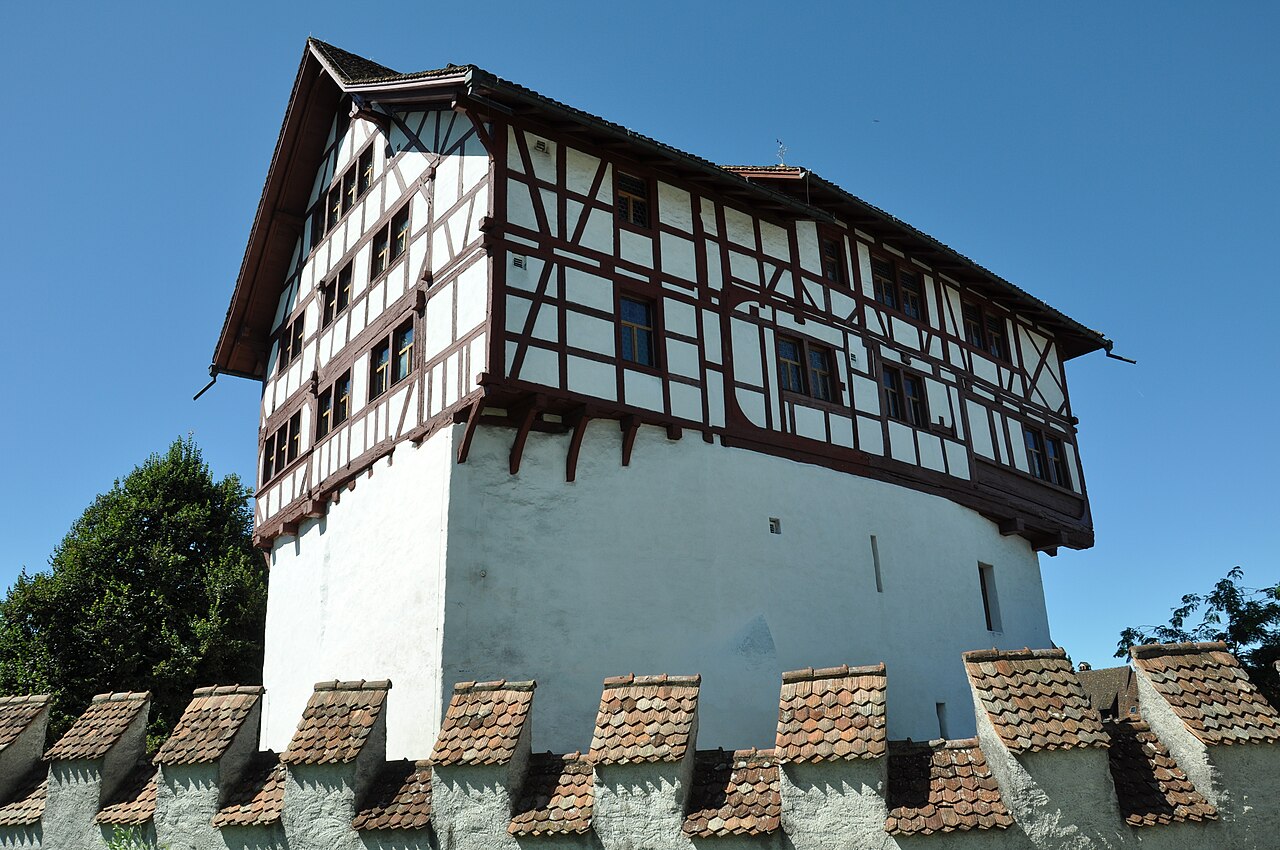
Zug Castle stands as a prominent historical landmark in the city of Zug, Switzerland, embodying centuries of architectural evolution and regional history. Originally established as a wooden manor house around the 11th century, the castle developed through the High Medieval period into a fortified stone stronghold that played a significant role in the political and military affairs of the region. Today, it serves as a cultural museum, preserving and showcasing the rich heritage of Zug and its surroundings. Early beginnings and medieval origins The site of Zug Castle was initially occupied by a wooden manor house built circa 1000 AD. This early structure was likely constructed by a ministerialis family serving noble houses such as the Counts of Aargau or Lenzburg. Situated on an island formed between two streams, the manor was protected by a wooden palisade, and a village grew along the waterways. Archaeological excavations confirm the presence of this early wooden fortification, which was later supplemented by a low stone wall approximately 70 to 90 centimeters high at the end of the 11th century. Despite these defenses, local tradition records that the castle suffered attack and damage during the 12th century. Kyburg period and stone fortifications In the 13th century, the castle and the surrounding area came under the control of the Kyburg family. Around 1200, the Kyburgs founded the city of Zug and undertook major reconstruction of the castle. The wooden structures were replaced with durable stone fortifications, including a central square tower measuring approximately 9 by 9 meters. This tower featured formidable walls, 2 meters thick at the base, tapering slightly to 1.5 meters at the upper stories, and reaching a height of about 16 meters. The tower was further protected by two semi-circular stone walls to the north and east, enhancing its defensive capabilities. By the end of the 13th century, the town of Zug was enclosed by imposing walls up to 16 meters high, reflecting its growing strategic and urban importance. These fortifications, combined with the castle's defenses, made Zug a significant stronghold in the region. Habsburg ownership and political significance Following the extinction of the Kyburg dynasty in 1264, the castle and town passed to the Habsburgs. The Habsburgs expanded the castle's living quarters and added several buildings between the main tower and the town walls, adapting the fortress to serve both military and residential functions. After the Battle of Morgarten in 1315, Zug became a key Habsburg stronghold amidst rising tensions with the Swiss Confederation. Despite the surrounding villages siding with the Confederation, the city of Zug remained loyal to the Habsburgs until a two-week siege led to its capture by the Swiss. Remarkably, the castle itself was not damaged during the siege and subsequently became part of the Confederation's holdings. Zug officially joined the Swiss Confederation in 1352, marking a shift in the castle's role from a military fortress to a symbol of civic pride and governance. Over time, its strategic importance waned as the political landscape evolved. Renaissance transformation and residential adaptation In the mid-16th century, significant changes were made under the direction of Johannes Zurlauben. Around 1555, the old defensive walls were dismantled and replaced with a decorative wall, signaling a transition from martial utility to aesthetic and residential purposes. Zurlauben also constructed a distinctive half-timbered building on the western side of the main tower, connecting it to expanded living quarters that incorporated former Habsburg residential structures. These renovations emphasized comfort and status, reflecting Renaissance architectural influences and the changing functions of castles during this period. The castle evolved into a noble residence rather than a purely defensive fortress. Modern preservation and museum use In 1945, the municipality of Zug acquired the castle from the Hediger family, initiating a new chapter focused on preservation and public engagement. Restoration efforts culminated in 1982, stabilizing the structure and adapting it for cultural use. The castle now houses the Zug town and cantonal museum, featuring permanent collections that highlight the region's history, including notable artifacts such as the original Saubanner battle banner from 1477. The museum underwent refurbishment in 2012 and reopened in November 2013 with a renewed permanent exhibition, enhancing its role as a center for heritage education and tourism. Zug Castle is recognized as a heritage site of national significance, attracting visitors interested in medieval architecture, Swiss history, and cultural heritage. Architectural features and layout The castle's architectural composition reflects its layered history. The central 13th-century stone tower remains the dominant feature, with its massive walls designed for defense and longevity. The two semi-circular stone walls to the north and east illustrate medieval military strategies aimed at protecting vulnerable points and controlling access. The 16th-century half-timbered addition on the western face of the tower contrasts with the stone masonry, showcasing Renaissance-era aesthetic preferences and residential comfort. The decorative wall constructed by Zurlauben replaced earlier fortifications, further signaling the castle's shift away from military functions. Located within the second city wall of Zug's historic old town, the castle integrates seamlessly into the urban fabric, serving as a testament to the city's medieval origins and subsequent development. Defensive elements Stone keep tower with walls up to 2 meters thick, tapering to 1.5 meters at the top Semi-circular curtain walls protecting the north and east sides of the tower Town walls up to 16 meters high enclosing Zug by the late 13th century Residential and decorative additions Half-timbered structure added in the 16th century on the west side of the tower Expanded living quarters connecting the tower to the half-timbered building Decorative wall replacing older defensive walls, emphasizing aesthetics Cultural significance and heritage status Zug Castle is a valuable cultural asset, reflecting the historical trajectory of a Swiss city transitioning from medieval stronghold to modern municipality. Its preservation as a museum allows visitors to engage with the region's past through architecture, artifacts, and exhibitions. The castle's inclusion as a heritage site of national significance underscores its importance in Swiss history, architecture, and identity. It offers insights into medieval fortification techniques, Renaissance residential adaptations, and the political shifts that shaped central Switzerland. Visiting zug castle Visitors to Zug Castle can explore its well-preserved medieval structures and enjoy the rich museum collections housed within. The castle is centrally located in Zug's old town, making it accessible for tourists and locals alike. The museum provides educational exhibits on the castle's history, medieval life, and regional culture. Guided tours, temporary exhibitions, and cultural events further enhance the visitor experience. Opening hours, ticket prices, and accessibility information are typically available through the municipality or the museum's official website, ensuring a well-organized visit.

High Medieval (11th–13th c.)
Details
6.9 km
St. Andreas Castle — Switzerland castle

St. Andreas Castle

Cham, Switzerland

St. Andreas Castle, located in Cham within the Canton of Zug, Switzerland, is a remarkable example of an early medieval hill castle with a history that stretches back to antiquity. The castle sits atop a prominent hill that has been a site of human activity since at least the 4th century AD, as evidenced by numerous Roman artifacts discovered there. This long-standing occupation highlights the strategic importance of the location, commanding views over the surrounding landscape and serving as a defensive and religious center through the centuries. The castle is part of a larger historic complex that includes a neighboring chapel, whose site has been continuously used for religious ceremonies since the Roman era. Notably, in the 8th century, the chapel was associated with a mysterious "holy bishop without a name," who conducted Christian services there, marking the site's early Christian significance in the region. This chapel, integral to the castle grounds, reflects the intertwined nature of spiritual and feudal power during the medieval period. Historical background and early use The hill on which St. Andreas Castle stands was originally occupied during Roman times, likely serving as a small fortified outpost or religious site. The discovery of Roman artifacts, including pottery shards and coins, confirms the area's importance well before the medieval period. The transition from Roman to early medieval use is marked by the establishment of the chapel and the castle itself, which likely began as a wooden fortification before evolving into a stone structure in the 9th century AD. The castle's early medieval origins place it among the earliest fortifications in the region, constructed during a period of increased territorial consolidation and Christianization in what is now Switzerland. The presence of the chapel and the castle together indicates the dual role of the site as both a defensive stronghold and a religious center, a common characteristic of hill castles from this era. Architectural features and layout St. Andreas Castle is classified as a hill castle, strategically positioned to maximize natural defensive advantages. The elevated location provides commanding views of the surrounding terrain, which would have been essential for early warning against potential invaders. Although the castle has undergone various modifications over the centuries, key architectural elements from its original construction remain visible. The castle complex includes robust stone walls that enclose the main courtyard, with remnants of defensive towers and gatehouses that controlled access to the site. The chapel, adjacent to the castle, retains elements of its early medieval construction, including portions of original masonry and foundations that hint at its Romanesque origins. The grounds encompass approximately 67,000 square metres of parkland, integrating the castle and chapel into a cohesive historic landscape. Defensive structures The castle's defensive design reflects typical early medieval military architecture, with thick curtain walls and limited entrances to enhance security. While much of the superstructure has been altered or lost, archaeological studies suggest the presence of a keep or donjon that served as the last line of defense and residence for the lord. The hilltop location itself acted as a natural fortification, augmented by man-made features such as ditches and embankments. Chapel and religious significance The chapel at St. Andreas is a significant feature, evidencing the site's long-standing religious importance. Its continuous use from Roman times through the early medieval period and beyond demonstrates the persistence of sacred spaces despite political and social changes. The chapel likely served the castle's inhabitants and local community, functioning as a spiritual hub and reflecting the integration of religious authority with feudal power. Ownership and current status Today, St. Andreas Castle remains privately owned, preserving its historical integrity while limiting public access. The castle and its extensive parkland, measuring about 67,000 square metres, are opened to the public only twice annually, allowing visitors to experience the site's unique blend of historical architecture and natural beauty. This controlled access helps protect the castle's fabric and the surrounding environment. The castle is recognized as a Swiss heritage site of national significance, underscoring its cultural and historical value within Switzerland. Efforts to maintain and preserve the castle emphasize the importance of safeguarding early medieval architecture and the continuity of religious sites from antiquity to the present. Cultural and historical importance St. Andreas Castle exemplifies the evolution of fortified sites in Switzerland from Roman times through the early medieval period. Its combination of military and religious functions illustrates the complex role such castles played in regional governance, defense, and spiritual life. The castle's preservation offers valuable insights into early medieval construction techniques, feudal society, and the spread of Christianity in Central Europe. The site's archaeological significance is enhanced by the Roman artifacts and early Christian connections, making it an important location for historians and archaeologists studying the transition from antiquity to the medieval era. The ongoing preservation of the castle and chapel ensures that future generations can explore this rich historical narrative firsthand. Visiting information While St. Andreas Castle is privately owned and not regularly open to the public, visitors have the opportunity to explore the grounds during the biannual open days. These occasions provide a rare chance to appreciate the castle's architecture, the chapel, and the surrounding parkland. Visitors are advised to check local announcements for the exact dates and any special events associated with the openings. The castle's location in Cham makes it accessible for day trips from major Swiss cities, offering a peaceful retreat into Switzerland's early medieval heritage. The surrounding region also features other historic sites and natural attractions, enriching the visitor experience.

Early Medieval (5th–10th c.)
Details
7.7 km

Buonas Castle

Buonas, Switzerland

Buonas Castle is a historic castle located in the village of Buonas, Switzerland. The castle's origins likely date back to the 11th century, making it a site with a long-standing medieval heritage. While the original structure was probably constructed during this early medieval period, much of what stands today reflects significant rebuilding and expansions from later centuries. Medieval origins and destruction The castle originally served as a fortified residence typical of the medieval period, strategically positioned to oversee the surrounding region. In 1478, a devastating fire severely damaged the castle, necessitating extensive reconstruction efforts. This event marked a pivotal moment in the castle's history, as it transitioned from its early medieval form to a more robust late medieval stronghold. Reconstruction and architectural development Following the fire, the castle underwent a thorough rebuilding process that lasted until 1494. The reconstruction culminated in 1498 with the completion of the new structure, which notably included the addition of an extra floor. This expansion not only restored the castle's defensive capabilities but also enhanced its residential and administrative functions. Architectural features The rebuilt castle exhibits characteristics typical of late medieval architecture, including thick stone walls, narrow windows designed for defense, and a compact, fortified layout. The addition of the upper floor provided more living space and improved the castle's silhouette, making it a prominent feature in the local landscape. The new castle of 1877 In the late 19th century, a so-called "new castle" was constructed adjacent to the medieval ruins in 1877. This newer building reflects the architectural sensibilities of its time, likely incorporating elements of historicism or revival styles popular in Switzerland during that period. The juxtaposition of the medieval and 19th-century structures offers a tangible timeline of the site's evolution through the centuries. Current use and preservation Today, Buonas Castle serves a modern function as a training center. This adaptive reuse helps preserve the castle's physical structure while providing it with a sustainable role in the community. The castle's preservation allows visitors and locals alike to appreciate its historical significance and architectural heritage. Cultural and historical significance Buonas Castle represents an important example of Swiss medieval fortifications that have been adapted over time. Its history of destruction and rebuilding illustrates the challenges faced by such structures in maintaining their relevance and integrity. The castle's survival and continued use underscore its enduring place in the region's cultural landscape.

Late Medieval (14th–15th c.)
Details